
How to Choose the Best Roofing Tarpaulin?

Time:2026-10-17 Author:Amelia
0%

Choosing the best Roofing Tarpaulin is not simply a matter of comparing prices. It is a protection decision. The right sheet must resist rain, wind, sunlight, abrasion, and repeated handling. A weak choice may flap above exposed rafters, collect water, or tear around poorly secured edges.

Recent market assessments from Grand View Research and Research and Markets identify durability, weather resistance, and application suitability as important tarpaulin purchasing factors. Their findings support a practical approach: examine fabric weight, coating quality, seam construction, eyelet strength, and expected service conditions. However, these reports usually cover the broader tarpaulin market. They do not fully isolate roofing applications. That limitation deserves attention.

Mark Graham, a recognized roofing technical specialist associated with NRCA guidance, has emphasized this principle: “A roof system must be evaluated as a whole.” A tarpaulin should therefore work with the roof structure, fasteners, drainage path, and local weather exposure. It is not a substitute for permanent roofing.

Look closely.

For example, a coated polyester tarp may suit temporary protection during repairs. A heavier PVC-coated fabric may perform better over a long renovation period. In coastal areas, corrosion-resistant eyelets matter. In high-wind zones, reinforced hems and closer fastening points become essential. Field experience also reveals an uncomfortable truth: many failures begin with installation, not fabric quality.

This guide explains how to compare Roofing Tarpaulin materials, sizes, coatings, and construction details. It also considers overlooked risks, including trapped moisture, edge damage, and misleading product specifications.
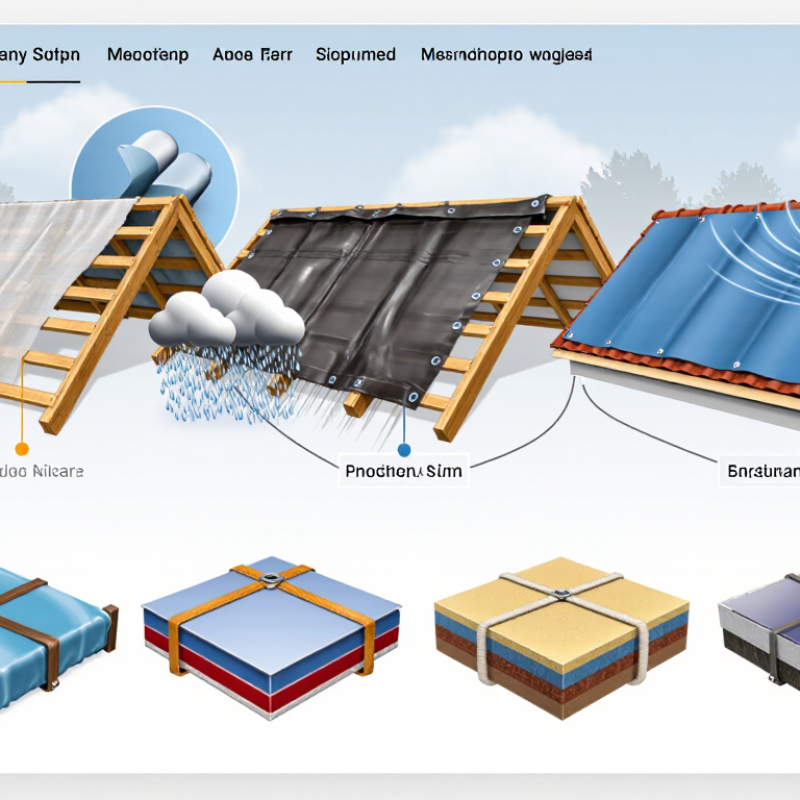
How to Choose the Best Roofing Tarpaulin?

Understanding Roofing Tarpaulin Materials and Construction

How to Choose the Best Roofing Tarpaulin?

Understanding Roofing Tarpaulin Materials and Construction

A roofing tarpaulin should match the roof’s exposure, shape, and repair period. Woven polyethylene is lightweight, flexible, and usually economical. It works well for short-term protection during dry weather. PVC-coated polyester is heavier and more stable under strong sunlight, rain, and repeated handling. Canvas feels breathable, but it may absorb moisture without proper treatment.

Material thickness matters, but construction matters more than many buyers expect. Check the fabric’s GSM, weave density, and coating consistency. A dense weave reduces stretching around rafters. Heat-welded seams usually resist water better than simple stitched seams. Reinforced hems should contain rope or webbing, not just folded fabric. Eyelets need strong patches at regular intervals.

Look closely at the roof details. A tarp flapping against sharp metal can wear through within days. I prefer rounded edges, padded contact points, and enough overlap for runoff. UV resistance is essential for exposed roofs. Waterproofing is not the same as condensation control. Poor ventilation can leave timber damp beneath a fully sealed cover.

Small details decide durability.

Manufacturers’ test data can help, but field conditions remain unpredictable. A high-rated tarp may still fail under poor anchoring or trapped wind. I have found that choosing the heaviest option is not always wise; excessive weight complicates installation and increases roof stress. Check repairability, storage needs, and the expected service period before purchasing.

Matching Tarpaulin Size, Weight, and Coverage Requirements

How to Choose the Best Roofing Tarpaulin?

Matching Tarpaulin Size, Weight, and Coverage Requirements

Choosing a roofing tarpaulin starts with accurate measurements, not guesswork. Measure the damaged roof area from the ground and add enough material for secure overlap. For many repairs, extending 60 to 90 centimetres beyond the damaged section provides useful coverage. A sloped roof also needs extra length for water runoff. If the tarp ends at the damage, rain can enter underneath.

Weight affects strength, handling, and wind resistance. A heavier tarpaulin usually offers better durability, but it can become difficult to position safely on a large roof. Select a coated, waterproof material with reinforced edges and closely spaced eyelets. Check the fabric weight in grams per square metre. A light sheet may suit a short emergency cover, while a heavier option is more suitable for extended outdoor exposure. Still, heavier is not always better.

Tips: Add overlap before ordering. Protect sharp roof edges with padding. Keep the tarp taut, but avoid excessive tension around eyelets. Use wide straps instead of thin cord when possible. Never allow water to collect in the centre.

I once underestimated the extra length needed around a roof vent. The tarp looked large enough, but wind lifted one corner overnight. That mistake changed my measuring process: I now sketch the roof, mark obstacles, and calculate coverage before choosing the final size.

How to Choose the Best Roofing Tarpaulin?

Match the tarpaulin size, weight, and coverage requirements to the area that needs protection.

Coverage is calculated from the listed tarpaulin dimensions. Estimated weight assumes a 500 g/m² heavy-duty polyethylene fabric and excludes small variations from hems, seams, and eyelets. Choose a tarp with extra edge coverage so it can be secured safely beyond the roof area.

Evaluating Waterproofing, UV Resistance, and Durability

How to Choose the Best Roofing Tarpaulin?

Choosing the best roofing tarpaulin starts with waterproofing, not color or advertised thickness. Check hydrostatic resistance and seam performance. ASTM D751 evaluates coated fabrics through hydrostatic pressure, tensile strength, and tear testing. A tarp can resist rain across its surface yet leak around stitched corners. Heat-sealed seams usually deserve closer inspection. Look for reinforced eyelets and folded hems, especially where wind can pull repeatedly.

UV resistance controls how quickly the material becomes brittle. NOAA classifies a UV Index of 8–10 as very high and 11 or above as extreme. This scale measures human exposure, not tarp lifespan, but it signals harsh solar conditions. Select fabric with UV stabilizers and documented testing under ASTM G154 or ISO 4892-3. The 2022 UNEP Environmental Effects of Ozone Depletion report also links ultraviolet exposure with faster polymer weathering. Still, test hours do not perfectly predict every roof. Local heat, dust, and ponding water interfere.

Tips: Ask for test results, not vague “all-weather” claims. Compare tear strength, coating weight, and seam construction. Press the fabric gently. Brittle creasing is a warning. My own assessment would not rely on denier alone; a heavier fabric may still fail if its coating is weak. Inspect after storms, because small punctures often expand before they become obvious. Sources: NOAA UV Index guidance, ASTM D751, ASTM G154, ISO 4892-3, and UNEP’s 2022 assessment.

Selecting Suitable Fasteners, Edges, and Reinforcement Features

How to Choose the Best Roofing Tarpaulin?

A roofing tarpaulin needs more than thick fabric. Fasteners, edge design, and reinforcement decide whether it survives real weather. NOAA recorded 28 billion-dollar weather disasters in the United States during 2023. Stronger temporary protection is becoming necessary.

Choose corrosion-resistant screws with broad washers, not narrow staples. Washers spread pressure and reduce fabric tearing around each fixing point. Place fasteners through reinforced hems whenever possible. The FEMA Hurricane Ian Mitigation Assessment Team report highlighted wind uplift and wind-driven rain as major roof vulnerabilities. Therefore, loose edges deserve special attention. Avoid fastening only across the tarp’s center.

Look for double-stitched hems, welded seams, and reinforced corner patches. Webbing inside the hem can distribute pulling forces more evenly. ASTM D751 provides recognized methods for testing coated fabrics, including tear and tensile performance. Ask suppliers for test results, not vague claims. A practical installation may use closer fastener spacing along exposed edges, while sheltered areas need less reinforcement. Local wind conditions still matter. There is no universal spacing rule.

I prefer checking the tarp after the first storm. Small holes often reveal poor washer choice or excessive tension. Too tight can be as dangerous as too loose. That detail is easy to miss. A quality tarp can fail when its attachment system is weak. Select the fabric, fasteners, and reinforcement as one working system.

Comparing Costs, Maintenance Needs, and Expected Service Life

Choosing a roofing tarpaulin starts with total cost, not the lowest purchase price. Basic polyethylene covers often cost less upfront, but their woven edges can fray after repeated wind movement. PVC-coated polyester usually costs more, yet it handles abrasion and frequent folding better. As a practical budget range, buyers may see approximately $0.20–$0.60 per square foot for polyethylene and $0.80–$2.50 for coated polyester. Prices vary with thickness, reinforcement, and order size.

Maintenance changes the calculation. Inspect seams, eyelets, and ridge contact points after heavy rain or strong winds. FM Global Data Sheet 1-52 emphasizes verifying wind resistance and securement, especially around roof edges. Keep the fabric tight, but not drum-tight. Excess tension can tear eyelets. Wash dust and bird residue with mild soap, then dry the cover fully before storage. I used to underestimate this step. Damp folding can create mildew within weeks.

Expected service life depends heavily on ultraviolet exposure and movement. ASTM G154 provides a recognized method for comparing accelerated UV performance, while ASTM D751 covers coated-fabric testing. Ask suppliers for test results, not vague “all-weather” claims. A lightly used polyethylene tarp may last one season to three years. Reinforced polyester can reach three to seven years under moderate conditions. Coastal wind, rooftop heat, and constant rubbing can shorten either estimate sharply. These figures are planning ranges, not promises.

How to Choose the Best Roofing Tarpaulin? — Comparing Costs, Maintenance Needs, and Expected Service Life
Tarpaulin Type Typical Material Cost
(USD/m²)
Expected Service Life Waterproofing Performance UV and Weather Resistance Maintenance Requirements Approximate Maintenance Cost
(USD/m²/year)
Best-Suited Applications Overall Value
Standard Polyethylene (PE) $1.50–$4.00 1–3 years in regular outdoor use Good when seams, eyelets, and edges remain intact Fair; sunlight can make the fabric brittle over time Clean with mild soap, inspect eyelets and seams, and keep tension even. Avoid sharp contact points. $0.20–$0.60 Short-term repairs, temporary weather protection, seasonal storage, and low-cost projects Good for low initial cost
Heavy-Duty Laminated PE $3.00–$7.00 2–5 years in regular outdoor use Very good when properly installed and adequately overlapped Good; UV-stabilized grades perform better than basic PE Wash periodically, remove standing water, inspect for abrasion, and replace damaged fastening points. $0.30–$0.80 Medium-term roof repairs, agricultural shelters, construction covers, and equipment protection Very good balance of cost and durability
PVC-Coated Polyester $7.00–$16.00 5–10 years in regular outdoor use Excellent; welded or heat-sealed seams can provide strong water resistance Very good, especially with UV-resistant coatings and correct installation Clean with non-abrasive detergent, check welds and tensioning hardware, and repair cuts promptly with compatible materials. $0.40–$1.20 Longer-term temporary roofing, industrial covers, truck covers, and demanding outdoor environments Excellent for durability and protection
Acrylic-Coated Canvas $6.00–$14.00 3–7 years in regular outdoor use Good to very good, depending on coating quality and seam treatment Very good; the fabric generally handles sunlight better than basic PE Allow the material to dry fully, brush away dirt, clean gently, and re-treat water repellency when necessary. $0.50–$1.50 Breathable covers, shade structures, temporary shelters, and applications where condensation control matters Good where breathability is important
Reinforced PVC Membrane $12.00–$30.00 7–15 years in regular outdoor use Excellent when seams are professionally welded and drainage is designed correctly Excellent; typically designed for prolonged exposure to sun, rain, and wind Perform scheduled inspections, clean deposits, check anchoring and welded seams, and repair punctures without delay. $0.60–$1.80 Large temporary structures, industrial roofs, event shelters, and projects requiring a longer service period Best for long-term performance
Cost and service-life note: Figures are typical planning ranges for the tarpaulin material only and exclude installation, framing, labor, shipping, and replacement hardware. Actual performance depends on fabric weight, UV stabilization, seam construction, wind exposure, drainage, installation tension, abrasion, snow or ice loading, and local climate. A roofing tarpaulin should not be treated as a substitute for a code-compliant permanent roof unless it has been specifically engineered and approved for that purpose.

FAQS

How should I measure a roofing tarpaulin?

Measure the damaged area and add 60 to 90 centimetres for overlap. Extend the tarp beyond vents, ridges, and sloped edges. Do not rely on visual estimates. I once measured too quickly, and wind lifted one corner overnight.

Why does roof slope affect tarp size?

A sloped roof needs extra length for water runoff. If the tarp stops at the damaged section, rain may enter underneath. Allow additional material below the damaged area. Water needs a clear path.

Does a heavier tarpaulin always provide better protection?

Not always. Heavy fabric usually resists wind and abrasion better. However, it becomes harder to position safely on a large roof. Choose weight according to roof size, handling limits, and exposure time.

What features improve waterproofing?

Choose coated, waterproof fabric with reinforced edges and folded hems. Inspect seams carefully, because surface fabric can resist rain while stitched corners leak. Heat-sealed seams may reduce leakage risks. Small details matter.

How can I judge ultraviolet resistance?

Look for documented testing and ultraviolet stabilizers. High sunlight, roof heat, dust, and standing water can weaken fabric faster. Testing hours provide useful comparisons, but they cannot predict every roof. Local conditions still matter.

How should I secure a tarpaulin against wind?

Keep the tarp taut without pulling eyelets excessively. Use wide straps when possible, rather than thin cord. Add padding over sharp roof edges. Do not let water pool in the centre.

What maintenance does a roofing tarpaulin need?

Inspect seams, eyelets, and ridge contact points after storms. Wash dust and bird residue with mild soap. Dry the cover completely before folding it. Damp storage can create mildew within weeks.

How long might a roofing tarpaulin last?

A lightly used polyethylene cover may last one season to three years. Reinforced polyester may last three to seven years under moderate conditions. Coastal wind, heat, and repeated rubbing can shorten either estimate sharply. These are planning ranges, not promises.

Conclusion

Choosing the right Roofing Tarpaulin requires more than selecting the largest or cheapest option. Start by understanding the material and construction, since reinforced fabrics and reliable coatings can provide better strength, flexibility, and weather protection. Measure the covered area carefully, allowing enough overlap for secure installation, and select a suitable weight that balances durability with ease of handling. A tarpaulin should offer dependable waterproofing, strong UV resistance, and durability against wind, rain, and repeated use.

Pay close attention to practical details such as reinforced edges, strong attachment points, rust-resistant fasteners, and well-placed eyelets. These features help prevent tearing and keep the cover securely positioned. Finally, compare the initial cost with maintenance requirements and expected service life. A higher-quality Roofing Tarpaulin may require a larger investment but can reduce replacement frequency and overall upkeep. The best choice is one that matches the structure, local weather conditions, installation method, and long-term protection needs.

Amelia

Amelia

Amelia is a seasoned marketing professional with a wealth of expertise in our company’s core offerings. With an unwavering passion for driving growth and innovation, she plays a pivotal role in shaping our marketing strategies and enhancing brand visibility. A key aspect of her responsibilities......