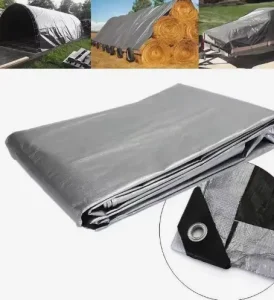
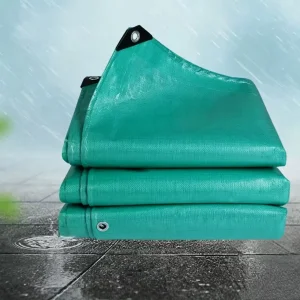
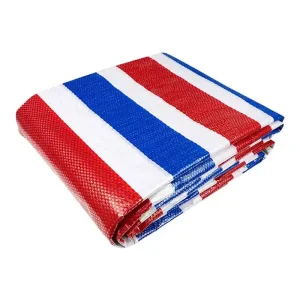
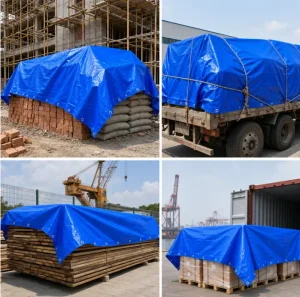
High-tensile woven rolls, waterproof laminated sheets, and climate-engineered protective textiles direct from our automated extrusion lines.
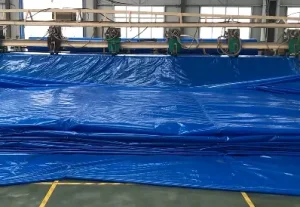
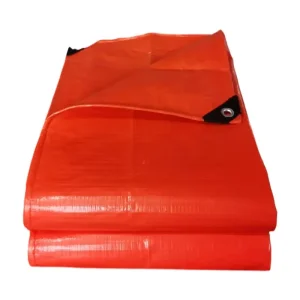
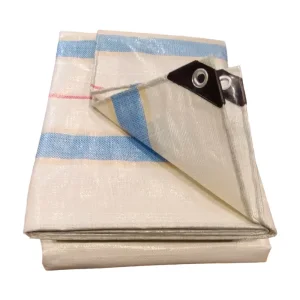
An in-depth analysis of high-density polypropylene substrate performance, global supply chain dynamics, and structural comparisons against legacy PE and PVC fabrics.
Woven Polypropylene (PP) tarpaulin rolls represent a significant evolution in industrial protective textiles. Compared to standard Polyethylene (PE), PP polymers exhibit higher tensile modulus, superior flexural strength, and a higher melting point (~165°C vs ~120°C for PE). This thermal and mechanical stability makes PP tarpaulin rolls the preferred structural base for heavy-duty industrial covers, high-stress containment systems, and multi-season agricultural membranes.
The global demand for PP tarpaulin rolls is expanding at a CAGR of 6.2%, driven primarily by the modernization of agricultural logistics, large-scale civil infrastructure projects across Asia-Pacific and North America, and growing demand in the Middle East for UV-stabilized containment solutions. Industrial procurement officers increasingly mandate factory-direct roll sourcing to convert localized tarpaulin sheets near point-of-use, cutting freight costs by up to 35% compared to pre-cut finished goods.
While laminated PVC tarpaulin offers long-term durability, its high tare weight (500–900 GSM) and high cost limit economic feasibility in massive coverage projects. PP tarpaulin rolls bridge the gap by providing high tear resistance at a fraction of the weight (60–300 GSM). The lightweight structural profile lowers labor overhead during field deployment, minimizes structural support loads on temporary scaffolding, and enables 100% monomaterial recycling without complex solvent separation processes.
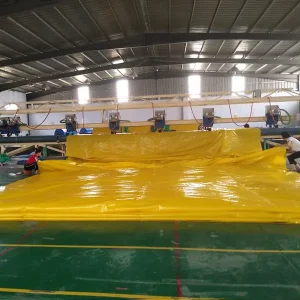
Factory-grade PP tarpaulin rolls manufactured by premier facilities like Linyi Xinshengyang (Star Tarpaulins) utilize high-tenacity polypropylene tapes stretched at ratio 1:5.5 to 1:6.2 during extrusion. This orientation aligns the molecular chain, yielding a tensile strength exceeding 1400 N/5cm in both warp and weft directions for high-density 14x14 weave counts—outperforming equivalent GSM PE alternatives under sustained wind load.
The 8-step controlled manufacturing sequence that guarantees consistent denier, zero delamination, and long-term weathering endurance.
Virgin PP/HDPE resin granules are combined with thermal stabilizers and color masterbatches. The molten polymer is extruded through flat dies, water-quenched, and slit into precise flat tapes. Tapes are stretched under controlled temperature zones to maximize molecular orientation and achieve high tenacity (≥ 5.5 cN/dtex).
Flat tapes are loaded onto high-speed circular looms (or flat water-jet looms for ultra-wide continuous rolls). Automatic warp-stop detectors ensure zero missing ends, maintaining strict weave density metrics (e.g., 8x8, 10x10, 12x12, or 14x14 threads per inch) across roll widths up to 6 meters.
The woven substrate passes through dual extrusion lamination lines. A molten film of Low-Density Polyethylene (LDPE) or specialized PP blend is applied to both sides under heavy pneumatic pressure rollers. This seals inter-thread voids, delivering 100% hydrostatic impermeability and smooth print-ready surfaces.
To resist solar photo-oxidation, specialized Hindered Amine Light Stabilizers (HALS) are dosed at 3.0% to 5.0% by weight during extrusion. Accelerated weathering tests in accordance with ASTM G154 demonstrate retention of over 80% tensile strength after 3000 hours of continuous UV exposure.
| Parameter | Light-Duty PP Roll | Standard Industrial PP Roll | Heavy-Duty Contract Roll | Testing Methodology |
|---|---|---|---|---|
| Base Mass (GSM) | 60 – 90 g/m² | 100 – 160 g/m² | 180 – 300 g/m² | ISO 3801 / ASTM D3776 |
| Weave Structure | 8 × 8 Mesh | 10 × 10 / 12 × 12 Mesh | 14 × 14 Mesh | ASTM D3775 Density Count |
| Tensile Strength (Warp/Weft) | 550 / 500 N/5cm | 950 / 900 N/5cm | 1450 / 1380 N/5cm | ISO 13934-1 Strip Method |
| Tear Resistance (Trapezoid) | 75 / 70 N | 130 / 120 N | 210 / 195 N | ISO 13937-2 / ASTM D751 |
| Hydrostatic Pressure | > 50 kPa | > 80 kPa | > 120 kPa | DIN EN 20811 / AATCC 127 |
| Thermal Endurance | -20°C to +75°C | -30°C to +85°C | -40°C to +95°C | ISO 812 Cold Bend / Hot Oven |
| Standard Roll Widths | 1.83m, 2.0m, 3.0m | 2.0m, 4.0m, 6.0m | 2.0m to 6.0m Seamless | Factory Mill Measurement |
Tailored engineering specifications developed for extreme climate demands and specific regional regulatory environments worldwide.
In regions such as Saudi Arabia, UAE, and Qatar, surface temperatures on exposed materials regularly top 70°C. Standard PE tarps degrade rapidly under intense ultraviolet exposure. Our GCC-engineered PP tarpaulin rolls utilize a dual-blend HALS formulation (5% dosage) combined with titanium dioxide reflective pigment, reducing under-tarp temperatures by 10–15°C while preventing structural polymer embrittlement during extended open-yard storage.
Contractors in North America mandate OSHA-compliant enclosure materials with severe flame propagation requirements. We manufacture specialized FR-treated PP tarpaulin rolls that comply with NFPA 701 Test Method 2 and ASTM E84 Class A ratings. These rolls are converted into custom scaffolding containment sheets, protecting jobsites against sub-zero winds, heavy snowfall, and accidental ignition sparks during welding.
Under EU ESG frameworks and waste reduction directives, farm operators require 100% recyclable, mono-material agricultural covers. Our PP tarpaulin rolls utilize non-halogenated flame retardants and heavy-metal-free pigments, satisfying REACH and RoHS environmental standards. Used hay tarps, grain storage liners, and weed barriers can be directly shredded and re-extruded into PP plastic pallets without chemical separation.
High humidity, continuous torrential rain, and tropical storms define the tropical belt. Our heavy-duty coated PP tarpaulin rolls provide hydro-head values over 120 kPa, acting as impermeable liners for aquaculture pond construction, temporary flood barrier dams, and high-tenacity cargo tarping across maritime shipping routes in Indonesia, Vietnam, and the Philippines.
Linyi Xinshengyang Plastic Products Co., Ltd. operating metrics since 2006.
How modern polymer research and automated manufacturing are revolutionizing PP tarpaulin roll production.
Integrating organoclay and silica nanoparticles into the extrusion coating matrix enhances abrasion resistance by up to 40% while creating micro-textured hydrophobic surfaces. Water droplets instantly bead and roll off, carrying surface dust away in self-cleaning solar panel covers and agricultural greenhouse side-curtains.
Real-time optical sensors and ultrasonic gauge monitors positioned on extrusion coating lines instantly flag micron-level variations in lamination thickness or tape width. Automated tension regulators dynamically correct weave stretch, eliminating roll deformation and edge curl during high-speed converting.
With global sustainability standards tightening, advanced multi-layer co-extrusion allows factories to incorporate up to 30% Post-Consumer Recyclate (PCR) into the core woven tape layer while keeping outer lamination layers 100% virgin polymer. This configuration maintains top-tier tensile ratings while cutting carbon footprint metrics significantly.
Engineering answers directly from our technical sales department to streamline your sourcing decisions.
Polypropylene (PP) features a higher tensile modulus, higher stiffness, and a higher thermal melting point (~165°C) than Polyethylene (PE ~120°C). Consequently, PP tarpaulin rolls offer greater resistance to puncture and structural stretching under heavy static loads. PE tarpaulins are slightly more flexible at extreme sub-zero temperatures (-40°C). Our factory produces both polyolefin formats to match specific climate and operational requirements.
For temporary covers, light promo packs, or short-term dust shielding, 60–90 GSM is economical. Hardware retail channels and light construction typically stock 100–160 GSM. Scaffolding enclosures, long-term hay covers, and heavy transport side-curtains demand 180–300 GSM woven PP/PE fabrics. For extreme industrial containment or heavy trailer curtains, knife-coated PVC from 500–900 GSM is recommended.
We blend Hindered Amine Light Stabilizers (HALS) into the masterbatch during initial resin extrusion. Standard dosage ranges from 1.5% (for temperate zones) up to 5.0% (for GCC, Australian, or Arizona sunlight levels). Accelerated UV weathering reports (ASTM G154) are provided per batch, validating tensile strength retention over extended field exposure periods.
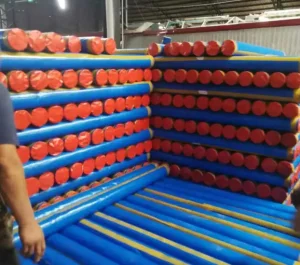
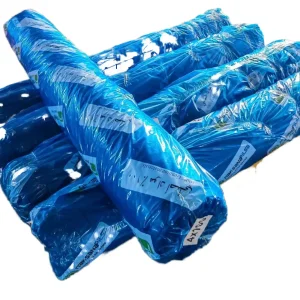
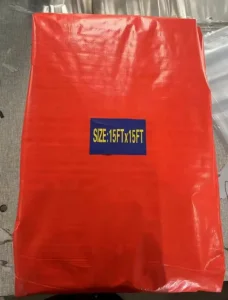
Master rolls are wound on heavy-duty 3-inch or 4-inch reinforced paper cores. Continuous roll widths range from 1.8 meters to 6.0 meters, with standard lengths of 50m, 100m, or 200m per roll. Each roll is wrapped in woven protective fabric, fitted with end-caps, and labeled with custom barcodes and batch tracking tags for automated warehouse scanning.
Standard stock color roll specifications start from 3 tons per size/color profile, or a mixed 20ft container (approx. 11-13 tons). Custom colors, specialized GSM weights, flame-retardant additives, or surface branding require a 5-ton production minimum per spec. Standard lead time is 15 to 25 days following pre-production sample sign-off.
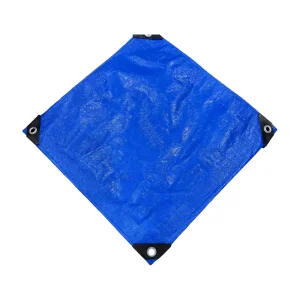
Yes. We routinely coordinate with third-party testing organizations including SGS, BV, and TÜV. Quality inspection covers continuous roll width verification, GSM basis weight testing, hydrostatic head resistance, warp/weft tensile strength, and eyelet pull-out forces on converted sheets.
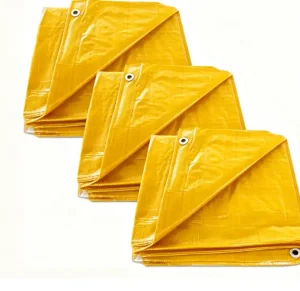
Heavy-duty hay covers, yellow construction textiles, cooling shade tarps, and custom-reinforced sheets ready for worldwide dispatch.