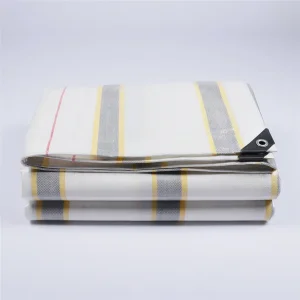
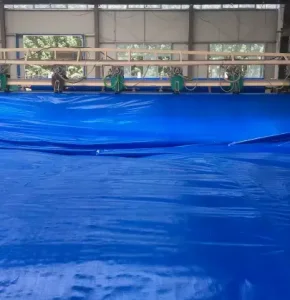
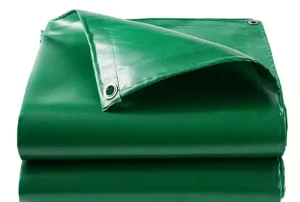
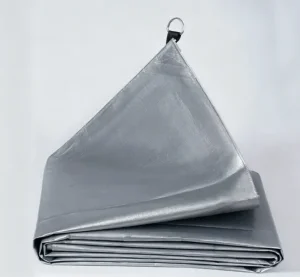
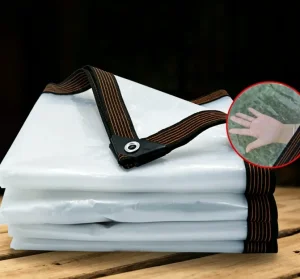
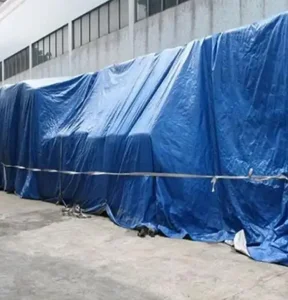
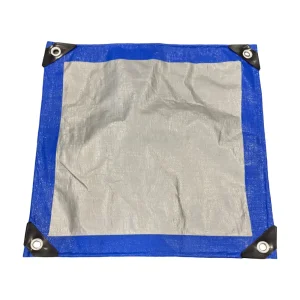
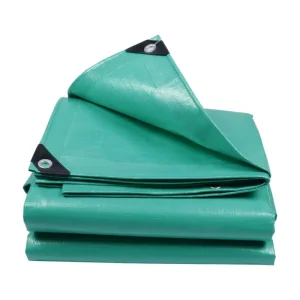
Direct factory running specifications engineered for heavy-duty covering, transport protection, and agricultural applications.
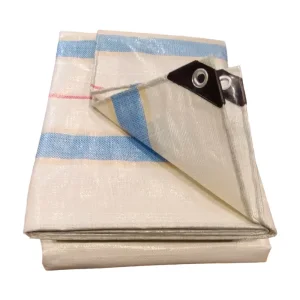
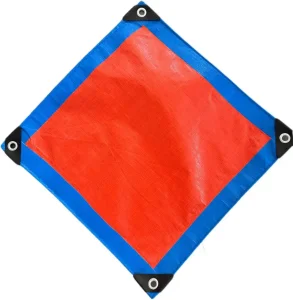

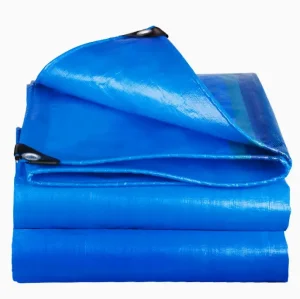
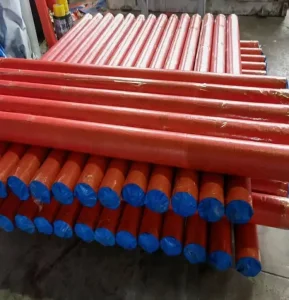
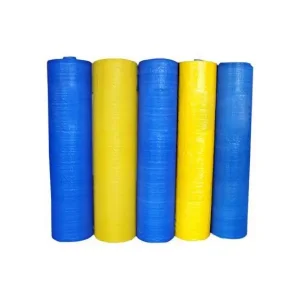
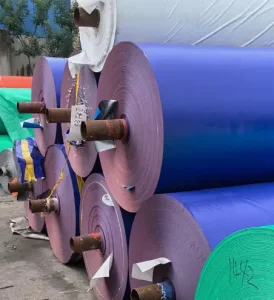
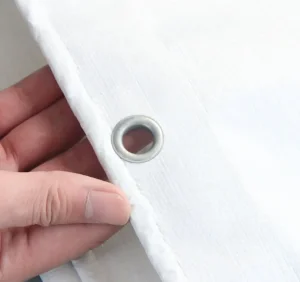
In the global industrial textiles market, PE Tarpaulin Rolls (Polyethylene Tarpaulin Rolls) represent the primary defense against environmental degradation across agriculture, commercial freight, maritime logistics, and civil infrastructure.
Unlike monolithic plastic sheeting, a high-performance PE tarpaulin roll is a multi-layered composite matrix. The core structural strength originates from high-density polyethylene (HDPE) flat yarns, extruded under precise thermal orientation. These yarns are woven into a high-tenacity mesh matrix (typically varying from 6×6 to 14×14 threads per square inch). Dual-sided low-density polyethylene (LDPE) or linear low-density polyethylene (LLDPE) lamination layers are subsequently applied under continuous pressure roll processing to form a 100% impermeable, water-repellent seal.
Procurement failure in field operations is rarely due to raw weight; it stems from yarn degradation caused by solar ultraviolet radiation and delamination under high shear wind forces. Leading manufacturing facilities utilize advanced Hindered Amine Light Stabilizers (HALS) integrated directly into both the HDPE core tape extrusion and the LDPE outer coating melt. This whitepaper analyzes the engineering parameters, chemical formulations, and global compliance benchmarks that differentiate basic poly tarps from true industrial-grade tarpaulin rolls.
Enterprise buyers across diverse global regions demand specialized physical characteristics tailored to extreme microclimates and specific operational workflows.
Primary Intent: Solar Resistance & Heat Dissipation.
In high UV index zones (UV index 11+), un-stabilized polymer chains suffer rapid scission, leading to embrittlement within 60 days. B2B buyers require minimum 3.5% to 5.0% UV masterbatch loadings with reflective dual-color configurations (e.g., Silver/Black or White/Blue) to lower interior temperature gradients and prevent thermal warping of underlying assets.
Primary Intent: Regulatory Compliance & Tear Resistance.
Commercial construction contractors prioritize compliance with local safety standards, including flame retardancy (DIN 4102 B1, EN 13501-1) and chemical safety (REACH SVHC restriction compliance). Demand focuses heavily on heavy-duty specs (180 GSM to 300 GSM) for scaffold wrap, containment sheeting, and industrial lumber wrapping with custom branding.
Primary Intent: Hydrostatic Pressure & Tensile Flexibility.
Tropical monsoon regions require exceptional hydrostatic head performance (>100 kPa) combined with high flexibility under high humidity. Agricultural producers utilize broad width seamless rolls (up to 6m wide) for large-scale grain drying, pond liners, and temporary crop protection against torrential downpours.
A rigorous breakdown of the step-by-step chemical and mechanical engineering processes executed inside modern PE tarpaulin factories.
Virgin High-Density Polyethylene (HDPE) resin beads are blended with color masterbatch and UV stabilizers inside automated gravimetric dosing systems. The melt is processed through a flat die extruder at temperatures ranging between 220°C and 260°C. The extruded primary film is water-quenched, slit into fine tapes, and mechanically drawn at a 1:5 stretch ratio over heated rollers to align polymer chains, yielding a tensile yarn strength exceeding 4.8 cN/dtex.
Yarn bobbins are loaded onto high-speed water-jet or circular looms. The mechanical tension on both warp and weft yarns is continuously monitored by laser sensors to prevent weave defects. Mesh counts are strictly calibrated to target specifications—from lightweight 6×6 meshes for temporary protective covers to ultra-dense 14×14 meshes for high-stress industrial applications.
The raw woven HDPE fabric passes through a state-of-the-art dual-side lamination line. Molten Low-Density Polyethylene (LDPE) is extruded at high velocity onto both surfaces simultaneously or sequentially. Corona treatment is applied to increase surface energy (>42 dynes/cm), guaranteeing permanent adhesion of the film coating to the woven substrate, completely eliminating micro-pinholes.
Coated tarpaulin fabric is wound onto heavy-duty cardboard or steel cores under constant electronic tension control. Uncut master rolls are finished at standard widths ranging from 1.8m to 4.0m, or ultra-wide formats up to 6.0m. Edge trimming, selvage reinforcement, and custom length slitting (e.g., 50m, 100m, 200m per roll) are completed with real-time digital yardage counters.
| Performance Specification | Light Duty Grade | Standard Commercial Grade | Heavy Industrial Grade | Test Method Standard |
|---|---|---|---|---|
| Weight Range (GSM) | 60 - 90 g/m² | 100 - 160 g/m² | 170 - 300+ g/m² | ISO 3801 / ASTM D3776 |
| Weave Count (TPI) | 6 × 6 to 8 × 8 | 10 × 10 to 12 × 12 | 14 × 14 to 16 × 16 | ASTM D3775 |
| Tensile Strength (Warp/Weft) | 450 / 400 N/5cm | 750 / 700 N/5cm | 1450 / 1350 N/5cm | ISO 1421 / ASTM D751 |
| Tear Resistance (Elmendorf) | 45 / 40 N | 90 / 85 N | 180 / 165 N | ASTM D1424 / ISO 4674 |
| Hydrostatic Head Pressure | > 30 kPa | > 70 kPa | > 120 kPa | AATCC 127 / ISO 811 |
| UV Accelerated Weathering | 300 Hours QUV | 800 Hours QUV | 1500+ Hours QUV | ASTM G154 / ISO 4892-3 |
Engineered solutions deployed across strategic economic sectors requiring verified material performance.
Post-harvest loss prevention is a critical requirement for agribusiness enterprise buyers. Custom-formulated PE tarpaulin rolls are converted into vast grain drying sheets, temporary silos, and silage stack wraps. The double-sided low-permeability film prevents ground moisture ingress while blocking rain. White outer surfaces reflect ambient solar heat, mitigating interior heat buildup and preventing fungal growth in stored crops.
Modern high-rise commercial construction relies on durable building wraps to shield open structures from extreme weather during concrete curing and interior finishing. Flame-retardant PE tarpaulin rolls provide safety barriers against falling debris and windborne rain while permitting translucent daylighting for workers inside.
Flatbed truck tarpaulins, side curtains, and open-top ocean container liners experience immense mechanical stress during highway and maritime transit. Ultra-heavyweight PE tarpaulin rolls (250+ GSM) offer high tear propagation resistance, preventing minor tears from causing cargo exposure during high-speed transit.
Global aid organizations (UNHCR, ICRC, Red Cross) require high-volume, rapidly deployable shelter tarps meeting rigid international procurement specifications. Industrial PE tarpaulin factories supply pre-cut sheets or master rolls equipped with reinforced corners and high-load grommets to support emergency relief operations worldwide.
Ensuring seamless international trade through complete regulatory transparency, rigorous batch testing, and tailored local market packaging.
Our manufacturing operations strictly adhere to international material safety frameworks. All Polyethylene masterbatches are verified free of prohibited phthalates, heavy metal catalysts (lead, cadmium, hexavalent chromium), and SVHC chemicals under EU REACH regulation (EC) No 1907/2006 and RoHS Directive 2011/65/EU.
Every production batch undergoes systematic sampling in our ISO/IEC 17025 accredited laboratory. We maintain long-term testing relationships with international inspection authorities including SGS, Bureau Veritas, and TÜV Rheinland to issue independent batch certificates for tensile strength, hydrostatic head pressure, and QUV resistance.
To support global distributors and hardware retail networks, rolls are packaged with heavy-duty outer PE protective sleeves, heavy paper roll end-caps, custom barcode labels, and multilingual instruction inserts. Mixed container loading schemes are digitally optimized to maximize volumetric payload efficiency.
Pioneering advancements in sustainable polymer chemistry, circular economy integration, and smart tarpaulin performance.
Transitioning from pure fossil-derived polyolefins toward bio-ethylene polymers derived from sugarcane ethanol, alongside up to 30% Post-Consumer Recycled (PCR) HDPE matrices. Advanced melt filtration technology ensures yarn tensile integrity remains within 95% of virgin polymer baseline specs.
Integrating photocatalytic Titanium Dioxide (TiO₂) nanoparticles into the outer LDPE coating matrix. Solar ultraviolet activation breaks down organic grime and airborne soot on exposed tarpaulins, maintaining maximum solar reflectivity and clean surfaces without requiring chemical washing.
Embedding ultra-thin, flexible RFID/NFC transponders directly between the woven base layer and outer lamination during high-speed extrusion coating. Enables real-time automated asset tracking, digital chain-of-custody verification, and maintenance logging for commercial shipping fleets.
In-depth technical answers addressing procurement intent, quality benchmarks, and custom manufacturing capabilities.
Durability in polyethylene tarpaulins is governed by four engineering factors: (1) Polymer Purity: 100% virgin HDPE tape resin yields high tensile strength without micro-fractures; (2) Yarn Stretch Ratio: High mechanical draw ratio during yarn extrusion aligns molecular chains for maximum breaking tenacity; (3) Coating Adhesion: High dynes/cm surface energy during LDPE lamination prevents delamination under wind shear; and (4) UV Masterbatch Loading: The integration of Hindered Amine Light Stabilizers (HALS) directly into both warp/weft yarns and outer film coatings prevents photo-oxidation under direct sunlight.
GSM (Grams per Square Meter) directly reflects structural tape denier and lamination film thickness.
• 60-90 GSM: Designed for light duty short-term covering, dust shielding, and light promotional packaging (Lifespan: 3 to 6 months exposed).
• 100-160 GSM: Commercial standard for general scaffolding wrap, hardware retail, and general equipment storage (Lifespan: 1 to 2 years exposed).
• 180-300+ GSM: Heavy-duty industrial grade for long-term agricultural grain silos, timber wrap, structural containment, and transport covers (Lifespan: 3 to 5+ years exposed with 3-5% UV additive).
Factory extrusion lines support seamless master roll widths from 1.83m (6ft) up to 4.0m (13ft), with ultra-wide high-frequency thermal welding capability extending widths up to 6.0m. Standard roll lengths are 50m, 100m, 200m, or customized bulk rolls up to 2,000 meters for automated converted packaging. Core options include heavy-duty 3-inch (76mm) or 4-inch (102mm) reinforced cardboard or steel cores with plastic end-plugs.
Yes. By injecting specialized brominated or halogen-free flame retardant additives into both the HDPE tape batch and outer LDPE coating melts during extrusion, the resulting tarpaulin achieves self-extinguishing properties. Flame retardant PE tarpaulins meet international standard benchmarks including DIN 4102 B1, EN 13501-1 Class B-s1,d0, and NFPA 701.
Standard custom specification runs require a minimum production batch of 3 metric tons per color and width setup. A standard 20-foot GP shipping container holds approximately 11 to 13 metric tons of packed rolls, while a 40-foot High Cube (40HQ) container holds 25 to 28 metric tons depending on core dimensions and outer packaging methods.
PE Tarpaulins: Offer a significantly higher strength-to-weight ratio, 100% recyclability (Polyolefin single-polymer group), zero toxic plasticizers, superior cold-flexibility, and approximately 40% to 60% lower material cost per square meter. Ideal for high-volume covering, agricultural storage, and construction.
PVC Tarpaulins: Heavier (typically 450 to 900 GSM), stiffer, and suited for permanent architectural membranes, heavy truck side-curtains, and long-term oil-boom containment where extreme tensile abrasion is the primary design driver.
High-performance custom specifications engineered for tents, moisture barriers, greenhouse protection, and specialized crop management.