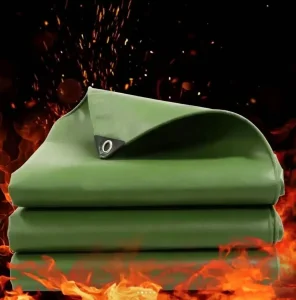
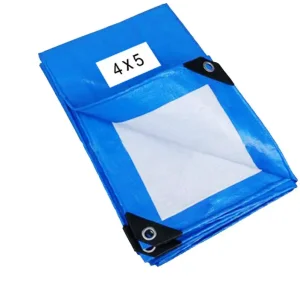
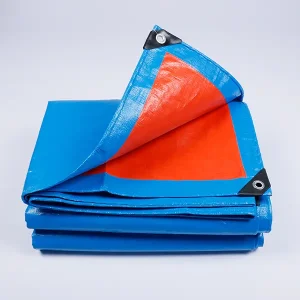
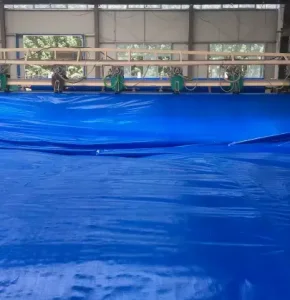
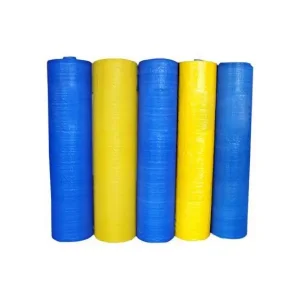
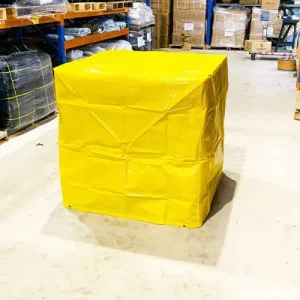
Direct-from-factory poly-woven covers, extruded layflat hoses, and scratch-resistant lamination rolls manufactured to ISO 9001 and international tensile standards.
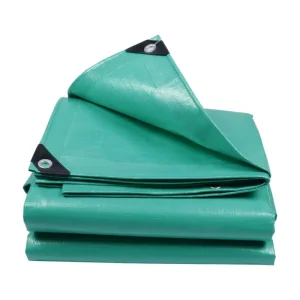
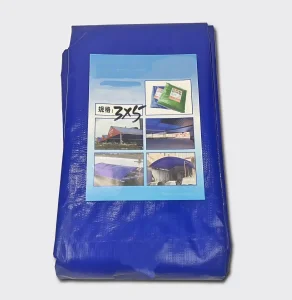
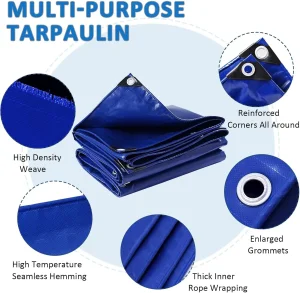
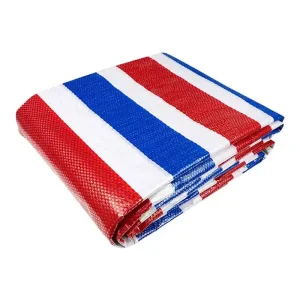
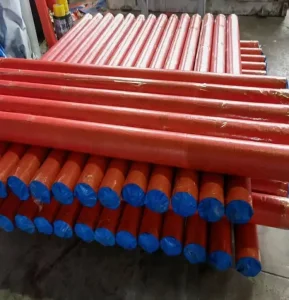
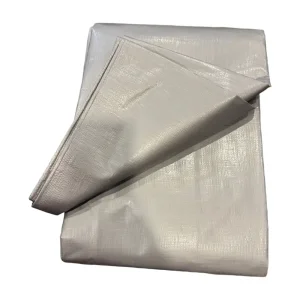
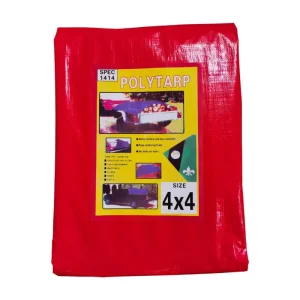
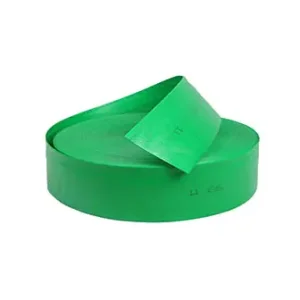
An authoritative engineering analysis of polymer formulations, color-striped weaving optics, weatherization barriers, and industrial procurement trends.
In modern industrial logistics, civil construction, and agricultural protective infrastructure, the demand for stripped tarpaulins (commonly referred to as blue-white-red striped PE/PP poly tarps) has transitioned from standard commoditized covers to highly engineered micro-climate barriers. Global procurement officers and supply chain directors no longer evaluate tarpaulins merely on raw weight per square meter (GSM); semantic search paradigms and search intent metrics reveal a decisive shift toward multi-layer tensile resistance, UV degradation kinetics, chemical inertness, and automated production traceability.
Striped tarpaulins owe their distinctive aesthetic—typically alternating bands of blue/white, red/white/blue, or green/white—to precisely extruded HDPE (High-Density Polyethylene) tape yarns impregnated with specialized masterbatch pigments prior to weaving. Unlike solid-colored canvas or monolithic film covers, multi-color striped tarpaulins provide high-contrast visual safety indicators across hazardous industrial environments such as maritime port terminals, scaffolding enclosures, and roadside transport corridors.
Advanced thermal studies indicate that alternating white stripe bands reflect up to 68% of solar infrared radiation, while darker blue or red bands absorb specific spectra. This alternating thermal gradient reduces surface thermal expansion stress across large-format tarpaulins, preventing localized sag and seam stress during extreme diurnal temperature swings in desert and tropical climates.
Utilizing 100% virgin HDPE resin melted at 240°C–260°C, stretched into ultra-fine filament ribbons with tensile yield strengths exceeding 9.5 cN/dtex for maximum tear resistance.
High-pressure hot-melt lamination of LDPE (Low-Density Polyethylene) creates a 100% impermeable, zero-porosity shield guarding against hydrostatic water heads up to 12,000 mm H2O.
Engineered with 3% to 5% Hindered Amine Light Stabilizers (HALS) and UV-tinuvin additives to prevent polymer chain scission under aggressive outdoor solar exposure.
From port logistics in Hamburg to agricultural solar drying pads in Southeast Asia, striped tarpaulins serve critical protective roles across diverse macroeconomic domains.
In North America and Western Europe, municipal building regulations require scaffolding perimeter containment to prevent falling debris, dust mitigation, and rain protection. Striped tarpaulins featuring pre-punched aluminum eyelets at 50 cm intervals enable rapid rigging. Their high visual contrast acts as a passive warning barrier for urban traffic while maintaining interior light diffusion for site workers.
Global shipping lines utilize 140 GSM to 220 GSM blue-white-red striped tarpaulins for top-covering open-top ISO shipping containers, flat rack cargo, and breakbulk machinery. The multi-layer lamination guards against salt-spray corrosion, chemical oxidation, and high-velocity wind shear during transoceanic transit.
Across South America, Africa, and Asia, large-format striped poly tarps act as moisture-proof ground sheets for post-harvest grain, coffee bean, and cocoa drying. The impervious LDPE coating blocks ground capillary moisture rise, while the striped surface allows farmers to quickly demarcate batch boundaries and bundle crops before rain events.
During emergency disaster response operations led by international NGOs, lightweight, high-tensile 90 GSM to 120 GSM striped tarpaulins provide immediate temporary roofing, water containment bladders, and sanitation dividers. Compact packing ratios permit dense air-drop logistics to affected crisis zones.
How advanced automation hubs in Linyi, Shandong optimize production efficiency, cost parity, and material stability for enterprise B2B buyers.
China’s dominance in the industrial poly-synthetic market is driven by hyper-concentrated manufacturing clusters such as Linyi Xinshengyang Plastic Products Co., Ltd. (Star Tarpaulins). Unlike decentralized assembly setups, an Industry 4.0 tarpaulin plant contains the complete processing value chain under a single roof: virgin polymer resin compounding, high-speed ribbon extrusion, high-density circular weaving, hot-melt double-sided film lamination, ultrasonic seam welding, automatic eyelet punching, and robotized baling.
Gravimetric dosing of virgin HDPE with UV stabilizers, anti-oxidants, and striped masterbatch color pigments.
Extrusion through T-dies into molten film sheets, slit into ribbons, and oriented in hot-water baths for ultra-high tenacity.
Automated looms weave warp and weft tapes into tight 8x8 to 14x14 mesh fabrics with continuous stripe registration.
Simultaneous dual-sided molten LDPE extrusion lamination producing a flawless, water-impermeable molecular bond.
Evaluating physical properties across PE Striped, PP Woven Heavy-Duty, and Commercial PVC Coating lines to optimize procurement selection.
| Performance Parameter | PE Striped Tarpaulin | PP Woven Heavy Tarp | PVC Coated Industrial Tarp |
|---|---|---|---|
| Base Material Construction | HDPE Woven Fabric + LDPE Lamination | Polypropylene (PP) High-Denier Mesh | High-Tenacity Polyester (PES) Base |
| Weight Range (GSM) | 60 GSM – 300 GSM | 90 GSM – 260 GSM | 450 GSM – 900 GSM |
| Hydrostatic Head Rating | > 10,000 mm H2O | > 6,000 mm H2O | > 25,000 mm H2O |
| Tensile Strength (ISO 13934-1) | 750 N / 50mm – 1400 N / 50mm | 850 N / 50mm – 1600 N / 50mm | 2200 N / 50mm – 4000 N / 50mm |
| Tear Resistance (ISO 4674) | 110 N – 250 N | 130 N – 280 N | 350 N – 600 N |
| UV Weathering Life (Outdoor) | 1 – 3 Years (with 3-5% UV additive) | 1 – 2 Years | 5 – 10+ Years |
| Temperature Tolerance | -40°C to +80°C | -20°C to +70°C | -30°C to +70°C (B1 FR Grade) |
| Cost-to-Weight Efficiency | Optimal / Highest Economy | Moderate / High Stiffness | Premium / Heavy Industrial |
Strategic risk mitigation strategies for procurement managers purchasing volume containers of plastic tarpaulin products.
The primary point of field failure in low-grade striped tarpaulins is film delamination—where the LDPE coating layer separates from the woven HDPE substrate under mechanical flexure or heat stress. Professional procurement specifications must require a minimum extrusion coating temperature of 280°C and corona treatment of the woven substrate to guarantee interfacial adhesion values exceeding 15 N/3cm.
Additionally, hem construction must be reinforced with high-density PP perimeter cords and welded using ultrasonic heat seams rather than simple cold stitching, which creates pinhole water leaks along edge margins.
Polyethylene tarpaulins represent a dense freight profile. Optimizing container loading ratios requires precise bale press compaction and customized master carton dimensions tailored to 20ft and 40ft High Cube (HC) container volumes. Factory direct baling under 100-ton hydraulic presses reduces void space by up to 35%, allowing importers to ship up to 28 metric tons per 40HQ container, significantly reducing sea-freight cost per square meter.
Every tier-1 Chinese supplier should furnish certified laboratory test reports for each production batch covering four core metrics: (1) Hydrostatic Pressure Test under ISO 811, (2) Accelerated QUV Weathering Aging under ASTM G154, (3) Warp and Weft Tensile Strength under ISO 13934-1, and (4) Grommet Pull-Out Resistance (minimum 500 N force threshold).
Direct answers to key technical questions raised by global distributors, sourcing agents, and engineering contractors.
Direct factory pricing on specialty agricultural tarps, fireproof covers, pallet covers, and roll goods.