Request a Catalog

How to Choose PE Tarpaulin for Global Sourcing in 2026?

Time:2026-09-17 Author:Liam
0%

Choosing Pe Tarpaulin for global sourcing in 2026 requires more than comparing prices per roll. Buyers must connect fabric weight, coating quality, seam strength, packaging, and delivery reliability. A 180 gsm sheet may look economical, yet weak eyelets can fail during the first heavy storm.

Market evidence also deserves careful reading. PlasticsEurope reported global plastics production of approximately 413.8 million tonnes in 2023, showing the enormous scale of polymer supply and its environmental responsibility. The OECD Global Plastics Outlook projects plastic waste could nearly triple by 2060 without stronger policy action. These reports do not measure tarpaulin demand directly. That limitation matters. Product-specific figures are often divided across different customs codes and regional databases.

Practical verification remains essential. Request technical data sheets, production samples, and recent third-party test results. Check polyethylene composition, UV resistance, tensile strength, tear strength, and temperature performance. Ask how many woven layers the fabric contains. Inspect reinforced corners and rust-resistant grommets, not just photographs. Confirm roll length, folded dimensions, container loading, and moisture protection before placing an order.

Trade data from UN Comtrade and the International Trade Centre can help compare supplier countries, but HS classifications may vary by product structure. Treat the numbers as directional, not perfect. Experienced sourcing teams also evaluate factory audits, batch traceability, and corrective-action records. A low quotation can hide replacement costs, delayed shipments, or inconsistent color. No spreadsheet removes that uncertainty. The strongest 2026 sourcing decision balances verified performance, total landed cost, supplier transparency, and realistic environmental expectations.
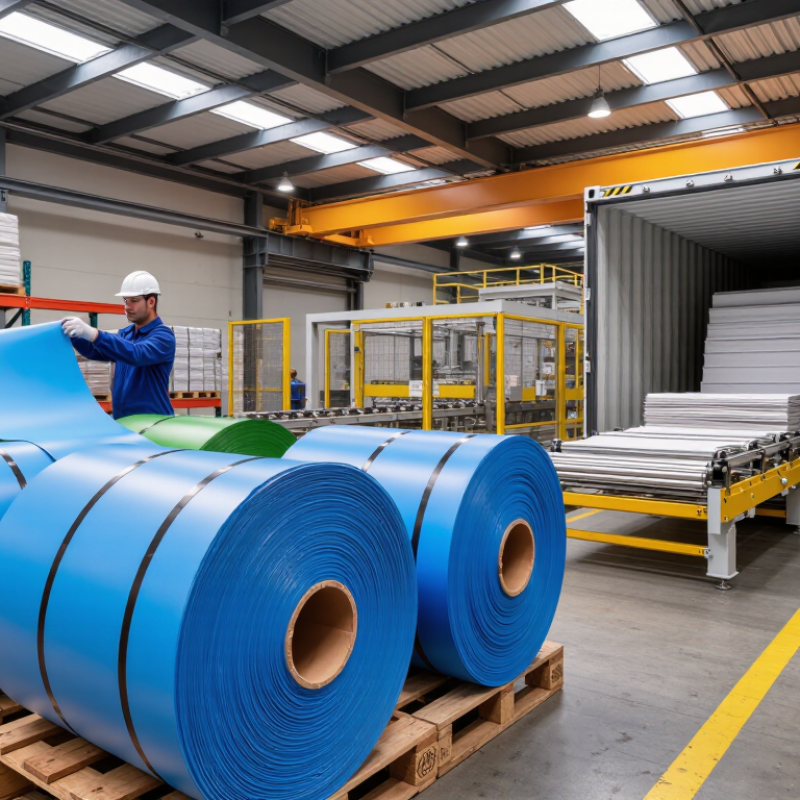
How to Choose PE Tarpaulin for Global Sourcing in 2026?

PE Tarpaulin Basics: Materials, Coatings, and Common Uses

PE tarpaulin is a woven polyethylene fabric designed for practical outdoor protection. The woven strips provide strength, while laminated layers improve water resistance. Lower-density polyethylene can reduce cost and weight. Higher-density polyethylene usually offers better tensile performance. However, thicker material is not automatically better. I have seen buyers select heavy sheets that become difficult to fold and transport. Check fabric weight, weave density, tear strength, and edge reinforcement together. These details often reveal more than thickness alone. A small sample test under rain and repeated folding can expose weak construction.

Coatings affect how the tarpaulin performs in real conditions. A polyethylene coating may improve waterproofing and protect the woven base from abrasion. UV stabilizers help reduce cracking after long sunlight exposure. Ask for test data covering water penetration, tensile strength, and UV aging. Test methods can differ, so unclear figures deserve careful review. PE tarpaulins commonly cover trucks, agricultural materials, temporary shelters, construction supplies, and outdoor equipment. For grain or animal-feed storage, confirm ventilation and contamination controls before purchasing. For global sourcing in 2026, specify roll dimensions, color tolerance, packaging, stitching, and inspection standards in writing. Some suppliers promise “waterproof” without defining pressure or exposure time. That wording needs challenge. Performance depends on climate, handling, and storage—not only the material name.

Define Your Sourcing Requirements and Performance Standards

How to Choose PE Tarpaulin for Global Sourcing in 2026?

Define your sourcing requirements before comparing prices. State the finished size, fabric weight, coating type, color, packing method, and expected service life. A 180 gsm cover may suit short-term storage, but demanding construction sites often require stronger fabric, reinforced hems, and rust-resistant eyelets. Measure twice.

Ask suppliers for test results, not general claims. Specify tensile and tear strength using ISO 1421 or ASTM D751 methods. For outdoor use, request UV and weathering data, such as testing aligned with ISO 4892-3. Check seam strength separately; weak stitching can defeat strong fabric.

I have seen samples pass visual inspection but fail after repeated folding. That risk deserves attention.

Sustainability should be measurable. The OECD Global Plastics Outlook reports 353 million tonnes of plastic waste generated in 2019, while only 9% was recycled. Therefore, ask about recycled PE content, traceability, contaminant controls, and practical end-of-life options. Verify claims through batch records and independent laboratory reports.

Also confirm applicable chemical and product-safety requirements in each destination market. Do not rely on one laboratory result. Humidity, salt air, handling, and regional sunlight can change performance. A detailed sourcing specification should include acceptable tolerances, inspection levels, sample approval, and corrective-action procedures. Cheap material is not cheap when replacement arrives late.

Compare Tarpaulin Specifications for Different Applications

How to Choose PE Tarpaulin for Global Sourcing in 2026?

PE tarpaulin specifications should match the application, not just the lowest quoted price. For agricultural covers, choose moderate GSM, strong woven fabric, UV treatment, and reliable waterproof lamination. A lighter sheet is easier to handle, but wind may expose its weakness. Construction sites usually need higher GSM, reinforced edges, and rust-resistant eyelets. Abrasion resistance matters around scaffolding and rough ground.

Transport covers require flexible material, tear resistance, and secure eyelet spacing. A tightly woven sheet can protect cargo during long journeys, but excessive weight increases handling costs. Outdoor storage needs UV stability and wide temperature tolerance. Ask suppliers for test data, including tensile strength, tear strength, water penetration, and UV aging. Photos are useful. Laboratory reports are better, although reports can still miss production inconsistencies.

Tips: Define the load, weather, service period, and sheet size before comparing offers. Request samples from the same production batch. Check GSM across several points, since uneven coating may reduce real performance. Confirm folded dimensions, packaging, and replacement terms. Do not overlook color; darker shades may absorb more heat. My practical mistake was comparing GSM alone. The heavier sheet performed poorly because its eyelets pulled out under wind. Specification balance matters more than one impressive number.

How to Choose PE Tarpaulin for Global Sourcing in 2026? - Compare Tarpaulin Specifications for Different Applications

Practical specification guide for selecting polyethylene tarpaulin by application, exposure level, and logistics requirements.

Typical commercial specification ranges. Final requirements should be confirmed by sample testing, intended use, local regulations, and shipment conditions.
Application Recommended Fabric Type Typical Weight Approx. Thickness Key Performance Targets Eyelet and Edge Requirements Recommended UV Protection Sourcing Considerations
Temporary rain and dust cover Woven PE fabric with laminated coating on both sides 70–110 g/m² Approx. 0.08–0.12 mm Water resistance, clean lamination, adequate tear resistance, low leakage at seams Aluminum or galvanized eyelets at approximately 1 m intervals; folded and reinforced perimeter Light to medium UV stabilization for short-term outdoor use Prioritize low packed volume, consistent color, and reliable carton or bale packing
Construction material and equipment cover Medium-duty woven PE with reinforced coating and heat-sealed hems 120–180 g/m² Approx. 0.12–0.18 mm Higher tear and puncture resistance, waterproof coating, moderate abrasion resistance Double-fold hem, corner patches, eyelets at approximately 50–100 cm intervals Medium UV stabilization when exposure may last several months Check seam strength, eyelet pull-out resistance, and resistance to cement dust or oily surfaces
Agricultural hay, grain, and feed cover Heavy-duty woven PE with weather-resistant double-sided lamination 160–220 g/m² Approx. 0.15–0.22 mm Waterproofing, tear resistance, dimensional stability, resistance to repeated folding Reinforced hems and corners; eyelets generally spaced 50–100 cm apart Medium to high UV stabilization for seasonal outdoor storage Confirm odor, cleanliness, and suitability for contact with agricultural products; avoid recycled content unless accepted
Truck, trailer, and container cover Heavy-duty woven PE with high-tenacity reinforcement and coated surface 180–260 g/m² Approx. 0.18–0.26 mm High tensile and tear strength, abrasion resistance, waterproofing, wind resistance Strong perimeter rope or webbing, reinforced corners, closely spaced eyelets for tie-downs High UV stabilization for frequent outdoor transport and storage Verify finished dimensions, shrinkage, tie-down layout, folding method, and packed weight per piece
Long-term outdoor storage Heavy-duty PE with stabilized woven scrim and robust laminated layers 220–300 g/m² Approx. 0.22–0.30 mm High tear and puncture resistance, stable coating, resistance to rain and sunlight Double or triple-fold hems, corner reinforcement, strong eyelets at approximately 50 cm intervals High UV stabilization; request documented accelerated-weathering or outdoor-exposure data Define expected service period, climate zone, wind exposure, and inspection or replacement policy
Groundsheet and camping shelter Flexible woven PE with smooth laminated surface and low water absorption 90–160 g/m² Approx. 0.10–0.16 mm Water resistance, foldability, low odor, adequate puncture resistance, easy cleaning Soft reinforced hems and rounded corners; eyelets positioned to reduce stress concentration Medium UV stabilization for periodic outdoor use Check surface feel, odor, color transfer, seam construction, and packed dimensions
Emergency relief and temporary shelter Medium- to heavy-duty woven PE designed for rapid deployment 150–250 g/m² Approx. 0.15–0.25 mm Waterproofing, tear resistance, quick installation, clear size identification Reinforced corners and perimeter; eyelets or webbing suitable for repeated tensioning Medium UV stabilization unless extended deployment is expected Specify flame performance, hygiene, labeling, language, packaging, and inspection requirements in advance
Fish pond and water containment cover Coated PE fabric selected for water exposure; use a liner-grade material when liquid containment is critical 200–350 g/m² Approx. 0.20–0.35 mm Water resistance, seam integrity, puncture resistance, resistance to prolonged moisture Minimize unsupported eyelet loads; use reinforced perimeter, patches, or webbing as appropriate High UV stabilization for continuous outdoor exposure Confirm whether the product is a cover or a containment liner; request chemical compatibility and migration data where relevant

Global Sourcing Specification Checklist

Material: Confirm polyethylene type, virgin or recycled content, fabric construction, and coating layers.
Dimensions: Define cut size, finished size, tolerance, shrinkage, and measurement method.
Performance: Request test results for mass per unit area, tensile strength, tear strength, puncture resistance, and water penetration.
Weathering: State expected outdoor duration, UV exposure, temperature range, and climate conditions.
Hardware: Specify eyelet material, internal diameter, spacing, corner patches, rope, webbing, and pull-out resistance.
Compliance: Check destination-market requirements for labeling, packaging, chemicals, flame performance, and product contact applications.

Evaluate Suppliers, Quality Control, and Certification

How to Choose PE Tarpaulin for Global Sourcing in 2026?

A reliable supplier should provide more than attractive prices and polished samples. Request a company profile, production capacity, export experience, and recent customer references. Check whether the factory controls weaving, coating, cutting, and eyelet installation. Outsourced steps can create hidden quality gaps. Ask for batch traceability from resin to finished rolls. A clear production record builds confidence.

Quality control should start with an approved sample and written specifications. Define fabric weight, thickness, tensile strength, tear strength, waterproof performance, UV resistance, and finished dimensions. Inspect color consistency and sealing around every grommet. Independent laboratories can verify key results before shipment. Factory inspections should include random sampling, not only the best cartons. Small defects become expensive after ocean delivery.

Certification requires careful judgment. ISO 9001 can indicate a documented management system, but it does not prove every tarp meets your requirements. Request current test reports, laboratory details, testing methods, and product identification. Certification needs depend on the destination, use, and public safety requirements. Do not accept copied certificates or unclear logos. A supplier may promise five-year UV life, yet climate and storage can change performance. That claim needs evidence. Even a thorough checklist can miss inconsistent coating on one production day. Keep retained samples and define corrective actions in the contract.

Calculate Total Costs, Shipping Risks, and Import Requirements

How to Choose PE Tarpaulin for Global Sourcing in 2026?

A low factory price rarely reflects the real buying cost. Calculate the landed cost before approving a sample. Include the product price, export packaging, inland transport, ocean freight, insurance, duties, customs fees, and local delivery. Add testing and inspection charges when required. A 180 GSM tarp may cost more than a 120 GSM tarp, but it can reduce replacement expenses in demanding applications. Compare equal sizes, GSM, coating quality, hem strength, and eyelet spacing.

Shipping risks deserve practical attention. Folded tarpaulins can absorb moisture inside poorly sealed cartons. Request moisture-resistant packaging and clear carton markings. Confirm pallet dimensions before booking freight. Oversized cartons may increase charges through container space or dimensional weight.

In one sourcing project, I underestimated inner packaging volume. The final freight bill was higher than expected. That mistake still influences my packing checks.

Ask for loading photos and verify the container condition before sealing.

Import requirements vary by destination and product use. Prepare a commercial invoice, packing list, bill of lading, accurate HS classification, and origin information. Some markets may request material declarations, flame-related test reports, or chemical compliance documents. Never rely only on a supplier’s verbal assurance. Match every document with the actual specification. Check whether customs needs translated labels or importer registration. Leave time for inspection. Delays happen. A two-week buffer is often wiser than promising an exact arrival date.

FAQS

What details should I define before sourcing PE tarpaulins?

Specify finished size, fabric weight, coating type, color, packing method, and expected service life. Measure twice. A stronger cover may suit construction sites, while lighter material may suit short-term storage. Include tolerances, inspection levels, and sample approval rules.

How can I verify tarpaulin performance?

Request test results for tensile strength, tear strength, waterproofing, UV resistance, and weathering. Ask for laboratory details and testing methods. Check seam strength separately. Strong fabric cannot fix weak stitching. Repeated folding may expose problems that visual checks miss.

What should I inspect on an approved sample?

Inspect dimensions, fabric weight, thickness, color consistency, hem strength, stitching, and eyelet sealing. Look closely. Check several areas, not just the center. Retain an approved sample for later comparison.

How can I evaluate a supplier’s production capability?

Request company information, production capacity, export experience, and recent references. Confirm which processes happen in-house. Weaving, coating, cutting, and eyelet installation can create separate quality risks. Ask for batch records from raw material to finished rolls.

Are certificates enough to prove product quality?

No. A management certificate does not prove every shipment meets your specification. Request current product test reports, laboratory details, and clear product identification. Do not accept copied documents or unclear symbols.

How should I assess recycled material claims?

Ask about recycled content, material traceability, contaminant controls, and realistic end-of-life options. Verify claims through batch records and independent testing. The claim may sound convincing. Evidence matters more.

What costs belong in the total sourcing calculation?

Include product price, packaging, inland transport, freight, insurance, duties, customs fees, delivery, testing, and inspection. Compare equal sizes and specifications. A heavier tarp may cost more but reduce replacement expenses. Cheap material can become expensive later.

How can I reduce packaging and shipping problems?

Request moisture-resistant cartons, clear markings, suitable pallet dimensions, and loading photographs. Check the container before sealing. Poor packaging can trap moisture inside folded tarpaulins. I once underestimated inner packaging volume. That mistake still affects my checks.

Which import documents may be necessary?

Prepare an accurate commercial invoice, packing list, transport document, origin information, and correct customs classification. Some destinations may require material declarations, safety reports, translated labels, or importer registration. Match every document with the actual goods. Leave a time buffer.

Conclusion

Choosing the right Pe Tarpaulin for global sourcing in 2026 requires more than comparing prices. Buyers should first understand the material, weaving structure, lamination, coating, and common uses, then define performance requirements such as waterproofing, tear resistance, UV protection, weight, size, and service life. Specifications should be matched to the application, whether for agriculture, construction, transportation, storage, or temporary protection.

A reliable sourcing process also includes evaluating supplier experience, production capacity, quality-control procedures, testing methods, and relevant certifications. Buyers should request samples, verify dimensions and material consistency, and establish clear inspection standards before placing an order. Finally, the total cost should include manufacturing, packaging, shipping, insurance, customs duties, taxes, and possible delays caused by weather or port congestion. Reviewing import requirements and preparing contingency plans can help reduce risks and ensure that the selected tarpaulin delivers consistent value throughout its intended service life.


Liam

Liam

Liam is a dedicated marketing professional with a profound expertise in the industry, where he excels at highlighting the unique advantages of our core products. With a keen understanding of market trends and consumer needs, Liam frequently updates our company’s professional blog, providing......