
Military Tarpaulin purchasing is not a simple choice of fabric and color. A sheet that looks sturdy in a showroom may crack after repeated folding, leak at a poorly finished seam, or fade under intense sunlight. Global buyers need to compare measurable specifications, not rely on broad claims such as “heavy duty.” Check fabric weight, coating type, seam construction, reinforced corners, eyelet spacing, and the supplier’s stated test methods. Ask how samples were tested, and request details that can be checked against the production order. Small omissions matter.
For transparency, the expert voice below is fictional, and its quotation is an editorial line rather than a verified statement from a real person. “A tarp earns trust at its weakest seam,” says fictional procurement adviser Daniel Mercer. That is the practical question behind these ten buying tips: will the product perform in the conditions your team actually faces? Compare UV exposure, rain, abrasion, storage, and expected handling. Confirm dimensions and tolerances in writing. Review packaging and inspection plans before shipment. Not every buyer needs the thickest option; extra weight can complicate transport and deployment. Buyers can still miss details, even with a careful checklist. Use the sections ahead to weigh durability against cost, clarify supplier evidence, and identify trade-offs before committing to a large order.
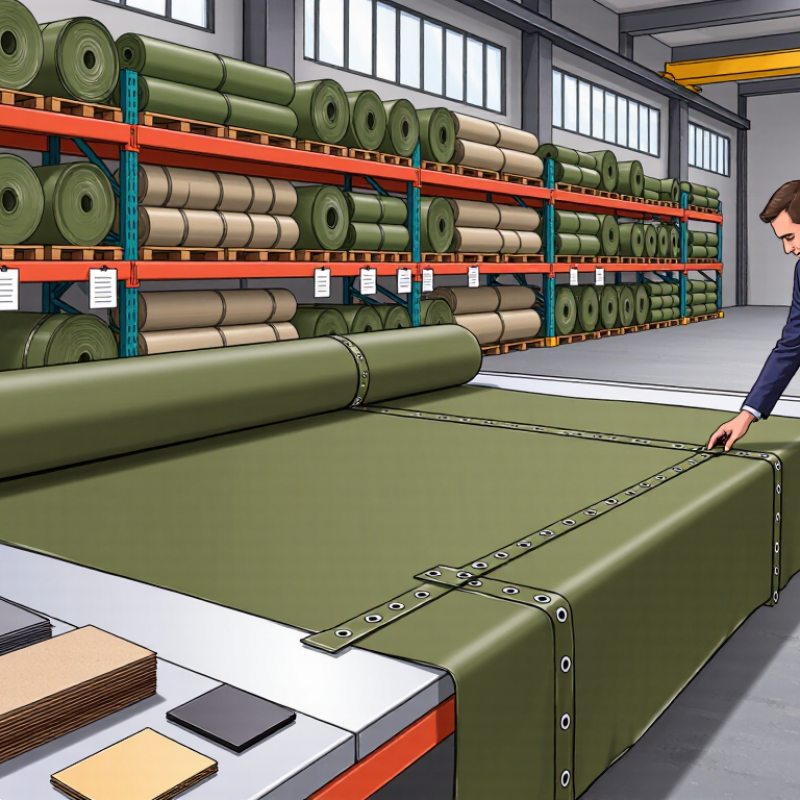
Start with the job, not the fabric name. A tarp covering parked equipment needs different protection from one used as a groundsheet or temporary shelter. Write down what it must shield, how long it will stay deployed, and how often crews will fold or move it. Small details matter: sharp corners can abrade fabric, while standing water can stress seams.
Then map the operating environment. Record expected sun exposure, rain, wind, temperature swings, dust, and salt spray. NOAA’s 2024 Billion-Dollar Weather and Climate Disasters report counted 27 U.S. disasters costing at least $1 billion each. That figure is not a tarp specification; it shows why local hazard records belong in procurement planning. The World Meteorological Organization’s State of the Global Climate 2024 reported global average temperatures about 1.55°C above the 1850–1900 baseline. Broad climate averages cannot replace site-level measurements.
Match construction to actual exposure. Prolonged sunlight calls for verified UV-resistance data; repeated handling makes tear and abrasion performance important. For wet sites, check seam construction and whether the stated rating means waterproof or merely water-resistant. Ask suppliers for test methods and conditions, not just claims. One limitation is easy to overlook: laboratory results may not reflect years of folding, dirt, and rough ground. A short field trial can reveal problems before large-scale purchasing.
For a military-grade tarpaulin, compare the base fabric, coating, and finished weight—not just the material name. Textile Exchange’s Materials Market Report 2024 estimates that polyester represented 57% of global fiber production in 2023. Its widespread use makes it easy to source, but it does not guarantee abrasion resistance or long outdoor life. Ask for fabric weight, yarn specification, coating type, and test results for the finished tarp. For coated fabrics, ASTM D751 provides relevant test methods; ISO 811 measures resistance to water penetration. Small details matter. Check that test reports identify the method and sample construction, not merely a fabric category.
Inspect seams, hems, and stress points closely. Reinforced hems should hold their shape, while patches around tie-down points should spread pulling force instead of concentrating it at a small eyelet. Ask how stitching and seam sealing perform after repeated folding and exposure to moisture. Request UV-aging and tear-strength results where long field exposure is expected. A heavy fabric can still fail at a weak corner. I have seen buyers focus on thickness and overlook the hardware spacing; that is an easy mistake to repeat. Compare samples under the same test conditions, and record any gaps between the report and the delivered construction.
A military tarpaulin can look heavy and still leak through its seams during wind-driven rain. Ask suppliers for test reports that identify the fabric, coating, sample size, and test method. A result without those details is hard to compare. Check water resistance under hydrostatic pressure, then ask how seams and reinforced corners were assessed. They often fail before the main panel does.
Weather resistance is not one number. Request evidence for UV exposure, abrasion, tear strength, and performance across the temperatures your shipment will face. Cold-weather buyers should ask whether the material stays flexible after conditioning; hot, sunny sites need clear information about coating degradation. Standards vary by market and application, so confirm the test method and acceptance limits in writing rather than relying on a vague “military grade” claim. Very important.
If possible, inspect a production sample and compare its weight, stitching, eyelets, and finish with the report. Ask whether testing covers the finished tarp or only a fabric swatch. That difference matters. A swatch cannot reveal water entering around a grommet or seam. Reports can also become outdated after a coating or supplier change, so request the test date and current production details. Even careful checks leave some uncertainty; real exposure, folding, and storage may reveal weaknesses that a laboratory test misses.
| # | Buying Tip | What to Verify | Relevant Test or Standard | Procurement Check |
|---|---|---|---|---|
| 1 | Specify the intended operating environment | Expected rain, wind, sun exposure, temperature range, duration of deployment, and whether the tarp will cover equipment or form part of a shelter. | There is no single universal military-tarpaulin test; requirements depend on the application and contract. | Provide an operating profile and require the supplier to map each stated condition to a measurable test or documented design requirement. |
| 2 | Verify water resistance with a measured test | Hydrostatic resistance of the coated or laminated fabric, including the test result, specimen conditioning, and test method used. | ISO 811 measures resistance of textile fabrics to water penetration under hydrostatic pressure. | Set a buyer-defined minimum pressure appropriate to the use. Do not treat a “waterproof” label alone as test evidence. |
| 3 | Check rain repellency separately from water penetration | Surface wetting or water repellency, which is different from water passing through the fabric under pressure. | ISO 4920 evaluates resistance to surface wetting by a spray test. | Request the spray-test rating and acceptance level, and assess it alongside—not instead of—hydrostatic resistance. |
| 4 | Review tensile strength in both fabric directions | Breaking force in the warp and weft directions, reported with units and specimen details. | ISO 1421 covers tensile strength and elongation tests for rubber- or plastics-coated fabrics. | Specify minimum values for both directions based on tarp size, tie-down loads, and expected handling. |
| 5 | Assess tear resistance | Resistance to a tear growing from a cut or puncture; confirm the reported direction and test configuration. | ISO 4674-1 provides methods for determining tear resistance of rubber- or plastics-coated fabrics. | Set a minimum tear requirement and request results for both principal fabric directions where relevant. |
| 6 | Inspect seams, hems, and reinforcements | Seam construction, reinforcement patches, edge finishing, and strength of attachment points such as eyelets or webbing. | ASTM D751 includes test methods for coated fabrics; the buyer should identify the applicable method and specimen configuration. | Request separate evidence for fabric and finished-product construction. Include seam or attachment-point requirements in the purchase specification. |
| 7 | Confirm UV-weathering performance | Changes after specified UV and moisture exposure, such as cracking, brittleness, coating damage, or loss of strength. | ISO 4892-3 describes exposure of plastics to fluorescent UV lamps; applicability to a finished coated textile should be agreed with the test laboratory. | Define exposure conditions and post-exposure properties to be checked. Treat accelerated exposure results as comparative test data, not a guaranteed service-life prediction. |
| 8 | Check low-temperature flexibility where needed | Whether the coating or laminate remains flexible and free from visible cracking at the intended minimum operating temperature. | Use a suitable, documented low-temperature flexibility method agreed for the material; no single method applies to every tarp construction. | State the target temperature, conditioning time, bend or flex procedure, and pass criteria before ordering. |
| 9 | Validate flame-performance requirements | Flame spread or propagation behavior, along with the exact material, specimen orientation, and end-use covered by the test. | NFPA 701 addresses flame propagation of textiles and films; confirm that the test and edition are suitable for the intended application and jurisdiction. | Require a report for the offered construction and specify the required pass criteria. Do not assume flame performance from material descriptions alone. |
| 10 | Check hardware, documentation, and batch consistency | Eyelet or fitting material, corrosion protection, traceable lot identification, inspection records, and consistency between tested and delivered construction. | ISO 9227 specifies salt-spray corrosion tests for metallic materials; results are test-specific and do not directly predict service life. | Request material and batch records, define inspection sampling, and verify that reports identify the same fabric, coating, seams, and hardware as the quoted product. |
Note: Test standards describe methods; they do not automatically establish a suitable pass level for every application. Buyers should specify acceptance limits, test conditions, report requirements, and applicable standard editions in the procurement documents.
Customization should begin with the operating conditions, not a color chart. A tarp exposed to sharp equipment, standing water, or repeated folding needs different reinforcement from one used for temporary weather cover. Specify finished dimensions, fabric weight, seam construction, eyelet spacing, and repair options in writing. Request a sample with a reinforced corner and inspect it under tension. Small details matter.
Compliance needs its own checklist. Ask which material and test documents apply to the destination market and intended use; verify that reports match the exact fabric, coating, and production site. A certificate for a similar product is not enough. The World Bank’s Logistics Performance Index 2023 assessed 139 economies, highlighting logistics reliability as a practical supply-chain concern. Buyers should confirm lead times, inspection stages, and what happens when a shipment misses specification. Paperwork is not performance.
Supplier reliability is harder to judge from a polished catalog. UNCTAD’s Review of Maritime Transport 2024 notes that over 80% of world trade by volume moves by sea, making realistic shipping schedules important for global orders. Ask for production capacity, quality-control records, and evidence of corrective actions. I would also test one batch before committing to a large order. That adds time, admittedly. But skipping it can cost more.
When comparing military tarpaulins, look beyond the quoted price per sheet. A low unit cost can rise after reinforced hems, eyelets, UV treatment, or custom dimensions are added. Ask suppliers to quote the same fabric weight, finished size, coating, seam construction, and accessories. That detail is easy to miss. Compare the delivered cost, including packing, freight, insurance, and applicable import charges. Request carton dimensions and gross weight; bulky folded sheets may cost more to ship than their scale weight suggests. Not just price. A spreadsheet helps, but only when every quote uses matching specifications.
Shipping time also affects value. Confirm production lead time separately from transit time, and ask how delays or split shipments are handled. A cheaper offer arriving three weeks late may not suit a project with a fixed deployment window. Get the shipping method and tracking arrangements in writing. After-sales support deserves equal scrutiny. Ask who handles defects, what evidence is needed, and whether replacement panels or repair materials are available. Clarify response times and warranty coverage before paying. Broad warranty language can sound reassuring, while the actual claim process remains unclear. Worth checking. Request the steps for filing a claim, and keep inspection photos when the goods arrive.
Indicative shipping transit-time benchmarks by mode
The bars show midpoints of broad planning ranges: air freight 5–10 days, rail freight 15–25 days, and ocean freight 25–45 days. Actual transit times vary by route, carrier, customs clearance, and other conditions. Compare freight, duties, insurance, and delivery costs—not just the product price—and confirm warranty terms, replacement procedures, and response times before ordering.
Start with what it must protect, how long it will stay deployed, and how often it will be moved. Sharp corners can wear fabric quickly.
Note sunlight, rain, wind, temperature changes, dust, and salt spray. Local site conditions matter more than broad climate averages.
Ask for test reports covering UV exposure, abrasion, tear strength, water resistance, and temperature performance. Check the methods and test conditions.
No. Seams, corners, and eyelets can leak even when the main panel performs well. Ask how the finished tarp was tested.
Compare its weight, stitching, eyelets, and finish with the test report. Check reinforced corners under tension. Small defects can matter.
State finished dimensions, fabric weight, seam construction, eyelet spacing, and repair options. Match reinforcement to the expected handling and exposure.
Confirm that each report matches the exact fabric, coating, production site, and current product. Similar-product paperwork may not be enough.
Ask about capacity, quality checks, lead times, and corrective actions. Test one batch before placing a large order, though this takes extra time.
Not fully. Folding, dirt, rough ground, and storage can reveal weaknesses later. A short field trial is useful, but not perfect.
Choosing a Military Tarpaulin starts with understanding how and where it will be used. Consider the intended application, expected load, exposure to weather, and operating environment before comparing options. Then assess the material, fabric weight, coating, seams, hems, and reinforcement points to ensure the cover is suited to repeated handling and the demands of its use.
Check weather-resistance claims and relevant performance standards, and confirm that customization options meet your practical requirements. Evaluate the supplier’s reliability, communication, quality documentation, and ability to provide consistent products. Finally, compare the total cost rather than just the unit price, taking shipping, delivery schedules, maintenance, warranty terms, and after-sales support into account. A careful review of these factors helps global buyers select a durable, fit-for-purpose tarpaulin with fewer surprises.
