Direct factory supply of precision-extruded, double-laminated agricultural tarps, weed barriers, and protective fabric rolls engineered for severe weather resilience.
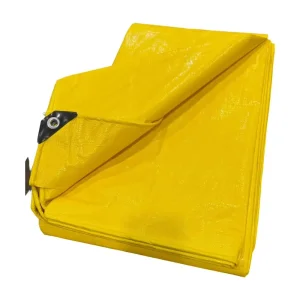
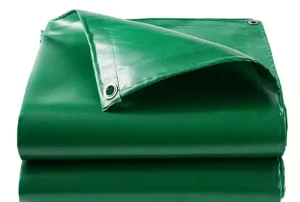
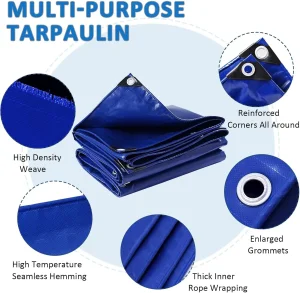
Modern agricultural productivity relies heavily on specialized polymer protection. From crop microclimate optimization to post-harvest grain preservation and temporary logistics shielding, agricultural tarpaulins represent a critical layer in global food security infrastructure.
The global demand for high-performance agricultural tarpaulins is expanding at an unprecedented rate, driven by climate volatility, intensive farming practices, and the imperative to minimize post-harvest losses. China has emerged as the premier global manufacturing hub, supplying over 65% of the world's woven polyethylene (PE) and polypropylene (PP) protective sheeting. Industrial manufacturing facilities in regions like Linyi, Shandong, integrate the entire production chain—from raw resin polymerization and tape extrusion to high-speed jet weaving and extrusion lamination.
Agricultural applications require precise material selection based on environmental stress vectors. High-Density Polyethylene (HDPE) tapes laminated with Low-Density Polyethylene (LDPE) provide optimal weight-to-tensile ratio, flexibility in sub-zero temperatures, and cost-efficiency. Polypropylene (PP) offers higher puncture resistance and tensile stiffness for structural covers, while Polyvinyl Chloride (PVC) coated fabrics serve heavy-duty requirements such as multi-year bio-gas digester covers and commercial truck side-curtains.
Our engineering guidelines specify strict quality benchmarks across molecular weight distribution, weaving density, tensile strength, and UV weathering kinetics.
| Parameter Category | Lightweight / General Duty | Medium Duty (Farm Standard) | Heavy-Duty Industrial / Ag | Testing & Compliance Protocol |
|---|---|---|---|---|
| Fabric Weight (GSM) | 60 GSM – 90 GSM | 100 GSM – 160 GSM | 180 GSM – 300+ GSM (Up to 900 GSM PVC) | ISO 3801 / ASTM D3776 |
| Weave Mesh Density | 6×6 to 8×8 sq. inch | 10×10 to 12×12 sq. inch | 14×14 to 16×16 sq. inch | ASTM D3775 Specification |
| Tensile Strength (Warp/Weft) | 450 / 400 N/5cm | 850 / 780 N/5cm | 1450 / 1350 N/5cm | ISO 13934-1 Grab Test Method |
| UV Weathering Life | 6 – 12 Months Exposure | 18 – 36 Months Exposure | 3 – 5+ Years Outdoor Guarantee | ASTM G154 (QUV Accelerated Test) |
| Hydrostatic Head Pressure | > 80 kPa (Waterproof) | > 150 kPa (High Pressure) | > 300 kPa (Extreme Containment) | ISO 811 Hydrostatic Test |
| Polymer Additive Dosing | 1.5% UV Masterbatch | 3% UV HALS + Anti-Oxidant | 5% UV HALS + Carbon Black / FR | In-house Rheology & XRF Inspection |
Unprotected polyethylene degrades rapidly under solar UV-A and UV-B radiation due to photo-oxidation of the polymer backbone. We incorporate Hindered Amine Light Stabilizers (HALS) and optical absorbers into the extrusion melt, neutralizing free radicals and extending field life in equatorial climates like the Middle East and Latin America.
Traditional stitching introduces needle punctures that compromise water resistance. Our facility uses advanced high-frequency heat sealing and hot-air welding technology. Seams are reinforced with embedded PP cordage and finished with heat-sealed seams that exceed the parent fabric's tensile limit.
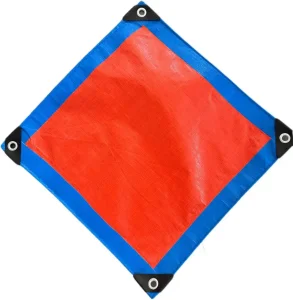
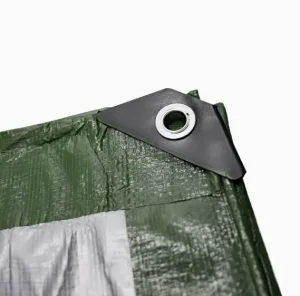
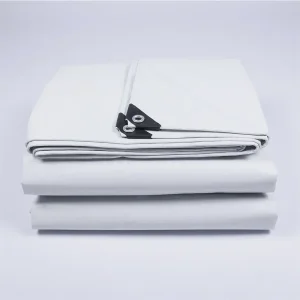
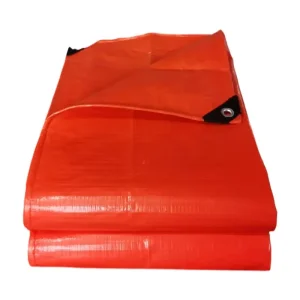
Stress concentrate at attachment points. High-capacity agricultural covers utilize molded poly-corner patches welded directly to double-folded hems. Heavy-duty aluminum or rust-proof brass grommets are mechanically riveted at tight pitches (50cm to 100cm) to withstand wind uplift loads.
Agricultural demands vary widely based on crop types, climate parameters, and regional farming infrastructure. Below are field-proven deployments engineered for global procurement partners.
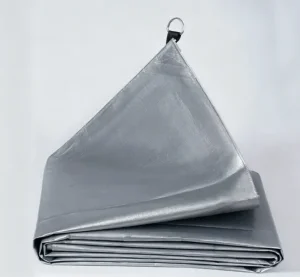
In high-irradiance regions with extreme ambient heat (exceeding 45°C), grain storage and forage haystacks require covers engineered with high thermal reflectance. Our double-sided Silver/Black and Silver/Green PE Tarpaulins bounce solar radiation off the outer silver layer, reducing internal temperature buildup under the tarp, while the opaque black inner layer blocks light penetration, preventing moisture condensation and microbial spoilage.
For dairy and livestock industries relying on ensilage, controlling oxygen ingress is essential. Our high-density 180–250 GSM heavy-duty silage tarps offer near-zero gas permeability. The high tensile strength prevents tear propagation during mechanical handling, ensuring airtight conditions for optimum lactic acid fermentation.
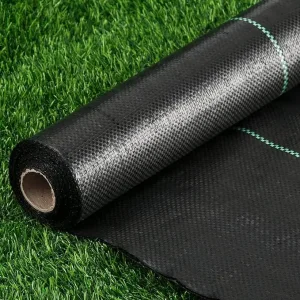
Commercial nurseries, vineyard beds, and orchard rows utilize our woven PP weed barrier fabrics. Designed with controlled water permeability and high opacity, these geotextiles suppress weed growth without chemicals while enabling soil aeration and irrigation penetration, reducing irrigation evaporation by up to 35%.
Transitioning beyond static sheeting, our high-strength woven PE layflat hoses provide low-cost, portable fluid transport for crop irrigation, farm dewatering, and liquid fertilizer transfer. Flexible coil storage drastically reduces freight volume compared to rigid PVC piping systems.
We partner directly with industrial distributors, government agricultural departments, international aid organizations, and retail chains to engineer tailored polymer protection systems.
From individual precut sheets packed in retail polybags with barcodes to master rolls up to 6 meters wide without welding (and wider via automated heat-sealing), we supply converter workshops and agricultural co-ops worldwide.
For enclosed agricultural storage, livestock housing curtains, and grain drying sheds, our formulations conform to international fire safety benchmarks including CPAI-84, DIN 4102 B1, and NFPA 701 standards.
Complete OEM service including custom surface logo flexographic printing up to 4 colors, high-durability color masterbatch matching (Pantone / RAL), customized grommet branding, and retail-ready display cartons.
As the polymer industry transitions toward circular economy models and high-efficiency material science, our factory R&D focuses on three major technological fronts:
Eliminating composite material waste by moving toward 100% Polyethylene mono-material architectures (matching yarn base, coating film, and hem cord). This allows seamless post-consumer mechanical recycling without secondary resin separation.
Developing functional masterbatches that selectively filter destructive infrared radiation while transmitting beneficial light wavelengths for greenhouse applications, promoting crop growth while preventing thermal stress.
Integrating nano-scale additives to increase puncture resistance by up to 40% while reducing total fabric GSM. This optimizes freight efficiency and lowers overall plastic consumption per hectare covered.
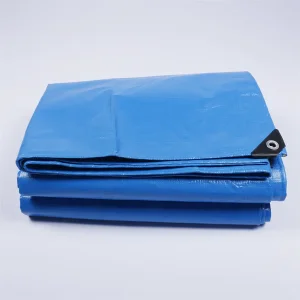
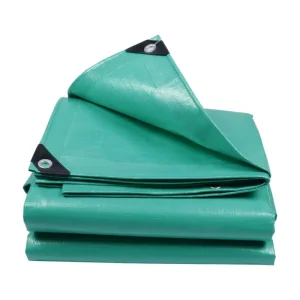
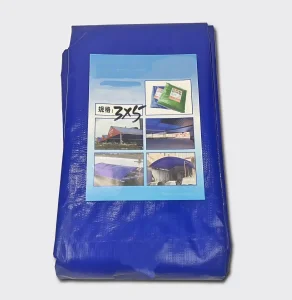
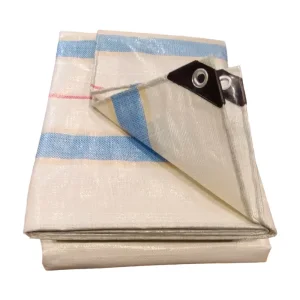
Explore our full line of clear, colored, woven PP, high-strength truck tarps, and multi-purpose covers direct from our Linyi production facility.
Direct technical guidance from our polymer manufacturing engineers to assist commercial buyers and importers.
Selection depends on mechanical stress and exposure duration. For short-term temporary crop covers (e.g., seasonal rain protection), 60–90 GSM with an 8x8 weave is cost-effective. For hardware distribution and general farm utility, 100–160 GSM (10x10 weave) offers optimal balance. Heavy-duty applications like hay stack tarps, grain bunker covers, and truck side-curtains require 180–300+ GSM PE (14x14 weave) or 500–900 GSM PVC-coated fabric. Our engineering team provides custom recommendations based on wind velocity, UV index, and handling frequency.
UV stabilization is integrated directly into the polymer matrix during filament extrusion. We formulate custom masterbatches using Hindered Amine Light Stabilizers (HALS) at concentrations ranging from 1.5% to 5% based on target climate conditions (e.g., 300 KLY for Middle East exposure). Every batch undergoes accelerated UV weathering testing (ASTM G154 / QUV chamber) to verify tensile retention after 2,000 hours of continuous UV and moisture cycles.
For standardized roll goods or stock sheet specifications, MOQ starts at 3 tons per color/specification, allowing mixed-container consolidation. A standard 20ft container accommodates approximately 11 to 13 tons of finished tarpaulins depending on packaging (bales vs. cartons), while a 40ft High Cube container loads between 25 and 28 tons. Automated high-density bale compression is available to maximize container volume and minimize sea freight costs per unit.
Yes. We produce fire-retardant (FR) formulations compliant with international standards including CPAI-84, DIN 4102-1 B1, and NFPA 701. Furthermore, all raw materials comply with EU REACH regulations, RoHS heavy-metal restrictions, and can be certified free of phthalates for food-contact grain drying sheets upon request.
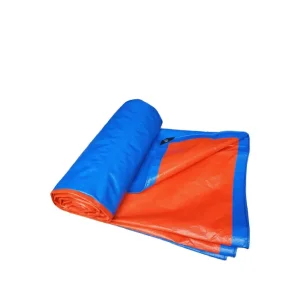
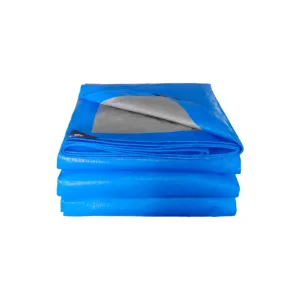
Standard production lead time ranges from 15 to 25 days following pre-production sample and artwork approval. For repeat orders of stocked color combinations (such as Blue/Orange, Green/Silver, or Double Silver), shipping lead times can be compressed to 10–12 days from our Linyi manufacturing plant.
Consult with our technical sales engineers to specify custom GSM, UV stabilization levels, size configurations, and shipping schedules for your distribution market.