Factory-direct technical solutions engineered for heavy-duty agricultural cover, field irrigation mainlines, and multi-season crop protection.
Modern commercial farming, grain storage, and macro-agricultural logistics require protective barriers capable of standing up to severe environmental stress, high solar radiation, and extreme hydrostatic forces.
Agricultural productivity is increasingly tied to post-harvest preservation and climate resilience. According to global agricultural logistics metrics, up to 25% of harvested grain and fodder is lost post-harvest due to moisture exposure, mold infestation, UV degradation, and improper storage infrastructure. As climate volatility intensifies globally—manifesting as unseasonal precipitation, intense solar radiation, and high wind velocities—the operational dependence on advanced, high-density polymer protection solutions has reached unprecedented levels.
China has established itself as the undisputed global manufacturing hub for polyolefin and polyvinyl protective textiles. By mastering raw polymer synthesis, tape extrusion, precision circular weaving, multi-layer co-extrusion coating, and automated thermal seam sealing, specialized Chinese manufacturers deliver superior protection solutions at scale. This technical whitepaper analyzes the engineering fundamentals, material science, procurement optimization, and regulatory compliance standards for agricultural buyers sourcing directly from a leading China Agriculture Tarpaulin Manufacturer.
How regional polymer clusters in Shandong Province (Linyi Hub) optimize production economics, raw material consistency, and rapid global distribution.
Top-tier Chinese tarpaulin factories operate fully integrated production cycles. Rather than purchasing semi-finished woven cloth or outsourcing lamination, operations begin directly with virgin High-Density Polyethylene (HDPE) and Linear Low-Density Polyethylene (LLDPE) resin pellets. In-house processing encompasses:
Situated in Shandong Province, Linyi is recognized as Asia's premier logistics and industrial plastic hub. Direct advantages include:
Decoupling price-per-ton from operational durability. How professional procurement directors evaluate GSM, tensile properties, and chemical stabilization.
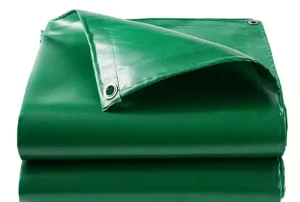
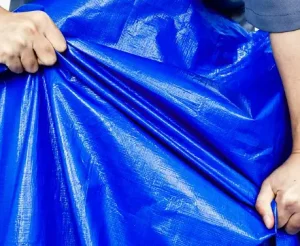
Selecting the correct fabric weight (Grammage per Square Meter - GSM) is critical to total cost of ownership (TCO). While lightweight 60–90 GSM tarps suit short-term seasonal covers, heavy-duty agricultural operations require 140–300 GSM textiles with high denier yarns (800D to 1500D) to withstand high mechanical stress and tear forces during windy conditions.
Polyolefins naturally degrade under solar Ultraviolet (UV-A and UV-B) radiation. Leading China manufacturers incorporate precise dosages ( Typically 1% to 5%) of HALS (Hindered Amine Light Stabilizers) and Carbon Black UV absorbers. This prevents chain scission and keeps covers flexible without embrittlement under intense tropical sunlight for 3 to 5 years.
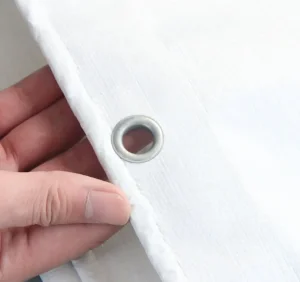
Failures in agricultural tarpaulins rarely occur in the center fabric; they start at perimeter eyelets under wind-load sheer stresses. Premium specifications feature ultrasonic-welded triangular corner reinforcements, double-stitched or hot-air welded PP rope hems, and anti-rust aluminum/brass eyelets spaced at 50cm intervals.
| Material Polymer Type | Standard Weight (GSM) | Tensile Strength (N/5cm) | Temperature Resistance | Primary Agricultural Application |
|---|---|---|---|---|
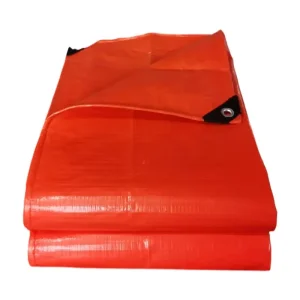
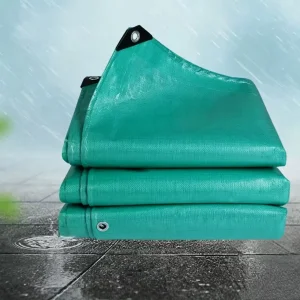
| PE (Polyethylene) Woven | 70 - 300 GSM | 600 / 550 (Warp/Weft) | -40°C to +80°C | Grain covers, Haystack protection, Temporary shade, Silage tarps |
| PP (Polypropylene) Woven | 90 - 220 GSM | 850 / 800 (Warp/Weft) | -20°C to +90°C | Heavy-duty weed barriers, Ground covers, Soil stabilization |
| PVC Coated Polyester | 400 - 900 GSM | 2500 / 2200 (Warp/Weft) | -30°C to +70°C | Biogas digester membranes, Long-term grain silos, Heavy transport curtains |
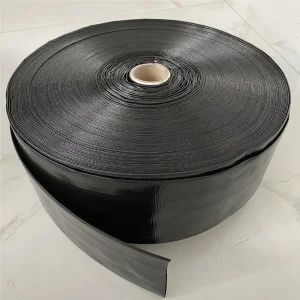
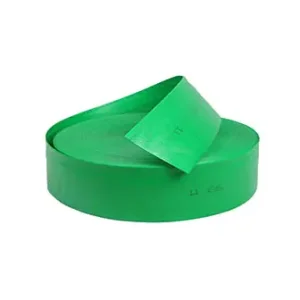
| PE Layflat Tube/Hose | 2" - 8" Diameter | Burst Pressure: 2 - 8 Bar | -10°C to +60°C | Agricultural irrigation mainlines, Water transfer, Dewatering pumps |
Ensuring international agricultural products pass stringent chemical safety, fire retardancy, and environmental durability regulations across major export markets.
Agricultural covers often come into direct or indirect contact with crops, livestock water, and soil ecosystems. Sourcing from a certified manufacturer ensures full adherence to international chemical compliance frameworks:
Top Chinese manufacturers validate every batch through rigorous laboratory testing regimes matching global ISO, ASTM, and DIN protocols:
Engineered textiles deployed across diverse agricultural microclimates—from desert irrigation to tropical monsoon grain drying.
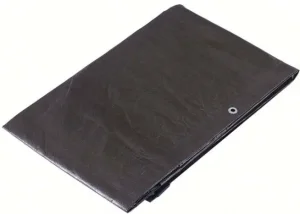
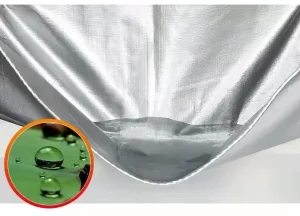
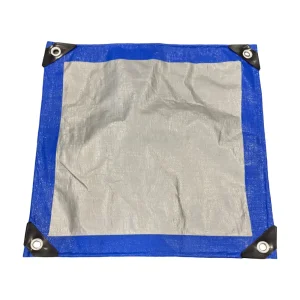
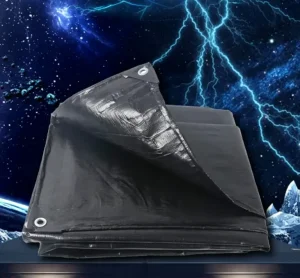
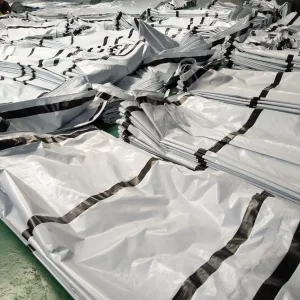
Oversized double-coated PE tarpaulins (e.g., Black/White or Silver/Black dual-tone) provide thermal management for bulk grain piles. White/Silver outer layers reflect solar heat to reduce interior condensation, while black inner layers block light penetration to eliminate mold spores.
Medium-weight (100–150 GSM) food-grade polyethylene tarpaulins serve as clean, durable ground sheets for drying coffee beans, cocoa, corn, and spices. Non-toxic coatings protect food safety while high abrasion resistance stands up to rake clearing.
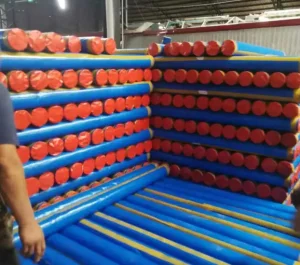
Black PE Layflat Hoses (2-inch to 8-inch diameter) provide low-cost, leakproof water conveyance from rivers, reservoirs, and pumps directly to drip irrigation manifolds. Built with embedded polyester yarn reinforcement to sustain 2–4 bar operational pressures.
Heavy-duty Polypropylene (PP) woven weed barrier fabrics stop weed growth by blocking photosynthetically active light while maintaining water and air permeability to nourish crop soil systems without requiring chemical herbicides.
Specially coated dual-color agricultural covers are installed over poultry, dairy, and livestock housing. Reflective silver coatings lower internal temperatures by 10–15°C in hot summer climates, directly improving animal welfare and farm productivity.
High-density, thick PE/PVC composite tarpaulins act as impermeable liners for fish and shrimp farming ponds, retention basins, and temporary liquid fertilizer storage tanks, preventing seepage into subsoil layers.
The shift toward circular economy polyolefins, smart thermal barrier coatings, and nano-reinforced tear resistance.
Traditional multi-material laminates present recycling challenges. Modern R&D focuses on 100% Polyethylene mono-material designs—where the woven base, lamination layers, and hem ropes share identical polymer chemistry, allowing 100% direct recycling at end-of-life.
Incorporating nano-scale ceramic and titanium dioxide IR-blocking additives into the exterior coating layer dramatically reduces radiant heat transfer, keeping agricultural stockpiles cool during peak summer heatwaves.
Transitioning from pure petro-chemical stabilizers to bio-derived organic antioxidants that deliver high weatherability while reducing the environmental carbon footprint of plastic manufacturing.
Technical and logistics answers directly from factory application engineers to assist your procurement evaluation.
Full product range ready for bulk container export, customized branding, and specialized global agricultural applications.
Connect directly with our engineering sales team to request custom GSM samples, technical spec sheets, factory audit reports, and container freight calculations.