Direct supply of precision-woven, multi-layered poly-tarpaulins and protective sheets from China's leading extrusion facilities.
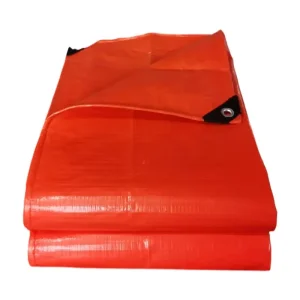
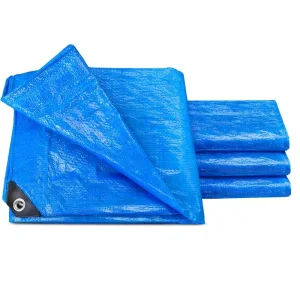
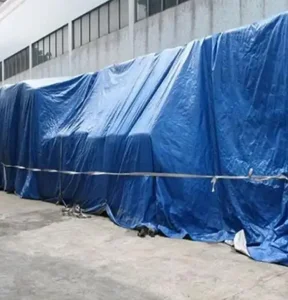
Analyzing the paradigm shift in modern civil engineering, flexible architectural enclosure systems, and the structural advantage of Chinese manufacturing hubs.
The contemporary global architectural landscape is experiencing an unprecedented acceleration toward pre-fabricated, modular, and climate-adaptive envelope systems. According to recent market analysis, the worldwide demand for architectural membranes, structural weatherproofing, and heavy-duty poly-fabric enclosures is expanding at a CAGR of 6.8%. Driven by stringent environmental legislation such as LEED (Leadership in Energy and Environmental Design) and BREEAM certifications, commercial construction contractors require high-performance poly-woven barrier systems that achieve dual objectives: extreme durability under adverse climatic stress and complete recyclability.
Modern mega-projects across North America, the Gulf Cooperation Council (GCC) region, and Western Europe no longer view temporary tarpaulins and building enclosures as low-cost consumables. Instead, they are recognized as critical safety, thermal, and environmental containment assets that prevent weather-induced project downtime, protect early-stage concrete curing, and seal urban scaffolding structures against dust and particulate emissions.
China stands at the epicenter of global technical textile production, maintaining an integrated supply chain cluster that accounts for over 55% of global PE, PP, and PVC architectural fabric output. Centered in industrial powerhouses such as Shandong Province (notably Linyi), the ecosystem integrates upstream petrochemical refining, high-tenacity polymer tape extrusion, circular weaving, double-side extrusion lamination, and automated thermal-welding finishing lines.
This vertical synthesis provides global buyers with distinct Information Gain and procurement resilience. By eliminating intermediate material processing hand-offs, Chinese factories control exact Grams per Square Meter (GSM) tolerances, optimize masterbatch UV dosage (up to 5% Hindered Amine Light Stabilizers), and maintain rigid tensile strength profiles at costs unmatchable by regional converters elsewhere.
Understanding the mechanical properties, extrusion physics, and chemical formulations driving modern building tarpaulins.
The structural backbone of professional architectural tarpaulins relies on high-tenacity HDPE slit-tape yarn. Extruded through precision flat dies, the polymer orientation provides exceptional tensile strength (up to 1450 N/5cm warp/weft) while keeping tear propagation minimal under severe wind loads.
Fabricated using high-speed circular looms at 8x8 to 14x14 mesh counts, the base scrim establishes structural stability for heavy civil engineering applications.
Both faces of the woven HDPE scrim undergo continuous molten LDPE extrusion lamination. This creates a non-porous 100% waterproof barrier with hydrostatic pressure resistance exceeding 100 kPa.
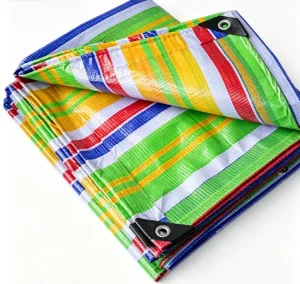
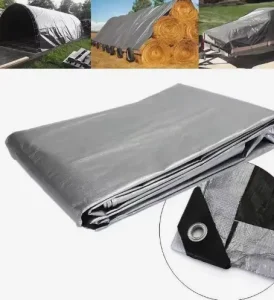
Advanced co-extrusion technology enables specialized dual-color configurations (such as Blue/Silver, Green/Silver, or Black/White), allowing active thermal reflection and solar glare mitigation on construction sites.
To resist harsh outdoor photodegradation, Chinese manufacturing formulators incorporate advanced HALS (Hindered Amine Light Stabilizers) and UV absorbers into the polymer matrix. This guarantees continuous operational integrity under high UV radiation environments (e.g., GCC or Australian climates).
Furthermore, fire-retardant (FR) formulations compliant with international standards DIN 4102 B1 and EN 13501-1 are integrated for urban scaffolding and event structure safety.
| Technical Parameter | PE Tarpaulin Standard | Heavy-Duty PE/PP Scaffolding | PVC Coated Architectural Membrane |
|---|---|---|---|
| Fabric Weight (GSM) | 60 g/m² – 140 g/m² | 150 g/m² – 300 g/m² | 450 g/m² – 900 g/m² |
| Base Mesh Count | 8x8 to 10x10 threads/sq.inch | 12x12 to 14x14 threads/sq.inch | 1000D x 1000D High Tenacity Polyester |
| Tensile Strength (ASTM D751) | 500 N / 600 N per 5cm | 1100 N / 1350 N per 5cm | 2500 N / 3000 N per 5cm |
| Tear Resistance (Trapezoid) | 80 N / 95 N | 160 N / 190 N | 350 N / 400 N |
| UV Stabilization Performance | 1% - 2% Masterbatch (1-2 Years) | 3% - 5% HALS (3-5 Years Accelerated) | Anti-UV + Anti-Mildew Topcoat (5-10 Years) |
| Temperature Tolerance | -20°C to +70°C | -30°C to +80°C | -40°C to +85°C |
From high-rise commercial developments to remote infrastructure projects, explore how heavy-duty poly-fabrics solve real-world engineering challenges.
Urban high-rise construction demands high-tensile safety sheeting around perimeter scaffolding. Flame-retardant, high-density PE grid tarpaulins shield active workers from extreme wind shear while protecting surrounding metropolitan traffic from falling tools and debris.
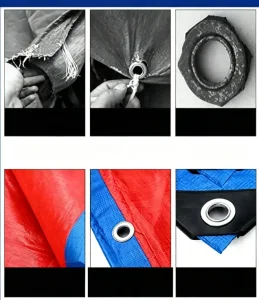
Reinforced heat-sealed eyelets placed at 50 cm intervals ensure rapid attachment to steel tube scaffolding systems under strict municipal safety codes.
Cold-weather civil engineering projects require controlled hydration kinetics for freshly poured concrete slabs, bridges, and foundation footings. Multi-layer insulated thermal tarps—combining virgin PE film with expanded closed-cell EPE foam—prevent thermal shock, sub-zero freezing, and moisture loss during critical 28-day curing cycles.
Modern architectural shade structures for public parks, resorts, and commercial plazas rely on micro-perforated UV grid mesh and high-density PE canopy fabrics. These engineered membranes block up to 95% of harmful UV radiation while permitting ambient air circulation to reduce heat build-up under large span structures.
Why Tier-1 international general contractors and procurement networks partner with established Chinese manufacturing plants.
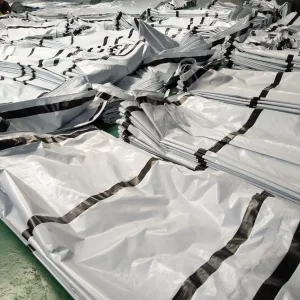
Leading Chinese tarpaulin factories operate fully integrated, end-to-end manufacturing workflows. From pneumatic resin dosing to automatic tension-controlled winders, every stage of extrusion and lamination is regulated by real-time sensor loops. Finished fabric rolls are routed to automatic high-frequency thermal welding lines that produce continuous 50-meter tarpaulin sheets with seamless, tear-proof rope-in-hem reinforcement.
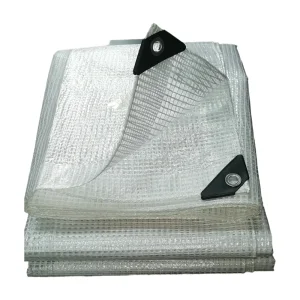
Triangular plastic corner patches and heavy-duty aluminum or brass grommets are automatically punched at high speeds, yielding pristine dimensional precision (±1cm tolerance) across bulk orders of tens of thousands of units.
Quality assurance complies with ISO 9001:2015 frameworks. On-site laboratory testing continuously measures key operational variables: hydrostatic head pressure, grab tensile strength, trapezoidal tear resistance, and colorfastness under accelerated Xenon-arc weatherometer testing.
Located near major ocean logistics hubs such as Qingdao and Lianyungang ports, factories leverage streamlined container loading systems (maximizing 40ft High Cube container payload capacities up to 26 metric tons), ensuring predictable delivery schedules to worldwide ports.
Direct technical answers addressing material selection, custom fabrication, compliance standards, and order logistics.
Explore heavy-duty, flame-retardant, and agricultural fabric specifications available for factory-direct dispatch.
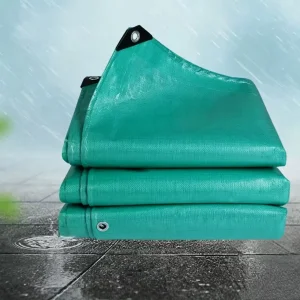
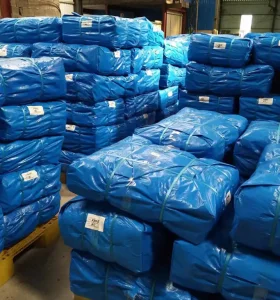
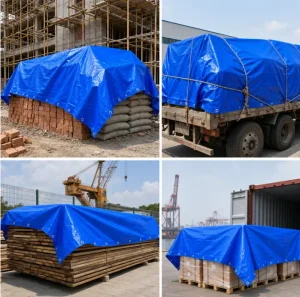
Consult with our structural polymer engineers to optimize GSM specifications, UV masterbatch ratios, and container loading efficiency for your destination port.