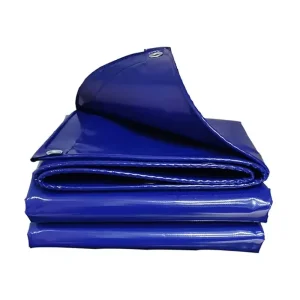
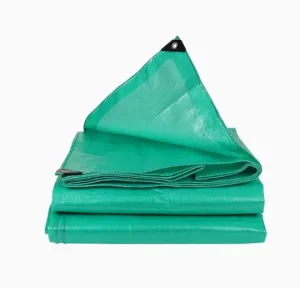
Engineered high-density polyethylene (HDPE), polypropylene (PP), and knife-coated PVC solutions designed for severe weather resistance, site enclosure, and logistics protection.
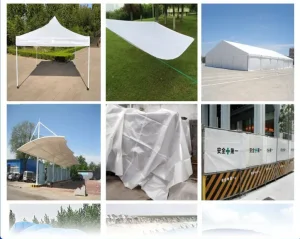
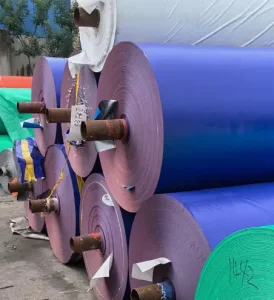
The global construction temporary protection sector has undergone a fundamental structural shift over the past decade. Modern infrastructure mega-projects—spanning high-rise commercial developments, transport interchanges, civil engineering works, and modular residential builds—demand high-performance protective membranes that exceed traditional tarpaulin performance. China's manufacturing ecosystems, led by advanced industrial hubs in Shandong (such as Linyi), represent the core supply baseline for over 65% of global woven polyethylene (PE), polypropylene (PP), and polyvinyl chloride (PVC) structural covers.
Driven by strict global safety regulations regarding scaffolding containment, weatherproofing, debris containment, and worker protection, commercial buyers no longer treat construction tarpaulins as low-cost commodities. Instead, key project directors, procurement officers, and distributor networks evaluate tarpaulin suppliers based on strict engineering benchmarks: tensile strength retention after prolonged solar radiation, hydrostatic head rating under continuous hydrostatic pressure, cold-crack resistance, tear propagation immunity, flame retardancy compliance, and environmental footprint sustainability.
Key Industry Takeaway: Selecting a qualified China construction tarpaulin manufacturer requires evaluating raw resin purity, extrusion drawing ratio controls, high-weave density (mesh count), and specialized double-sided low-density polyethylene (LDPE) or knife-coated PVC lamination chemistry rather than focusing purely on initial unit cost.
A deep breakdown of polymer behavior, structural mesh counts, UV stabilization chemistry, and lamination mechanics in industrial tarpaulin manufacturing.
HDPE woven tarpaulins represent the industry standard for lightweight to heavy-duty temporary site protection (60 GSM to 300 GSM). Synthesized via low-pressure polymerization of ethylene, virgin HDPE resin yields high tensile orientation when extruded into flat tapes. Co-extruded LDPE lamination on both sides creates a 100% moisture-impermeable barrier. Adding 3% to 5% Hindered Amine Light Stabilizers (HALS) prevents polymer chain scission caused by UV degradation in high-irradiance regions.
Polypropylene tarps offer higher flexural modulus and tensile resistance per unit weight compared to standard PE fabrics. PP woven substrates are ideal for high-stress applications such as structural concrete curing blankets, aggregate retention covers, and heavy equipment wraps. Due to PP's natural sensitivity to UV oxidation, advanced factory formulations blend specialized carbon black or titanium dioxide (TiO2) masterbatches to extend field durability in open construction sites.
For multi-year structural applications, high-rise enclosure curtains, and heavy truck side-curtains (400 GSM to 900 GSM), PVC knife-coating delivers maximum longevity. High-tenacity polyester scrim (500D to 1000D) is submerged in liquid PVC paste with plasticizers, flame retardants, and anti-fungal additives. High-frequency thermal welding produces completely seamless, structural joints capable of withstanding hurricane-force wind loads.
| Material Grade | Weight Range (GSM) | Tensile Strength (Warp/Weft) | Hydrostatic Head | UV Lifespan Expectancy | Primary Industrial Application |
|---|---|---|---|---|---|
| Light Utility PE | 60 - 90 GSM | 450 / 400 N/5cm | > 8,000 mm H2O | 6 - 12 Months | Dust covers, basic light material protection, temporary rain covers. |
| Standard Construction PE | 100 - 160 GSM | 750 / 700 N/5cm | > 12,000 mm H2O | 12 - 24 Months | Scaffolding enclosures, building weatherproofing, ground sheets. |
| Heavy Construction PE/PP | 180 - 300 GSM | 1400 / 1300 N/5cm | > 15,000 mm H2O | 24 - 36 Months | Concrete curing blankets, long-term aggregate covers, heavy machinery protection. |
| Structural Architectural PVC | 450 - 900 GSM | 2500 / 2300 N/5cm | > 25,000 mm H2O | 36 - 60+ Months | Acoustic perimeter barriers, structural enclosures, long-haul truck side-curtains. |
How high-performance tarpaulins solve critical structural, environmental, and thermal challenges on modern construction sites.
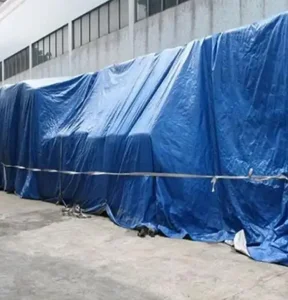
Unprotected construction sites face severe weather delays, structural wind loads, and rain damage. Engineered PE tarpaulin sheets (120 to 200 GSM) with reinforced webbing borders and spaced brass eyelets secure tightly to scaffolding structures. These enclosures shield interior trade work, maintain inner micro-climates during cold spells, and prevent high-altitude debris hazards.
Achieving optimal compressive strength in poured concrete requires careful moisture and temperature control. Insulated multi-layer tarpaulin systems—combining a durable silver-reflective outer PE woven tarp, inner closed-cell EPE foam core, and bottom moisture-retention film—prevent thermal shock, limit moisture loss, and accelerate hydration curing even in sub-zero winter environments.
Environmental regulations around urban remediation and sandblasting require complete containment of hazardous airborne particulates (lead paint dust, silica, asbestos). Flame-retardant (FR) anti-static treated PE and PVC covers form sealed negative-pressure containment zones, helping site operators comply with local environmental safety rules.
Rigorous testing standards ensuring industrial compliance across North American, European, and Middle Eastern markets.
North American buyers require compliance with ASTM D3786 (Mullen Bursting Strength), ASTM D5034/D5035 (Grab and Strip Tensile Breaking Strength), and ASTM D1922 (Tear Propagation Resistance). Industrial tarpaulins sourced for US federal or municipal projects typically demand certified testing data for these metrics.
European imports mandate strict compliance with EN 13501-1 (Fire classification of construction products) and DIN 4102-1 B1 (Flame Retardancy). Chemical safety requires compliance with EU REACH (SVHC) regulations, limiting heavy metals, phthalates (DEHP, DBP, BBP), and organotin compounds in plasticized tarpaulin goods.
To guarantee field lifespans in high-UV environments (such as the GCC region, Australia, and Sub-Saharan Africa), raw factory batches undergo accelerated Xenon-arc weatherometer testing according to ISO 4892-2. Samples are evaluated for tensile retention rate (minimum 80% strength retention after 2,000 continuous hours of exposure).
Customizing polymer formulations to meet local climate challenges across worldwide markets.
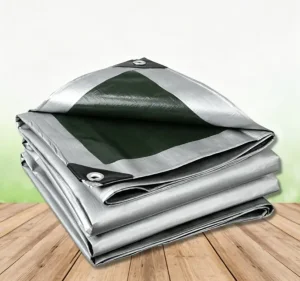
With summer temperatures topping 50°C and severe UV degradation, standard utility tarps can turn brittle within weeks. Localized solutions feature high-reflectivity dual-color silver/green or silver/white masterbatches containing thermal-barrier TiO2 additives. This setup drops surface radiant heat by 10°C to 15°C while protecting underlying materials and machinery.
Sub-zero temperatures render conventional low-cost plasticizers rigid, causing stress cracks during folding. Factories use specialized cold-crack resistant elastomer modifications (EVA plasticizers) that maintain flexural fatigue strength down to -40°C. These tarps are essential for winter building enclosures and temporary snow containment covers.
Heavy rain and high relative humidity create mold growth and hydrostatic failure risks. Multi-layer PE co-extrusion coated with anti-fungal biocides guarantees long-term mold resistance. At the same time, high hydrostatic pressure coatings (>20,000 mm H2O) prevent moisture bleed-through during heavy downpours.
How innovations in polymer science, circular recycling, and smart structural monitoring are shaping the future of construction protection.
Traditional tarpaulins reinforced with mixed polymers present recycling challenges at end-of-life. Leading Chinese manufacturers are pioneering 100% mono-material Polypropylene tarpaulins where the base scrim, coating layers, webbing reinforcement, and eyelet grommets are engineered from a single PP resin family. This allows complete post-construction mechanical recycling without manual separation.
Integrating nano-scale Titanium Dioxide (TiO2) photocatalytic top-coats allows outdoor tarpaulin structures to break down accumulated organic dirt, industrial smog, and airborne oil residues when exposed to natural sunlight. Rainwater then washes away the decomposed particulates, maintaining high optical reflectivity and aesthetic site appearance without manual cleaning.
Future heavy-duty architectural enclosures are integrating flexible printed conductive ribbons and micro-sensors directly into the tarpaulin substrate. These embedded networks monitor real-time wind shear loads, structural tension losses, fabric tear propagation, and internal ambient humidity levels—alerting site managers via IoT protocols before structural integrity is compromised.
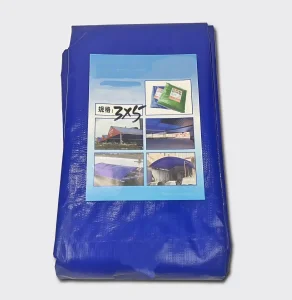
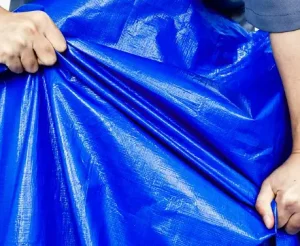
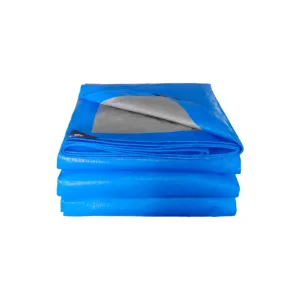
Explore ready-to-ship rolls, tailored sheet sizes, and multi-purpose protective products direct from our integrated manufacturing lines.
Clear technical insights from our manufacturing team to simplify your B2B supplier selection process.
For light debris containment and short-term enclosure (under 6 months), a 100 to 120 GSM PE tarp with an 8x8 or 10x10 mesh count provides a cost-effective solution. For heavy winter enclosures, high-wind coastal projects, or multi-year builds, specify a 180 to 250 GSM tarp with a 12x12 or 14x14 mesh count. This delivers grab tensile strengths exceeding 1,200 N/5cm, preventing eyelet tear-outs and wind blowouts under heavy loads.
PE lamination involves extruding liquid LDPE onto both sides of a woven HDPE fabric. This process creates a light, economical, and fully waterproof sheet ideal for temporary applications (60-300 GSM). PVC knife coating applies liquid PVC paste onto a woven polyester scrim using a precision blade, followed by heat curing. This creates a solid, heavy-duty membrane (450-900 GSM) with high abrasion resistance, 5+ year outdoor lifespans, and easy high-frequency welding options.
UV degradation occurs when solar ultraviolet radiation breaks polymer chains, causing brittleness and loss of tensile strength. Direct factories add Hindered Amine Light Stabilizers (HALS) alongside carbon black or titanium dioxide (TiO2) pigments during tape extrusion. Masterbatch dosages range from 1% (standard utility) to 5% (heavy-duty desert grade), guaranteeing 80%+ tensile strength retention after up to 36 months of field exposure.
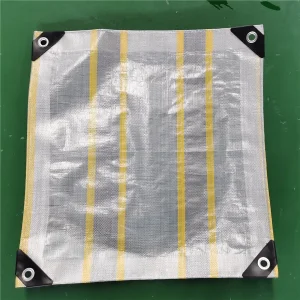
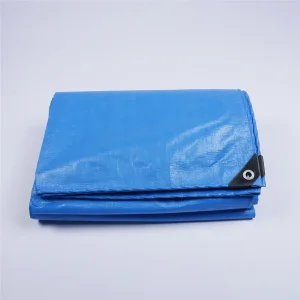
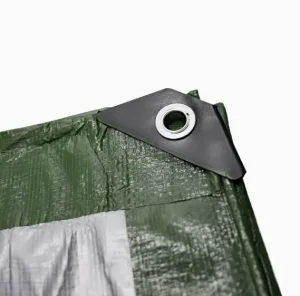
Finished tarpaulin sheets feature reinforced folded hems containing PP rope inserts (from 3mm to 6mm diameter) heat-sealed along all edges. Corner points feature double-layer rigid plastic patches to absorb high tension. Eyelet options include rust-proof aluminum, solid brass, or heavy-duty plastic grommets spaced at custom intervals (50 cm, 100 cm, or customer-specified pitches).
Standard quality assurance includes batch-specific mill test certificates covering real GSM weight, hydrostatic head pressure (mm H2O), warp/weft grab tensile strength, tear resistance, and eyelet pull-out force. Third-party pre-shipment inspections via SGS, Bureau Veritas (BV), or TÜV SÜD can also be arranged upon request.