Explore our top-tier protective covers, heavy-duty tarpaulins, and engineered woven products manufactured directly at our Linyi production facility.
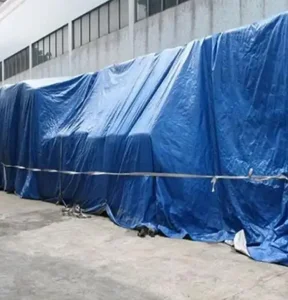
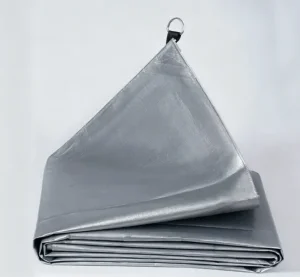
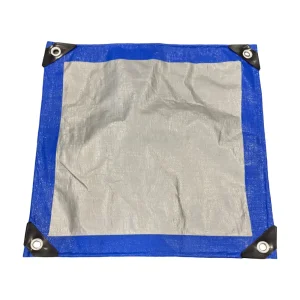
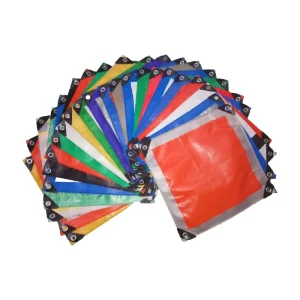
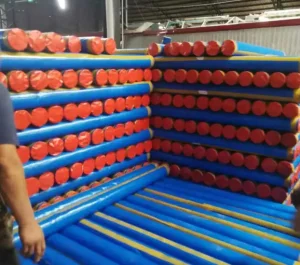
In an era dominated by synthetic polymers, natural cotton canvas tarps maintain an irreplaceable structural niche across global industrial, agricultural, and commercial supply chains.
The global industrial protective fabric market is experiencing a profound paradigm shift. While petroleum-derived synthetic sheeting—such as Polyethylene (PE) and Polyvinyl Chloride (PVC)—dominates high-volume short-term applications, high-density Cotton Canvas Tarps remain the benchmark for heavy-duty, breathable, and environmentally responsible protection. International procurement officers, logistics conglomerates, and government defense agencies increasingly prioritize natural duck cotton matrix materials due to their unique thermodynamic properties, moisture permeability, and superior resistance to friction degradation.
Unlike non-porous plastic films that trap ambient moisture and induce destructive sweat condensation under fluctuating thermal environments, organic cotton fibers dynamically absorb and release water vapor. This inherent micro-ventilation mechanism makes cotton canvas tarps indispensable for protecting rust-sensitive industrial machinery, kiln-dried timber, agricultural yields (such as tobacco, hay, and grains), and military-grade hardware. Furthermore, global ESG (Environmental, Social, and Governance) mandates are accelerating the transition toward biodegradable textiles, positioning cotton canvas as a premier choice for eco-conscious enterprises seeking to reduce microplastic contamination.
Woven cotton fibers permit internal heat and humidity to dissipate naturally, eliminating internal condensation build-up that causes corrosion, mold, and rot in metal and organic cargo.
Cotton canvas will not melt or fuse under extreme thermal friction or contact with hot equipment exhausts, offering structural integrity up to temperatures where plastics fail completely.
Derived from 100% natural plant cellulose, treated cotton canvas offers a reduced carbon footprint, minimal microplastic shed, and natural bio-degradation at end-of-life cycles.
Understanding yarn counts, Duck canvas numbers, and finish chemistry is essential for precision B2B procurement and long-term field performance.
At Linyi Xinshengyang Plastic Products Co., Ltd. (Star Tarpaulins), our cotton canvas manufacturing processes adhere strictly to international industrial textile standards. We utilize high-tenacity ring-spun cotton yarns, weaving single duck (single yarn per warp/weft) and double duck (plies of two threads twisted together) fabrics ranging from 10 oz/yd² to 24 oz/yd² finished weight.
| Canvas Grade / Number | Unfinished Weight (oz/yd²) | Finished Weight (oz/yd²) | Tensile Strength (Warp × Weft) | Primary Chemical Finish | Recommended Applications |
|---|---|---|---|---|---|
| #12 Single Duck | 10.0 oz | 15.0 oz - 16.0 oz | 140 lbs × 120 lbs | Wax / Paraffin Impregnated | General machinery covers, drop cloths, light agricultural tarps |
| #10 Single Duck | 12.0 oz | 17.5 oz - 18.5 oz | 180 lbs × 150 lbs | Silicone Hydrophobic Coating | Flatbed truck tarps, construction site wind barriers, equipment covers |
| #8 Double Duck | 18.0 oz | 24.0 oz - 26.0 oz | 260 lbs × 220 lbs | Dual Wax + Fire Retardant (CPAI-84) | Heavy military tentage, industrial welding curtains, refinery covers |
| #4 Heavy Army Duck | 24.0 oz | 30.0 oz - 32.0 oz | 340 lbs × 300 lbs | Organosilicon Dry-Finish | Extreme weather maritime tarps, oilfield containment, disaster relief shelters |
Raw cotton canvas absorb moisture rapidly. To achieve outdoor utility, specialized chemical finishing must be applied during factory processing:
Combining raw material sovereignty, automated weaving technology, and direct export logistics from Linyi, Shandong.
China produces over 30% of the world's raw cotton and stands as the world's leading industrial textile powerhouse. Located in the hub of Shandong Province—the heartland of Chinese weaving and synthetic polymer manufacturing—Linyi Xinshengyang Plastic Products Co., Ltd. (Star Tarpaulins) leverages an unmatchable ecosystem advantage. Operating from a 30,000 m² state-of-the-art facility in Wanggou Industrial Park, our plant manages an annual output exceeding 20,000 metric tons of protective woven fabrics.
Direct sourcing of premium long-staple cotton yarn coupled with automated heavy shuttleless looms ensures uniform warp/weft tension, zero weaving defects, and ultra-high seam shear strength.
In-house continuous immersion coating lines ensure complete wax and silicone penetration across 6-meter seamless widths, preventing edge peeling or inconsistent waterproofing spots.
Proximity to Qingdao and Lianyungang international deep-water ports allows for rapid container consolidation, lower inland freight costs, and predictable 15-25 day manufacturing lead times.
Data-backed performance parameters driving bulk procurement confidence across 40+ countries.
Tailored cotton canvas configurations engineered to withstand demanding global climate conditions.
Protects expensive CNC machinery, turbines, and steel coils during long-distance intermodal transit. Prevents surface pitting caused by trapped humidity under non-breathable plastic sheets.
Used extensively for military relief shelters, field hospitals, and tactical gear covers. High tear strength and sound-dampening qualities create comfortable indoor living environments.
Ideal for tobacco leaf curing, cotton bale wrapping, and hay storage. The moisture-regulating properties safeguard organic harvests against internal thermal combustion and mold growth.
Silicon-treated heavy canvas is the core structural fabric for safari tents, yurt covers, and luxury glamping structures, delivering aesthetic warmth alongside weather protection.
Heavy canvas drop cloths absorb paint spills without bleeding through to flooring, while reinforced canvas scaffold screens shield workers from high winds and dust without blowing away.
Resists degradation from harsh salt spray and atmospheric marine conditions. Reinforced brass grommets and double-stitched webbing hems withstand intense coastal wind shear.
Every finished tarpaulin undergoes strict physical testing to ensure strict compliance with client purchase specifications.
Quality reliability is the foundation of long-term B2B procurement relationships. At Star Tarpaulins, our quality management system enforces rigorous step-by-step inspections directly on the production line:
Incoming cotton yarn batches are tested for staple length, twist count, and breaking strength before entering the weaving looms.
Optical laser sensors inspect woven duck gray fabric for skipped threads, uneven warp tension, or weave density discrepancies.
Wax and silicone fluid viscosity, temperature, and immersion speed are automatically monitored to guarantee even chemical pickup.
Finished fabric samples are subjected to water column pressure meters (ISO 811) to confirm water-repellency ratings.
Automated CNC knife cutters cut canvas sheets to precise dimensional tolerances, preventing manual cutting variations.
Hems are folded over rot-resistant polyester threads with flat-fell seams, delivering maximal seam tear resistance.
Heavy-duty brass or stainless steel eyelets installed with triangular corner patches undergo pneumatic pull-out testing.
Random container sampling (AQL 2.5 standard) ensures size, weight, artwork, barcode, and packing criteria are 100% fulfilled.
Get authoritative answers directly from our senior textile engineering and export sales teams.
While PE and PVC tarpaulins are lightweight and cost-effective for short-term waterproofing, they trap moisture underneath, leading to severe condensation damage on metal or agricultural goods. Cotton canvas is naturally breathable, highly abrasion-resistant, tear-resistant, heat-tolerant, and environmentally biodegradable.
Wax-treated canvas utilizes paraffin wax for water repellency, adding weight and giving the fabric a slightly stiff, waxy feel. Silicone-treated canvas uses dry organosilicon polymers that coat fibers without clogging pores, yielding a fabric that is 100% dry to touch, lightweight, non-staining, odorless, and highly water-repellent.
Yes! As a direct manufacturer, we offer complete OEM/ODM customization. You can specify unfinished canvas weights (10 oz to 24 oz), finished treatments (Wax, Silicone, Fire Retardant), sheet sizes (from 2m×3m to 20m×30m), reinforced eyelet spacing (50cm or 100cm pitch), and custom brand labeling.
For custom canvas specifications, our minimum order quantity starts from 3 metric tons per specification or a mixed 20ft container load. Production lead time is generally 15 to 25 days following pre-production sample approval and deposit confirmation.
Cotton canvas excels in sub-zero and arctic weather conditions. Unlike PVC tarps that become stiff, brittle, and prone to cracking under extreme freezing, cotton canvas retains its flexible drape and mechanical tear resistance down to -40°C.
We regularly partner with SGS, Bureau Veritas (BV), and TÜV for independent product verification. We can supply material test reports for hydrostatic pressure, warp/weft tensile strength, flame retardancy (CPAI-84, NFPA 701), Certificate of Origin, and ISO 9001 compliance documentation.
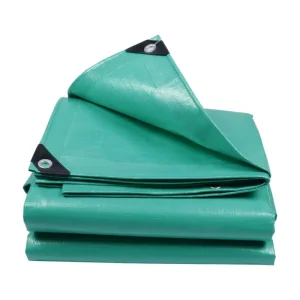
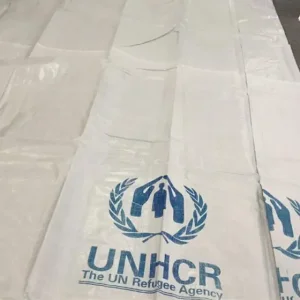
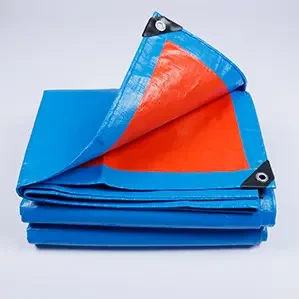
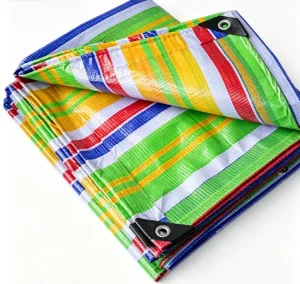
Browse our extended product lines tailored for construction, agriculture, transport, and commercial shade structures.
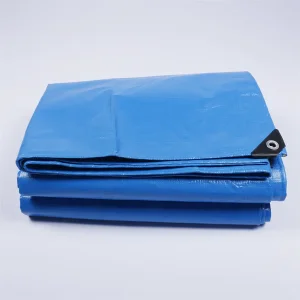
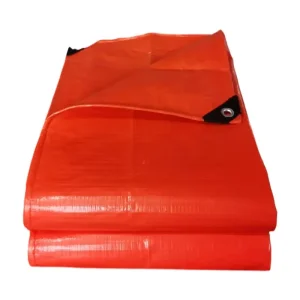
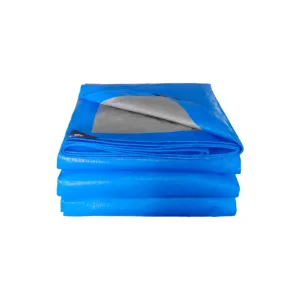
Partner with Linyi's leading tarpaulin manufacturer. Our engineering staff is ready to assist with custom size drawings, GSM formulation, and container loading optimization.