Direct factory production lines specializing in high-strength, waterproof, and UV-stabilized heavy-duty tarpaulin solutions.
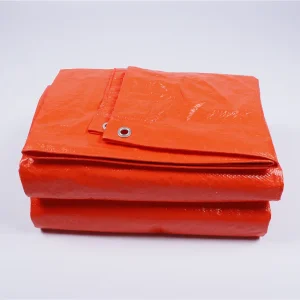
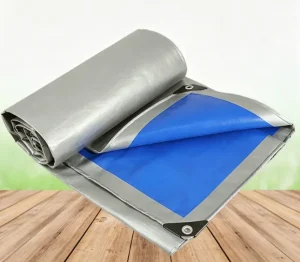
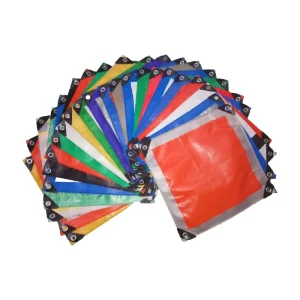
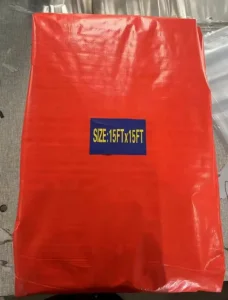
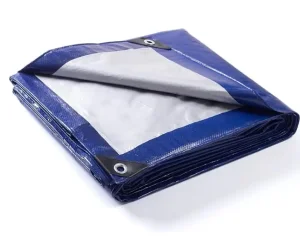
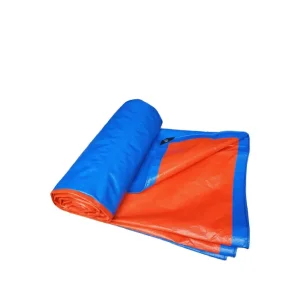
The global industrial protective fabric market is undergoing a structural transition. Sourcing leaders in logistics, civil infrastructure, and commercial agriculture are increasingly favoring custom Polyethylene (PE) tarpaulins over traditional Polyvinyl Chloride (PVC) and standard Polypropylene (PP) woven materials. Driven by strict international environmental mandates (such as EU REACH regulations on phthalates and plasticizers) and an imperative for optimized weight-to-strength ratios, PE tarpaulins have established themselves as the industry benchmark for heavy-duty, scalable, and weather-resistant surface protection.
Custom PE tarpaulin manufacturing engineered in China commands over 65% of the global commercial supply chain. This dominant market positioning stems from advanced high-density polyethylene (HDPE) tape extrusion control, optimized low-density polyethylene (LDPE) double-sided lamination technology, and unrivaled upstream raw-material integration. B2B procurement professionals no longer select protective tarps purely on price-per-square-meter; instead, purchasing decisions are evaluated through comprehensive total-cost-of-ownership models accounting for tensile fatigue, UV degradation indexes, cold-crack thresholds, and end-of-life recyclability.
Technical Gain Insight: Modern 3-layer co-extruded PE tarpaulins deliver equivalent tensile yield limits to standard 450 GSM PVC tarps while weighing up to 60% less (e.g., at 180–220 GSM). This weight reduction slashes container transport freight overheads and speeds up manual deployment times across civil engineering jobsites.
| Material Benchmark | Custom PE Tarpaulin (HDPE/LDPE) | Standard PVC Tarpaulin | Polypropylene (PP) Tarp |
|---|---|---|---|
| Areal Density Range | 60 GSM to 300 GSM | 400 GSM to 900 GSM | 70 GSM to 220 GSM |
| Hydrostatic Head Rating | > 80 kPa (100% Waterproof) | > 120 kPa (Extreme Pressure) | < 40 kPa (Permeable over time) |
| Low-Temp Cold Crack | -40°C Rating (Exceeds Sub-zero requirements) | -15°C to -20°C (Stiffens under frost) | -10°C (Prone to brittle stress fracture) |
| Eco-Compliance / Recycling | 100% Recyclable Olefin (Phthalate-Free) | Contains Plasticizers (Tricky Disposal) | Recyclable (Degrades faster under UV) |
| Chemical / Acid Resistance | Exceptional (Resists Alkalis & Acids) | Moderate (Degrades under oil contact) | Moderate |
How Linyi's world-class manufacturing hub delivers structural lead-time compression and extreme quality control.
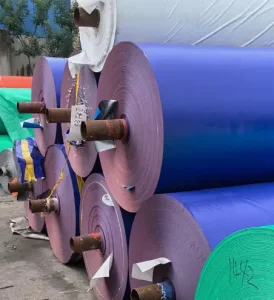
Leading OEM factories in Shandong, China operate fully integrated production flows: Virgin resin compounding -> Tape Drawing (Extrusion) -> Water-jet Weaving -> Dual-side Thermal Coating -> Automatic Cutting & Hemming -> Ultrasonic Eyelet Installation. By controlling every stage under one roof, variations in coating weight and mesh tension are eliminated.
Situated in Linyi, Shandong—the plastic manufacturing capital of Eastern China—suppliers leverage deep cluster integration. Upstream PetroChina HDPE virgin resin supplies are situated hours away, while direct rail-and-port freight pipelines via Qingdao Port ensure container shipping lead times are reduced by up to 35% compared to non-clustered global competitors.
Direct relationships with global polymer suppliers allow Chinese master manufacturers to maintain 50,000-ton resin reserves. This structural buffer insulates international procurement partners from sudden global monomer price spikes, maintaining stable contract pricing for multi-quarter infrastructure procurement programs.
Achieving absolute waterproofing combined with extended outdoor UV endurance requires chemical precision at the polymer level. A premium-grade custom PE tarpaulin consists of a inner woven HDPE core scrim sandwiched between two outer layers of LDPE/LLDPE co-extruded films.
Virgin High-Density Polyethylene resins (Melt Flow Index 0.7–1.1 g/10min) are melted, blown into film, cut into precise flat tapes, and stretched through a hot-air oven at a draw ratio of 1:5.5. This molecular orientation imparts immense tensile resistance along both warp and weft axes. Deniers range from 500D for lightweight architectural covers to 1500D+ for structural logistics tarpaulins, achieving weave densities of 8x8 up to 14x14 tapes per square inch.
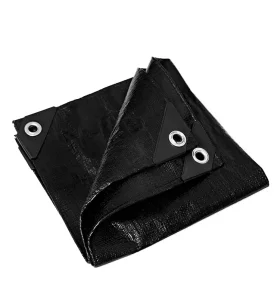
Unprotected polyethylene degrades rapidly under solar UV radiation (UV-A and UV-B spectrums), leading to photo-oxidation, embrittlement, and surface flaking. Advanced custom factories incorporate high-grade Hindered Amine Light Stabilizers (HALS) along with Carbon Black (for double-black industrial tarps) or Titanium Dioxide (TiO2 for silver light-reflecting tarps). Standard masterbatch dosing levels are calculated according to global solar radiation maps:
Instead of relying on chemical adhesives, the HDPE core matrix is passed through a molten LDPE/LLDPE film shower at temperatures exceeding 260°C. High-pressure chilled rollers bond the layers instantly. This thermal fusion eliminates film delamination risks under extreme wind-shearing loads, yielding a completely impermeable hydrostatic barrier.
Targeted engineering configurations tailored for regional environmental challenges and industry specs.
Target Regions: Northern Europe, Canada, Northeast China, North America.
Tech Spec: 100% Virgin PE fabric laminated with EPE foam core insertion (up to 10mm thickness). Retains hydration heat during concrete setting down to -30°C, preventing thermal crack formation in high-rise foundation pours.
Target Regions: Trans-African Corridors, South American Highway Freight.
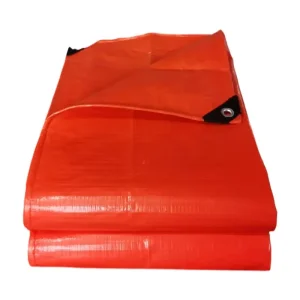
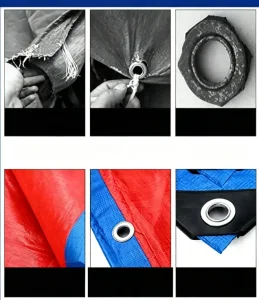
Tech Spec: Dual-side Orange/Black high-visibility 200–260 GSM PE fabrics equipped with sonic-welded triangular corner reinforcements, double-stitched rope hems, and heavy-gauge brass grommets every 50cm.
Target Regions: Australia, Midwest USA, Argentina.
Tech Spec: Double-Silver/Black thermal reflection films (180+ GSM). Reflects 90% of infrared solar radiation, keeping stored wheat, maize, or silage cool, maintaining optimal moisture levels while blocking pests.
Target Regions: UNHCR/NGO Tenders, Pacific Island Storm Belts.
Tech Spec: Lightweight White/Cyan 80–110 GSM tarps with high tear resistance, packaged in compact retail master packs for rapid emergency airlift drop and shelter assembly.
Exporting engineered protective fabrics to high-compliance markets requires rigorous adherence to standardized testing regimes. Top-tier Chinese custom supplier facilities operate internal quality control laboratories that issue lot-specific Test Certificates (COA) matching global metrics:
| Testing Parameter | Standard Test Method | OEM Target Standard Performance |
|---|---|---|
| Tensile Strength (Warp/Weft) | ASTM D5034 / ISO 13934-1 | 800 N / 5cm up to 1800 N / 5cm (Depending on GSM) |
| Tear Resistance (Trapezoid) | ASTM D2261 / ISO 4674 | > 120 N (Prevents tear propagation along eyelets) |
| Hydrostatic Head Pressure | DIN EN 20811 / AATCC 127 | > 10,000 mm H2O (Zero fluid seepage) |
| Accelerated Weathering (UV) | ASTM G154 (QUV Tester) | > 80% Tensile Retention after 2000 Hours Exposure |
| Flame Retardancy (Optional) | NFPA 701 / CPAI-84 / EN 13501-1 | Self-extinguishing within 2 seconds of ignition removal |
| Chemical Compliance | EU REACH SVHC / RoHS | Zero Lead, Cadmium, or SVHC Restricted Phthalates |
Direct technical and commercial answers provided by our senior polymer engineers.
In global industry standard practices, "Cut Size" refers to the dimensions of the flat fabric sheet before hems are folded and sealed. "Finished Size" represents the actual usable footprint after 3cm-5cm of double-edge folding, internal polypropylene rope hem insertion, and corner reinforcement welding. Standard finished sizes are typically 10cm to 20cm smaller than the nominal cut size. Reputable OEM factories provide clear dual-dimension labeling on all master cartons to prevent compliance issues with end consumers.
Selection depends entirely on expected mechanical stress and exposure duration:
Yes. Custom manufacturing facilities operate high-speed flexographic surface printing presses capable of printing up to 4-color logos, safety warnings, barcode labels, and brand identity graphics directly onto the LDPE outer surface before finished panel confectioning. Custom retail color inserts, belly bands, and barcode polybag packaging options are fully supported for OEM private-label brands.
A standard 40-foot High Cube (40HC) shipping container accommodates approximately 25 to 28 Metric Tons of PE tarpaulin products. Folded finished tarpaulins packed in high-density compressed bales maximize cubic space efficiency. Continuous tarpaulin rolls (wound on heavy-duty paper cores and wrapped in woven sleeves) pack slightly less by weight due to volumetric core voids but are optimal for local converting facilities equipped with automatic slitting lines.
Explore our complete range of specialized fabric formulations and agricultural ground covers.