Engineered for extreme durability, hydrostatic protection, and weather resistance. Original factory direct supply lines with complete customization.
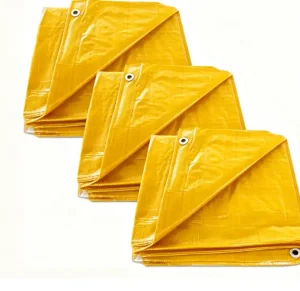
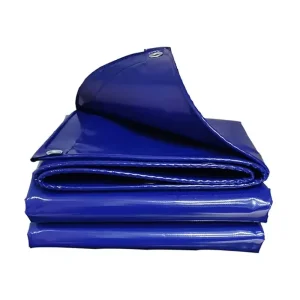
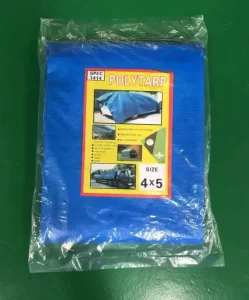
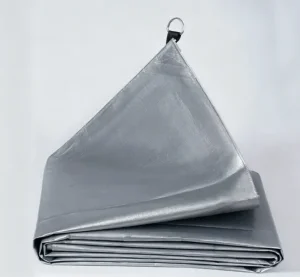
Understanding the structural shifts in polyolefin extrusions, laminated technical textiles, and industrial-grade protective fabric sourcing.
Over the last three decades, China's industrial textile sector has transformed from low-cost volume weaving into high-precision polymer chemistry and technical engineering. Modern China fabric suppliers and factories leverage state-of-the-art flat and circular looms combined with dual-head extrusion laminators to process Polyethylene (PE), Polypropylene (PP), and Polyvinyl Chloride (PVC) fabrics. These substrates achieve tear strengths exceeding 2500 N/5cm and hydrostatic head resistance beyond 100 kPa.
Sourcing high-grade tarpaulin and landscape fabric requires evaluating not just raw GSM, but molecular polymer density (HDPE vs. LLDPE), UV masterbatch dosage (HALS percentage), and seam welding integrity.
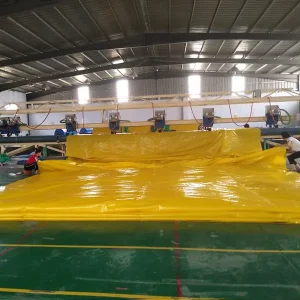
Linyi, Shandong Province, stands as Asia's premier manufacturing epicenter for woven polyolefin fabrics and protective tarpaulins. Companies such as Linyi Xinshengyang Plastic Products Co., Ltd. (Star Tarpaulins) operate massive 30,000 m² facilities producing over 20,000 tons annually. Operating integrated vertical production lines—from virgin granule extrusion and tape drawing to high-speed circular weaving, dual-side LDPE lamination, and automated eyelet crimping—ensures rigorous quality control and cost efficiencies unmatched globally.
How high-performance PE, PP, and PVC fabrics are extruded, woven, laminated, and finished to precise international engineering tolerances.
Virgin HDPE/PP chips are blended with climate-matched UV stabilizers and extruded into high-tenacity flat yarn monofilaments.
High-speed water-jet and circular looms weave yarn into robust scrim structures ranging from 6x6 to 14x14 mesh density per inch.
Molten LDPE or PVC knife-coating layers are applied under high heat and pressure, locking fibers and creating 100% waterproof barrier layers.
Computerized cutting tables trim continuous fabric rolls into exact metric or imperial sheet sizes with minimal selvage waste.
Hems are folded over reinforcing PP inner ropes and heat-welded at high temperatures to eliminate stitched thread vulnerabilities.
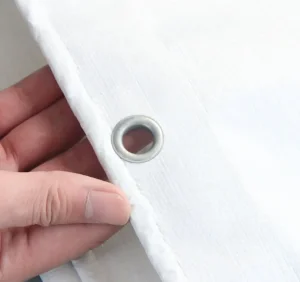
Heavy-duty aluminum, brass, or poly grommets are crimped at 50 cm or 100 cm pitch intervals with pneumatic precision.
Molded plastic corner patches are riveted to absorb peak wind shock loads and prevent high-stress corner tearing.
Hydrostatic pressure, tensile testing, and barcode lab labeling ensure full batch traceability prior to container stuffing.
Select the ideal polymer compound and coating density based on mechanical load, chemical exposure, temperature variance, and target service lifespan.
| Polymer Type | GSM Range | Tensile Strength (Warp/Weft) | UV Resistance Lifespan | Key Performance Attributes | Primary Industrial Applications |
|---|---|---|---|---|---|
| PE Tarpaulin (HDPE/LDPE) | 60 – 300 GSM | 600 N – 1400 N / 5cm | 1 to 5 Years (3-5% HALS) | Lightweight, highly flexible in sub-zero temp (-40°C), 100% recyclable, economic | Construction scaffolding, goods covers, emergency relief shelter, hay tarps |
| PP Tarpaulin / Geotextile | 90 – 400 GSM | 900 N – 2200 N / 5cm | 2 to 6 Years (UV Stabilized) | Higher tensile modulus, flex-crack resistance, high weed barrier puncture strength | Landscape weed barriers, sub-base driveway geotextiles, heavy lumber wrap |
| PVC Coated Tarpaulin | 400 – 900 GSM | 2000 N – 4500 N / 5cm | 5 to 10+ Years (Extreme UV) | Knife-coated, flame retardant (B1/NFPA), oil/chemical proof, high frequency weldable | Truck side curtains, architectural membrane tents, containment booms, oil bladders |
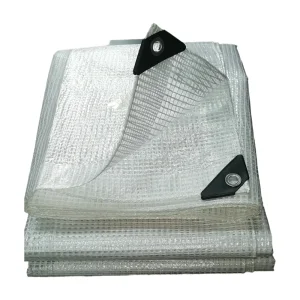
| PE Grid / Shade Mesh | 70 – 220 GSM | 500 N – 1100 N / 5cm | 3 to 7 Years | Wind-permeable, light diffusion control (30%-90% shade), tear-stop grid reinforcement | Greenhouse shade cloth, construction debris netting, agriculture crop protection |
Matching local regional standards across North America, the European Union, the Middle East, and Australasia with certified testing protocols.
All PE and PVC formulations satisfy EU REACH SVHC non-toxicity thresholds. Lead, Cadmium, and Phthalates (DEHP, DBP, BBP) are strictly eliminated, permitting entry into European DIY retail networks and eco-conscious municipal contracts.
For enclosed structural projects, public event tents, and warehouse curtains, fabrics are treated with halogen-free flame retardant additives reaching DIN 4102 B1, EN 13501-1, and NFPA 701 compliance ratings.
Standard UV masterbatch isn't enough for high-solar zones. Export shipments bound for the Middle East (GCC), Sub-Saharan Africa, and Australia feature 3% to 5% Hindered Amine Light Stabilizer (HALS) masterbatch to prevent premature polymer degradation under 200+ kly/year solar radiation.
From heavy transportation and civil infrastructure to specialized agriculture and outdoor recreation.
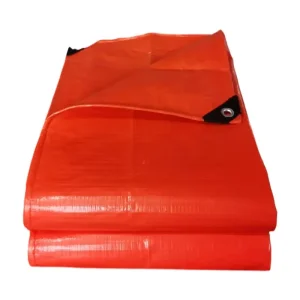
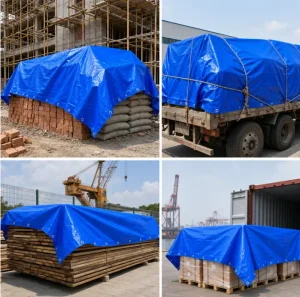
Long-haul highway trucking requires tarpaulins that withstand high-velocity wind buffeting, friction against cargo frames, and torrential rain. China fabric suppliers craft 180–300 GSM PE tarps and 650–900 GSM PVC truck curtains featuring anti-abrasion topcoats, high-frequency welded seams, and reinforced D-ring tie-down assemblies.
Agricultural storage tarps must eliminate moisture ingress while enduring repeated flexing in open fields. Specialized 16 mil heavy-duty yellow/black hay tarps feature integrated web hand-straps, high tear-stop weave patterns, and mold-inhibiting lamination to preserve livestock feed value.
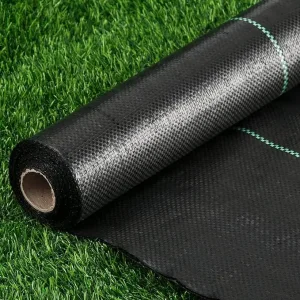
High-density woven PP weed control mats permit water percolation while blocking 99.8% of photosynthetically active light. Engineered for commercial driveways, garden beds, and berry farms, these geotextiles incorporate colored alignment stripes for rapid plant spacing and mechanical root barrier protection.
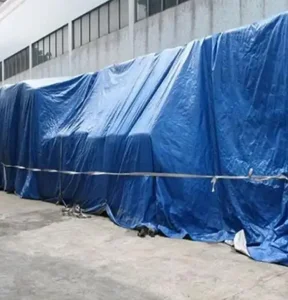
Urban construction zones utilize flame-retardant blue, green, or clear tarpaulin roll covers. These act as containment curtains against falling debris, provide thermal insulation for concrete curing, and maintain interior climate control during harsh winter building phases.
Key innovations driving the next decade of industrial protective covers and synthetic woven geotextiles.
Traditional multi-layer fabrics with mixed resins pose recycling challenges. Next-generation production emphasizes 100% monomaterial Polyethylene sheets (where inner yarn, coating layer, hem rope, and eyelet are all PE-based), enabling direct mechanical recycling without manual component separation.
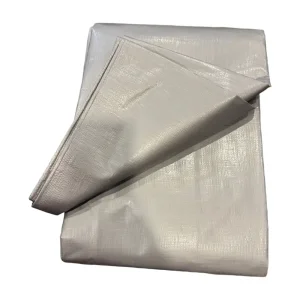
Advanced double-sided silver and titan-white coatings reflect up to 88% of infrared solar radiation. Applied to lumber wrap, poultry house curtains, and disaster relief tents, these fabrics significantly reduce internal ambient temperatures and cooling energy overheads.
Leading Chinese textile mills are integrating optical AI camera vision onto weaving lines to detect broken warp tapes or coating pinholes in real time. This automated inspection guarantees near-zero defect rates across 100,000-meter continuous roll production runs.
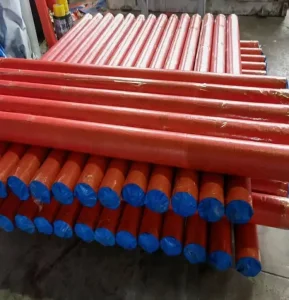
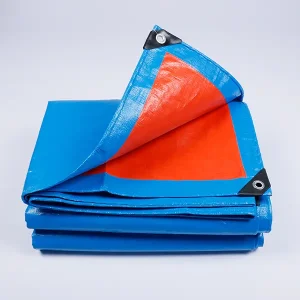
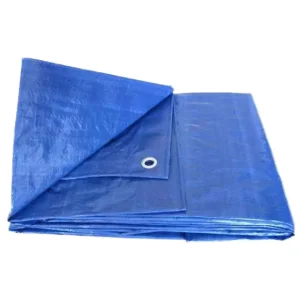
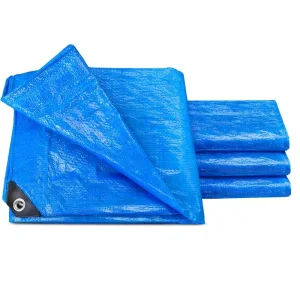
Heavy-duty roll stock, multipurpose poly tarps, and specialized protective sheeting direct from our manufacturing facility.
Direct answers from our Senior Technical Directors to streamline your factory sourcing audit and RFQ workflow.
Selecting the optimal GSM depends on the mechanical stress, climate conditions, and intended handling frequency:
For standard stocked fabric rolls and standard tarpaulin colors (such as Blue/Silver, Green/Silver, or Dark Brown), our base minimum order starts at one 20ft container load (FCL mix), equivalent to approximately 8 to 10 tons. For custom specs, specialized colors, specific eyelet spacings, or custom logo printing, MOQ is 3 tons per specification. Standard manufacturing lead time is 15 to 25 days post pre-production sample approval and deposit confirmation.
We blend imported Hindered Amine Light Stabilizers (HALS) into the virgin HDPE/PP resin during yarn extrusion. Dosage is tailored to destination solar radiation levels (from 1.5% for Northern Europe up to 5% masterbatch for the Middle East and Australia). Every batch undergoes accelerated QUV weatherometer testing (ASTM G154) to verify tensile retention rates over 1,000 to 3,000 hours of continuous UV exposure.
Yes, comprehensive OEM/ODM manufacturing is our core strength. We cut and finish tarpaulins to exact dimensional requirements (in meters or feet-inch system), offer aluminum, brass, or plastic eyelets placed at 50 cm, 100 cm, or custom intervals, and supply full-color retail insert cards, barcode stickers, display cartons, or bale packing according to your brand guidelines.
Every order is issued an internal Mill Test Certificate (MTC) detailing hydrostatic pressure resistance, tensile warp/weft strength, tear resistance, and fabric weight tolerance (±3%). We regularly host third-party inspection firms such as SGS, Bureau Veritas (BV), and TÜV Rheinland for pre-shipment quality inspection and container loading verification.
We utilize high-density hydraulic baling presses for finished poly tarps, achieving up to 30% higher volume compression compared to standard carton packing. A 40ft High Cube (40HQ) container can accommodate approximately 25,000 kg of baled tarpaulins, significantly lowering your freight cost per square meter.
Contact our engineering sales team today to request product samples, detailed technical data sheets (TDS), and custom FOB/CIF container price quotes.