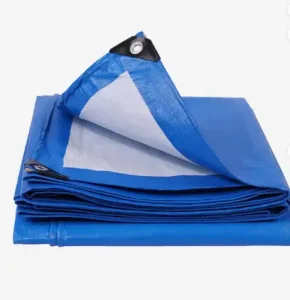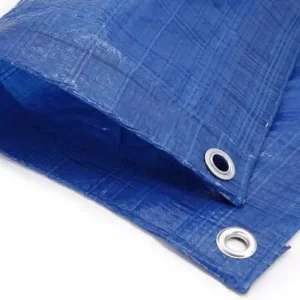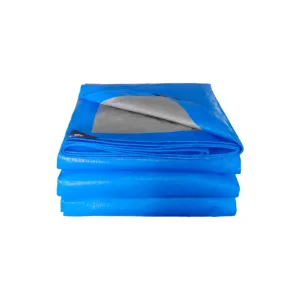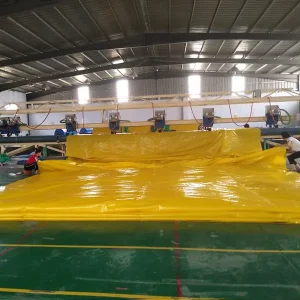
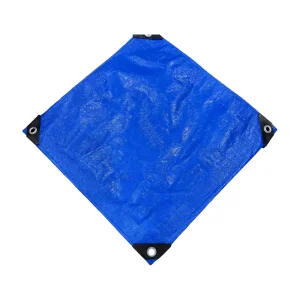
Explore our heavy-duty flame-retardant, waterproof, and UV-stabilized tarpaulin series directly manufactured in our Shandong production facility.
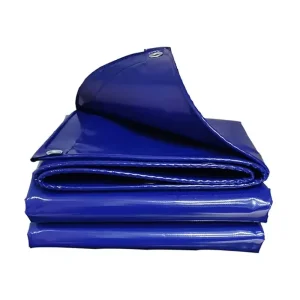
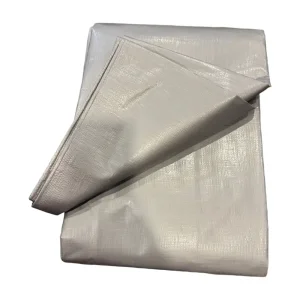
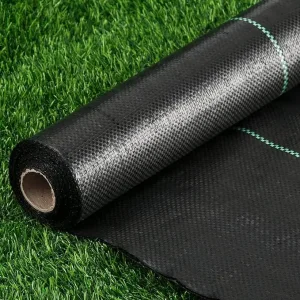

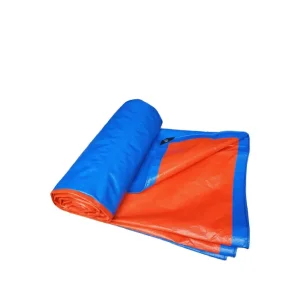
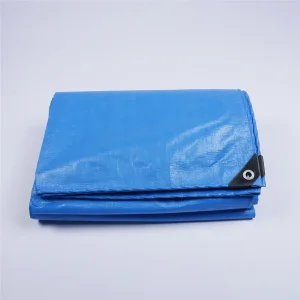
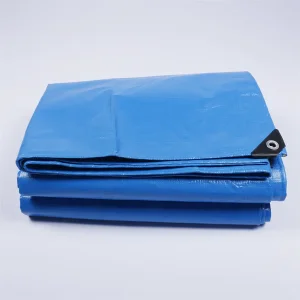
An in-depth guide to flame retardancy mechanisms, synthetic polymer formulations, compliance certifications, and global procurement criteria for enterprise industrial safety buyers.
Fire Retardant (FR) Tarpaulins produced in leading Chinese factories utilize advanced additive formulations integrated directly during raw polymer extrusion or liquid PVC coating processes. Standard Polyethylene (PE) and Polyvinyl Chloride (PVC) base fabrics are inherently vulnerable to thermal degradation and rapid flame propagation unless chemically stabilized.
Our engineering team incorporates multi-stage flame retarding additives into HDPE (High-Density Polyethylene) tape extrusion and PVC knife coating mixtures:
The structural integrity of FR tarpaulin hinges on its internal woven scrim. High-density woven PE scrims ranging from 80 GSM to 300 GSM, alongside high-tenacity polyester matrix bases (500D to 1000D) for PVC knife-coated tarpaulins, deliver exceptional tensile strength (warp/weft > 2500 N / 5cm).
Double-sided molten lamination ensures 100% water impermeability (Hydrostatic Head > 100,000 mm H₂O), while UV-stabilizing masterbatches (3% to 5% dosage) prevent polymer chain scission under high solar irradiance environments across the Middle East, Australia, and Arizona.
| Tarpaulin Material Class | GSM Range | Flame Retardancy Standard | Tensile Strength (N/5cm) | Primary Industrial Application |
|---|---|---|---|---|
| FR Woven PE Sheet | 120 - 300 GSM | NFPA 701, CPAI-84 | 1200 - 1800 N | Scaffolding Enclosures, DIY Hardware, Cargo Covers |
| FR PVC Laminated Tarp | 400 - 650 GSM | DIN 4102 B1, EN 13501-1 B-s1,d0 | 2000 - 2800 N | Truck Side Curtains, Mining Tents, Containment Tarps |
| Heavy FR PVC Knife-Coated | 680 - 900 GSM | ASTM E84 Class A, BS 7837 | 3000 - 4500 N | Petrochemical Containment, Architectural Structures |
| FR Woven PP Fabric | 100 - 250 GSM | UL94 V-0 Equivalent | 1100 - 1600 N | Agricultural Grain Storage, Weed Control Covers |
SEO Information Gain Insight: Unlike standard commodity tarps, industrial-grade Fire Retardant Tarpaulins undergo continuous testing for self-extinguishing duration. When exposed to a direct 800°C flame source for 12 seconds, certified FR tarps display zero afterflame (< 2 seconds) and zero molten flaming droplets, protecting underlying asset investments worth millions of dollars.
Enterprise procurement departments must align tarpaulin technical parameters with strict regional fire safety codes. As a premier Chinese manufacturer, our plant products meet and exceed major global regulatory frameworks.
NFPA 701 (Test Method 1 & 2): Standard methods of fire tests for flame propagation of textiles and films. Essential for scaffolding nets, architectural covers, and public event canopies in North America.
ASTM E84 Class A: Flame Spread Index < 25 and Smoke Developed Index < 450 for interior containment structures and commercial building site covers.
EN 13501-1 (B-s1, d0): The premier European building product fire classification. B = Very limited contribution to fire; s1 = Low smoke emission; d0 = Zero flaming droplets/particles.
DIN 4102-1 B1: German national standard for difficult-to-ignite materials, mandatory for industrial curtains, temporary storage halls, and exhibition structures across Europe.
AS/NZS 1530.3: Early Fire Hazard Properties test controlling ignitability index, flame spread index, heat evolved index, and smoke developed index across Australia and New Zealand.
Middle East Civil Defense: Direct certification compliance (UAE Civil Defense, Saudi Civil Defense) requiring minimum Limiting Oxygen Index (LOI ≥ 32%) for extreme sun/heat environments.
China's fully integrated chemical manufacturing and textile cluster ecosystem provides unmatched scale, rapid technical iteration, and total cost control for enterprise buyers.
Located in Shandong Province—the heartland of China's polymer processing industry—our direct factory sourcing links directly to virgin resin producers (Sinopec, PetroChina). This direct integration guarantees:
Our 30,000 m² facility features end-to-end machinery designed for maximum efficiency and custom versatility:
We provide complete white-label manufacturing services for global distributors, hardware chains, and industrial contractors:
Standard tarpaulins fail in high-risk environments. Fire Retardant Tarpaulins act as critical line-of-defense protective barriers across demanding industrial settings.
Urban construction sites require fire-rated debris netting and scaffolding sheeting (NFPA 701 / EN 13501-1). Sparks from hot-work welding or electrical faults can ignite standard tarps, spreading fire up high-rise building facades. FR tarps prevent flame ignition and control construction dust.
In oil, gas, and chemical processing facilities, temporary containment covers must resist hydrocarbon spills, extreme heat, and sparks. Our heavy-duty PVC FR knife-coated fabrics provide chemical resistance, spark protection, and antistatic properties.
Truck covers and train cargo tarpaulins encounter severe friction, weather extremes, and potential exhaust heat ignition. Flame retardant truck side curtains protect valuable cargo against hot highway debris and vandalism while fulfilling international transit safety regulations.
The global protective covers market is rapidly evolving toward sustainability, smart thermal regulation, and high-performance polyolefin alloys.
Environmental regulations like REACH and RoHS are driving a transition away from traditional brominated flame retardants. Modern Chinese manufacturing lines lead this shift by incorporating phosphorus-nitrogen intumescent systems and recyclable thermoplastic polyolefin (TPO) coatings that can be 100% re-melted into industrial plastic products at end-of-life.
Combining flame-retardant chemistry with metallic silver heat-reflective aluminum laminates creates high-efficiency thermal insulation tarps. Used in extreme desert climates and cold-chain logistics, these hybrid tarps reflect up to 95% of radiant solar energy while retaining strict self-extinguishing safety properties.
Expert answers to technical procurement queries from distributors, engineers, and enterprise buying officers.
A "Fire Retardant" (FR) tarpaulin is engineered to self-extinguish when the direct flame source is removed, preventing fire propagation. It melts under extreme sustained temperature but will not fuel active flames. A "Fireproof" tarp (such as high-silica woven fiberglass or ceramic blankets) can withstand continuous continuous direct flames above 1000°C without melting. FR Poly Tarps are lightweight, flexible, and waterproof, designed for protective covering rather than furnace lining.
For North America, specify NFPA 701 (Method 1 for light fabrics, Method 2 for heavy coated materials) or ASTM E84 Class A. For Europe, specify EN 13501-1 Class B-s1, d0 or German DIN 4102-1 B1. For agricultural/camping tents in North America, CPAI-84 is also common.
Yes, intense UV radiation breaks down polymer chains and can leach unbonded surface FR additives over long outdoor exposures. However, our direct factory formulations blend 3% to 5% Hindered Amine Light Stabilizers (HALS) alongside permanent internal FR masterbatches, maintaining compliance over 2 to 5 years of intense outdoor exposure depending on GSM thickness.
For standard stocked color rolls and ready-made sizes, MOQ starts at one 20ft container mix (approx. 10-12 metric tons). Custom OEM specifications (custom GSM, color match, logo printing, special FR formulation) require 3 tons per specification. Standard production lead time is 15-25 business days after artwork approval.
Every production batch undergoes mandatory lab testing before packing: Hydrostatic head test (AATCC 127) verifying > 100,000mm H₂O column pressure, Tensile & Tear testing (ASTM D751 / ISO 13934), and Vertical Flame Chamber testing (NFPA 701). Inspection reports with high-resolution photos/videos are issued prior to container sealing.
Yes. We manufacture customized halogen-free FR tarpaulins utilizing Aluminum Trihydroxide (ATH) and Ammonium Polyphosphate (APP) chemistries that pass REACH, RoHS, and low-smoke emission specifications for subways, tunnels, and public infrastructure projects.
Explore our full range of specialty tarpaulins, landscaping fabrics, and agricultural covers engineered for global supply chains.