Precision-woven, UV-stabilized, and multi-layer laminated reflective sheets engineered for severe solar thermal environments.
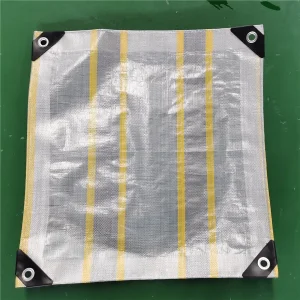
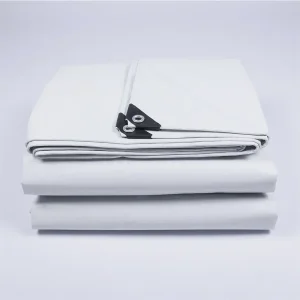
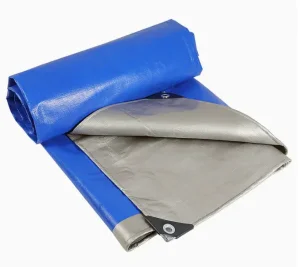
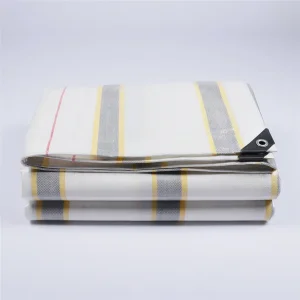
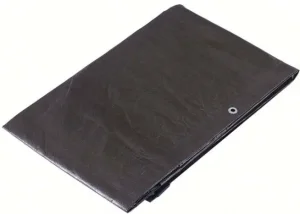
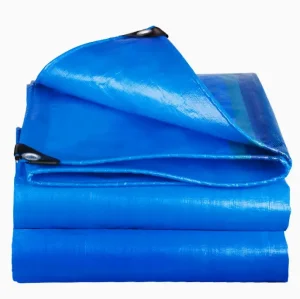
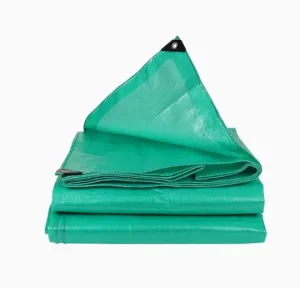
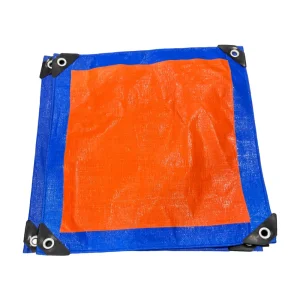
Why Tier-1 industrial buyers, logistics fleets, and agricultural enterprises are shifting from conventional tarpaulins to spectrally selective heat-reflective polyolefins.
As global mean temperatures break historical peaks, exposed freight, open-air stockpiles, and agricultural yields suffer severe economic degradation. Traditional dark PE or standard PVC tarps absorb up to 90% of incident solar radiation, elevating interior under-cover temperatures by 15°C to 28°C above ambient levels. This creates severe microclimate heat traps that accelerate crop spoilage, degrade rubber/plastic components, breakdown chemical stability, and increase refrigeration power demands by over 40% in cold-chain transit.
As a leading China Heat Reflective Tarp Manufacturer & Supplier, Star Tarpaulins has developed multi-layer co-extrusion and aluminum vapor-deposition techniques that manipulate light reflection at the molecular level. By integrating rutile titanium dioxide ($\text{TiO}_2$) optical nano-particles alongside high-purity aluminum coatings into high-density polyethylene (HDPE) woven matrices, our heat-reflective tarpaulins achieve a Solar Reflectance Index (SRI) exceeding 108, reflecting up to 95% of Near-Infrared (NIR) solar wavelengths (700nm–2500nm).
Understanding how Near-Infrared (NIR) radiation scattering and low thermal emissivity prevent heat transfer across industrial protective covers.
The top layer comprises vacuum-metallized aluminum or micro-prismatic silver lamination infused with Hindered Amine Light Stabilizers (HALS). This barrier reflects shortwave UV and near-infrared thermal energy before photon absorption converts into sensible thermal mass.
At the center lies an ultra-dense 1000D to 1500D Virgin HDPE structural mesh woven on sulzer circular looms. Providing tensile strength upwards of 2400 N/5cm, it guarantees structural resistance against extreme wind shear, tearing, and puncture stresses.
The interior layer utilizes a specialized carbon-black or deep white low-emissivity (Low-E) LDPE coating. This dual-action layer blocks heat radiation from emitting downwards into the covered cargo while absorbing ambient internal radiant heat.
| Performance Metric | Standard Blue PE Tarp (120 GSM) | Heavy PVC Truck Cover (650 GSM) | StarTarp Heat-Reflective Silver (180 GSM) | StarTarp Thermal Shield Pro (280 GSM) |
|---|---|---|---|---|
| Solar Reflectance Index (SRI) | 22 - 28 | 35 - 42 | SRI 98 | SRI 108+ |
| Near-Infrared (NIR) Reflection | 15% | 30% | 88% | 95.4% |
| Delta Temperature ($\Delta T$ Under Cover) | +12°C above ambient | +8°C above ambient | -12°C below ambient | -18°C to -22°C below ambient |
| Tensile Strength (Warp/Weft) | 650 / 600 N/5cm | 2500 / 2300 N/5cm | 1450 / 1380 N/5cm | 2650 / 2480 N/5cm |
| UV Resistance Rating | 6 Months | 2 Years | 3 - 5 Years (5% UV) | 5+ Years Custom Masterbatch |
| Thermal Conductivity ($\lambda$) | 0.33 W/m·K | 0.19 W/m·K | 0.042 W/m·K | 0.028 W/m·K |
From desert logistics in the Middle East to agricultural harvesting in Australia, explore how our heat reflective tarps solve critical thermal risks.
In regions such as Saudi Arabia, UAE, and North Africa, ambient summer temperatures routinely exceed 48°C. Standard tarps transform grain piles into high-moisture thermal cookers, inducing rapid fungal growth and aflatoxin contamination. StarTarp’s high-SRI silver/black heat reflective tarps drop grain pile surface temperatures by over 20°C, maintaining seed viability and preserving thousands of metric tons of wheat, corn, and grain reserves without electrical refrigeration.
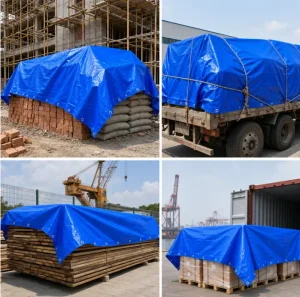
Cross-border haulage across North America, Australia, and Southern Europe subjects trailers and flatbeds to severe solar bombardment. Using heat reflective truck tarpaulin curtains prevents heat soak into cargo holds, reducing diesel fuel consumption of refrigerated transport units (REEFER) by 22% to 35%, cutting operational expenses while guaranteeing temperature compliance for pharmaceuticals and fresh produce.
In remote desert and equatorial mining camps (Atacama Desert, Western Australia, West Africa), housing heavy machinery, hydraulic power packs, and explosive storage under traditional covers leads to thermal stress failures. Our reflective canopy tarps act as passive solar shields, reducing surface metal heat absorption and protecting sensitive seals, electronics, and volatile compounds from solar overheating.
Rapid moisture loss during high-temperature concrete curing creates micro-fractures and degrades structural strength. Heat-reflective thermal tarps regulate curing hydration by reflecting direct sunlight while trapping essential moisture underneath, meeting strict civil engineering standards for bridge decks, airport runways, and skyscraper foundations.
Fully integrated manufacturing capabilities from raw virgin resin extrusion to reinforced heat-sealed finishing.
PE Range: 60 GSM to 320 GSM (grams per square meter).
PVC Range: 400 GSM to 900 GSM.
Thickness Range: 0.08mm to 0.85mm.
Strict tolerance control within ±3% through real-time ultrasonic gauge sensors on production lines.
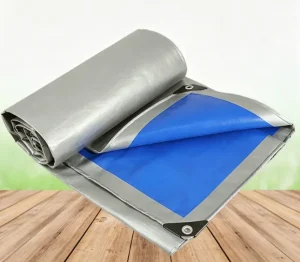
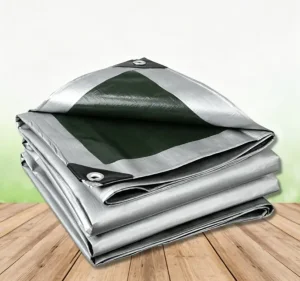
Dual-side color options: Silver/Black, Double Silver, Silver/Green, White/Black, Metallized Gold/Silver, and custom Pantone matching. Color fastness grade 7+ under ISO 105-B02 standards.
Ultrasonic welded continuous seams, heavy-duty polypropylene perimeter ropes inside double-stitched or heat-sealed hems, molded triangular plastic corners, and solid aluminum or brass eyelets spaced at 50cm or 100cm pitch.
Our products undergo rigorous third-party laboratory testing to ensure compliance with global environmental, safety, and performance frameworks.
Standard test method for Solar Absorptance, Reflectance, and calculation of Solar Reflectance Index (SRI).
100% compliant with EU Regulation (EC) No 1907/2006. Free from SVHCs, phthalates, and heavy metals.
Flame retardant compliance options certified under US NFPA 701, DIN 4102 B1, and CPAI-84 standards.
Certified Quality Management System and Environmental Management System guarantees zero-defect manufacturing.
Pioneering the next generation of smart thermal management and bio-based circular polymer tarpaulins.
Integrating 30%+ plant-derived sugarcane ethanol polyethylene to reduce carbon footprint by 45% without compromising tear strength.
Deploying omnidirectional prismatic surface structures to reflect low-angle morning and afternoon sun ray energy effectively.
Developing adaptive tarps that automatically shift emissivity based on ambient temperature thresholds to conserve internal warmth at night.
100% recyclable mono-material polyolefin constructions allowing complete industrial closed-loop re-granulation at end-of-life.
In-depth technical answers for procurement managers, distributors, and engineering specification buyers.
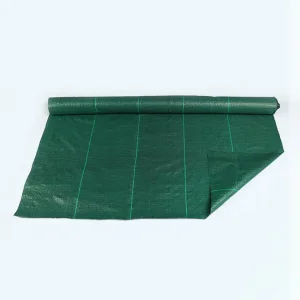
Explore our full line of landscape barrier fabrics, ultra-waterproof sheets, container covers, and industrial tent materials.
Contact our engineering consultation team today to receive a complete technical dossier, SRI lab test certifications, free swatch samples, and factory-direct container pricing.