Engineered for high-tensile strength, extreme thermal endurance, and harsh environmental exposure.
Understanding polymer degradation kinetics, thermal stability indexes, and environmental resistance in modern industrial coverings.
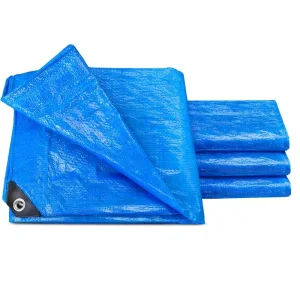
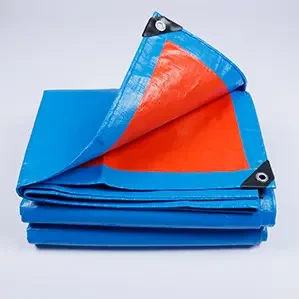
Polyethylene (PE) and Polypropylene (PP) substrates treated with hindered amine light stabilizers (HALS) and thermal antioxidant masterbatches withstand prolonged temperatures up to 80°C continuous, preventing chain scission and embrittlement.
Engineered with double-sided low-density polyethylene (LDPE) lamination and antimony trioxide / halogen-free fire retardants (FR) meeting UL94 V-0 and NFPA 701 standards for critical safety compliance.
High-density polyethylene (HDPE) woven scrim ranging from 8x8 to 14x14 mesh density provides superior warp and weft tensile resistance, preventing tearing during thermal expansion and wind shear stress.
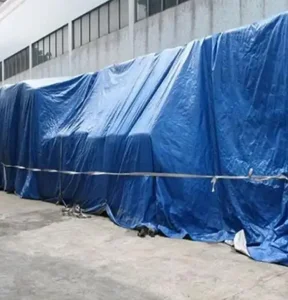
In modern industrial applications, thermal management is a fundamental requirement for protective coverings. Industrial tarpaulins deployed in harsh climates—such as hot asphalt transport, foundry insulation, Middle Eastern oil field logistics, and agricultural solar drying—face simultaneous thermal, oxidative, and ultraviolet (UV) stress. Standard Polyethylene (PE) tarpaulins degrade rapidly when exposed to surface temperatures exceeding 60°C without precise chemical stabilization.
As a premier China Heat Resistant Tarp Manufacturer & Supplier, Linyi Xinshengyang Plastic Products Co., Ltd. (Star Tarpaulins) integrates material science engineering into high-volume polymer processing. By engineering multi-layer polyolefin structure matrices containing specialized UV absorbers, thermal antioxidants (Irganox 1010/1076), and inorganic heat-reflective pigments (such as rutile titanium dioxide and micro-aluminum flakes), our technical fabrics maintain physical structural integrity across a temperature spectrum ranging from -40°C to +80°C continuous (and up to 120°C intermittent spike loads for specialized formulations).
Information Gain Metric: Standard market tarps lose up to 60% of their tensile strength within 1,000 hours of high-temperature solar exposure. Star Tarpaulins' stabilized multi-coated PE tarpaulins retain over 88% of their structural burst pressure under accelerated Xenon-arc weathering (ASTM G155) and thermal cycling.
Procurement teams must balance thermal endurance, weight, tensile performance, chemical inertness, and Total Cost of Ownership (TCO). Below is an engineering comparison matrix of primary industrial tarpaulin substrates manufactured within China’s supply ecosystem:
| Polymer Substrate Type | Continuous Temp Limit (°C) | Tensile Strength (N/5cm) | Hydrostatic Head (kPa) | Flame Retardancy Standard | Primary Industrial Application |
|---|---|---|---|---|---|
| Stabilized PE (HDPE/LDPE) | -40°C to +80°C | 1200 / 1100 | > 80 kPa | CPAI-84 / NFPA 701 Option | Logistics, Asphalt Haulage, Agricultural Storage |
| Heavy-Duty PP Woven | -30°C to +100°C | 1600 / 1400 | > 60 kPa | UL94 HB / V-2 | High-Stress Scaffolding, Industrial Liners |
| Knife-Coated PVC | -30°C to +70°C | 2500 / 2300 | > 150 kPa | DIN 4102 B1 / M2 | Curtain-Siders, Permanent Structures, Tents |
| Silicone-Coated Fiberglass | -50°C to +260°C | 3000 / 2800 | > 200 kPa | BS 476 Part 7 Class 1 | Welding Blankets, Foundry Heat Shields |
Linyi City in Shandong Province represents the epicenter of China’s woven polyolefin manufacturing cluster. This industrial concentration delivers unparalleled supply chain advantages for international enterprise procurement:
B2B importers, hardware distributors, industrial logistics operators, and NGO procurement agents require stringent compliance documentation and localized support to mitigate supply chain risks. Star Tarpaulins adheres to international quality assurance frameworks:
Free from SVHC (Substances of Very High Concern), lead, cadmium, phthalates, and restricted azo dyes, fulfilling European Union and North American environmental directives.
Rigorous inline quality inspections including continuous thickness monitoring, hydrostatic head tests (ISO 811), and tear-propagation force testing (ASTM D1922).
Multi-lingual technical documentation, customized container loading optimizations, OEM private labeling, and regional distributor support packages.
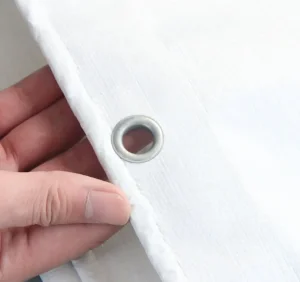
Ultrasonically welded or high-temperature heat-sealed hems reinforced with PP rope inside, paired with aluminum or anti-corrosive brass eyelets at 50cm/100cm intervals.
Deploying specialized heat-resistant and polyolefin covers across demanding commercial sectors worldwide.
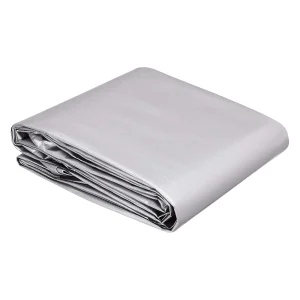
Hot mix asphalt (HMA) must be transported at temperatures exceeding 140°C. Specially formulated heat-reflective double-silver PE tarps cover dump truck beds to retain internal heat while enduring extreme thermal venting from the cargo.
In high-ambient desert regions (GCC nations, North Africa), surface temperatures on exposed equipment reach 75°C+. Triple-coated 3-5% UV masterbatch PE tarpaulins prevent UV photodegradation, heat build-up, and sand abrasion.
In South America and Southeast Asia, agricultural producers utilize high-GSM white/black light-blocking heat-resistant sheets for crop drying (coffee, cocoa, grains) to manage thermal accumulation and humidity condensation.
The global protective fabric industry is undergoing rapid technical evolution driven by sustainability mandates and material innovation:
Direct answers from our engineering team regarding tarpaulin specifications, thermal limits, and bulk procurement.
Direct factory supply for agricultural, logistics, construction, and custom OEM requirements.