
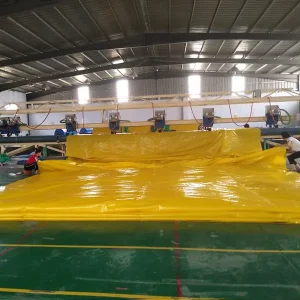
Direct from Linyi's premier extrusion and lamination facility. Engineered for maximum tensile strength, tear propagation resistance, and extreme atmospheric resilience.
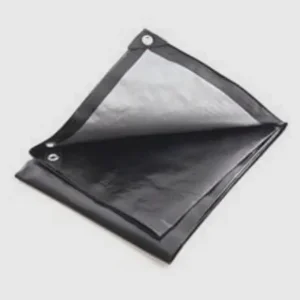
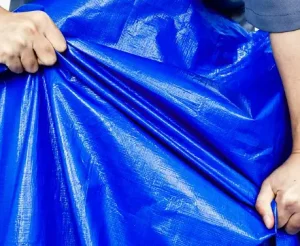
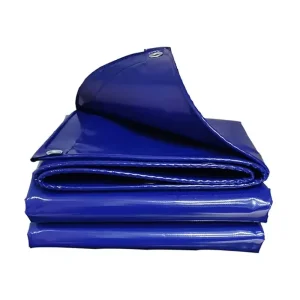
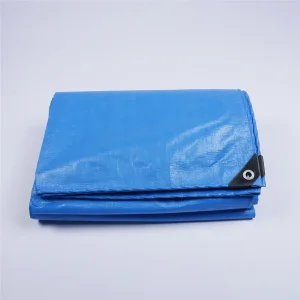
How evolving haulage regulations, extreme weather phenomena, and material engineering advancements are reshaping long-haul freight protection across North America, Europe, Asia-Pacific, and the Middle East.
Highway commercial transport subjects trailer tarps to continuous high-speed wind shearing forces exceeding 110 km/h. Improper tensile tension leads to destructive "billowing" effects that accelerate seam fatigue. Premium tarpaulins require high-tenacity polyester or virgin HDPE base scrims (1000D+ yarn rating) engineered to withstand dynamic flap stress without tearing.
Solar ultraviolet radiation (UV-A and UV-B) ruptures long-chain polymer bonds in unformulated polyolefins, leading to chalking, embrittlement, and cracking within months. Leading Chinese manufacturers incorporate 3% to 5% Hindered Amine Light Stabilizers (HALS) alongside carbon black pigments to guarantee a field service life up to 5 years under extreme solar irradiance.
Cross-border freight routes encounter drastic climate transitions—from sub-zero Arctic freeze in Northern Europe and Canada to scorching desert heat in Australia and North Africa. Modern PVC knife-coated and PE multi-layer laminated sheets utilize specialized plasticizers to prevent cold-cracking at -40°C while resisting thermal softening up to +70°C.
Unlike regional brokers or retail resellers, direct Chinese heavy-duty tarpaulin manufacturers control the entire polymer processing value chain—from high-density polyethylene (HDPE) granule extrusion, high-tenacity yarn drawing, and circular weaving, to dual-side LDPE extrusion lamination and automated high-frequency seam welding. This total vertical integration ensures batch-to-batch structural uniformity, strict GSM tolerance control (±2%), and unmatched cost-efficiency for international fleet purchasers.
A comprehensive comparison of industrial polymer substrates engineered for trailer tarp construction: PVC Knife-Coated, Heavyweight PE, and Woven PP Fabrics.
| Performance Characteristic | PVC Knife-Coated (Heavy Transport) | Heavyweight PE Laminated (Standard Fleet) | Woven PP (High Tensile Agriculture) |
|---|---|---|---|
| Weight Range (GSM) | 500 GSM – 900 GSM | 180 GSM – 300 GSM | 120 GSM – 250 GSM |
| Base Fabric Denier | 1000D × 1000D High Tenacity Polyester | 800D – 1200D HDPE Woven Tape | 850D – 1100D Polypropylene Tape |
| Tensile Strength (ISO 1421) | Warp: 3000 N/5cm | Weft: 2800 N/5cm | Warp: 1400 N/5cm | Weft: 1300 N/5cm | Warp: 1600 N/5cm | Weft: 1500 N/5cm |
| Tear Strength (DIN 53363) | Warp: 350 N | Weft: 300 N | Warp: 180 N | Weft: 160 N | Warp: 200 N | Weft: 190 N |
| Hydrostatic Head (Waterproofness) | > 15,000 mm H2O Column | > 8,000 mm H2O Column | > 6,000 mm H2O Column |
| Seam Integrity Technology | High-Frequency (HF) Dielectric Welding | Hot-Air Thermal Extrusion Sealing | Double-Stitching with PE Rope Reinforcement |
| Primary Application Profile | Lumber Tarps, Steel Tarps, Side Curtains | General Freight, Machinery, Grain Covers | Bulk Hay Bales, Temporary Site Shelter |
*Note: Technical metrics represent baseline laboratory test values under ISO standard testing environments. Customized formulations including FR (Flame Retardant to NFPA 701 / B1), Anti-Static, and Anti-Mildew additives are available upon commercial request.
Our 30,000 square-meter facility in Lanshan District, Linyi operates an 8-stage automated production chain designed for flawless quality control and unmatched manufacturing speed.
Virgin Petrochemical HDPE/PP resin granules are blended with proprietary UV masterbatch and melted in multi-cavity extruder lines, producing flat yarn tapes with precise denier ratings and ultra-high tensile orientation.
State-of-the-art circular looms and water-jet weaving machines interlock the synthetic yarn tapes into high-density scrims (8x8 to 14x14 mesh count), establishing the structural core of the tarp.
Molten Low-Density Polyethylene (LDPE) is co-extruded onto both faces of the woven core simultaneously, fusing a glass-smooth, 100% impervious barrier coat resistant to puncture and abrasion.
Computer-controlled CNC cutting tables trim broad tarpaulin rolls to exact dimensional tolerances based on client trailer specifications (Lumber, Steel, Drop-Side, or Custom Flatbed layouts).
Perimeter edges are folded over polypropylene load-bearing ropes and continuous hot-air welded. Seams undergo thermal fusion, creating a join that exceeds the tensile strength of the raw fabric itself.
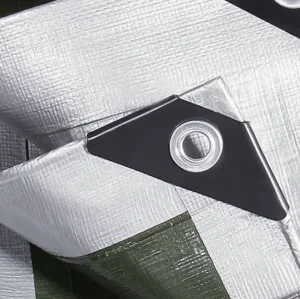
High-stress points are reinforced with double-layer welded corner triangles. Rust-proof brass or heavy-gauge aluminum eyelets are hydraulically set at precise intervals (every 50cm, 100cm, or custom pitch).
Engineered configurations tailored to specific freight challenges across global logistics corridors.
Challenge: Sharp steel coil edges, high moisture sensitivity, and strict North American/European DOT tie-down regulations.
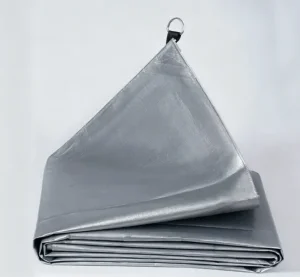
Engineered Solution: Heavyweight 18 mil / 270 GSM PE or 650 GSM PVC steel tarps featuring 4-foot drop flaps, reinforced stainless steel D-rings sewn over 2-inch seatbelt webbing, and internal abrasion pads that prevent sharp metal edges from cutting the tarp fabric.
Challenge: Tall, bulky rectangular loads requiring complete weather sealing against highway rain splash, road salt, and wind penetration.
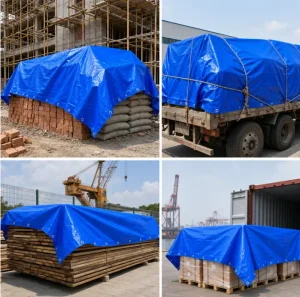
Engineered Solution: 3-Piece Lumber Tarp systems featuring 8-foot drop sides, tail control flaps, and triple rows of zinc-plated D-rings. Lightweight high-density PE substrates reduce total tarp weight to under 45 lbs, protecting driver back health during manual rigging.
Challenge: Constant mechanical abrasion from automatic roll-over systems, intense UV radiation during harvest season, and moisture protection.
Engineered Solution: Semi-rigid 250 GSM to 300 GSM PE tarps with custom roll-tube pockets, double-stitched reinforced edges, and hydrophobic surface coatings that allow rainwater to sheet off instantly, preventing grain mold contamination.
As global transportation industries pivot toward lower carbon footprints and circular supply chains, heavy-duty tarp manufacturing is undergoing a technology-driven evolution.
Traditional PVC tarps containing mixed plastisols present recycling challenges at end-of-life. The industry is rapidly shifting toward All-Polyethylene (PE) Mono-Material tarpaulins, where the woven base scrim, coating layers, and perimeter ropes belong to the same resin family, allowing 100% direct mechanical recycling into industrial plastic pallets without material separation.
Modern fleet management demands real-time cargo visibility. Next-generation trailer tarpaulins incorporate thin-film flexible RFID tags, humidity indicators, and strain sensors directly beneath the lamination layer. Fleet operators receive instant cellular alerts if a tarp experiences unauthorized tampering, tears, or internal moisture spikes during long-distance transits.
Leveraging nanostructured TiO2 (Titanium Dioxide) surface coatings, modern trailer tarps exhibit self-cleaning photocatalytic properties. Dirt, road grime, and diesel exhaust particles are decomposed under natural sunlight and washed away by rainfall, maintaining low tare weight and professional fleet appearance without chemical washdowns.
Explore our factory-direct catalog available for worldwide container shipment. Fully customizable in weight, color, grommet spacing, and brand packaging.
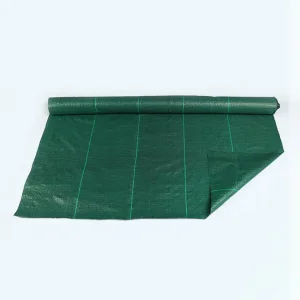
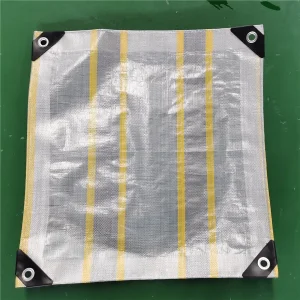
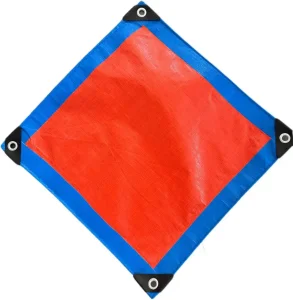
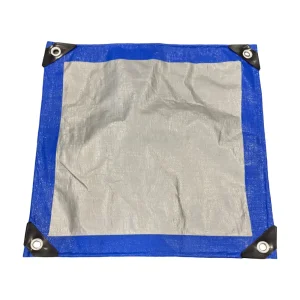
To ensure supply chain reliability, B2B procurement managers must evaluate five critical operational standards during factory audits.
Verify that the manufacturer uses 100% virgin HDPE polymer granules rather than recycled regrind scrap. Virgin resin exhibits vastly superior tensile elongation, resistance to environmental stress cracking, and consistent dye absorption.
Demand batch hydrostatic pressure test reports. A genuine heavy-duty trailer tarp must maintain waterproofing integrity under hydrostatic head pressures exceeding 8,000mm to 15,000mm H2O, particularly across welded seam junctions.
High wind loads exert extreme point stress on tie-down eyelets. Qualified manufacturers install multi-layer reinforced corner patches and conduct mechanical pull-out testing to ensure eyelets hold up to 150 kg (330 lbs) of direct shear force.
Request QUV accelerated weathering lab data (ASTM G154 standard). A compliant 3%-5% UV masterbatch formulation must retain over 80% of its initial tensile strength after 2,500 hours of continuous UV-B radiation exposure.
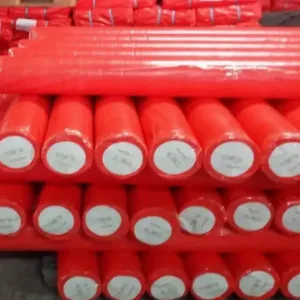
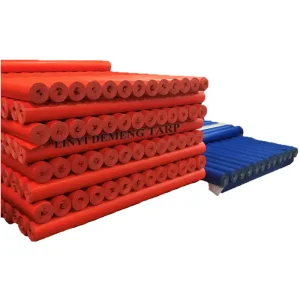
Heavy tarps incur significant ocean freight costs. Professional Chinese exporters utilize automated hydraulic baling presses or heavy-duty wooden palletizing systems to maximize container payload weight up to 28 metric tons per 40HQ container.
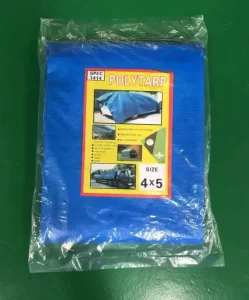
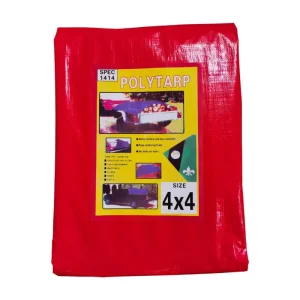
From inner polybags with color display inserts to barcode labeling, master carton printing, and custom-branded webbing, robust OEM support streamlines retail and distribution delivery across export markets.
Expert insights addressing key specification choices, order logistics, and performance benchmarks.
The choice between PE and PVC depends primarily on payload weight, handling frequency, and service life expectations:
Standard factory MOQ for custom manufactured tarpaulins is 3 metric tons per specification (or a mixed 20ft full container load for standard stocking sizes). Production lead time typically ranges between 15 to 25 days following artwork confirmation and pre-production sample approval. Fast-track repeat orders for stocked roll fabrics can ship within 10 to 15 days.
UV protection is added directly at the raw material extrusion stage. We blend 3% to 5% high-grade Hindered Amine Light Stabilizers (HALS) masterbatch into the molten virgin HDPE/PP resin prior to tape drawing. This chemical stabilization protects the polymer matrix against photo-oxidation and color fading, guaranteeing long-term outdoor exposure durability in high-UV regions such as the Middle East, Australia, and Arizona.
Yes. As a direct OEM manufacturer, we produce tarps according to your exact mechanical drawings. Customizable features include:
Every production run undergoes strict quality verification, including: (1) Hydrostatic pressure testing on finished seams to confirm zero water permeability, (2) Tensile and tear strength testing using computerized universal testing machines (ISO 1421), (3) Eyelet pull-out load testing, and (4) Weight (GSM) and dimensional tolerance auditing. Complete photo and video inspection reports are provided before container seal closing.