Direct factory-engineered tarp solutions featuring multi-layer polymer coating, high-tensile ripstop weaving, and certified weather resistance for international logistics networks.
A comprehensive examination of polymer composition, physical tensile strength, hydrostatic resistance, and environmental stability parameters for heavy-duty freight tarpaulins.
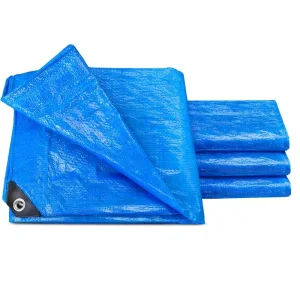
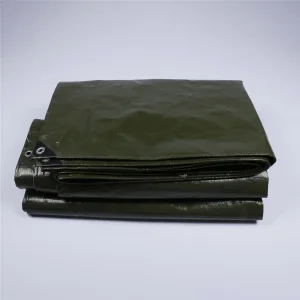
When engineering protective covers for heavy-duty transport vehicles—ranging from flatbed semi-trailers, intermodal chassis, and side-curtain trailers to agricultural bulk haulers—selecting the appropriate polymer substrate is critical. Modern logistics networks encounter severe mechanical stress, hydrodynamic pressure during highway velocities, extended exposure to UV radiation, and atmospheric chemical pollutants. A professional selection of China heavy duty truck tarpaulin requires analyzing structural differences between Polyvinyl Chloride (PVC) knife-coated fabrics and Polyethylene (PE) laminated high-density woven matrices.
The operational capability of heavy-duty truck tarpaulins is fundamentally governed by the base scrim denier, weave density, bonding layer physics, and protective lacquer formulation. The table below outlines key engineering metrics standardized across leading Chinese manufacturing plants:
| Performance Parameter | Heavy-Duty PVC Knife Coated (650-900 GSM) | Heavy-Duty PE Laminated (200-300 GSM) | Testing Standard |
|---|---|---|---|
| Base Cloth Construction | 1000D × 1000D / 1300D × 1300D High-Tenacity Polyester | 1000D × 1000D High-Density Polyethylene (HDPE) Weave | DIN EN ISO 2060 |
| Tensile Strength (Warp/Weft) | 4000 N / 3500 N per 5 cm | 1400 N / 1300 N per 5 cm | DIN 53354 / ISO 1421 |
| Tear Resistance (Trapezoidal) | 600 N / 500 N | 250 N / 220 N | DIN 53363 |
| Hydrostatic Head Pressure | > 100 kPa (10,000 mm H₂O) | > 70 kPa (7,000 mm H₂O) | ISO 811 / AATCC 127 |
| Thermal Stability Range | -40°C to +70°C (-40°F to +158°F) | -30°C to +60°C (-22°F to +140°F) | DIN 53361 |
| Surface Finishing | Dual PVDF / Acrylic Lacquer (Self-cleaning) | LDPE Double-sided Co-extrusion Lamination | Internal Optical Spectrophotometry |
| Flame Retardancy | B1, B2 (DIN 4102-1), NFPA 701, M2 | CPAI-84 / Customized FR Masterbatch | DIN 4102 / NFPA 701 |
Chinese technical textile manufacturers utilize specialized additive recipes during the liquid PVC dip-coating or LDPE extrusion film lamination processes:
An in-depth analysis of vertical manufacturing integration, raw material cluster economics, precise quality control automation, and custom OEM manufacturing scalability.
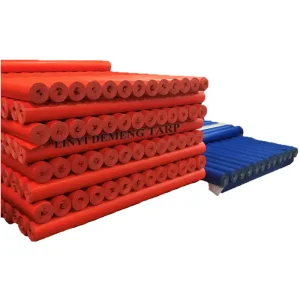
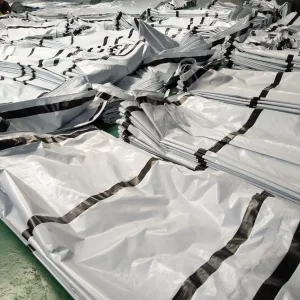
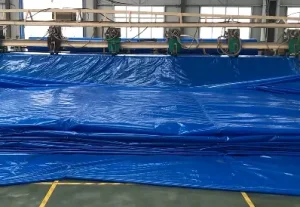
Leading Chinese manufacturing hubs (such as Linyi in Shandong and Haining in Zhejiang) integrate petrochemical processing, filament drawing, weaving, double-sided coating, automated cutting, high-frequency welding, and eyelet riveting within a single industrial ecosystem, substantially reducing unit costs.
Chinese factories utilize high-capacity Dornier air-jet weaving machines alongside specialized European knife-coating lines. This equipment enables continuous roll production up to 5.1 meters wide with zero structural seam defects and consistent coat weight tolerances (±5 GSM).
Utilizing high-frequency dielectric welding (15 kW to 35 kW outputs), computerized hot-air sealing lines, double-stitched reinforced webbing hems, and automatic brass/aluminum eyelet setting machines, China's export factories guarantee consistent seam peel strengths matching original base fabric specs.
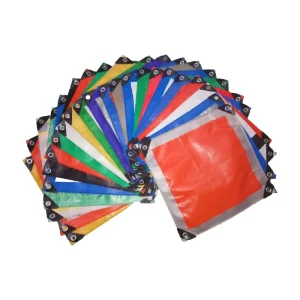
The concentration of raw material synthesis (Sinopec PE/PP granules, specialized PVC resin production) and industrial machinery manufacturing in Shandong and Zhejiang provinces creates significant economies of scale. Buyers sourcing directly from Chinese factories benefit from shortened lead times (15 to 25 days for containerized shipments), complete customizability of color codes (RAL/Pantone matching), optimized surface lacquer coatings, and precise control over tear-stop scrim weaving configurations.
A strategic guide for enterprise procurement officers, logistics distributors, and transport fleet directors seeking optimal life-cycle reliability and international compliance.
For international enterprise fleet operators managing thousands of commercial trailers across transcontinental highways, purchasing truck tarpaulins is not merely an operational supply expense—it is a critical risk-mitigation strategy. Cargo damage stemming from tarp tears, seam delamination under hydrodynamic strain, or water leakage can cause substantial financial liabilities.
Procurement specifications must strictly mandate international technical certifications. Chinese OEM suppliers regularly validate products against key global benchmarks:
Exploring next-generation technical textile innovations transforming global freight logistics, sustainable fleet operations, and smart supply chain monitoring.
Advanced Chinese tarpaulin suppliers are co-developing technical textiles embedded with micro RFID chips, flexible tamper-detecting conductive threads, and Bluetooth Low Energy (BLE) environmental sensors. These "smart covers" enable real-time tracking of cargo integrity, alerting dispatchers to unauthorized tarpaulin slicing or temperature/humidity anomalies during sensitive cold-chain or high-value freight transit.
Driven by global carbon reduction mandates (ESG targets), manufacturers are replacing traditional petroleum-based plasticizers with bio-derived plant esters and developing 100% recyclable polyolefin tarpaulins (PO/PE blends). These mono-material designs eliminate the complex separation process of polyester base threads from PVC coatings, allowing end-of-life tarpaulins to be shredded and directly remanufactured into industrial plastic pellets.
Furthermore, advancement in nano-scale surface coatings—such as self-cleaning TiO₂ (titanium dioxide) photo-catalytic top layers—allows truck covers to break down organic dirt and road grime under solar ultraviolet rays. When combined with hydrophobic PVDF lacquers, rain shower rinses clean the tarpaulin exterior automatically, lowering fleet maintenance costs and preserving brand graphics printed on trailer side curtains.
Real-world engineering deployments demonstrating tarpaulin performance under demanding geographic and operational environments globally.
Environment: Intense UV radiation, ambient temperatures exceeding +50°C (+122°F), severe sand scour abrasion, and sudden night-time temperature drops.
Solution: 900 GSM Heavy-Duty PVC Tarpaulin with 5% HALS UV stabilizer dosage, dual PVDF top-coating, and high-heat reflection pigments. Results showed zero coating degradation, cracking, or color fading after 36 months of continuous desert transport operations.
Environment: Extreme freezing down to -40°C (-40°F), heavy ice accumulation, road salt exposure, and high mechanical flex-stress during manual tarping.
Solution: Low-temperature plasticized PVC formulation bonded to 1300D high-tenacity polyester scrim. The specialized tarp maintained dynamic flexibility without cold-cracking, preserving full water barrier integrity across harsh Nordic winter operations.
Environment: Near 100% relative humidity, torrential monsoon rain, high salt spray during inter-island ferry transit, and mold growth risk.
Solution: Multi-layer PE co-extruded tarpaulin featuring anti-microbial additive additives and double heat-sealed reinforced hems with rust-proof solid brass eyelets. Complete cargo dryness was achieved across 200+ maritime/overland freight runs.
Environment: Sharp mineral aggregate loading impacts, heavy abrasive friction, vibration strain, and high puncture hazards.
Solution: Heavy-duty rip-stop 750 GSM PVC tarpaulin constructed with double-thread grid scrim and high-frequency welded double-layer wear patches along corner stress points, extending tarp service life by 2.5x over standard covers.
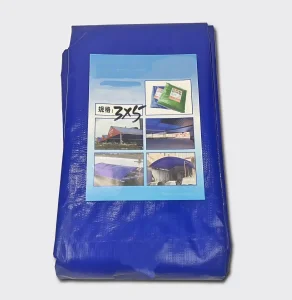
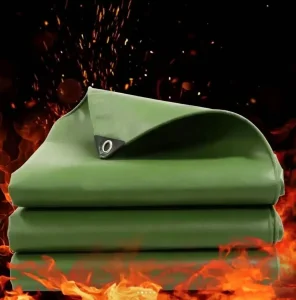
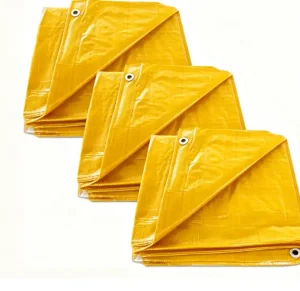
Custom industrial tarpaulins, flame-retardant sheeting, anti-aging rolls, and specialized covers manufactured to exact customer specifications.
Expert insights compiled by senior polymer engineers and global trade directors to assist procurement managers during supplier evaluations.