Direct supply of precision-extruded, high-density woven tarpaulins with dual-side lamination for structural and industrial applications.
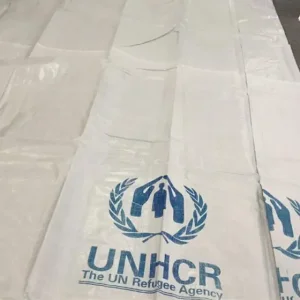
In an era defined by intensifying macro-climatic anomalies—ranging from Category 5 Atlantic hurricanes and Pacific typhoons to extreme solar radiation cycles in the Middle East—the global requirement for engineered temporary roofing systems has undergone a paradigm shift. Temporary roof tarpaulins are no longer regarded as mere commodity drop-cloths. Modern industrial procurement heads, emergency disaster response agencies (including UN human assistance divisions and FEMA contractors), and commercial civil engineering firms treat heavy-duty waterproof poly-tarps as critical structural assets engineered to mitigate multi-billion-dollar collateral weather damages.
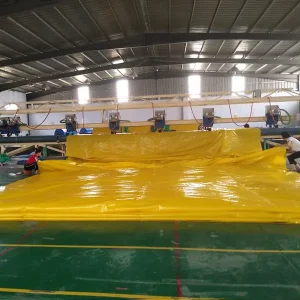
China's manufacturing ecosystem, specifically centered within high-capacity extrusion hubs like Linyi City, Shandong Province, accounts for over 65% of the world's high-density polyethylene (HDPE) and polyvinyl chloride (PVC) technical textile exports. As leading China Heavy Duty Waterproof Roof Tarps Manufacturers & Suppliers, our industrial infrastructure combines chemical polymer engineering, high-speed water-jet weaving, and dual-extrusion molten lamination processes to manufacture tarpaulins capable of surviving extreme mechanical stress, continuous hydrostatic pressure, and prolonged UV photo-oxidation.
Information Gain Key Takeaway: Unlike standard retail-grade tarps (60–90 GSM) that degrade under UV light within weeks, heavy-duty industrial roof tarpaulins require specific polymer formulations: High-Density Polyethylene woven core scrim (HDPE) for tensile structural memory, low-density polyethylene (LDPE) for double-pass liquid barrier lamination, and Hindered Amine Light Stabilizers (HALS) to prevent polymer chain scission under high-irradiance conditions.
Understanding the multi-stage manufacturing sequence that transforms raw virgin resin pellets into field-proven, weather-impervious protective membranes.
100% virgin HDPE pellets are mixed with UV stabilization masterbatch (HALS) and extruded into flat tapes at precise denier ratings (from 800D to 1500D), establishing the foundational tensile strength of the substrate.
Utilizing high-speed circular and flat looms, the tape yarn is woven into tight mesh configurations (8×8, 10×10, 12×12, up to 14×14 threads per square inch), providing exceptional tear propagation resistance.
The woven inner scrim passes through high-pressure extrusion laminators that melt-apply a uniform LDPE coating to both sides, sealing all interstitial gaps to guarantee 100% water impermeability.
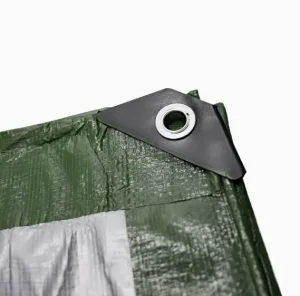
Hems are folded over continuous heavy-duty PP ropes and ultrasonically welded or thermal-sealed. Corners receive double-layer plastic-reinforced corner patches to distribute anchor tie-down loads.
Precision automatic pneumatic presses punch rust-proof aluminum, solid brass, or stainless steel eyelets along hems at customized spacings (30cm, 50cm, 100cm pitch) under high clamping force.
Every finished lot undergoes rigorous batch testing: Hydrostatic pressure head test (up to 15,000mm H2O), trapezoidal tear resistance testing, and seam thermal weld pull-apart verification.
Selecting the optimal technical textile matrix depends on installation duration, wind shear requirements, temperature swings, and chemical exposure risks. The engineering table below outlines empirical performance benchmarks:
| Engineering Property | Heavy-Duty PE Tarp (160–300 GSM) | Woven PP Tarp (140–250 GSM) | Industrial PVC Coated (450–900 GSM) |
|---|---|---|---|
| Primary Resin Core | High-Density Polyethylene (HDPE) | Polypropylene (PP) | High-Tenacity Polyester (PES) Scrim |
| Hydrostatic Head Pressure | > 8,000 mm H₂O | > 6,000 mm H₂O | > 15,000 mm H₂O (Impervious) |
| Tensile Strength (ASTM D751) | 1200 N / 5cm (Warp), 1100 N (Weft) | 1400 N / 5cm (High Stiffness) | 2800 N / 5cm (Structural Grade) |
| Tear Propagation (Trapezoid) | High (Polyolefin Flexibility) | Moderate (Prone to stress cracking) | Extreme (Rip-Stop Knife-Coated) |
| Operating Temperature Window | -40°C to +80°C (Cold-Crack Proof) | -10°C to +90°C | -30°C to +70°C |
| UV Lifetime (3.5% HALS) | 18 to 36 Months Field Exposure | 12 to 18 Months Field Exposure | 60+ Months Continuous Exposure |
| Flame Retardancy Standard | CPAI-84 / NFPA 701 (Optional) | Custom Additive Compatible | DIN 4102 B1 / M2 Certified |
| Typical Sourcing Target | Emergency Roofing, Hardware Distribution | Agricultural Scaffolding, Lumber Wrap | Permanent Structures, Truck Curtains |
Tailored structural configurations designed to meet regional weather hazards, building code mandates, and industrial workflow requirements.
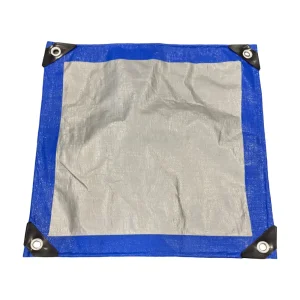
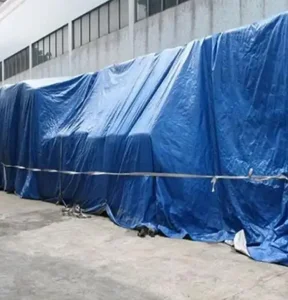
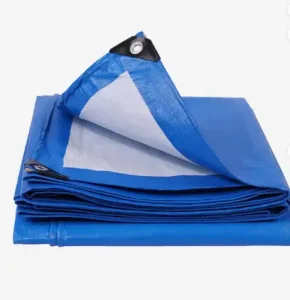
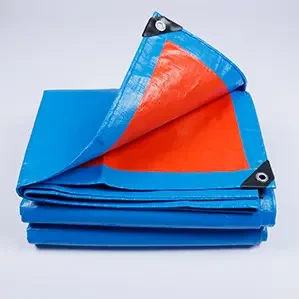
Rapidly deployed blue/silver 14-mil heavy-duty tarps used by FEMA contractors and commercial roofers following severe weather events. Fitted with heavy-gauge corner webbings and 18-inch eyelet pitch to resist hurricane-force wind uplift.
Fire-retardant (EN 13501-1 Class B-s1, d0) scaffold enclosures and temporary roof coverings. Protects open building envelopes, concrete pours, and structural masonry during winter expansion and renovation phases.
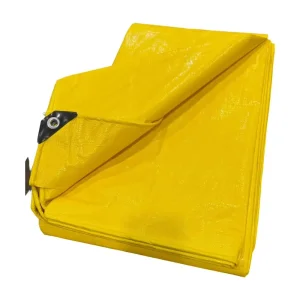
Engineered with 5% active Hindered Amine Light Stabilizers (HALS) to withstand solar radiation exceeding 220 kLy/year in Saudi Arabia, UAE, and Qatar. Protects bulk cement, drilling mud, and raw materials from intense solar degradation.
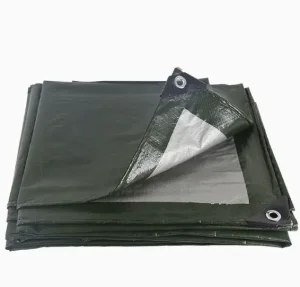
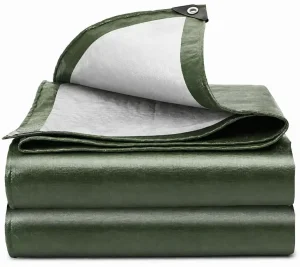
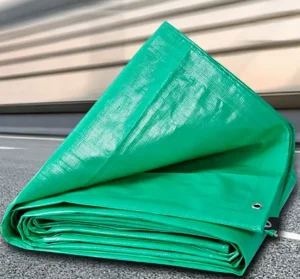
Heavyweight 200–260 GSM green/black dual-sided poly tarps with mold-inhibiting lamination. Used for covering vast hay stacks, grain bunkers, and palm oil stockpiles during heavy monsoon seasons.
Custom-sized, heavy-duty tarpaulins outfitted with steel D-rings and elastic cord tie-downs. Fits open-top sea containers, flatbed machinery trailers, and intermodal rail transport.
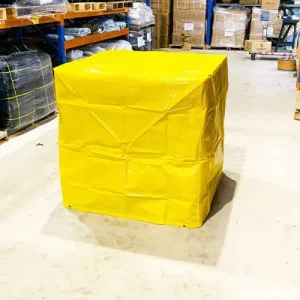
Pre-formed 5-sided waterproof pallet covers and timber wraps designed to protect high-value exported minerals, machinery parts, and packaged coffee beans during long maritime transit.
Operating a modern 30,000 m² integrated production plant in Wanggou Industrial Park, Linyi City, our factory adheres to ISO 9001:2015 (Quality Management) and ISO 14001:2015 (Environmental Management) standards. We recognize that international buyers require total compliance with local regulatory frameworks, including European Union REACH (EC 1907/2006) chemical safety mandates regarding phthalates, heavy metals, and SVHCs (Substances of Very High Concern).
Supply Chain Quality Assurance: Every lot is backed by batch-specific certificates of analysis (COA). Third-party pre-shipment inspection by international testing authorities (such as SGS, Bureau Veritas, or TÜV Rheinland) is welcome and routinely performed at our loading docks.
As regulatory scrutiny around single-use plastics intensifies and corporate ESG mandates reshape global procurement, our R&D engineering teams are pioneering next-generation synthetic textile technologies:
Developing 100% pure polyolefin tarpaulins where the inner scrim, lamination film, and hem rope are manufactured from identical polyethylene grades. This eliminates sorting steps during industrial recycling, enabling 100% closed-loop post-use re-granulation.
Embedding ultra-thin, passive RFID and moisture-sensing threads directly into the roof tarpaulin scrim during weaving. This allows automated building management systems to instantly locate micro-leaks or structural tension losses on massive covered roof surfaces.
Integrating titanium dioxide nano-particle top-coats that use ambient sunlight to break down airborne dust, industrial soot, and organic pollutants, preserving maximum solar reflectiveness over multi-year field installations.
Explore our full line of specialized pallet covers, truck tarps, thick agriculture sheets, and industrial rolls.
Expert engineering answers to critical specification, quality verification, and commercial procurement queries.
For short-term or standard retail applications, 60–90 GSM poly-tarps with 8×8 mesh density are typically sufficient. However, for structural roof repairs, hurricane emergency response, or commercial building covers, we recommend a minimum of 160 GSM to 300 GSM with a 12×12 or 14×14 weave density using 1000D+ high-tenacity HDPE yarn. Higher GSM ensures higher resistance to wind tearing and puncture from debris, while providing a longer field life under UV exposure.
We blend top-tier Hindered Amine Light Stabilizers (HALS) directly into the virgin HDPE molten polymer during yarn extrusion, at dosages between 3.0% and 5.0% by weight depending on destination climate. For harsh sun regions like the Middle East, Australia, or Arizona, this formulation guarantees resistance up to 3000+ hours in accelerated Xenon-Arc weathering test chambers (ASTM G154), preventing polymer brittleness and color fading.
For standard stocked specifications and popular sizes (e.g., 20'x30', 30'x50' blue/silver tarps), our MOQ starts at one 20ft container mix (approx. 10–11 metric tons). For fully customized sizes, non-standard pantone colors, or specialized private label packaging, our minimum requirement is 3 metric tons per specification. Regular bulk production lead time is 15 to 25 calendar days following artwork confirmation and deposit clearance.
Yes. By incorporating specialized bromine-free or halogenated fire-retardant (FR) masterbatches during extrusion, we produce heavy-duty tarps complying with international fire safety certifications including USA CPAI-84, NFPA 701 (Method 1 & 2), and European Union EN 13501-1 Class B-s1, d0 / DIN 4102 B1 standards. Lab test certificates are supplied per order.
We utilize multi-stage automated hot-air thermal seam sealing machines operating at digitally controlled temperatures (over 400°C) and pressure. This fuses the molten LDPE outer coatings together into a seamless molecular bond. Every batch is subjected to hydrostatic pressure testing exceeding 8,000mm to 15,000mm H₂O to guarantee zero water penetration across all welded seams.
Standard tarps feature anti-rust aluminum grommets spaced every 30cm, 50cm, or 100cm. For severe wind uplift zones, we offer solid brass or heavy-gauge stainless steel eyelets set over 4-layer folded hem structures. Additionally, we mold high-impact polypropylene triangular corner patches that encase the corner grommets to evenly distribute extreme tie-down tensions.
Linyi is the global epicenter for plastic woven textile manufacturing in China, offering unmatched industrial clustering benefits: direct access to raw resin suppliers, specialized high-speed weaving machinery, low-cost logistics hubs, and a highly skilled technical workforce. Operating our integrated 30,000 m² factory allows us to eliminate middleman markups while maintaining total quality control from raw pellet to loaded container.
We support standard international commercial terms including FOB (Qingdao / Lianyungang ports), CFR, CIF, DDP, and EXW. Our experienced export team manages full documentation sets: Commercial Invoice, Packing List, Original Clean Bill of Lading, Certificate of Origin (Form E, Form A, RCEP), and Phytosanitary / Fumigation documentation as required by destination customs authorities.