
Direct-from-factory technical-grade woven PE tarpaulins, PVC sheets, and layflat tubing systems.
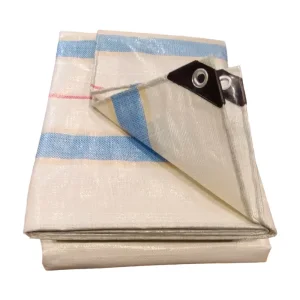
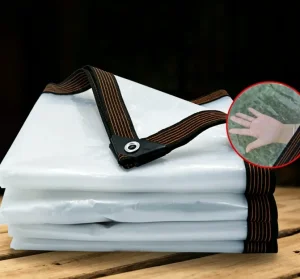
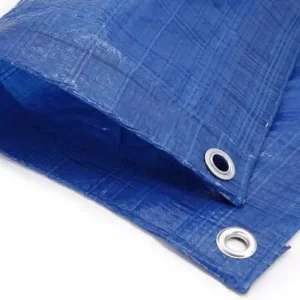
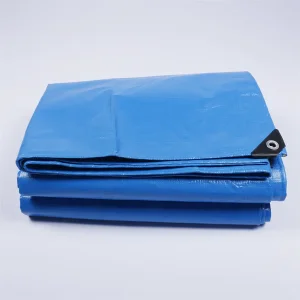
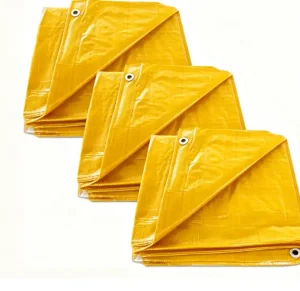
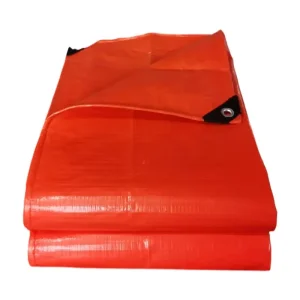
Polyethylene ($[C_2H_4]_n$) remains the cornerstone of modern materials engineering, accounting for over 34% of the global synthetic polymer market. Valued at over USD 110 billion globally and expanding at a CAGR of 4.2%, Polyethylene's unique molecular adaptability—ranging from Low-Density Polyethylene (LDPE) and Linear Low-Density Polyethylene (LLDPE) to High-Density Polyethylene (HDPE) and Ultra-High-Molecular-Weight Polyethylene (UHMWPE)—enables critical applications across agricultural preservation, infrastructure protection, global logistics, and industrial containment.
Polyethylene synthesis relies on the polymerization of ethylene monomers derived from steam cracking of naphtha or ethane. By manipulating catalyst systems (Ziegler-Natta, Metallocene, or Phillips catalysts), manufacturers precisely control branching density, molecular weight distribution (MWD), and crystallinity index (ranging from 45% in LDPE to over 80% in HDPE).
PE exhibits exceptional impact resistance, low coefficient of friction, high dielectric strength, and chemical inertness against strong acids, alkalis, and organic solvents. Tensile strengths range from 10 MPa (LDPE sheeting) to over 38 MPa in oriented HDPE tapes, with melting points spanning $105^\circ\text{C}$ to $135^\circ\text{C}$.
As standard thermoplastic material (Resin Identification Code 2 for HDPE, Code 4 for LDPE), Polyethylene represents the vanguard of post-consumer recycled (PCR) circular economies. Advanced chemical recycling (pyrolysis) and mechanical re-granulation allow up to 100% material closed-loop recovery without severe chain scission.
In high-performance industrial tarpaulins, pure monofilaments often fail under multi-axial stress. Leading Chinese manufacturing plants utilize a 3-layer co-extrusion process: an inner HDPE high-density woven fabric core providing tensile structural strength (burst resistance), double-laminated with outer LLDPE layers containing active Hindered Amine Light Stabilizers (HALS) and Carbon Black blockers. This structure delivers superior tear strength per gram compared to traditional PVC sheeting at 40% less tare weight.
Leveraging localized industrial clusters, high-speed automated extrusion lines, and direct raw material integration in Shandong Province.
China’s dominance in industrial Polyethylene processing—exemplified by hubs like Linyi, Shandong (home to Linyi Xinshengyang Plastic Products Co., Ltd. / Star Tarpaulins since 2006)—is built on end-to-end vertical integration. Unlike regional converters that purchase pre-woven gray fabric, tier-1 Chinese plants control the entire synthesis sequence:
Chinese Polyethylene manufacturing has transitioned from labor-intensive assembly to automated, Industry 4.0 data-driven processing. Modern plants maintain rigorous quality gates across every unit operation:
| Process Step | Technical Control Parameter | Target Tolerance |
|---|---|---|
| Resin Extrusion | Melt Flow Index (MFI) & Denier | ± 2% Denier Uniformity |
| Weaving Matrix | Warp/Weft Thread Count & Tension | Zero Missing Picks |
| PE Lamination | Coating Micron Thickness & Adhesion | ≥ 15 Micron Film Peel Strength |
| Finishing Line | Eyelet Pull-out & Weld Hydrostatics | ≥ 500 N Resistance / 100% Waterproof |
Comprehensive breakdown of polymer selection according to environmental stress, mechanical load, and solar radiation exposure.
| Polymer Grade | Density Range ($g/cm^3$) | Key Performance Characteristics | Primary Industrial Applications |
|---|---|---|---|
| HDPE (High-Density PE) | 0.941 – 0.965 | High tensile strength, rigid structure, low permeability, high chemical resistance. | Woven tarpaulin substrates, heavy-duty geomembranes, concrete curing blankets, rigid containers. |
| LLDPE (Linear Low-Density PE) | 0.915 – 0.925 | Exceptional puncture resistance, high elongation, superior flex-crack durability. | Double-sided tarpaulin lamination films, stretch wrap, agricultural silage film, greenhouse covers. |
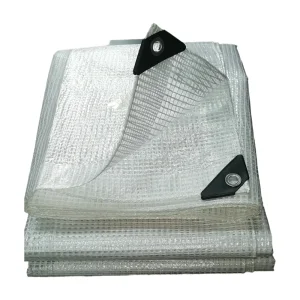
| LDPE (Low-Density PE) | 0.910 – 0.940 | High flexibility, optical clarity, easy processability, sound moisture barrier. | Transparent rainproof sheeting, succulent plant shields, lightweight protective covers, film packaging. |
| PP (Polypropylene Blend) | 0.895 – 0.920 | Higher heat deflection temperature ($110^\circ\text{C}+$); elevated flexural modulus. | Heavy-duty cargo covers, weed barrier ground fabrics, high-stress scaffolding sheets. |
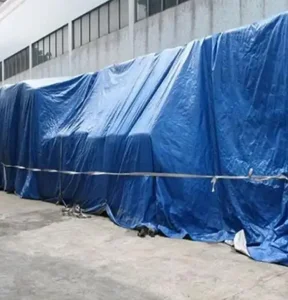
Scaffolding weather enclosures, high-visibility blue/orange site tarpaulins, 100% virgin PE concrete curing insulation blankets, foundation vapor barriers, and temporary roofing emergency membranes. UV-stabilized to withstand intense outdoor solar irradiance (up to 300 Kly).
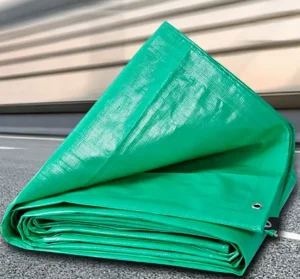
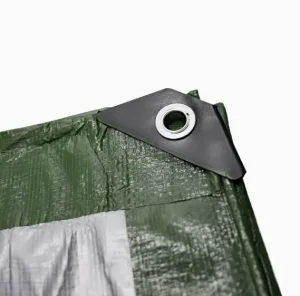
Heavy-duty truck side curtains, container liners, railcar tarps, and flatbed trailer covers. Features double-green or green/silver thermal-reflectively coated 140g–300g sheets designed to prevent thermal buildup while providing complete rainproof protection during long-haul transit.
Weed barrier suppression fabrics, agricultural hay stack covers, PE layflat irrigation hoses, and thermal greenhouse film. Engineered with targeted UV masterbatch dosages (3%–5%) to prevent photo-oxidation during multi-season field usage in South America, Africa, and the Middle East.
As environmental regulations tighten and global buyers demand verified EPD (Environmental Product Declarations), Polyethylene manufacturing is undergoing a structural transition toward decarbonization and advanced additive engineering.
Traditional multi-material laminates (e.g., PET bonded to PVC) present complex recycling challenges. The modern standard shifts decisively toward Mono-Material Polyethylene Structures. Combining an HDPE woven base fabric with LLDPE lamination allows the entire end-of-life tarp or sheet to be shredded and melted directly into Post-Consumer Recycled (PCR) pellets without chemical delamination.
Photodegradation from UV light breaks Polyethylene polymer chains, causing embrittlement and peeling. Advanced Chinese manufacturers now incorporate nano-zinc oxide ($ZnO$) and triazine-based HALS (Hindered Amine Light Stabilizers). This molecular shielding increases outdoor weatherability in high-radiation regions (e.g., GCC countries and Australia) from 12 months up to 5+ years.
Synthesized from sugarcane ethanol feedstocks, Bio-PE offers an identical chemical and physical profile to fossil-based PE while acting as a carbon sink ($2.15\text{ kg CO}_2$ absorbed per kg produced). Tier-1 Chinese suppliers are integrating up to 30% Bio-PE into standard production runs for European buyers under strict REACH and EU taxonomy guidelines.
Polyethylene tarpaulins specified for high-risk industrial sites, mining, and scaffolding now feature halogen-free flame retardant additives compliant with UL94 V-0 and DIN 4102 B1 standards. Co-extruded layers also embed conductive carbon black pathways to safely dissipate static electricity during bulk grain or chemical handling.
Sourcing Polyethylene products globally requires rigorous evaluation beyond price-per-ton. Professional procurement managers must implement structural quality audits to prevent job-site failures.
Standard: ASTM D882 / ISO 527-3
Ensure warp and weft tensile limits meet design specs. Standard 140g PE tarpaulins should achieve $\ge 700\text{ N/5cm}$ tensile strength. Require batch test certificates verifying trapezoidal tear resistance (ASTM D1922) to prevent propagation when snagged.
Standard: DIN EN 20811 / AATCC 127
Waterproof performance requires a minimum hydrostatic pressure rating of $\ge 80\text{ kPa}$ ($8,000\text{ mm H}_2\text{O}$). Ultrasonic heat-welded seams must be tested to ensure seal integrity matches the parent fabric strength without thermal degradation.
Standard: ASTM G154 (QUV Testing)
Demand QUV accelerated weathering laboratory reports showing $\ge 80\%$ retention of tensile strength after 1,500 hours of continuous UV-B radiation exposure ($313\text{ nm}$ wavelength at $60^\circ\text{C}$).
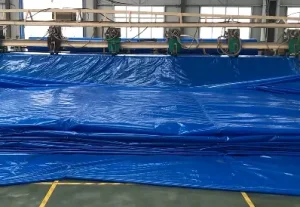
Trading globally as Star Tarpaulins, Linyi Xinshengyang operates a modern 30,000 m² integrated production complex in Wanggou Industrial Park, Lanshan District, Linyi, Shandong. Producing over 20,000 tons annually of PE, PP, and PVC sheets (60–300 GSM), the factory maintains full in-house extrusion, circular weaving, double-sided lamination, edge heat-sealing, and grommet punching lines.
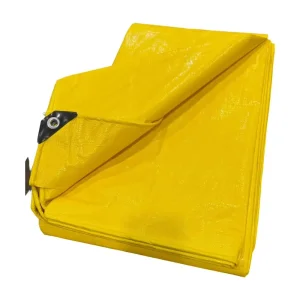
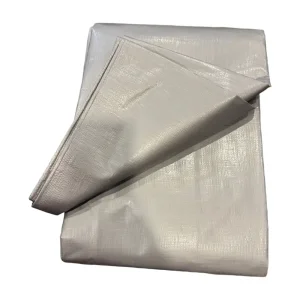
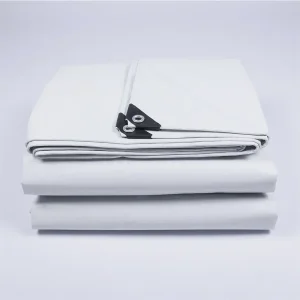
Explore our full engineering portfolio: insulated curing tarps, mesh screens, double-coated covers, and transport sheets.
Clear engineering answers to complex B2B Polyethylene procurement questions.
GSM selection depends directly on exposure duration and mechanical strain:
While both are polyolefins, Polyethylene (PE) offers superior low-temperature flexibility (down to $-40^\circ\text{C}$ without embrittlement), higher tear elongation, and far greater intrinsic resistance to UV degradation when stabilized. Polypropylene (PP) exhibits higher flexural rigidity and a higher melting point ($160^\circ\text{C}$ vs $130^\circ\text{C}$ for PE), making PP ideal for high-stiffness weed barrier geotextiles, but more prone to environmental cracking in cold climates unless copolymerized.
UV resistance is engineered during the primary extrusion stage by compounding virgin HDPE resin with 3% to 5% active Hindered Amine Light Stabilizers (HALS) and micro-fine Carbon Black masterbatch. Quality assurance is verified via ASTM G154 accelerated weathering tests. Products destined for high-UV environments (such as Australia, Arizona, or the Middle East) are calibrated to withstand 300 to 500 Kly (Kilo-Langleys) of cumulative solar radiation.
Standard minimum order quantities (MOQ) for custom-printed, custom-sized specifications start at 3 metric tons per specification, or one mixed 20ft container (approx. 11–13 tons). Production lead times typically range from 15 to 25 days following pre-production sample approval. A 40ft High Cube container accommodates approximately 25 to 28 tons of packed PE tarpaulin bales or cartons depending on roll width and GSM packing density.
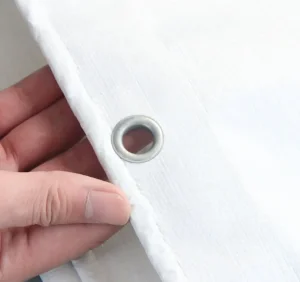
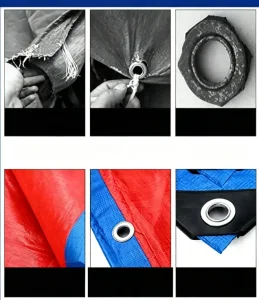
Yes. Fully automated conversion lines fit aluminum, brass, or molded plastic eyelets at custom intervals (e.g., 50 cm, 100 cm, or 3 feet). Perimeter edges feature embedded PP rope inner reinforcement with heat-welded hems. Four-bar black molded rubber corner patches provide extra tear resistance under high wind loads. OEM flexographic printing allows up to 4-color logos and customized barcode labels.