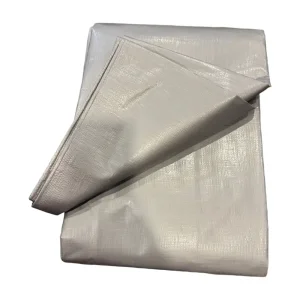
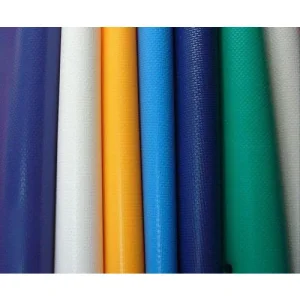
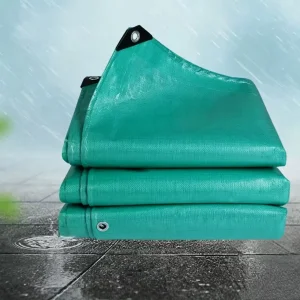
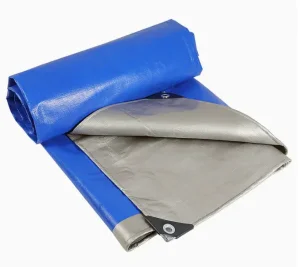
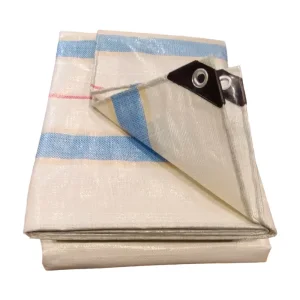
Precision-extruded, high-density polyethylene (HDPE) and PVC woven sunshade tarpaulins designed for maximum solar radiation shielding and all-weather durability.
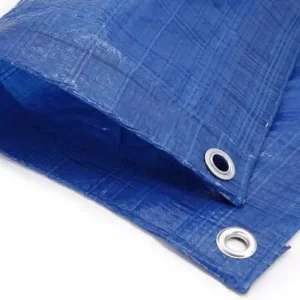
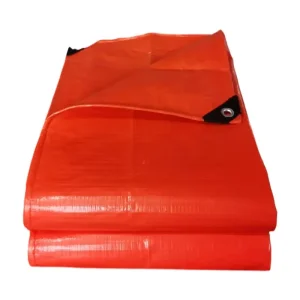
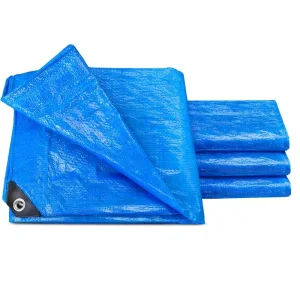
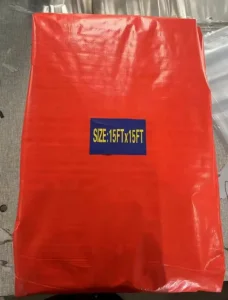
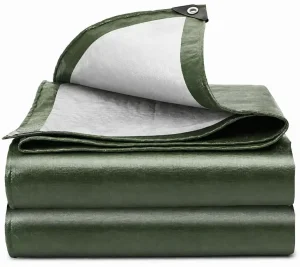
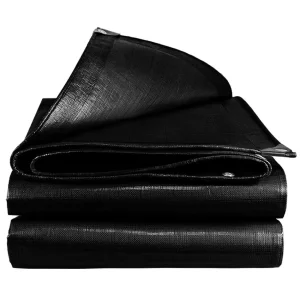
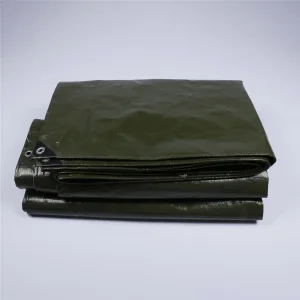
A rigorous examination of solar spectral radiation impact on synthetic polymers, next-generation UV masterbatch formulations, and accelerated weathering degradation kinetics.
Solar radiation poses a severe chemical threat to outdoor polyolefin textiles, including polyethylene (PE) and polypropylene (PP) woven structures. In hot desert regions, tropical equatorial zones, and high-altitude industrial construction sites, intense solar ultraviolet light—specifically within the UVA (315–400 nm) and UVB (280–315 nm) spectra—triggers catastrophic polymer photoxidation. Without engineered protection, un-stabilized HDPE tape yarns experience homolytic C-C and C-H bond cleavage, producing alkyl radicals ($R^\bullet$) that rapidly combine with atmospheric oxygen to form peroxyl radicals ($ROO^\bullet$). This radical chain reaction causes cross-linking brittleness, dramatic tensile strength decay, surface chalking, and premature mechanical collapse.
To establish true multi-year field endurance under extreme solar irradiance, a top-tier China Sun Protection Supplier & Factory must integrate a three-tier chemical stabilization matrix during the virgin resin extrusion phase:
Monomeric and polymeric Hindered Amine Light Stabilizers (e.g., Chimassorb 944 / Tinuvin 622) trap active nitroxyl radicals without consumption, providing continuous self-regenerating chemical protection throughout the polymer mass.
Benzotriazole compounds and high-purity micro-fine Titanium Dioxide ($\text{TiO}_2$) or Carbon Black absorb high-energy UV photons, instantly converting destructive light energy into harmless low-level thermal dissipation.
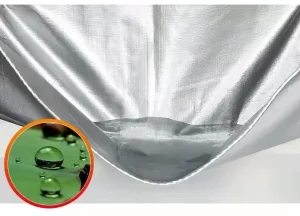
Tri-layer LDPE/LLDPE molten coating coats both surfaces of high-density woven fabric. Incorporating heat-reflective pigments (silver/gold/green) reduces thermal absorption by up to 35°C, preventing thermal degradation.
Distinguished international procurement organizations evaluate factory capability by reviewing laboratory verification reports based on standardized testing protocols. True industrial-grade sun protection tarpaulins must meet or exceed the following global benchmarks:
Matching technical tarpaulin specifications with geographic microclimates, exposure durations, and physical strain parameters for optimized Total Cost of Ownership (TCO).
Global commercial purchasers—ranging from civil infrastructure conglomerates in the Middle East to agricultural cooperatives in Australia and South America—face distinct climate challenges. Sourcing off-the-shelf standard tarpaulins often leads to premature solar degradation, tore seams, and costly equipment replacement. A mature supplier must tailor GSM (grams per square meter), denier counts, and UV additive percentages to regional radiation intensities.
| Target Region / Climate | Solar Radiation Index | Recommended Material | GSM Range | UV Addition (%) | Estimated Lifespan |
|---|---|---|---|---|---|
| Middle East (GCC) & Sahara Arid / Extreme Solar Exposure |
Extreme (>220 kly/yr) | HDPE Woven / Double Silver Coated PE | 180 – 300 GSM | 4.0% – 5.0% HALS | 36 – 60 Months Outdoor |
| Southeast Asia & Amazon Basin Tropical / High UV + Monsoons |
High (160–200 kly/yr) | PE Coated PVC / Anti-Mildew PE | 140 – 250 GSM | 3.0% – 4.0% UV | 24 – 48 Months Outdoor |
| North America & EU Region Temperate / Seasonal Freeze-Thaw |
Moderate (100–140 kly/yr) | Standard Polyethylene (PE) / PP Sheet | 90 – 180 GSM | 2.0% – 3.0% UV | 18 – 36 Months Outdoor |
| Australia & Southern Africa High UV-B Hole / Intensive Light |
Very High (>200 kly/yr) | Heavy Duty Tri-Layer PE / Flame Retardant | 200 – 350 GSM | 4.5% – 5.0% HALS | 36 – 48 Months Outdoor |
By upgrading virgin resin content by 15% and increasing UV additive dosing from standard 1% to engineered 4%, global procurement officers achieve a 300% extension in outdoor field operational life. This eliminates labor re-installation costs and cargo damage liabilities.
Modern ESG compliance mandates circular material usage. Our 100% Polyethylene (PE) tarpaulin systems feature matching PE inner woven fabric, PE lamination film, and PE hem ropes, allowing full closed-loop mechanical recycling without sorting.
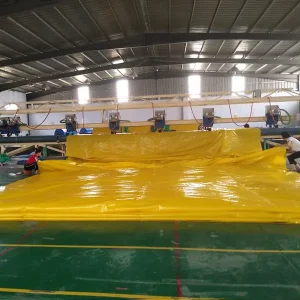
Inside Linyi Xinshengyang Plastic Products Co., Ltd. (Star Tarpaulins): Vertical manufacturing integration, automated processing, and digital quality oversight.
Utilizing micro-processor controlled extrusion lines, virgin HDPE granules are melted, drawn into flat filaments, and orientation-strengthened to achieve ultra-high tensile tenacity ($\ge 9.5\text{ cN/dtex}$).
Hundreds of automated circular looms operate 24/7, crafting dense warp/weft weave structural mesh (8x8 up to 14x14 strands per square inch) that guarantees rip-stop structural strength.
Dual wide-format coating lines apply LDPE water barrier lamination films on both fabric faces simultaneously at elevated temperatures, bonding layers into a zero-delamination material.
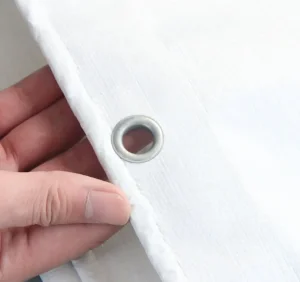
Ultrasonic edge-folding machines heat-seal perimeter hems reinforced with internal polypropylene cord. Automated eyelet punches install rustproof aluminum or brass grommets every 50cm.
In-house QC technicians verify hydro-static head pressure ($\ge 100\text{ kPa}$), trapezoidal tear resistance, grommet pull-out force, and color fastness for every production run batch.
Situated in Linyi, Shandong—China's logistics capital—with direct port connection to Qingdao. Container space calculation software optimizes bale packing density to reduce ocean freight cost per unit.
Proven field deployment across critical industrial, agricultural, logistics, and emergency response infrastructure worldwide.
Sun exposure causes severe moisture loss and nutrient destruction in stacked hay bales. Heavy-duty 200+ GSM yellow/black or green/silver tarpaulins with heavy UV stabilization maintain internal hay quality, block UV degradation, and withstand gale-force winds when secured via reinforced web handles.
Long-distance trucking across desert highways exposes cargo to constant sun scouring and high wind shear. Dual-side green or black PE/PVC truck covers feature tear-resistant weave construction, preventing puncture propagation and protecting moisture-sensitive freight from sun baking and rainstorms.
High-rise civil construction projects utilize flame-retardant, UV-blocked scaffolding sheeting. These sheets protect site workers from direct heat prostration, control dust dispersal, and resist wind friction damage while maintaining structural integrity over multi-month construction timelines.
Photovoltaic sub-station equipment and temporary energy storage units require heat-reflective covering during maintenance downtime. Double-silver laminated poly tarps reflect up to 88% of solar infrared radiation, maintaining lower ambient equipment temperatures underneath.
In cooperation with international aid organizations, engineered PE shelter sheets provide immediate, low-cost family emergency protection. Specially formulated white/blue sheets deliver total waterproof shielding, sun protection, and easy deployment in disaster recovery zones.
Seaport container staging yards and boat dry-docks experience extreme combined environmental stress: intense solar reflection off ocean water alongside corrosive salt spray. Heavy PVC and heavy-gauge PE tarpaulins deliver all-weather resistance without cracking.
Authoritative technical answers to common B2B purchasing, material selection, and quality assurance inquiries.
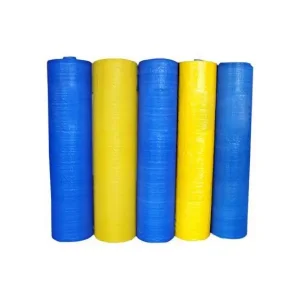
Explore our complete range of high-performance sun protection sheets, rolls, and specialized agricultural and industrial tarp solutions.