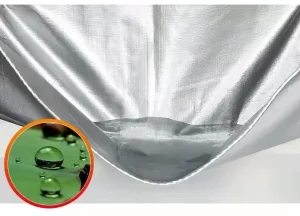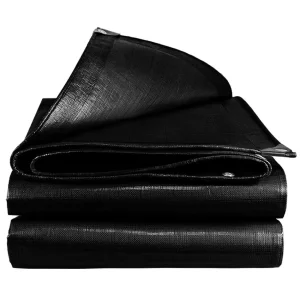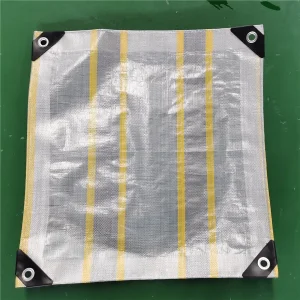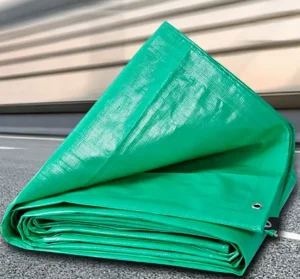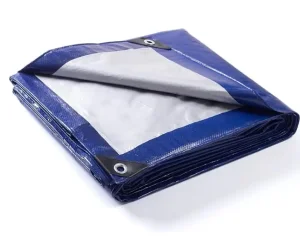
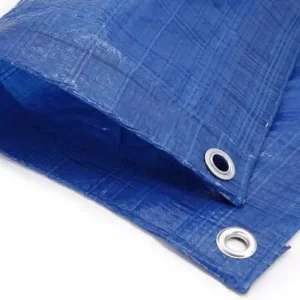
Direct factory supply of heavy-duty PE, PP, and PVC tarpaulins optimized for high tear propagation resistance, extreme climate endurance, and structural longevity.
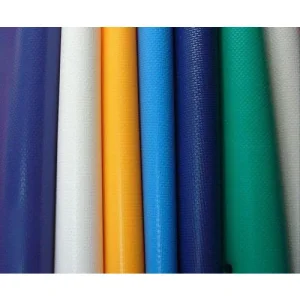
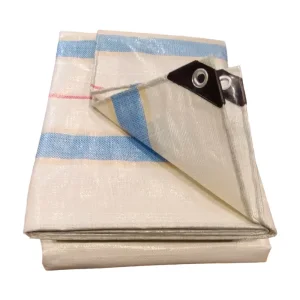
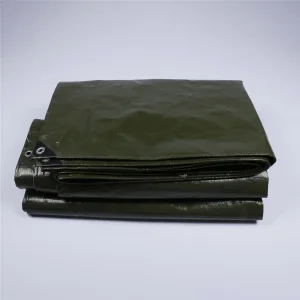
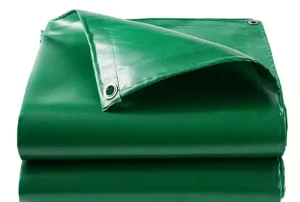
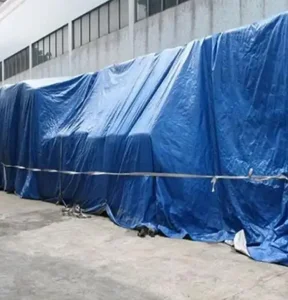
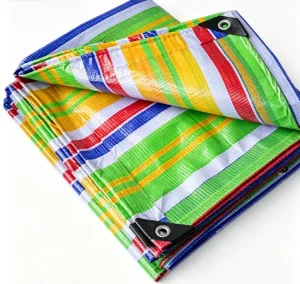
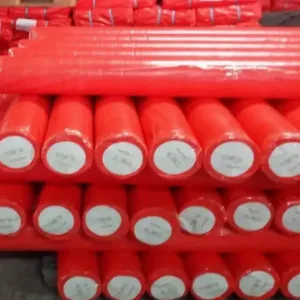
Understanding mechanical stress distribution, puncture energy absorption, and tear propagation mechanisms in modern industrial tarpaulins.
In industrial polymer containment and protective covering applications, the common failure mode of low-grade tarpaulins is not tensile fracture under uniform load, but localized shear tearing initiated by sharp puncture events or high-velocity wind stress. Tensile strength measures the absolute force required to pull a strip of fabric to its breaking point. In contrast, tear resistance (evaluated under standard ASTM D751 tongue tear or trapezoidal tear methodologies) measures the energy required to extend an existing puncture or cut within the fabric grid.
As a premier China tear-resistant manufacturer & factory, Linyi Xinshengyang Plastic Products Co., Ltd. (Star Tarpaulins) engineers polywoven fabrics specifically designed to arrest tear propagation. By co-extruding virgin High-Density Polyethylene (HDPE) tapes with optimized molecular draw ratios, and weaving them into dense cross-hatch scrim matrices, our materials distribute localized strain energy across multiple intersecting weft and warp yarns simultaneously.
Selecting the correct polymer base (PE, PP, or PVC) depends on environmental dynamics, mechanical shear demands, and target service lifespan. The table below outlines empirical performance indices across our primary production lines:
| Polymer Type | Density / GSM | Tear Strength (Tongue) | Tensile Warp/Weft | Flex Life Index |
|---|---|---|---|---|
| HDPE / LDPE Co-extruded | 60 – 300 GSM | 180 N – 350 N | 900 N / 850 N per 5cm | High (Cold Flex -40°C) |
| High-Tenacity PP Woven | 90 – 260 GSM | 220 N – 410 N | 1100 N / 1050 N per 5cm | Moderate Flex Life |
| PVC Knife-Coated | 450 – 900 GSM | 450 N – 780 N | 2500 N / 2300 N per 5cm | Extreme Abrasion/Flex |
Innovations in nano-composite polymer blends, biaxial orientation geometry, and self-healing thermal coatings transforming next-generation protective fabrics.
Next-generation slit-film extrusion technology utilizes multi-stage thermal stretching to orient polyethylene polymer chains both axially and transversely. This increases molecular crystallinity, raising warp/weft tear initiation thresholds by up to 45% without adding weight.
Integrating low-fraction functionalized graphene nanoplatelets into molten LDPE lamination layers arrests micro-fractures at point-of-puncture. Nano-silica dispersed within the outer shell creates an elastomeric buffer that dampens mechanical shear spikes.
Photo-oxidative degradation is the primary trigger of yarn embrittlement and subsequent tearing. Our R&D incorporates modern Hindered Amine Light Stabilizers (HALS) combined with nano-TiO2 solar reflectors, expanding field survival in high-UV desert regions beyond 5 years.
Tailored material configurations engineered to address severe operational stress, environmental regulations, and critical asset protection requirements.
High-speed highway buffeting creates severe aerodynamic flap shear that quickly tears conventional low-denier covers. Our heavy-duty 650 GSM PVC and 250+ GSM PE truck tarpaulins feature double-stitched webbed hems, welded seams, and brass grommets capable of withstanding lateral pull forces over 1,200 N.
Construction sites require fire-retardant (FR standard NFPA 701 / EN 13501-1) netting and reinforced enclosure tarpaulins. Our high-density polywoven sheets prevent accidental tear propagation caused by protruding rebar, debris impact, or storm-force winds on high-rise scaffolding systems.
Hay bale protection, agricultural pond liners, and silage pit covers demand complete impermeability combined with high tear strength to withstand puncture from sharp straw, branches, and machinery hooks. Our multi-layer co-extruded films guarantee oxygen barrier integrity and long-term elasticity.
Operating out of a 30,000 m² modern manufacturing ecosystem in Linyi Industrial Park, controlling every phase from raw polymer extrusion to finished packaging.
Trading companies and assemblers often buy woven fabric from external vendors, leading to inconsistent Gram-per-Square-Meter (GSM) weights, uneven coating thickness, and weak seam heat welds. As a true original China tear-resistant manufacturer & factory, Star Tarpaulins enforces full vertical production:
Data verified via internal ISO 9001:2015 quality management audits and continuous batch tracking logs.
How international procurement managers optimize total cost of ownership (TCO) by specifying precise technical parameters rather than buying on raw price alone.
Specifying a high GSM with a low denier thick yarn woven loosely results in a tarp that feels heavy but tears easily under shear force. Optimal tear resistance requires a high denier yarn (e.g., 800D to 1500D) woven in tight mesh counts (12x12 or 14x14 per inch).
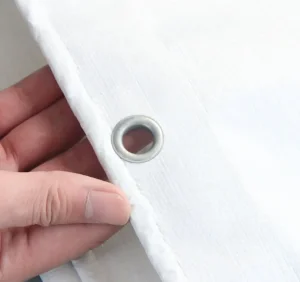
Over 70% of field tarp failures occur at point-of-tie-down. Specify molded plastic triangular corner caps, double-folded rope hems, and heavy-duty eyelets staked at maximum 50cm intervals to distribute wind tension evenly across the hem border.
Standard poly tarps without UV inhibitors degrade within 90 days of outdoor exposure. Specify 3% to 5% high-grade Hindered Amine Light Stabilizers (HALS) masterbatch tailored for destination solar radiation indices (e.g., Middle East, Australia, West Africa).
Every shipment is backed by international laboratory certifications, custom clearance documentation support, and OEM packaging localization.
Rigorous factory management system governing polymer purity, weaving tension, and final pack audit.
Formulations tested for hazardous heavy metals, SVHC chemicals, phthalates, and lead content for EU entry.
Verified laboratory test reports for tongue tear strength, hydrostatic head pressure, and elongation.
Private label retail packaging, multi-lingual installation inserts, custom EAN/UPC barcodes, and custom colors.
Direct responses from our lead materials engineers regarding specifications, procurement logistics, and custom manufacturing capability.
Explore our extended wholesale manufacturing catalog available in full rolls, ready-cut sheets, and custom engineered OEM dimensions.