Engineered poly fabric solutions manufactured with precision extruded HDPE, high-tenacity PP weaves, and waterproof double-sided lamination.
Operating since 2006 from Linyi, Shandong, Linyi Xinshengyang Plastic Products Co., Ltd. (Star Tarpaulins) delivers fully integrated extrusion, weaving, lamination, and fabrication excellence.
An in-depth analysis of supply chain stability, post-harvest losses, and climate risk mitigation in modern global agriculture.
According to the FAO, unmitigated exposure to humidity, rain rot, and solar radiation accounts for over $400 billion in global post-harvest loss annually. High-density woven polyethylene (HDPE) tarpaulins function as portable, emergency silos and temporary grain bunkers. By providing hydrostatic barrier control (up to 100 kPa) and UV radiation shielding, agricultural tarpaulins preserve crop dry-weight integrity and prevent micro-toxin development during transit and field storage.
Increasing frequency of hailstorms, torrential monsoons, and extreme UV index anomalies has shifted tarpaulin usage from seasonal accessories to structural necessities. Commercial farms utilize heavy-duty 150 GSM to 300 GSM PE fabrics to build resilient, semi-permanent field shelters, shade grid nets, and greenhouse thermal blanketing—minimizing crop mortality rates under atmospheric stress.
B2B procurement managers and agricultural hardware importers prioritize vertical integration over intermediary brokers. Direct partnership with primary extruders ensures precise control over resin purity (virgin vs. recycled blends), tensile warp/weft thread counts (e.g., 8×8 to 14×14 mesh), and batch-level addition of Hindered Amine Light Stabilizers (HALS).
Evaluating HDPE, PP, and PVC substrates to match site-specific operational environments, UV exposure intensity, and mechanical stress criteria.
| Substrate Material | GSM Range (g/m²) | Tensile Strength (Warp/Weft) | UV Service Life (Years) | Key Agricultural Application |
|---|---|---|---|---|
| PE (Polyethylene) Lamination | 60 - 300 GSM | 650 N / 850 N per 5cm | 1.5 - 5.0 Years (with 3-5% UV) | Crop covers, hay storage, scaffolding, temporary waterproofing |
| PP (Polypropylene) Woven | 70 - 260 GSM | 800 N / 1050 N per 5cm | 1.0 - 3.0 Years | Heavy-duty weed barrier, soil stabilization, high-friction ground sheets |
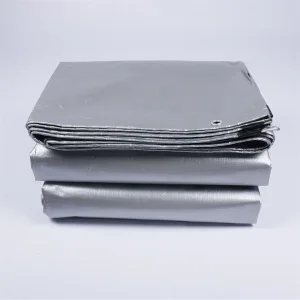
| PVC Coated Tarpaulin | 450 - 900 GSM | 2200 N / 2500 N per 5cm | 5.0 - 10.0+ Years | Biogas covers, permanent truck side curtains, deep pond liners, grain silos |
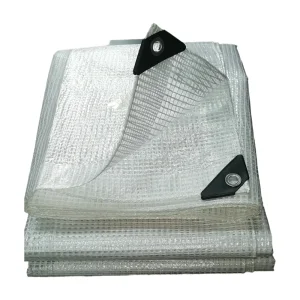
| PE Grid / Mesh Fabric | 100 - 220 GSM | 900 N / 1100 N per 5cm | 2.0 - 4.0 Years | Greenhouse ventilation shade, hail protection screens, nursery windbreaks |
Polyolefins (PE and PP) degrade under solar Ultraviolet (UV-A and UV-B) radiation due to photo-oxidation, leading to polymer chain scission, brittleness, and loss of tensile strength. Direct factory formulations incorporate Hindered Amine Light Stabilizers (HALS) combined with carbon black or titanium dioxide pigments. For arid environments like Arizona or the Middle East, masterbatch ratios are calibrated to 3%–5% by weight, guaranteeing mechanical survival over multi-year solar cycles.
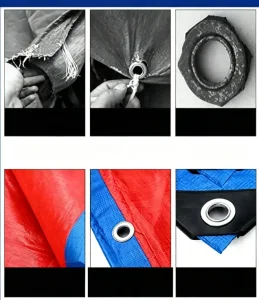
A tarpaulin sheet's weakest point is its perimeter. High-quality production uses continuous high-frequency hot-air welding to seal structural ropes inside a double-folded hem. Galvanized steel, aluminum, or solid brass eyelets are mechanically stamped through four-layer reinforced corner patches at 50 cm to 100 cm intervals—yielding eyelet pull-out resistance exceeding 500 N force.
How specialized tarpaulin specifications adapt to distinct climatic challenges and regional farming methodologies.
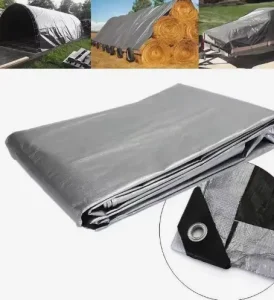
In the US Midwest and Canadian Prairies, large-scale corn and grain growers deploy heavy-duty 200–300 GSM black/white PE sheets for bunker silo sealing. The outer white layer reflects thermal solar rays to maintain low fermentation temperatures, while the inner black layer provides total opacity to prevent light degradation.
Agriculture in the Middle East and North Africa faces sand abrasion and solar irradiance over 2200 kWh/m². Dual-silver reflective tarps and 5% UV-dosed HDPE grid meshes are deployed over livestock pens and shade structures, reducing ambient temperature beneath the canopy by up to 8°C.
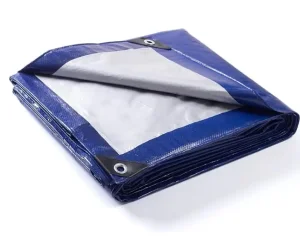
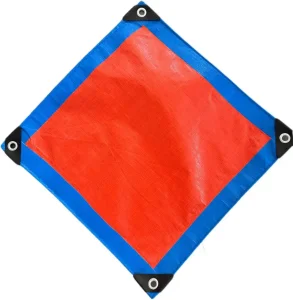
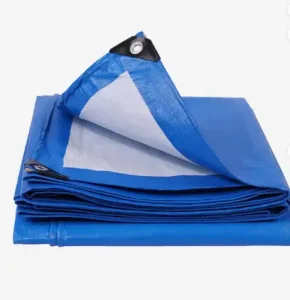
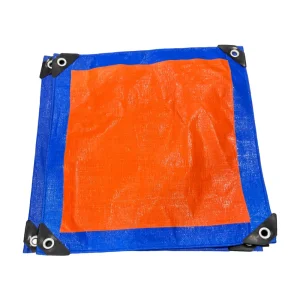
Across Southeast Asia and India, smallholders rely on lightweight, high-tear 90–140 GSM blue/orange PE tarps. These portable sheets allow rapid deployment over sun-drying rice paddy crops when unpredicted monsoon rains occur, safeguarding seasonal yields from water logging.
End-to-end engineered fabric systems designed for modern agricultural sectors, from aquaculture containment to soil conservation.
Aquaculture pond integrity requires zero-seepage membranes. Heavy-gauge virgin HDPE lamination and PVC sheets prevent chemical leaching into soil while insulating fish and shrimp stock from ground contaminants. Reinforced puncture resistance protects against sharp rock substrata.
High-density woven polypropylene (PP) weed barrier fabrics allow optimal water permeability while blocking 99% of photosynthetically active radiation (PAR). This eliminates weed competition without chemical herbicides, retaining organic soil moisture and reducing irrigation frequency.
Turnkey grain storage systems utilize custom-sized tarpaulin covers featuring integrated perimeter ratchet tie-down straps and airtight heat-sealed seams. This temporary silo system provides an affordable alternative to permanent steel bins for bumper harvest seasons.
Multi-layered insulated tarpaulins featuring internal closed-cell PE foam cores protect sub-grade agricultural concrete foundations and frost-sensitive crops during winter construction and low-temperature agricultural cycles.
Pioneering the transition toward circular economic polymers, smart thermal reflection, and IoT-enabled agricultural covers.
Eliminating non-recyclable multi-polymer composites. Developing 100% mono-PE tarpaulins where base fabric, lamination layer, rim ropes, and eyelets utilize identical polyethylene grades—enabling 100% direct melt recycling without manual component separation.
Integrating nano-titanium dioxide and microscopic ceramic spheres into the top lamination coat. This advanced surface technology reflects up to 94% of Near-Infrared (NIR) thermal energy, drastically reducing heat buildup under stored grain covers.
Embedding flexible, printed humidity and temperature sensor threads directly into the woven core of silage covers. Farm operators can monitor sub-tarp fermentation metrics via real-time mobile network telemetry.
Every batch undergoes strict mechanical, hydrostatic, and dimensional verification prior to container export.
Virgin HDPE melt extrusion into flat yarn tapes with tight denier control.
High-speed water-jet and circular looms weave high-tensile base fabric mesh.
Molten LDPE double-sided coating applies waterproof barrier layers.
Automated cutting tables slice master rolls to exact finished dimensions.
Thermal welding joins panels and encapsulates perimeter reinforcement ropes.
Pneumatic punchers set heavy-duty aluminum or brass eyelets into hems.
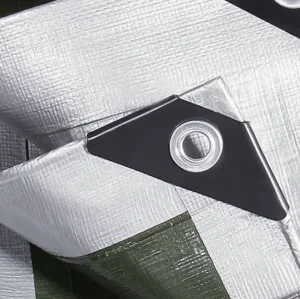
Molded plastic triangular patches reinforce high-stress corner eyelets.
Batch testing verifies water column pressure, tensile strength, and weight.
Expert guidance from manufacturing engineers to assist wholesale distributors and OEM procurement managers.
Target application determines GSM. General-purpose outdoor covers, promotional packs, and light hardware retail typically use 60–90 GSM PE fabric. Construction scaffolding, medium-duty farm covers, and equipment storage require 100–160 GSM. Long-term hay bale covers, bunker silo tarps, and heavy-duty logistics covers demand 180–300 GSM PE/PP. For permanent structural tents, bi-gas covers, and trailer curtains, 450–900 GSM PVC coated fabric is recommended.
For standard stocked specifications, our MOQ starts at one 20ft container mix. Custom fabrications involving specific colors, custom GSM, brand logos, or specialized eyelet configurations require a minimum of 3 metric tons per specification. Standard factory production lead time is 15–25 days following pre-production artwork and physical sample confirmation.
UV longevity depends on the percentage of Hindered Amine Light Stabilizer (HALS) masterbatch compounded during tape extrusion. We formulate custom UV dosages ranging from 1% (temperate regions) to 5% (high-UV regions like Australia, the Middle East, and Sub-Saharan Africa). Accelerated weathering tests (QUV chamber ISO 4892-2) are conducted to ensure retention of at least 80% tensile strength after 2,000 hours of continuous UV irradiation.
Yes. Finished tarpaulin sheets can be manufactured in sizes ranging from small 2m x 3m utility covers up to continuous 20m x 30m agricultural sheets. Perimeter hems feature internal PP ropes, triangular plastic corner patches, and customized eyelets (aluminum, brass, or plastic) placed at 50 cm, 100 cm, or custom intervals. We offer full OEM service, including custom poly-bag inserts, barcode labels, and exterior master carton printing up to 4 colors.
Yes. Upon request, we incorporate flame-retardant additives compliant with international standards such as NFPA 701, DIN 4102-1 B1, and CPAI-84. Furthermore, our pure virgin polyethylene substrates comply with EU REACH regulations and RoHS directives, ensuring non-toxicity for soil contact and animal husbandry shelters.
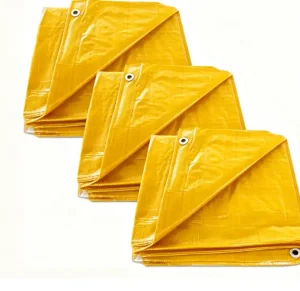
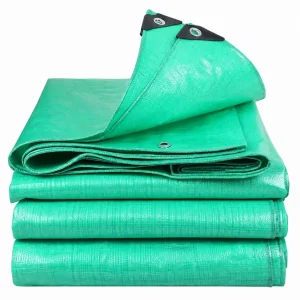
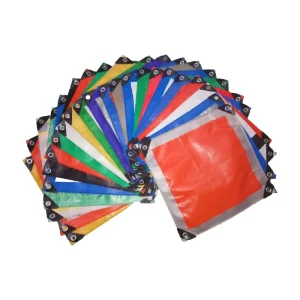
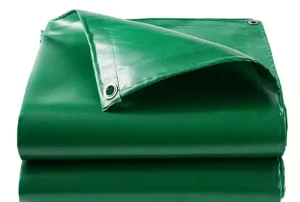
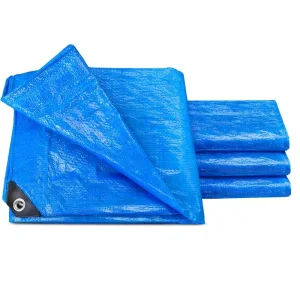
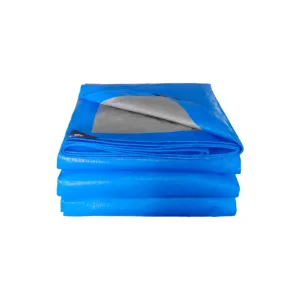
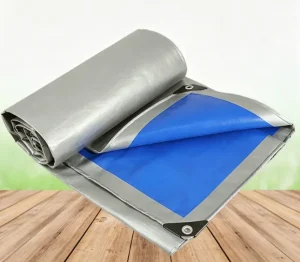
Explore our full line of specialized colors, heavy weights, and reinforced structural fabrics ready for global dispatch.
Send us your required dimensions, GSM weight, UV exposure expectations, and target market—our export engineering team will deliver a comprehensive factory quotation and container loading plan within 24 hours.