Direct factory-manufactured specifications available for global containerized distribution, engineering contractors, and agricultural suppliers.
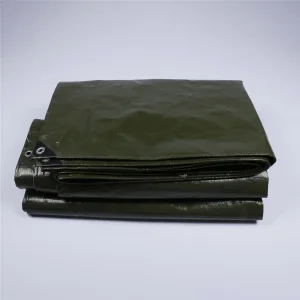
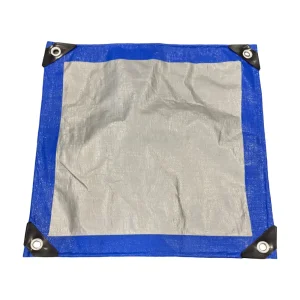
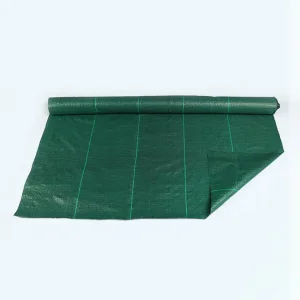
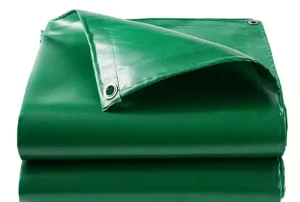
An executive analysis of raw material volatility, structural polyolefin polymers, and high-tenacity fabric performance across global supply chains.
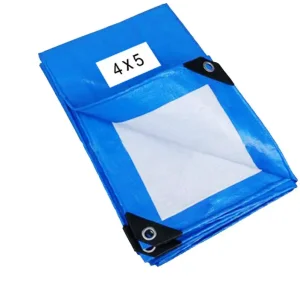
The global demand for industrial protective fabrics, specifically woven Polyethylene (PE), Polypropylene (PP), and Polyvinyl Chloride (PVC) tarpaulins, has evolved from commodity-grade covering products into highly engineered synthetic textile systems. B2B procurement directors, municipal buyers, and international distributors face complex purchasing parameters driven by fluctuating ethylene/propylene petrochemical feedstocks, strict regional environmental directives (such as EU REACH SVHC and US California Prop 65), and severe climatic stressors. Sourcing directly from certified primary manufacturing plants eliminates supply chain opacity while providing verifiable technical parameters: precise Grams per Square Meter (GSM), yarn denier specs (500D to 1500D), weave density matrices (from 8x8 to 14x14 tapes per inch), and scientifically calibrated ultraviolet (UV) masterbatch dosages.
In the modern commercial infrastructure market, protective covers are no longer evaluated purely on unit cost. Procurement metrics now calculate the Total Cost of Ownership (TCO) based on operational uptime, material tensile degradation rates under high UV index exposure, weld seam hydrostatic burst pressure, and resistance to environmental stress cracking (ESCR). As global logistics networks expand and climate volatility increases severe weather incidents, bulk purchasers require custom-engineered tarpaulin formulations tailored to specific geographic micro-climates—ranging from high-humidity maritime shipping channels to sub-zero arctic construction sites and high-UV desert solar farms.
We source 100% virgin High-Density Polyethylene (HDPE) for core structural tapes and Low-Density Polyethylene (LDPE) for dual-sided lamination. Zero recycled regrind ensures uniform tensile strength and prevents micro-void formation during hot-melt coating extrusion.
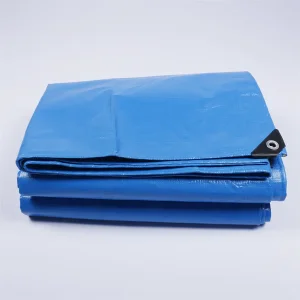
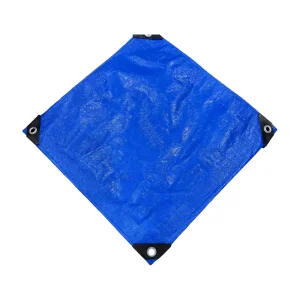
Precision circular weaving looms yield structural mesh matrix densities tailored to application loads. From lightweight 65 GSM multi-purpose tarps to heavy-duty 300 GSM PE and 900 GSM knife-coated PVC architectural membranes.
Targeted additive compounding incorporating 3% to 5% high-grade Chimassorb® and Tinuvin® UV stabilizers prevents polymer chain scission under long-term solar irradiation, extending outdoor service life by up to 300%.
Deploying specialized tarpaulin chemistry, edge reinforcements, and joining technologies across critical industrial verticals.
Challenge: Containment of debris, weather-proofing active pours, flame retardancy compliance, and high wind-load endurance on elevated scaffolding systems.
Technical Solution: Flame-retardant (DIN 4102 B1 / NFPA 701 standard) PE and PVC mesh fabrics ranging from 140 to 250 GSM. Engineered with reinforced eyelet bands spaced at 50 cm intervals, ultrasonically welded hems, and high tear-resistance to absorb dynamic wind shear forces in high-rise environments.
Challenge: Continuous vibration, mechanical abrasion, highway wind flap, zero-tolerance water ingress, and broad thermal swings during intermodal transit.
Technical Solution: High-tenacity 650–900 GSM PVC coated tarpaulins utilizing 1000D x 1000D polyester base cloth. Features acrylic lacquer top-coating for dirt repellency, hot-air welded structural stress points, heavy-duty D-rings, and custom-molded corner caps designed for flatbed trailers and container side-curtains.
Challenge: Micro-biological degradation, puncture risk from crop stems, UV degradation in unshaded open fields, and soil weed suppression control.
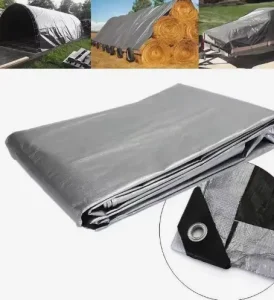
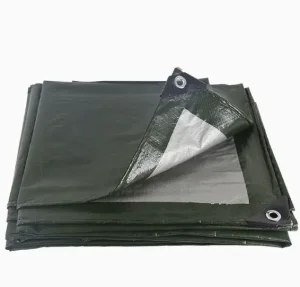
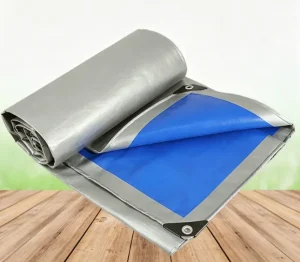
Technical Solution: Heavy-duty, high-density woven polypropylene landscape fabrics and dual-color (Black/White, Green/Silver) silage tarps up to 260 GSM. Incorporates anti-fungal agents, puncture-resistant woven cores, and 5-year solar stabilization for hay stack covering, grain bunker seals, and weed control ground barriers.
| Polymer Specification | Standard Weight (GSM) | Tensile Strength (N/5cm) | Hydrostatic Head | UV Resistance Rating | Primary Application |
|---|---|---|---|---|---|
| Lightweight PE Tarp | 60 – 100 GSM | 450 / 400 (Warp/Weft) | > 1,500 mm H₂O | 1 - 2 Seasons (1.5% UV) | General covers, DIY, temporary ground sheets |
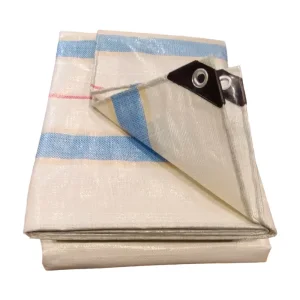
| Medium-Duty PE Tarp | 110 – 170 GSM | 750 / 700 (Warp/Weft) | > 4,000 mm H₂O | 2 - 3 Years (3.0% UV) | Construction site, scaffolding, machinery protection |
| Heavy-Duty Reinforced PE | 180 – 300 GSM | 1400 / 1300 (Warp/Weft) | > 8,000 mm H₂O | 3 - 5 Years (5.0% UV) | Long-term roof repair, hay stack, emergency relief |
| Woven PP Weed Barrier | 90 – 150 GSM | 1100 / 950 (Warp/Weft) | Permeable / Water Drain | 3 - 5 Years (Carbon Black) | Agricultural weed control, nursery soil cover |
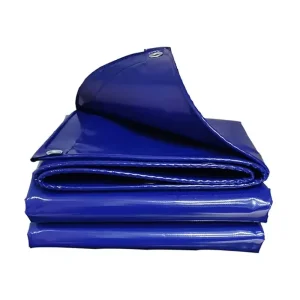
| Heavy Knife-Coated PVC | 450 – 900 GSM | 2800 / 2600 (Warp/Weft) | > 20,000 mm H₂O | 5 - 10 Years (Advanced HALS) | Truck side curtains, structural tents, industrial liners |
Inside our 30,000 m² automated manufacturing facility in Linyi, China—leveraging end-to-end quality control.
Virgin HDPE pellets are melted and extruded into uniform thin films, slit into precision monofilament tapes, and water-quenched. Tapes undergo 1:6 hot-stretching to align polymer molecular chains, creating exceptionally high tensile yarn.
Utilizing high-speed water-jet and circular weaving looms, structural scrims are woven at micro-monitored tension settings. Weave counts (8x8 up to 14x14) are verified by automated optical laser sensors to guarantee zero warp/weft defects.
The woven scrim passes through dual high-temperature extrusion coating lines. Molten LDPE blended with color pigments, UV inhibitors, and flame-retardant additives is permanently fused onto both fabric faces under high nip-roller pressure.
Fabric rolls are cut to CAD dimensions. Edges are folded over heavy-duty PP rope hems and heat-sealed via continuous hot-air welding. Anti-rust aluminum or solid brass eyelets and molded plastic corner patches are applied at controlled pitch intervals.
Every production lot is subjected to destructive physical testing and laboratory chemical analysis to verify contract specifications prior to export dispatch.
Conforming to ISO 811 and ASTM D751 standards. Fabrics and hot-air welded seams are subjected to continuous water pressure up to 10,000 mm H₂O to ensure 100% moisture impermeability under monsoon-level rainfall simulation.
Using computerized universal tension testers (ISO 1421 Strip Method and ASTM D1117 Trapezoid Tear Method), we measure breaking force along both warp and weft axes, ensuring structural resistance against dynamic wind gusts and sharp loads.
Fabrics undergo QUV accelerated weathering tests (ISO 4892-3 cycle exposure) to calculate UV half-life degradation. All products are fully compliant with EU REACH SVHC list, containing no banned phthalates or heavy metal stabilizers.
End-to-end support for international importers, hardware retail chains, and government tender procurement organizations.
We provide complete OEM private labeling services. From customized polybag inserts, high-resolution flexographic surface printing (up to 4 colors), and custom barcode/EAN tags to retail-ready display cartons designed for big-box hardware stores.
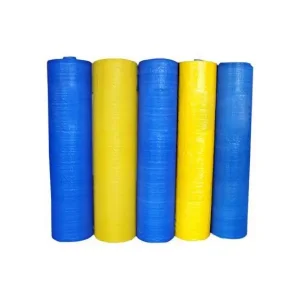
Order finished, cut-and-sewn sheets equipped with eyelets and corner patches, or master fabric rolls from 2.0 meters up to 6.0 meters seamless width (up to 1000m roll lengths) for local conversion workshops and tent fabricators.
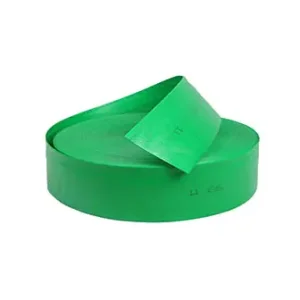
Our automated hydraulic baling presses and palletized packaging maximize cubic volume utilization per 20ft and 40ft High Cube container. Combine PE tarpaulin sheets, PVC rolls, garden weed fabrics, and layflat hose in single shipments to lower freight costs.
Explore specialized industrial formulations engineered for maximum abrasion resistance, structural flexibility, and high-pressure fluid transfer.
In-depth engineering answers covering GSM selection, polymer chemistry, UV longevity, and containerized logistics.
The core distinction lies in chemical composition, structural weight, tensile strength, and target service lifespan:
GSM measures total fabric mass per square meter, factoring in both structural woven yarn denier and double-sided extrusion coating thickness.
Selection guide by application:
• 60 – 90 GSM: Promotional lightweight packs, economic hardware covers, temporary rain tarps.
• 100 – 160 GSM: Medium-duty retail covers, camping ground sheets, equipment tarpaulins.
• 180 – 300 GSM: Heavy-duty construction scaffolding, long-term hay stack covers, emergency storm shelters.
• 450 – 900 GSM (PVC): High-stress transport fleet tarps, commercial tent structures, static industrial curtains.
Standard Polyethylene degrades rapidly under solar UV-A and UV-B radiation due to photo-oxidation of polymer chains. For high solar radiation climates (exceeding 160–200 kLy/year), we compound 3% to 5% Hindered Amine Light Stabilizers (HALS) into the virgin HDPE extrusion stage. This chemical addition neutralizes free radicals generated by UV exposure, enabling 3 to 5 years of continuous outdoor structural performance without embrittlement or peeling.
For standard inventory specifications, our baseline order starts at a 20ft container mix (approx. 10 to 12 metric tons). Custom OEM orders specifying non-standard colors, specialized GSM, private retail label branding, or surface logo printing require an MOQ of 3 metric tons per specification. Standard production lead time is 15 to 25 days following pre-production sample approval and artwork sign-off.
Yes. Every master batch can be accompanied by mill test certificates (MTC) covering tensile strength (ISO 1421), hydrostatic head pressure (ISO 811), and tear strength (ASTM D751). Furthermore, we routinely support pre-shipment third-party inspections by SGS, Bureau Veritas (BV), or TÜV, and provide compliance documentation for EU REACH SVHC, RoHS, and flame retardancy standards (DIN 4102 B1, NFPA 701).
Partner directly with Linyi Xinshengyang Plastic Products Co., Ltd. (Star Tarpaulins). Our technical team will compute structural load requirements, recommend optimal polymer chemistry, and calculate exact containerized loading plans for your project.