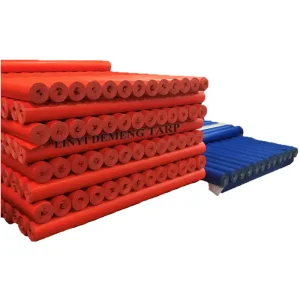
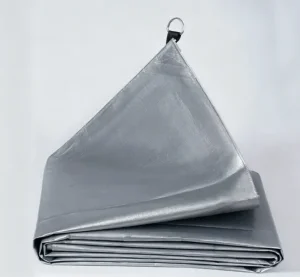
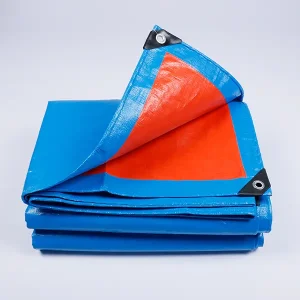
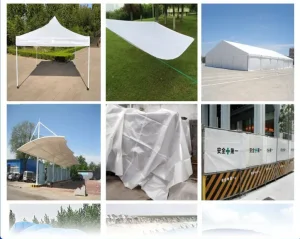
Direct factory production lines for high-tensile ground protection sheets, concrete curing blankets, and multi-purpose polymer tarpaulins manufactured under ISO 9001 and ISO 14001 certification standards.
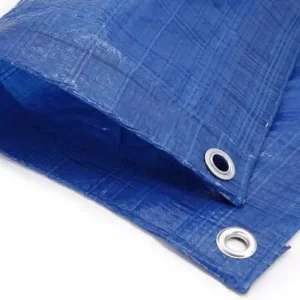

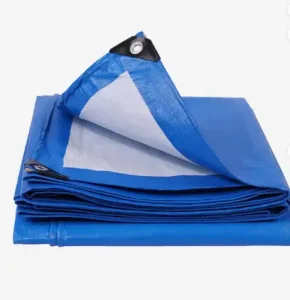
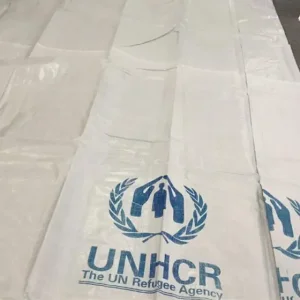
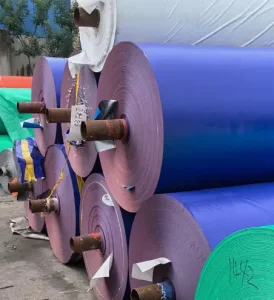
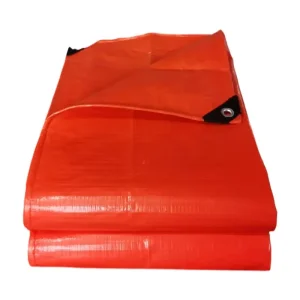
In modern civil engineering, mega-agricultural endeavors, and environmental containment, ground cover tarpaulins serve as critical functional interfaces between earth substrates and external environments. Modern B2B procurement has shifted from simple waterproof sheets to highly engineered polymer membranes featuring precise anti-UV formulations, controlled permeability, thermal regulation, and structural puncture resistance.
High-Density Polyethylene (HDPE) provides structural tensile strength via linear molecular chains, while Low-Density Polyethylene (LDPE) and LLDPE coatings deliver absolute impermeability and flexibility. Factory-controlled extrusion ensures zero micro-void formation during high-speed lamination cycles.
Solar ultraviolet (UV) radiation triggers photo-oxidation in polyolefins, degrading tensile performance. Modern wholesale ground cover tarpaulins integrate Hindered Amine Light Stabilizers (HALS) and Carbon Black formulations to guarantee multi-season stability under extreme solar irradiation.
Enterprise buyers require application-specific engineering parameter alignment rather than generic commodity tarp metrics. Below is a comprehensive breakdown of technical requirements harvested from global procurement vectors across North America, Europe, Australia, and the Middle East.
Primary Needs: Concrete curing retention, foundation moisture barriers, temporary subgrade stabilization.
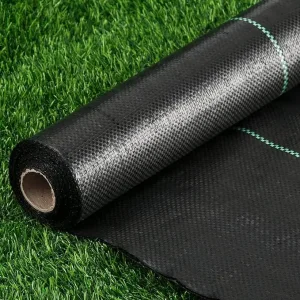
Primary Needs: Weed suppression without toxic herbicides, solarization, orchard ground reflection, hay protection.
Primary Needs: Heavy machinery underlayment, ore stockpile covering, leak containment, transport trailers.
Making an informed procurement choice requires understanding physical polymer mechanics. Below is an authoritative technical comparison between the three dominant synthetic ground barrier materials.
| Technical Parameter | HDPE / LDPE Polyethylene (PE) | Polypropylene Woven (PP) | Polyvinyl Chloride (PVC Coated) |
|---|---|---|---|
| Typical Weight Range (GSM) | 60 GSM – 300 GSM | 70 GSM – 220 GSM | 400 GSM – 900 GSM |
| Tensile Strength (Warp/Weft) | High (800 N – 1600 N / 5cm) | Very High (1100 N – 2100 N / 5cm) | Extreme (> 2500 N / 5cm) |
| Water Impermeability | 100% Dual Lamination Film | Permeable / Non-woven / Coated | 100% Hydrostatic Sealed Polymer |
| Flexibility in Sub-Zero Temps | Excellent (-40°C retention) | Fair (Becomes brittle < -10°C) | Requires Cold-Crack Additives |
| Recyclability & Sustainability | High (Code 2 / Code 4 Polyolefin) | High (Code 5 Polyolefin) | Requires Specialized Recycling |
| Cost Efficiency Index | ★★★★★ (Optimal B2B Balance) | ★★★★☆ (Economy Bulk Use) | ★★★☆☆ (High Investment / Long Life) |
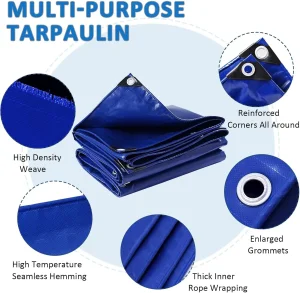
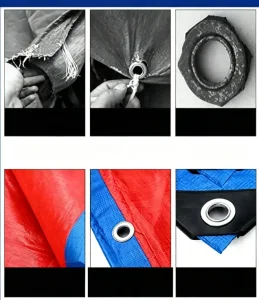
The boundary failure rate of ground tarpaulins under high wind uplift is governed by hem strength. Factory automated lines process continuous rope insertion inside heat-sealed hems, coupled with double-thickness triangular corner gussets and rust-proof aluminum or solid brass eyelets spaced precisely at 50 cm or 100 cm intervals.
For ground cover applications involving walkability (such as scaffold underlayment or agricultural harvest tarps), surface embossing applies micro-textured patterns to LDPE films. This reduces human slip hazards while maintaining full liquid resistance during heavy precipitation events.
Driven by international environmental mandates and smart construction standards, ground cover tarpaulin manufacturing is undergoing significant technological upgrades.
Integration of up to 50% Post-Consumer Recycled (PCR) resin without compromising warp-directional tensile stability. Bio-based PE sourced from sugarcane ethylene provides a net-zero carbon footprint for ESG-compliant B2B buyers.
Self-cleaning surface layers infused with titanium dioxide (TiO2) nanoparticles react with daylight to decompose organic soil debris, oil splatter, and agricultural micro-fungi, keeping the sheet surface clean automatically.
Pilot projects embedding flexible conductive threads and passive RFID temperature/humidity sensors inside concrete curing blankets to transmit real-time hydration data directly to site engineers' smartphones.
Ensuring seamless international trade requires rigorous factory quality management and compliance with regional regulatory directives.
Our manufacturing protocols adhere strictly to global environmental safety standards:
Direct-from-factory loading strategies are designed to maximize volumetric efficiency:
Detailed technical answers to common engineering and procurement inquiries regarding factory direct ground cover tarps.
"Cut Size" refers to the dimensions of the fabric sheet prior to hem folding and heat sealing. During factory finishing, around 3% to 5% of material is folded inward to create double-thick rope-reinforced edges. Therefore, "Finished Size" is the actual net dimension delivered to the buyer. Our factory clearly lists both metrics in quotation sheets to avoid misinterpretation.
UV exposure is measured in Kilo-Langleys (KLY) per year. Central Europe averages ~100 KLY/year, while the Middle East and Northern Australia exceed 200 KLY/year. We adjust Hindered Amine Light Stabilizer (HALS) masterbatch ratios from 1% up to 5% based on destination climate, ensuring a consistent field service life of 1 to 5 years.
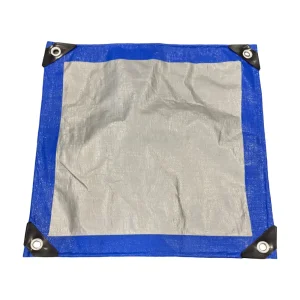
Standard stock color specs (such as Blue/Silver or Blue/Orange 90-120 GSM) carry an MOQ of 1 ton per specification. Custom colors, specified weave densities, or flexographic logo surface printing require a minimum run of 3 to 5 tons per production setup to ensure resin extrusion stability and color match consistency.
Concrete curing sheets lock in internal moisture required for cement hydration while providing a thermal barrier against thermal shock. Closed-cell PE foam cores laminated between woven poly layers maintain internal hydration equilibrium, preventing micro-fractures in cold or arid conditions.
Explore our complete catalog of specialized agricultural ground shade fabrics, heavy PVC scratch-resistant sheets, geotextiles, and custom-tailored covers.