Explore our enterprise-grade plastic tarpaulins manufactured under strict ISO 9001 and ISO 14001 quality management standards, designed for extreme weather protection, logistics, and industrial covers.
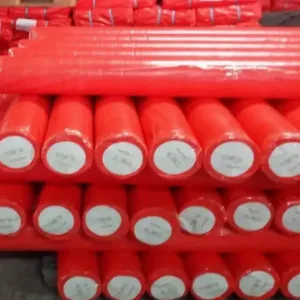
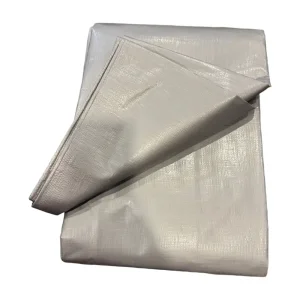
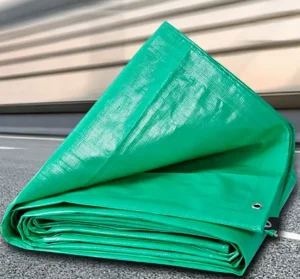
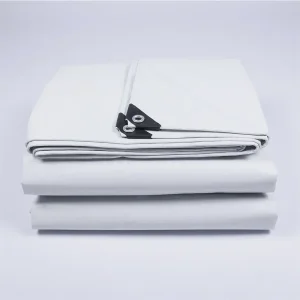
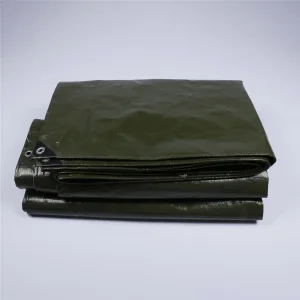
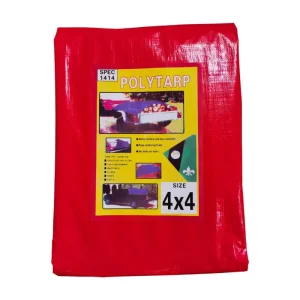
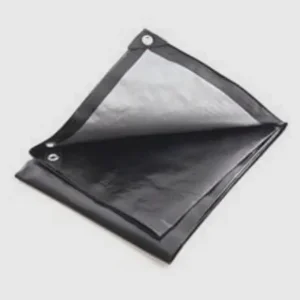
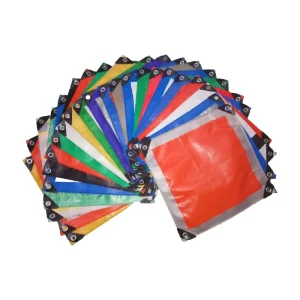
In modern industrial procurement, selecting a wholesale heavy-duty plastic tarp manufacturer extends far beyond simply matching price points. Corporate procurement managers, civil engineering contractors, and agricultural logistics directors require detailed engineering insights regarding material composition, degradation kinetics, tensile parameters, and supply chain scalability. Heavy-duty plastic tarpaulins—spanning High-Density Polyethylene (HDPE), Polypropylene (PP), and Polyvinyl Chloride (PVC)—serve as critical protective barriers against catastrophic weather exposure, UV degradation, mechanical tearing, and chemical ingress.
Enterprise buyers systematically evaluate tarpaulin products based on four fundamental engineering criteria:
| Polymer Type | GSM Weight Range | Tensile Strength (Warp/Weft) | UV Resistance Horizon | Primary Industrial Use Case |
|---|---|---|---|---|
| Virgin PE (HDPE/LDPE) | 60 GSM - 300 GSM | 700 N / 600 N per 5cm | 12 to 36 Months (3-5% HALS) | Scaffolding, Hay Covers, Temporary Freight Tarps |
| Woven PP (Polypropylene) | 100 GSM - 250 GSM | 950 N / 850 N per 5cm | 6 to 18 Months (Standard) | Heavy Grain Covers, Erosion Control, Layflat Liners |
| Knife-Coated PVC | 400 GSM - 900 GSM | 2500 N / 2300 N per 5cm | 36 to 72 Months (Extended) | Truck Side Curtains, Architectural Tents, Oil Booms |
China has solidified its position as the global epicenter for industrial polyolefin and vinyl processing. Specialized manufacturing clusters, particularly in Shandong province (Linyi industrial zones), integrate the complete vertical supply chain: from petrochemical resin synthesis to automated water-jet weaving, extrusion lamination, and robotic eyelet insertion.
Direct supply agreements with domestic petrochemical giants (Sinopec, PetroChina) ensure access to premium-grade virgin HDPE resins (such as 5000S grade) and LDPE lamination resins with low melt flow index (MFI), resulting in superior film ductility and puncture resistance.
Modern Chinese manufacturing facilities utilize high-speed water-jet and circular looms capable of producing tight weave counts ranging from 8×8 to 14×14 mesh per square inch. This creates a balanced tensile-to-weight ratio unmatched by traditional flat weaving.
Advanced double-sided molten LDPE lamination lines apply mirror-smooth protective film layers at high speed. Dual-layer extrusion ensures pinhole-free waterproofing and uniform thickness tolerances across wide-width sheets up to 6 meters without seams.
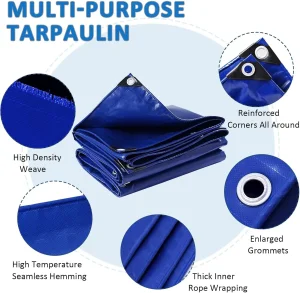
Hem lines feature continuous sonic welding combined with PP inner rope insertion. Heavy-duty molded triangular plastic corner caps and rust-proof aluminum or brass eyelets (spaced at 50cm or 100cm intervals) guarantee maximum pull-out force resistance under wind load.
Different enterprise deployment environments demand precise polymer customizations. A standard utility tarp cannot survive the extreme conditions of a mining site or high-altitude agricultural facility. China's leading OEM/ODM factories offer scenario-tailored material formulations designed to solve macro industry challenges:
Construction sites require flame-retardant (FR) protective sheeting to comply with international safety regulations such as NFPA 701, DIN 4102-1 (B1 Class), and EN 13501-1. Heavy-duty PE tarpaulins integrated with antimony trioxide and halogenated flame-retardant additives self-extinguish within seconds of flame removal, preventing catastrophic scaffolding fires while providing containment against wind-borne debris.
For long-distance freight hauling, weight optimization directly impacts fuel economy. High-density PE tarpaulins (180 GSM to 270 GSM) and heavy PVC side-curtain fabrics (650 GSM to 900 GSM) undergo rigid flex-fatigue testing (ISO 7854). These materials resist continuous dynamic flexing at speeds over 100 km/h and maintain mechanical integrity across a temperature spectrum of -40°C to +80°C.
In global agricultural markets, UV degradation is the primary cause of premature tarp failure. Premium agricultural covers utilize 3% to 5% high-purity Hindered Amine Light Stabilizer (HALS) masterbatch formulations. Furthermore, dual-color co-extrusion (such as Black/Silver or Green/Silver) reflects solar radiation on the exterior surface to suppress heat buildup, while the dark interior layer blocks light transmission to prevent weed growth and crop rot.
In crisis response scenarios, procurement speed and structural reliability are paramount. Standardized emergency response tarps (e.g., UNHCR/UNICEF specification poly tarps) feature high tear-propagation resistance, white reflective coatings for climate control in hot regions, and reinforced band grommets to allow immediate field erection using minimal tools.
The global plastic tarpaulin market is undergoing a rapid technological evolution driven by sustainability mandates, climate anomalies, and smart material engineering. Forward-thinking enterprise buyers monitor several macro trends currently reshaping the manufacturing landscape:
Driven by EU Green Deal policies and global ESG commitments, top manufacturers are incorporating up to 30%-50% Post-Consumer Recycled (PCR) or Post-Industrial Recycled (PIR) PE/PP resins into inner woven cores while maintaining virgin polymer coating barriers, reducing total carbon footprint by up to 35%.
Regions such as the Middle East (GCC countries), Sub-Saharan Africa, and Northern Australia experience solar radiation levels exceeding 180-220 Kly/year. Chinese export factories now produce specialized "Desert Grade" tarps stabilized with nickel-based light stabilizers capable of enduring 3+ years of continuous high-Langley exposure.
For Nordic, Canadian, and East European winter operations, standard plasticizers in PVC tarps migration-crystallize at sub-zero temperatures, causing brittle cracking. Innovative TPU-modified polyolefin sheets maintain elasticity down to -45°C, serving critical arctic mining and transport requirements.
Purchasing agents must align material specifications with destination environmental conditions to optimize lifecycle cost-efficiency:
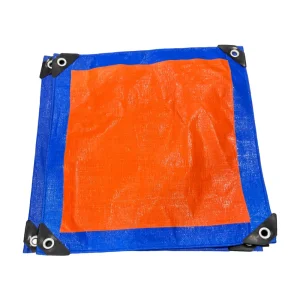
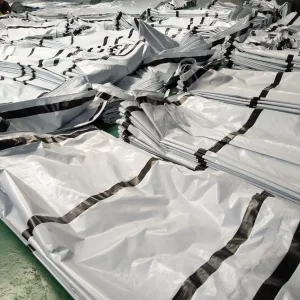
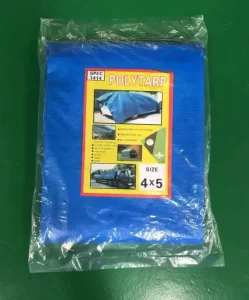
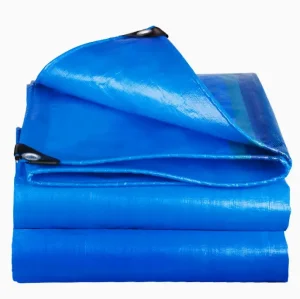
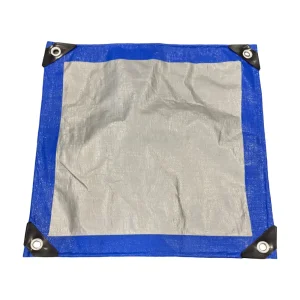
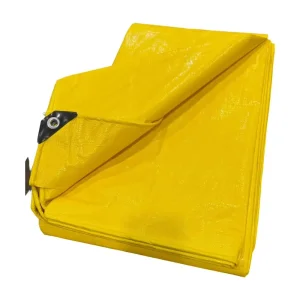
Explore our secondary lineup of high-tenacity PE, PP, and PVC heavy-duty coverings, featuring custom roll widths, specialized striped designs, and multi-purpose protective sheets.
In-depth technical answers addressing material selection, manufacturing tolerances, export logistics, and quality assurance standards.
GSM measures total fabric density per unit area, combining the weight of the interior woven polyolefin scrim and the exterior double-sided polyethylene coating layers. Higher GSM values generally indicate thicker yarn denier (e.g., 800D to 1500D) and denser mesh counts (e.g., 12×12 or 14×14). Consequently, a 200 GSM tarp offers roughly 2.5 times the tensile strength (N/5cm) and puncture resistance compared to an 80 GSM economy tarp. However, polymer virginity and drawing ratio also dictate ultimate mechanical strength.
PE (Polyethylene): Lightweight, highly flexible, economical, 100% recyclable. Best for general covers, construction scaffolding, and short-to-medium term outdoor protection (60–300 GSM).
PP (Polypropylene): Higher flexural modulus and tensile stiffness than PE. Preferred for heavy agricultural ground sheets and layflat fluid containment.
PVC (Polyvinyl Chloride): Heavyweight (450–900 GSM), extreme abrasion resistance, weldable seams, long lifespan (5–10 years). Ideal for commercial truck side curtains, structural architecture, and industrial oil booms.
Photothermal degradation is controlled by mixing specialized masterbatches into the raw HDPE film resin prior to tape extrusion. Factories incorporate 3% to 5% Hindered Amine Light Stabilizers (HALS) such as Chimassorb 944 / Tinuvin 770, alongside organic pigments or Carbon Black. Accelerated weathering tests (ASTM G154) verify that premium formulations retain over 80% of original tensile strength after 2,000 hours of continuous UV-B exposure.
Full OEM/ODM customization is available, including: finished cut sizes or continuous master rolls (2m to 6m width without welding), custom color matching (Ral/Pantone), GSM weight adjustments, flame-retardant compliance (DIN 4102 B1), custom eyelet types (Aluminum, Brass, Polycarbonate), eyelet spacing (30cm, 50cm, 100cm), reinforced molded plastic corners, surface flexographic printing (up to 4 colors), and custom retail polybag packaging with master cartons.
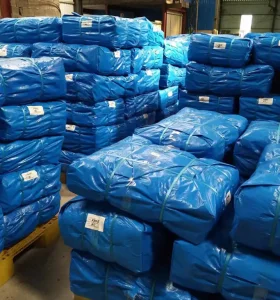
Plastic tarps are dense but compressible. High-capacity hydraulic baling presses compress tarpaulin cartons or bales by up to 40% volume. A standard 40ft High Cube (40HC) shipping container can fit approximately 25 to 28 Metric Tons of poly tarps depending on regional road weight restrictions, maximizing payload efficiency and minimizing per-unit freight cost.
Factory Quality Assurance departments issue full batch testing reports covering: 1) GSM weight tolerance (±3%), 2) Tensile and Tear strength testing (ASTM D751), 3) Hydrostatic head pressure check (AATCC 127), 4) Eyelet pull-out load test, and 5) Container loading visual inspection logs. Third-party testing services such as SGS, BV, and Intertek can be integrated seamlessly into the pre-shipment workflow.
Elevate your enterprise supply chain with factory-direct pricing, certified quality management, and tailored engineering solutions. Connect with our engineering sales team to request custom quotations, physical sample swatches, and factory audit documentation.