Direct factory production engineered for maximum tear resistance, hydrostatic protection, and extended UV resistance across harsh global environments.
In-depth structural analysis of heavy-duty polyolefin protective coverings for modern commercial supply chains.
Industrial enterprise procurement of heavy-duty tarp covers has evolved far beyond basic waterproofing needs. Today’s global supply chain leads, fleet logistics engineers, and agricultural procurement directors require micro-engineered polymer matrices capable of enduring extreme mechanical stress, intense photo-oxidative radiation, and aggressive chemical environments. As a leading manufacturer based in Linyi, Shandong, Linyi Xinshengyang Plastic Products Co., Ltd. (Star Tarpaulins) leads the industry in delivering high-density polyethylene (HDPE) woven cores coupled with double-sided low-density polyethylene (LDPE) lamination, setting new standards for industrial reliability.
When sourcing heavy-duty tarp covers at scale, technical directors must evaluate polymer performance across several standardized testing parameters. Cheap re-ground recycled polyolefins lead to premature environmental stress cracking (ESC), rapid UV degradation, and sudden seam shear failures under wind loading. Professional sourcing specifications mandate virgin resins supplemented with specialized chemical additives:
Formulated with high-denier HDPE flat tapes (typically 800D to 1500D) woven in high-density weave patterns (10×10 to 14×14 per square inch), achieving tensile strengths exceeding 1200 N/5cm per ASTM D751 standards.
Incorporation of 3% to 5% Hindered Amine Light Stabilizers (HALS) and Rutile Titanium Dioxide (TiO2) blocks UV-A and UV-B radiation, extending outdoor service life to over 36 months under high-irradiance desert conditions.
Extrusion co-lamination at temperatures above 300°C seals micro-interstices between woven tapes, yielding absolute zero-permeability hydrostatic head ratings (>100 kPa / DIN EN 20811) with ultrasonic welded seams.
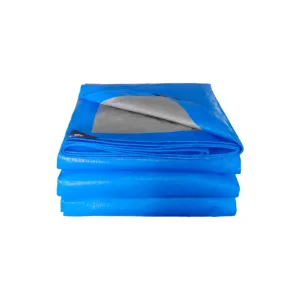
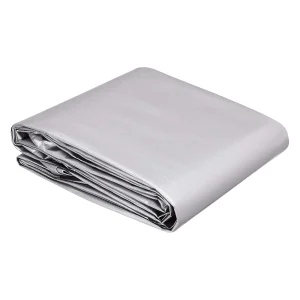
Multi-layer co-extrusion technology enables specialized dual-color tarpaulins. The outer silver layer contains high-purity aluminum oxide micro-pigments that reflect up to 85% of solar infrared radiation, while the inner black layer contains active carbon black to absorb residual thermal energy and eliminate interior light penetration. This dual-action thermal shield reduces internal cargo temperatures by up to 12°C in outdoor storage applications compared to monolithic colored tarps.
How Star Tarpaulins leverages end-to-end automated manufacturing in Linyi, Shandong to deliver unmatched cost efficiency and quality control.
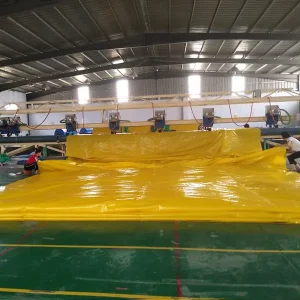
Linyi, Shandong stands as the world's premier cluster for polyolefin textile manufacturing. Operating within this industrial ecosystem, Star Tarpaulins (Linyi Xinshengyang Plastic Products Co., Ltd.) has deployed an Industry 4.0 smart factory architecture spanning 30,000 square meters of production space. By controlling the complete manufacturing value chain in-house—from raw resin pellet compounding to final robotic eyelet insertion—we eliminate subcontractor markups, mitigate quality variability, and guarantee rapid order execution.
| Stage | Process Step | Core Equipment & Automation | Quality Control Standard |
|---|---|---|---|
| 01 | Polymer Extrusion & Drawing | Computerized High-Speed Tape Extruders | Denier tolerance within ±2%, melt flow index (MFI) verified per batch. |
| 02 | Precision Circular Weaving | Air-Jet & Automated Water-Jet Looms | Continuous optical weave density monitoring (10×10 to 14×14 mesh). |
| 03 | Double-Side Co-Lamination | T-Die Extrusion Coating Line | Infrared film thickness sensors ensure ±3 GSM lamination uniformity. |
| 04 | Computerized Slitting & Cutting | Automated Laser Cutting Tables | Dimensional accuracy within ±5 mm across large-format tarps. |
| 05 | Hot-Air Ultrasonic Seam Welding | Multi-Axis Thermal Welders | 100% molecular bonding of seams; zero pinhole guarantee. |
| 06 | Corner Reinforcement & Hemming | PP Rope Insertion & Sonic Riveting | 4-layer folded hem perimeter with rubberized corner patches. |
| 07 | Automated Grommet Punching | High-Speed Hydraulic Grommet Lines | Aluminium / Brass eyelet pull-out resistance > 800 N shear load. |
| 08 | Pre-Shipment QA Inspection | Hydrostatic & Tensile Testing Lab | Batch-level SGS / BV compliance certificate generation. |
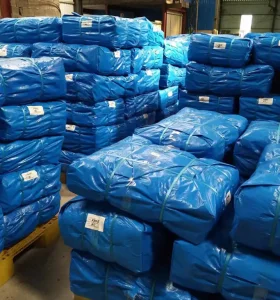
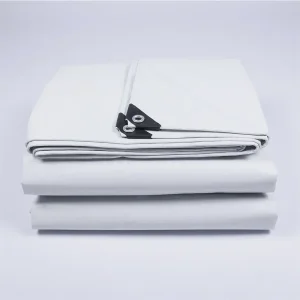
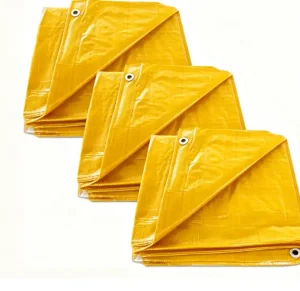
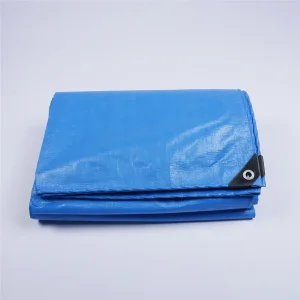
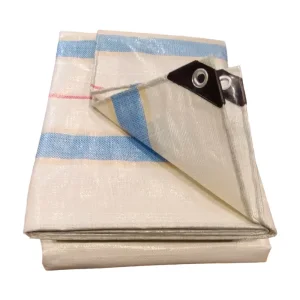
Through close integration with Qingdao and Lianyungang deep-water sea ports, Star Tarpaulins guarantees short export transit windows. Our factory operates 24/7 continuous production cycles, keeping standard blue/silver, double-white, and heavy yellow rolls in stock for rapid dispatch within 10 to 15 days.
Domain-specific tarp engineering designed to optimize operational security across key economic sectors.
Heavy-duty PVC curtainsider fabrics (650–900 GSM) and reinforced PE cargo covers protect freight against high-speed wind buffeting, highway abrasion, and torrential rain. Integrated anti-chafing coatings prevent tarp wear against cargo edges.
Extra-wide 16 mil agricultural hay covers with reinforced hand-straps provide condensation-free protection for haystacks, grain piles, and silage. High-dosage UV stabilization prevents plastic brittleness under unshaded sun exposure.
Thermal insulated poly concrete curing blankets retain hydration heat during cold-weather pour operations. Scaffolding weather-enclosures prevent wind hazards while allowing daylight transmission for site safety.
Manufactured to meet international humanitarian specifications (UNHCR / Red Cross standards), lightweight yet tear-resistant tarpaulins offer immediate waterproofing for roof damage and emergency temporary shelters.
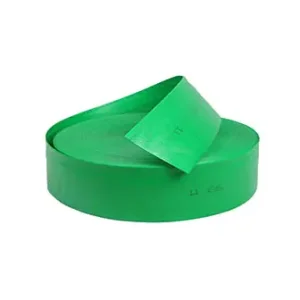
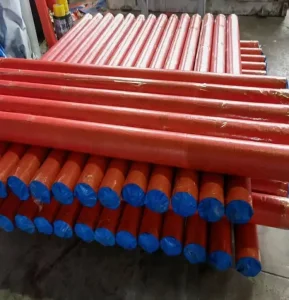
2" to 8" PE/PVC layflat hoses are constructed with inner woven synthetic jackets under polyolefin lamination, managing working pressures up to 8 Bar for mine dewatering, agricultural irrigation, and municipal drainage.
Custom-printed woven poly lumber wrap rolls with anti-skid surface treatments protect kiln-dried timber products from moisture uptake and road grime during transit across intermodal rail networks.
Next-generation polymer developments shaping the future of industrial protective fabrics.
As regulatory frameworks tighten worldwide, the polyolefin industry is experiencing a shift toward circular economy compliance, fluorine-free chemistry, and smart material integration. Star Tarpaulins' R&D division works closely with polymer research institutes to introduce technical innovations that improve performance while minimizing environmental impact.
Traditional multi-material coated fabrics—such as PVC coated onto polyester substrates—present significant recycling challenges because their constituent layers cannot be easily separated. Our technical roadmap prioritizes 100% Polyolefin Monomaterial Tarpaulins (HDPE Core + LDPE Lamination). At end-of-life, these products can be directly shredded, re-pelletized, and extruded into secondary industrial products without chemical separation.
Conventional UV stabilizers slowly leach out of polymer matrices when exposed to rain and intense sunlight. Our ongoing research integrates hydrophobic nano-TiO2 particles combined with polymeric HALS compounds. This matrix chemically anchors within the polyolefin backbone, preventing leaching and maintaining physical tensile strength over extended deployment periods.
In response to global restrictions on per- and polyfluoroalkyl substances (PFAS), our lamination formulations use advanced fluor-free silicon-modified polyolefins. These engineered surfaces achieve high water contact angles (>110 degrees), promoting easy self-cleaning without environmental persistent organic pollutants.
Ensuring hassle-free global customs clearance, safety certifications, and specialized regional support.
Navigating international import regulations requires rigorous product testing and fully traceable documentation. Star Tarpaulins provides export-ready compliance packages designed to meet the strict regulatory demands of importers in North America, Europe, Australia, and the Middle East.
Formulations tested free of Substances of Very High Concern (SVHC), heavy metals (Lead, Cadmium, Hexavalent Chromium), and banned plasticizers, meeting European Union Environmental Directives.
All consumer-grade outdoor tarpaulins and pet-shelter protective sheets adhere to California Prop 65 safety limits, ensuring zero exposure to carcinogenic chemicals.
Engineered with specialty additive compounds meeting NFPA 701 (USA), DIN 4102 B1 (Germany), and CPAI-84 standards for industrial scaffolding and public event marquee setups.
Our multilingual export documentation department prepares complete shipping paperwork—including Certificates of Origin (Form A, Form E, RCEP COO), bill of lading releases, SGS batch inspection reports, and custom HS Code classification lists (HS 3926.90 / HS 6306.12)—ensuring fast customs clearance at destination ports.
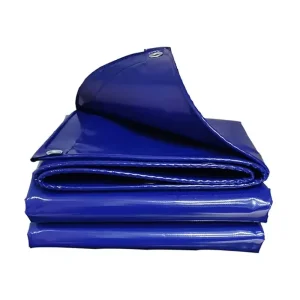
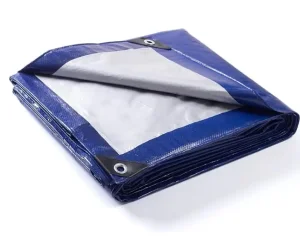
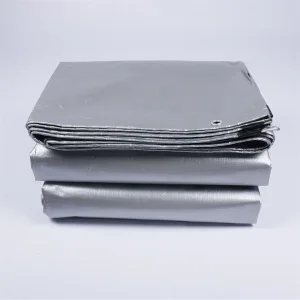
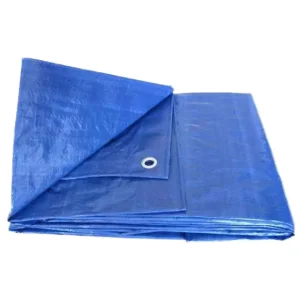
Explore our comprehensive lineup of factory-direct heavy-duty tarpaulins ready for high-volume wholesale distribution.
Detailed technical answers provided by our senior polymer application engineers.
Selection depends on weight requirements, lifespan expectations, and target budget. PE (Polyethylene) tarpaulins are lightweight (60 to 300 GSM), highly cost-effective, 100% recyclable, and ideal for hardware retail, emergency relief, agricultural covers, and general temporary protection. PVC (Polyvinyl Chloride) tarpaulins are heavier (450 to 900 GSM), feature extreme mechanical tear resistance, and offer an outdoor service life exceeding 5 to 10 years, making them ideal for heavy commercial trailer curtains, permanent membrane structures, and industrial containment barriers.
GSM (Grams per Square Meter) measures total product weight, which directly correlates with coating thickness and durability. Weave Mesh Count (e.g., 10×10 or 14×14 per square inch) indicates structural yarn density. A higher mesh count with higher denier tape (e.g., 1200D 14×14) provides high puncture and tear resistance, while the extrusion coating GSM determines hydrostatic water tightness and UV chemical barrier performance.
We incorporate high-grade Hindered Amine Light Stabilizers (HALS) combined with TiO2 or Carbon Black masterbatches directly into both the inner extruded yarn and outer lamination layers during extrusion. For high-irradiance markets in the Middle East, Africa, and Australia, we engineer 3% to 5% active UV stabilizer dosages. Accelerated QUV weatherometer testing reports are available for every production run.
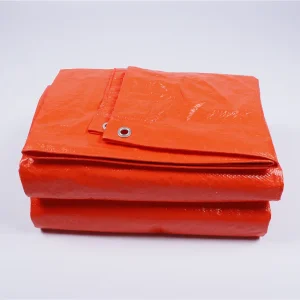
For standard stocked specifications (such as Blue/Silver or Blue/Orange 20ft container mixes), MOQs start at 2 to 3 tons per size. Custom OEM runs—including specific Pantone colors, custom branding printing, specialized eyelet spacings, or custom retail label packaging—require a minimum order of 5 tons per specification. Standard production lead times range from 15 to 25 days following pre-production sample approval.
Yes. We formulate customized polyolefin compounds with flame retardant additives compliant with NFPA 701, CPAI-84, and DIN 4102 B1 standards. Additionally, for cold-climate applications (such as Nordic construction sites or Canadian winter timber protection), our cold-crack resistant formulations remain flexible down to -40°C without surface coating fractures.
To help distributors optimize inventory turnover, we offer mixed-container loading service. You can consolidate ready-made PE tarp sheets, master tarpaulin rolls, PE layflat hoses, and weed barrier fabrics within a single 20ft or 40ft High Cube container. Our logistics team provides computer-optimized container loading plans to maximize volume utilization.
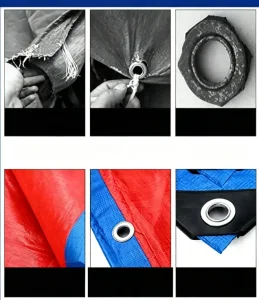
We supply rust-proof aluminum grommets, heavy-duty solid brass eyelets, or high-impact polycarbonate plastic grommets placed at custom pitches (standard 50cm or 100cm pitch). Hems are reinforced with poly rope melted inside thermal heat-welded folds. Corners feature heavy-duty molded rubber or 3-ply fabric corner patches to prevent tear-outs under high tension.
Every shipment is issued an internal Quality Control Certificate covering GSM tolerance, tensile warp/weft tests, hydrostatic head values, and eyelet pull-out forces. We also welcome third-party inspections (SGS, Bureau Veritas, TUV, Cotecna) prior to container sealing, providing complete transparency for international buyers.