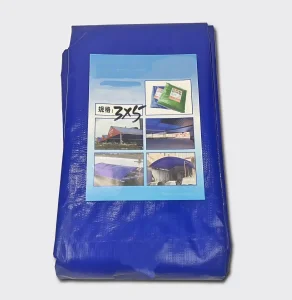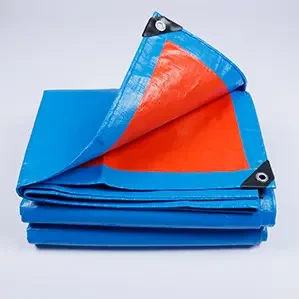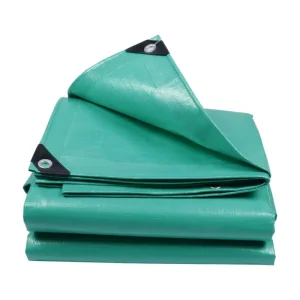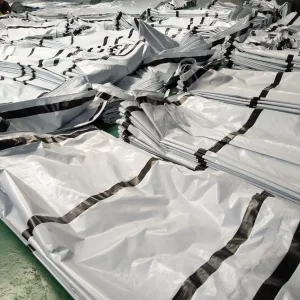
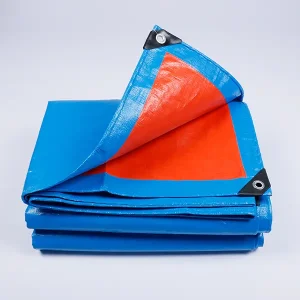
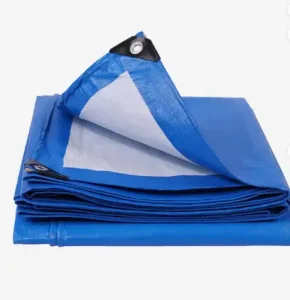
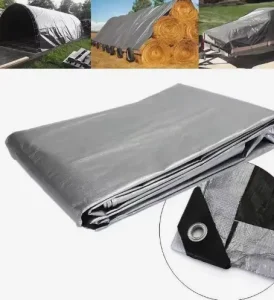
The global demand for wholesale military surplus tarps and industrial-grade tactical protective covers has transitioned from traditional army surplus retail channels into a multi-billion dollar commercial ecosystem. B2B procurement officers, defense logistics contractors, municipal emergency response agencies, and heavy equipment distributors increasingly rely on specialized manufacturing plants capable of replicating or exceeding military specification standards (MIL-SPEC). Commercial military surplus tarpaulins represent a intersection of extreme environmental durability, cost efficiency, and modular functional versatility.
Historically, military protective covers relied on heavy cotton duck canvas treated with paraffin wax or copper naphthenate. While durable, legacy canvas tarps presented severe operational drawbacks: high dry weight, vulnerability to rot and mildew under tropical humidity, water absorption leading to payload weight gains, and poor chemical resistance. The industrial shift toward High-Density Polyethylene (HDPE) core weaving with Low-Density Polyethylene (LDPE) double-sided lamination, along with Polyvinyl Chloride (PVC) knife-coating technologies, has completely redefined the macro landscape.
Industrial buyers seeking bulk procurement from established manufacturing bases must evaluate factory capabilities through structural polymer metrics rather than surface-level branding. Modern factories must maintain absolute control over the entire supply chain—from virgin resin tape extrusion and high-speed water-jet weaving to high-temperature thermal lamination, ultrasonic edge hemming, and brass/aluminum grommet stamping.
Understanding the internal structural composition of military-grade protective tarpaulins requires an analysis of polymer physics, tensile stress vectors, and weatherproofing chemical additives. True factory-level custom manufacturing relies on four core technical pillars:
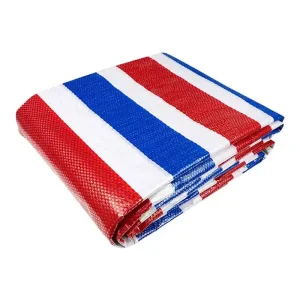
The foundational core of woven tarpaulins consists of virgin HDPE ribbon tapes extruded under high thermal draw ratios. Weave count specifications range from standard 8x8 mesh per square inch for lightweight utility sheets to heavy-duty 14x14 or 16x16 mesh (800D to 1500D) for tactical ballistic-surplus simulation and heavy vehicle freight protection.
Extrusion lamination coats both sides of the woven substrate with a multi-micrometer non-porous barrier. This liquid poly barrier completely seals weave gaps, delivering 100% water impermeability. For extreme military-spec demands, PVC knife-coating bonds directly into polyester mesh to eliminate delamination under high shear stress.
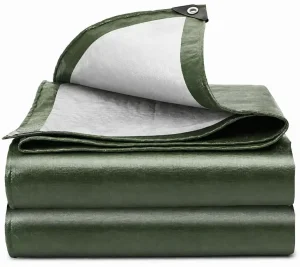
Unprotected polyethylene degrades rapidly under solar ultraviolet radiation. Advanced factories incorporate Hindered Amine Light Stabilizers (HALS) and Carbon Black / Olive Drab UV masterbatch at 3% to 5% volume fractions, guaranteeing long-term outdoor survival in high-irradiance zones like the Middle East and Australia.
| Material Classification | GSM Range | Tensile Strength (Warp/Weft) | Hydrostatic Resistance | Flame Retardancy Standard | Primary Industrial Application |
|---|---|---|---|---|---|
| Lightweight PE Tarpaulin | 60 - 90 GSM | 450 / 400 N/5cm | > 1200 mm H2O | Optional CPAI-84 | Promotional, short-term goods covering, drop cloths |
| Standard Commercial Poly | 100 - 160 GSM | 750 / 700 N/5cm | > 1800 mm H2O | UL94 HB Class | Construction scaffolding, DIY hardware retail, ag covers |
| Heavy-Duty Tactical PE (Mil-Spec) | 180 - 300 GSM | 1200 / 1150 N/5cm | > 2500 mm H2O | NFPA 701 / DIN 4102 B1 | Military surplus covers, hay storage, equipment shrouds |
| Reinforced PVC Knife-Coated | 450 - 900 GSM | 2500 / 2300 N/5cm | > 5000 mm H2O | BS 7837 / EN 13501-1 | Truck side curtains, tactical tents, containment booms |
The global trade in military surplus tarpaulins has modernized. Buyers are moving away from traditional physical auction houses selling used government surplus and toward direct contract manufacturing with high-capacity factories. This shift is driven by three primary commercial realities:
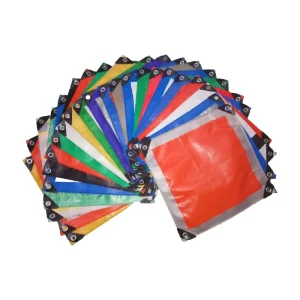
Authentic military surplus inventories are inherently unpredictable, inconsistent in wear state, and limited in bulk volume. Sourcing directly from certified OEM tarpaulin factories guarantees standardized GSM weight, predictable tensile performance, custom color batches (including tactical Olive Drab, Coyote Tan, NATO Camo, and Charcoal Black), and continuous container-load availability.
Direct wholesale purchasing from integrated production facilities eliminates intermediate trading markups. Furthermore, modern lightweight high-density poly fabrics drastically lower international shipping freight costs per square meter compared to old-style heavy canvas surplus, delivering significantly higher margin thresholds for importers and government suppliers.
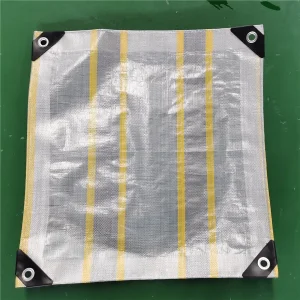
Major commercial sectors currently driving bulk military-spec tarp orders include international humanitarian logistics (UNHCR/Red Cross temporary shelter compliance), agricultural storage contractors, mining haulage fleets, and commercial disaster relief suppliers. Factory capability to quickly adjust sheet dimensions, corner triangular reinforcement patches, rope-in-hem reinforcement, and eyelet pitch (every 50cm vs 100cm) is vital for winning competitive tenders.
Industrial tarpaulins must perform under harsh environmental extremes. Manufacturing processes must be calibrated to match the specific microclimate and mechanical requirements of the target operational deployment zone.
Operational Challenges: Extreme daytime thermal heating (up to +55°C surface temperatures), intense UV exposure causing plastic brittleness, and windblown sand abrasion.
Engineering Solution: Double-sided silver/coyote tan reflectant LDPE coating combined with high-percentage HALS UV stabilizers. Silver exterior surfaces reflect heat, reducing internal storage temperatures by up to 15°C.
Operational Challenges: Continuous salt fog corrosion, constant wave action shear stress, and rapid mold/fungal proliferation under high humidity.
Engineering Solution: Heavy-duty PVC knife-coated fabric or 220+ GSM PE tarps featuring molded plastic reinforced corners, solid aluminum or anti-corrosive polycarbonate eyelets, and anti-fungicidally treated masterbatch formulations.
Operational Challenges: Extreme cold-induced polymer crystallization, causing standard plastic tarps to crack, snap, and lose waterproof integrity when flexed.
Engineering Solution: Specialized low-density plasticizer blending during the lamination process, maintaining physical fabric flexibility and crease-tear resistance at temperatures down to -40°C / -40°F.
Securing major commercial contracts requires rigorous compliance with international safety, chemical, and physical performance standards. Quality-focused manufacturing plants enforce strict testing protocols at every stage of production:
The industrial membrane sector is undergoing rapid technology transformation driven by material science breakthroughs, automation, and circular economy imperatives. Modern manufacturing plants are actively integrating four key innovation vectors:
Integration of micro-encapsulated siloxane polymers within LDPE lamination layers. Minor surface punctures automatically seal when exposed to ambient heat and sun, preventing water ingress.
Replacing mixed-material components with mono-material Polyethylene construction (PE fabric + PE eyelets + PE reinforcement cord). Enables complete zero-waste recycling without manual disassembly.
Advanced masterbatch pigment additives engineered to absorb or disperse Near-Infrared signatures, providing visual stealth and solar heat reduction for specialized field applications.
Development of ultra-thin, flexible solar thin-film integration directly onto heavy-duty tarp substrates, converting field covers into off-grid power generation arrays.
Direct technical answers to common engineering, procurement, and logistics queries encountered by bulk importers and project contractors: