Factory-direct inventory of heavy-duty PE and PP woven coated tarpaulins engineered for severe environmental resistance.
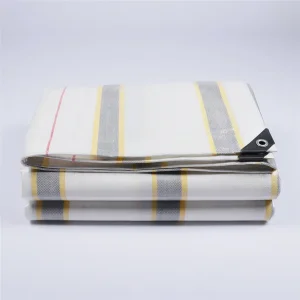
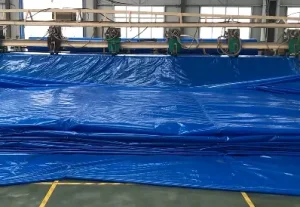
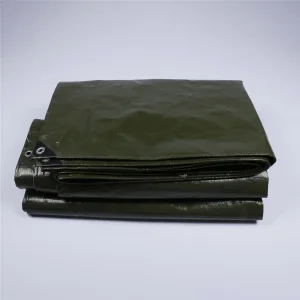
The global industrial landscape for technical textiles and polymer-coated containment solutions has undergone a major paradigm shift. Driven by intensifying global supply chain volatility, climate change-induced weather extremes, and heightened regulatory scrutiny regarding cargo preservation and worker safety, the demand for high-grade, multipurpose tarpaulins has evolved from basic temporary covering to highly engineered, structural protective barriers.
As enterprise procurement managers, industrial distributors, and OEM buyers analyze total cost of ownership (TCO), material selection directly affects operational longevity. Polyethylene (PE), Polypropylene (PP), and Polyvinyl Chloride (PVC) fabrics serve as the structural backbone for global commerce. From protecting multi-million-dollar agricultural yields in North America to shielding heavy machinery cargo transiting maritime lanes, selecting the precise substrate density, weave mesh ratio, and chemical masterbatch formulation is critical to preventing degradation from ultraviolet (UV) radiation, severe wind shear, and moisture ingress.
Protecting intermodal freight against severe weather conditions during transit across oceanic and overland logistics networks.
Engineered thermal reflection and sub-zero flex performance tailored specifically to extreme localized ambient conditions.
Strict adherence to REACH, RoHS, ASTM, and ISO testing protocols ensures zero hazardous chemical off-gassing and reliable flame retardancy.
The synthesis of high-durability multipurpose tarpaulins relies on precise multi-stage processing: high-density polymer extrusion, high-tenacity tape drawing, precision water-jet or circular weaving, and double-sided extrusion lamination.
Manufactured using High-Density Polyethylene (HDPE) as the inner woven core (providing structural tensile load resilience) coupled with Low-Density Polyethylene (LDPE) or Linear Low-Density Polyethylene (LLDPE) double-sided surface coatings. The integration of Hindered Amine Light Stabilizers (HALS) within the masterbatch suppresses photo-oxidative degradation, preventing chain scission when exposed to direct solar radiation over extended durations.
Engineered for extreme heavy-duty performance, PVC tarpaulins utilize a high-tenacity polyester woven scrim coated with liquid PVC plastisol via knife-over-roll technology. This creates an impenetrable composite material offering high hydrostatic resistance, superior tear propagation strength, and structural flame retardancy (DIN 4102 B1/B2 compliant).
| Material Metric | PE Tarpaulin (Commercial) | PP Tarpaulin (Agricultural) | PVC Coated (Industrial) |
|---|---|---|---|
| Weight Range (GSM) | 60 g/m² – 300 g/m² | 80 g/m² – 260 g/m² | 450 g/m² – 900 g/m² |
| Tensile Strength (Warp/Weft) | 700 N / 600 N (5cm) | 850 N / 750 N (5cm) | 2500 N / 2200 N (5cm) |
| Tear Resistance (Trapezoid) | 80 N – 140 N | 95 N – 160 N | 300 N – 450 N |
| Hydrostatic Pressure Head | > 15 kPa (Waterproof) | > 12 kPa (Moisture-Resistant) | > 100 kPa (Impermeable) |
| UV Degradation Resistance | 3% - 5% HALS Additive | 2% - 4% UV Masterbatch | Integrated Anti-UV Surface Coating |
| Thermal Operating Range | -20°C to +70°C | -10°C to +80°C | -30°C to +70°C |
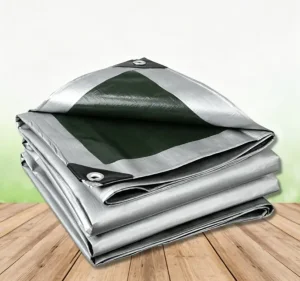
High ambient temperatures combined with high solar irradiation levels accelerate polymer oxidation. Sourcing requires tarpaulins formulated with up to 5% active HALS and thermal-reflective double-silver or silver-green outer coatings to minimize heat buildup beneath stockpiles.
Heavy-duty transport requirements demand tarpaulins with cold-crack stability down to -30°C. Heavy lumber wraps, side curtains, and truck tarps utilize flexible plasticizer formulations to ensure the fabric remains pliable without tearing during cold winter rigging.
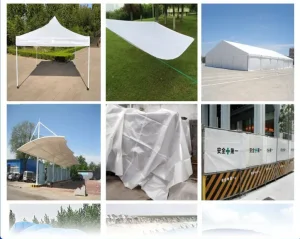
Construction scaffolding covers and event tent textiles must strictly adhere to REACH regulation standards regarding SVHC chemicals, phthalate-free plasticizers, and flame-retardant certifications according to DIN 4102 B1 standards.
Monsoonal weather conditions mandate high hydrostatic pressure containment. Biocidal additives incorporated into the coating prevent fungal growth, mildew accumulation, and micro-bacterial decay during continuous moisture exposure.
To adhere to strict B2B procurement standards, our manufacturing facilities operate under an ISO 9001:2015 certified Quality Management System. Each production batch undergoes rigorous laboratory testing to verify mechanical and chemical parameters prior to export container loading.
Executed in accordance with ASTM D751 and ISO 1421 standards using constant-rate-of-extension (CRE) testing machinery to ensure edge grommets and body fabric withstand high tension load requirements.
Evaluated under ISO 811 standards. Fabric surfaces and high-frequency welded heat-sealed seams are subjected to continuous water pressure to guarantee zero pinhole leakage.
Utilizing Xenon Arc chamber testing (ASTM G155) to simulate up to 3 years of intense field sunlight exposure, verifying that color retention and plastic integrity remain well within operational thresholds.
Direct factory sourcing requires careful evaluation of technical specifications to align product properties with end-use demands. Below is a engineering checklist designed for commercial buyers, importers, and procurement specialists.
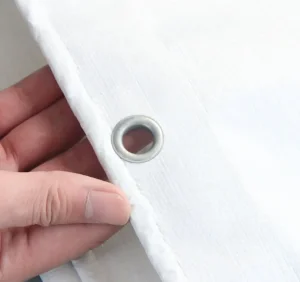
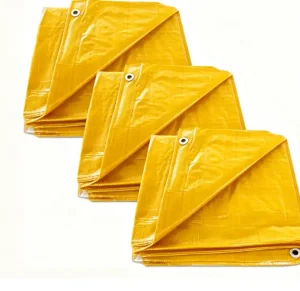
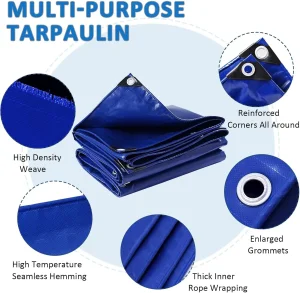
Standard pre-cut finished sizes feature PP/PE rope-reinforced folded hems along the perimeter. High-stress applications require sonic-welded triangular rubber corner reinforcements and heavy-duty brass or aluminum eyelets placed at custom intervals (50cm, 100cm, or custom pitch).
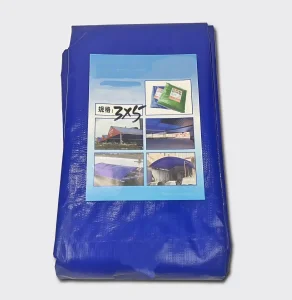
Finished sheets are compressed using hydraulic baling presses or heavy-duty corrugated cartons to optimize container loading yields. High-density bale packing maximizes cubic meter efficiency for 20GP/40HQ container shipments, reducing freight costs per unit.
Industrial-grade fireproof, scratch-resistant, and high-tenacity custom solutions directly from our production workshops.
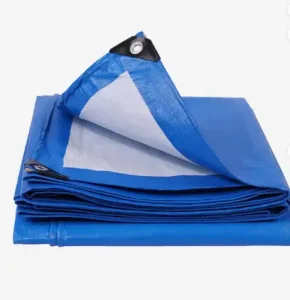
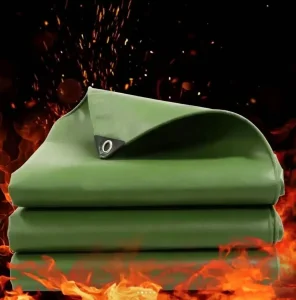
Connect directly with our engineering team to request customized GSM formulations, material samples, OEM packaging plans, and bulk FOB/CIF container price estimates.
Initiate Engineering Inquiry