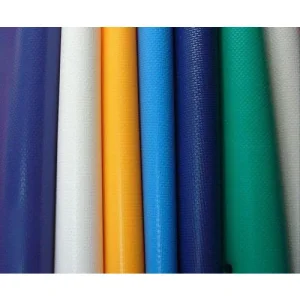
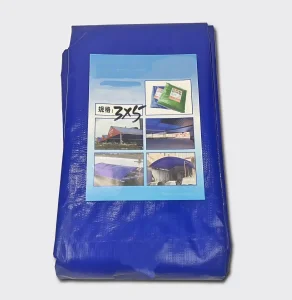
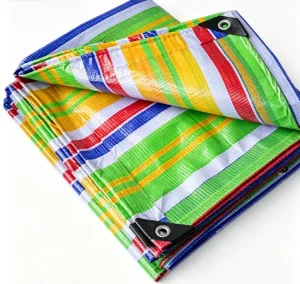
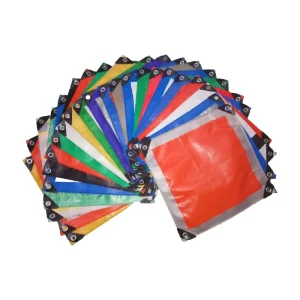
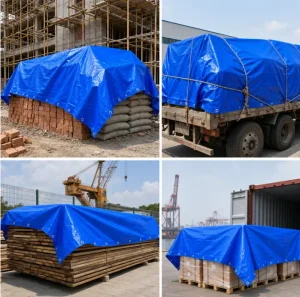
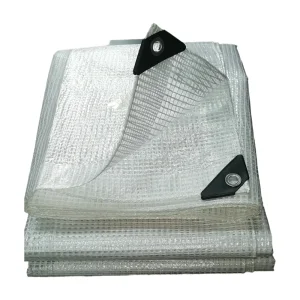
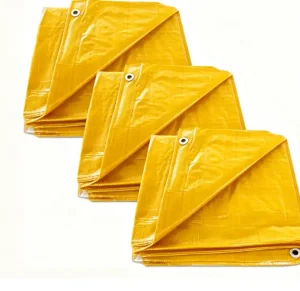
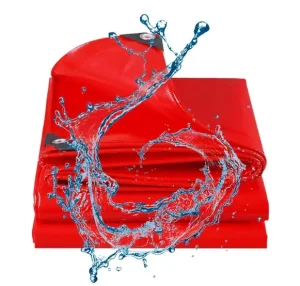
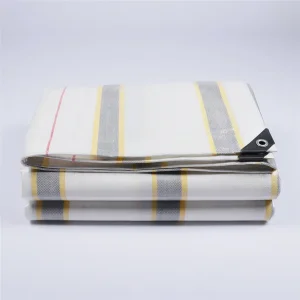
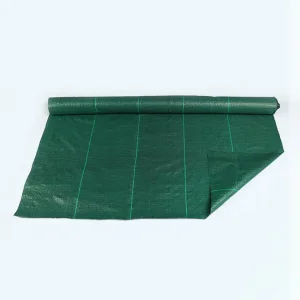
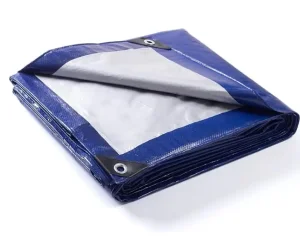
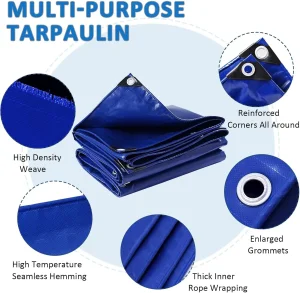
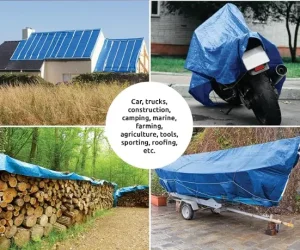
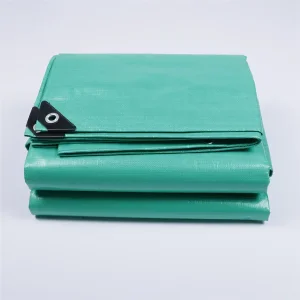
Featured export-grade heavy-duty waterproof tarpaulin products engineered for global logistics, construction, and agricultural protection.
An in-depth analysis of material formulations, extrusion dynamics, structural weave density, and co-lamination technologies driving wholesale plastic tarp manufacturing.
The structural backbone of modern PE tarps consists of high-tenacity HDPE tapes. Virgin granules are extruded through flat-die lines, stretched under elevated thermal control to align polymer chains, and wound onto high-speed bobbins. This yield process guarantees tensile strengths exceeding 1200 N / 5cm, preventing structural tearing under cyclic wind loads.
Impermeability is achieved by extrusion-coating molten LDPE containing titanium dioxide pigments, UV stabilizers, and optical brighteners onto both faces of the HDPE woven scrim. This creates a solid 3-ply or 5-ply cross-laminated barrier, sealing structural voids and ensuring zero hydrostatic water penetration up to 100 kPa water column pressure.
For industrial applications demanding extreme longevity, knife-coated PVC tarpaulins utilize high-tenacity polyester scrims (1000D/1100D) embedded within liquid PVC paste. Enhanced with plasticizers, flame retardants, and acrylic top-lacquering, PVC tarps exhibit superior abrasion resistance, flame self-extinguishing capabilities, and continuous dynamic tear resistance.
B2B procurement managers must evaluate mechanical specifications against project requirements to optimize cost-to-service ratios. The matrix below defines key operational characteristics across polymer types.
| Material Metric | PE Tarpaulin (Standard) | PE Heavy-Duty (Virgin) | PP Woven Grid Tarp | PVC Coated Tarpaulin |
|---|---|---|---|---|
| GSM Range (g/m²) | 60 - 140 GSM | 150 - 300 GSM | 100 - 220 GSM | 400 - 900 GSM |
| Base Polymer Composition | Recycled/Virgin HDPE + LDPE | 100% Virgin HDPE Scrim + LDPE | Polypropylene Tape Scrim | 1000D Polyester + PVC Paste |
| Tensile Strength (Warp/Weft) | 450 / 400 N/5cm | 1100 / 950 N/5cm | 900 / 850 N/5cm | 2500 / 2300 N/5cm |
| Hydrostatic Head Pressure | > 25 kPa | > 60 kPa | > 35 kPa | > 150 kPa |
| UV Resistance Life (Middle East Sun) | 3 to 6 Months | 12 to 36 Months (3-5% HALS) | 6 to 12 Months | 36 to 72 Months |
| Flex Fatigue Resistance | Moderate | High | Moderate / Rigid | Ultra-High |
| Optimal Application Intent | Temporary Covers, Retail DIY | Construction, Truck Cover, Ag | Shade Nets, Ground Barriers | Trailer Side Curtains, Tents |
Why leading global distributors, industrial contractors, and OEM brands centralize their wholesale tarp manufacturing in China’s specialized industrial clusters.
China’s primary plastic tarpaulin manufacturing centers—notably Linyi, Weifang, and Ningbo—benefit from fully integrated supply chains. Raw polymer resin refineries, masterbatch formulators, high-precision circular loom builders, and automated eyelet machinery makers sit within a 50-kilometer radius. This vertical compression drastically reduces transportation overheads and sub-component lead times.
Modern Chinese tarp factories operate massive batteries of 6-shuttle, 8-shuttle, and ultra-wide flat weaving looms running 24/7. Automated melt-extrusion units draw consistent denier tape at linear speeds exceeding 500 meters per minute. Massive scale enables Chinese suppliers to maintain unbeatable unit-cost economics without sacrificing mechanical tolerance control.
Extensive downstream converting machinery empowers Chinese factories to offer complete OEM/ODM flexibility: sonic heat-sealing seams, inner perimeter PP/PE rope reinforcement, high-tonnage ultrasonic aluminum/brass eyelet punching, triple-corner plastic patch reinforcement, and custom multi-color rotogravure surface branding.
Key innovations in material science, environmental regulations, and smart textile technologies shaping next-generation protective covers.
Global environmental mandates (such as EU circular economy directives) are forcing a shift away from non-recyclable composite textiles. Next-generation tarps prioritize 100% monomaterial Polyethylene structures (where scrim, lamination, edge ropes, and eyelets are all polyolefin-derived). This allows whole-sheet mechanical recycling without complex material separation.
Photodegradation remains the primary cause of tarp failure in high-ultraviolet zones. Incorporating Hindered Amine Light Stabilizers (HALS) combined with nano-scale Titanium Dioxide and Zinc Oxide UV absorbers prevents polymer chain scission. Advanced formulations retain up to 80% tensile strength after 3000 hours of continuous QUV accelerated weathering tests.
Commercial construction scaffolding and enclosed public shelters increasingly mandate strict fire codes (e.g., DIN 4102 B1, NFPA 701, CPAI-84). Factories are integrating halogen-free flame retardants alongside hydrophobic fluoropolymer surface lacquers, causing mud, dust, and industrial soot to slide off with natural rainfall.
Tailored tarpaulin configurations engineered to solve operational challenges across logistics, agriculture, construction, and disaster relief management.
Challenge: Long-haul cargo exposed to highway speeds, extreme wind drag, abrasions, rain penetration, and UV degradation.
Factory Solution: 200-280 GSM heavy-duty silver/black PE tarps or 650 GSM PVC truck side curtains with heat-welded seams, reinforced webbings, and stainless steel D-rings. The silver reflective layer reduces thermal buildup inside cargo beds by reflecting up to 75% of solar radiation.
Challenge: Moisture infiltration spoiling harvested grain stockpiles, UV degradation of silage covers, and seepage in earth-dug fish ponds.
Factory Solution: 120-180 GSM UV-stabilized white/green agricultural sheets for crop coverage; high-density 0.5mm+ HDPE geomembrane/tarp liners for farm pond irrigation reservoir containment, certified non-toxic for aquatic life.
Challenge: Debris falling from scaffolding, concrete curing moisture loss, and temporary weatherproofing of unroofed commercial structures.
Factory Solution: High-visibility blue/orange construction tarps or flame-retardant grid mesh tarps with eyelets every 50cm, enabling secure tie-downs to tubular scaffolding frames while allowing controlled wind passage.
Challenge: Rapid deployment needs for emergency housing following earthquakes, floods, or displacement crisis under extreme climatic exposure.
Factory Solution: Strict adherence to UNHCR/UNICEF specification sheets (4x6m sheets, white reflective top, black sun-blocking underlayer, reinforced bands, tear strength > 600N), packaged in dense sea-freight bales for global air-drop or rapid container logistics.
A procedural checklist for international procurement teams, supply chain directors, and import agencies conducting supplier audits.
Always verify raw fabric mass versus total laminated weight. Unscrupulous suppliers may increase LDPE coating thickness while reducing HDPE core scrim denier (e.g., using 600D instead of 1000D yarn), resulting in nominal GSM compliance but severe degradation in tear propagation resistance.
Mandate factory-issued or third-party (SGS, Intertek, Bureau Veritas) test reports covering key criteria:
Inspect thermal heat-sealing zones. Overheating crystallizes the polymer mesh causing micro-cracks; underheating leads to delamination under tension. Eyelets must feature double-layer fabric backing patches capable of withstanding minimum pull-out loads of 500 N.
Explore customized colorways, specialized agricultural ground covers, and heavy-duty industrial tarpaulin rolls direct from production lines.
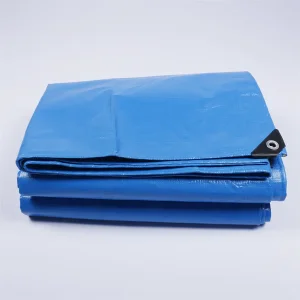
Expert answers to critical procurement questions regarding material specs, MOQ, production workflows, and shipping logistics.
Cut Size refers to the raw dimensions of the tarpaulin sheet before hem folding, rope reinforcement, and perimeter heat-sealing. Finished Size represents the actual physical dimensions after perimeter hemming (typically 10 cm to 30 cm shorter along both width and length). Commercial buyers must specify whether quotes are based on finished size or cut size to avoid discrepancy during incoming QC audits.
Unprotected polyethylene degrades rapidly under intense ultraviolet radiation due to photo-oxidation breaking carbon-carbon polymer backbones. Direct-factory masterbatch compounding adds Hindered Amine Light Stabilizers (HALS) typically at a 1% to 5% loading rate based on destination radiation index. For example, a 3% HALS addition guarantees up to 24-36 months of outdoor structural integrity in Middle Eastern or Equatorial African environments.
Standard OEM custom production run MOQs start at 3 to 5 Metric Tons per specification/colorway. For standard inventory specifications (e.g., Blue/Orange 100 GSM or Silver/Black 150 GSM), MOQs start at one mixed 20ft container (~10 to 12 metric tons). A standard 40ft High Cube (40HQ) container holds approximately 25 to 28 metric tons of compressed bale-packed tarpaulins.
PE tarpaulins (60-300 GSM) are lightweight, cost-effective, and ideal for short-to-medium-term coverage (6 to 24 months), offering an exceptional balance of low purchasing cost and flexible handling. PVC coated tarpaulins (400-900 GSM) cost 3x to 5x more per square meter but provide heavy-duty structural durability lasting 5 to 10 years under harsh static or dynamic stress. Choose PE for temporary or disposable logistics, and PVC for permanent vehicle curtains or marquee structures.
Factories provide three primary packaging options:
1. Bale Packing: Individual sheets folded and packed into heavy-duty woven polybags tightly compressed with steel strapping—maximizes container payload.
2. Carton Packing: Individual tarps placed in retail polybags with color display artwork, packed into 5-ply corrugated export cartons—ideal for retail chains and hardware stores.
3. Roll Packing: Uncut continuous fabric wound onto hard paper cores, wrapped in PE protective film—designed for downstream converting factories.
Yes. Custom extrusion formulations can incorporate halogen-free flame retardant additives (such as aluminum trihydrate or antimony trioxide systems) during core tape drawing and surface coating. Flame-retardant tarpaulins are tested to comply with international standards like DIN 4102-1 (B1/B2), NFPA 701, and BS 7837.