Explore our precision-engineered woven polymer products, optimized for agricultural protection, industrial containment, structural roofing, and global logistics environments.
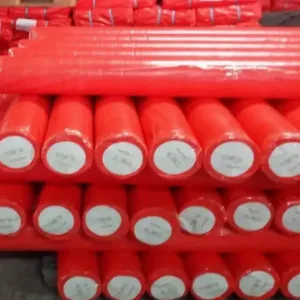
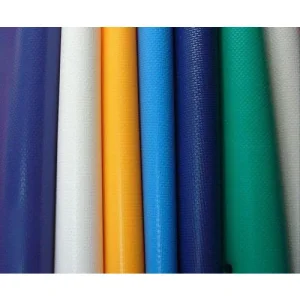
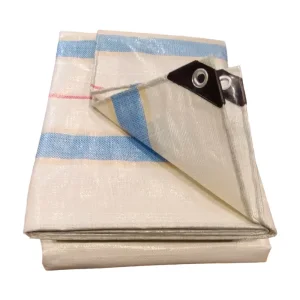
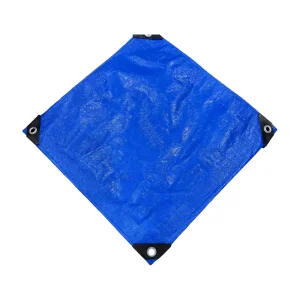
The global demand for high-performance protective flexible membranes has evolved dramatically beyond standard poly-sheets. In modern commercial, logistics, and heavy industrial domains, polyester tarpaulins (PET base fabrics) and engineered poly-composites represent the backbone of environmental containment, cargo security, and structural shelter operations. As an established original equipment manufacturer (OEM) and global exporter, our manufacturing infrastructure bridges raw polymer science with field-tested mechanical durability.
Global commercial activity across North America, the Middle East, Europe, and Asia-Pacific demands specialized functional characteristics. Whether subjected to the hyper-arid, high-UV environments of Arabian logistics hubs or the sub-zero mechanical flexing required across Scandinavian transport corridors, engineered tarpaulins must maintain structural integrity, dimensional stability, and zero hydrostatic leakage. The integration of high-denier polyester filaments with specialized Polyethylene (PE), Polypropylene (PP), and Polyvinyl Chloride (PVC) formulations allows industrial procurement managers to precisely calibrate mass-to-strength ratios against operational expenditure.
Achieving superior tensile strength, tear propagation resistance, and long-term weathering protection requires a deep understanding of textile polymer chemistry. Tarpaulins generally utilize three distinct matrix categories: Polyethylene (PE), Polypropylene (PP), and PVC-laminated/knife-coated Polyester (PET).
Polyester (Polyethylene Terephthalate) yarns offer exceptional initial tensile strength and low elongation under load. Utilizing continuous filament extrusion with high-tenacity polymers (500D to 1500D), PET forms the ideal structural grid for heavy-duty truck curtains and structural membranes.
Unprotected polymers suffer photo-oxidative degradation under solar UV radiation. We incorporate Hindered Amine Light Stabilizers (HALS) and Rutile Titanium Dioxide (TiO2) at concentrations between 3% to 5%, retarding molecular chain scission in high-exposure regions.
Through double-sided hot-melt extrusion lamination or liquid PVC knife-coating, plasticized polymer films fully encapsulate the woven scrim, forming an absolute barrier against hydrostatic pressure exceeding 2000 mm H2O.
| Polymer Parameter | High-Tenacity PET / PVC | HDPE / LDPE Coated Tarp | Woven Polypropylene (PP) |
|---|---|---|---|
| Base Density (GSM Range) | 400 GSM – 900 GSM | 60 GSM – 300 GSM | 100 GSM – 260 GSM |
| Tensile Strength (Warp/Weft) | 2500 N / 2300 N / 5cm | 900 N / 800 N / 5cm | 1200 N / 1100 N / 5cm |
| Tear Strength (Trapezoidal) | > 300 N | > 100 N | > 140 N |
| Thermal Stability Window | -30°C to +70°C | -20°C to +60°C | -10°C to +80°C |
| Primary Industrial Use Case | Truck Side Curtains, Architecture | General Cargo, DIY, Ag Cover | Heavy Grain Storage, Scaffolding |
Our manufacturing facility situated in Linyi, Shandong Province, operates at the center of China’s premier industrial plastic and technical textile cluster. This geographic concentration provides an uninterrupted raw material pipeline—from primary petrochemical resin synthesis to precision yarn drawing and automated weaving.
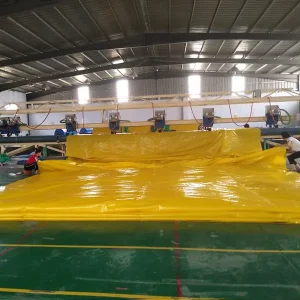
By keeping tape extrusion, water-jet weaving, double-sided film extrusion lamination, automatic rope-hemming, and eyelet punching inside a single 30,000 m² plant, we eliminate middle-layer subcontractor delays and ensure 100% batch-to-batch consistency.
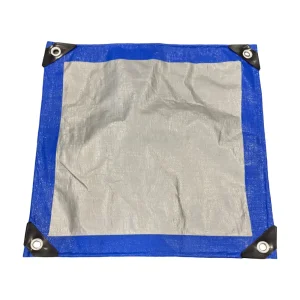
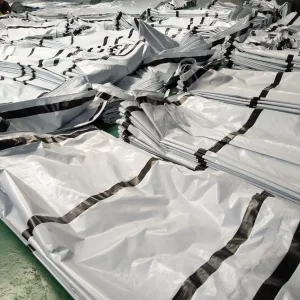
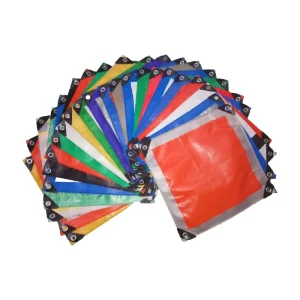
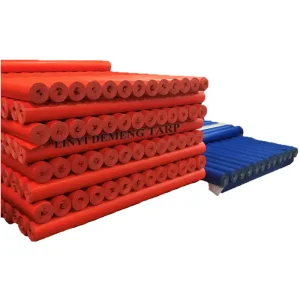
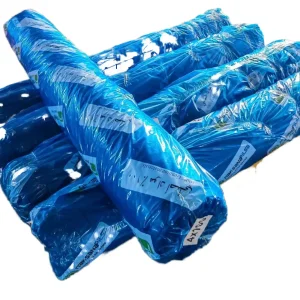
With 20,000 metric tons of annual capacity and stock availability of popular blue/silver, green/silver, and three-color striped specifications, standard repeat container orders can be processed and dispatched within 10 to 15 days.
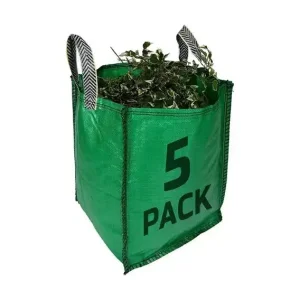
Direct proximity to Qingdao Port enables streamlined FOB/CFR/CIF logistics. Flexible mixed-container loading allows global distributors to bundle PE sheets, PVC rolls, layflat hoses, and garden waste bags in a single consignment.
Tarpaulin performance requirements vary vastly across geographical micro-climates and industry sectors. Our engineering team customizes fabric specifications according to regional field conditions:
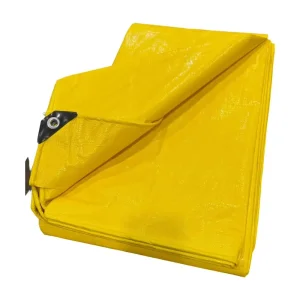
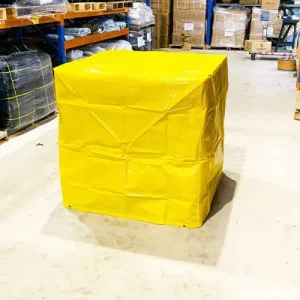
In the US and Canada, extra heavy-duty 16 mil yellow hay covers with hand straps and heavy poly tarps protect agricultural yields against freezing rain and intense summer heat. Lumber covers require anti-skid treatments and high tear-resistance for highway intermodal transport.
Operating under extreme solar radiation index (UV 11+), GCC and African field tarpaulins demand double-silver reflection sheets with 4%–5% UV HALS additives. Used extensively in mining containment, water reservoirs, and emergency shelter systems.
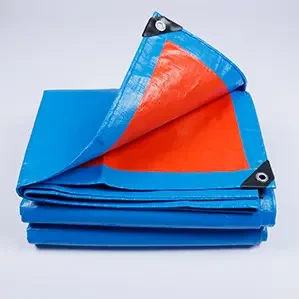
European construction sites demand strict adherence to DIN 4102 B1 flame retardancy for scaffold enclosure sheeting and zero hazardous phthalates under EU REACH regulations. High visibility blue/orange tarps are standard for safety compliance.
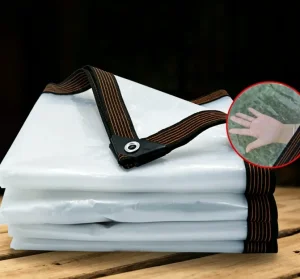
In tropical and monsoon sectors, heavy-duty 2" PE layflat irrigation hoses, high-density transparent rainproof greenhouse covers, and pond liners protect agricultural crops and aqua-farms against heavy precipitation and moisture intrusion.
Our internal Quality Assurance Laboratory conducts rigorous, batch-by-batch physical testing to guarantee that delivered materials conform to international ISO and ASTM standards:
Evaluated per DIN EN 20811 / ASTM D751. Coated fabrics are subjected to continuous fluid pressure to verify complete water impermeability across welded seams and field surfaces.
Tested via ISO 13934-1 / ISO 13937-2 universal testing machines, logging maximum warp/weft breaking force and eyelet pull-out resistance under sudden wind load simulation.
Simulated under ASTM G154 (QUV Tester) conditions for 1500+ hours, ensuring retention of >80% original tensile properties under solar irradiation exposure.
Explore our versatile catalog of agricultural covers, specialized translucent plastic sheeting, garden bags, and heavy poly tarp rolls for custom commercial conversion.
As environmental stewardship and circular economy regulations intensify globally, industrial plastic manufacturers must advance polymer recovery and bio-based resin research. Our engineering division is actively pursuing three sustainable technical pathways:
Traditional PVC tarpaulins require complex mechanical separation due to fabric-to-coating dissimilarity. By manufacturing 100% Polyethylene (HDPE scrim with LDPE film coating), our PE tarpaulins can be directly pelletized and re-melted into industrial recycling streams without delamination.
Integrating post-consumer recycled PET (rPET) yarns into base woven matrices reduces carbon intensity by up to 35%. Combined with eco-friendly non-phthalate plasticizers, these structural membranes fulfill modern corporate Scope 3 emission targets.
Incorporating nano-scale Titanium Dioxide (TiO2) into outer surface lacquers allows UV sunlight to break down organic dirt and atmospheric soot, ensuring long-term architectural aesthetic clarity with minimal wash-water maintenance.
Sourcing technical tarpaulins requires balancing unit cost against long-term operational performance. Below are direct answers from our factory engineers to common procurement inquiries: