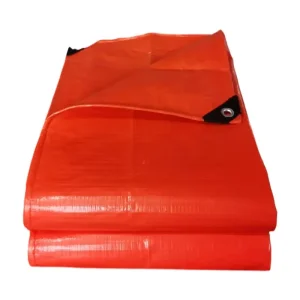
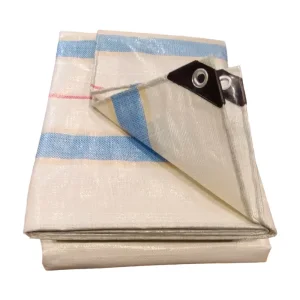
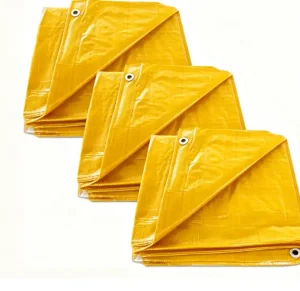
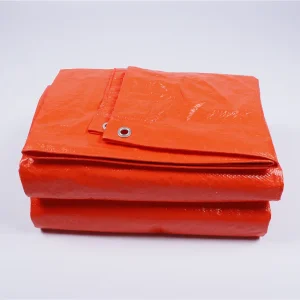
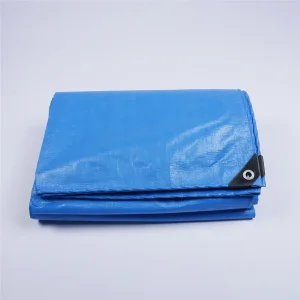
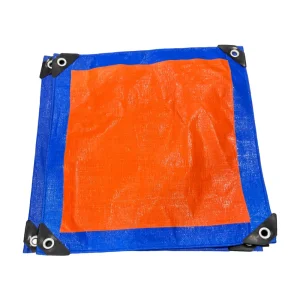
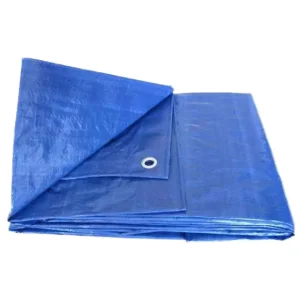
High-tensile, waterproof, and UV-stabilized tarpaulins manufactured for heavy-duty industrial, logistics, and agricultural applications.
Understanding the structural shifts, material chemistry, and macro-demand driving wholesale polypropylene supply chains worldwide.
Polypropylene (PP)—a semi-crystalline thermoplastic polymer belonging to the polyolefin group—stands as the backbone of modern industrial packaging, containment, construction, and agricultural protective fabrics. Globally, the polypropylene market has surpassed USD 120 Billion in valuation, propelled by its exceptional fatigue resistance, chemical inertness, high melting point (~160°C to 166°C), and remarkable tensile strength-to-weight ratio.
In the realm of industrial technical textiles and tarpaulin manufacturing, polypropylene split-film tapes and continuous filaments are woven into structural scrims that offer unmatched dimensional stability. Unlike alternative polymers, PP homopolymers and block copolymers provide the structural stiffness required to endure heavy mechanical loads, dynamic wind shear, and prolonged stress without suffering catastrophic creep deformation.
Global procurement directors and supply chain executives face evolving challenges: fluctuating resin prices, regional supply bottlenecks, and stringent environmental mandates. Sourcing directly from high-capacity, vertically integrated wholesale polypropylene suppliers and factories ensures cost predictability, batch-to-batch polymer purity, and technical compliance with international standard bodies such as ASTM, ISO, and REACH.
How advanced extrusion engineering, regional raw material synthesis, and scale economies yield superior ROI for bulk buyers.
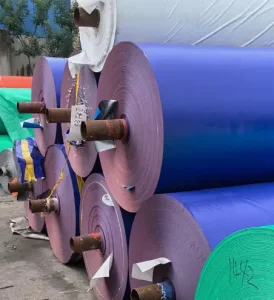
Operating out of major industrial centers such as Linyi, Shandong—China's premier hub for plastic polymer conversion—our facility eliminates intermediary markups by handling every unit operation in-house. From virgin resin pellet compounding, masterbatch additive blending, high-speed tape extrusion, to water-jet and circular loom weaving, double-sided lamination, heat-sealing, and eyelet riveting.
This closed-loop vertical alignment guarantees complete trace-ability. Batch melt flow indexes (MFI) and draw-ratios are calibrated in real time, preventing variations in thread denier, fabric burst strength, and coating adhesion.
China's polyolefin processing ecosystem yields unmatched structural cost advantages. High-density industrial clusters provide immediate access to petrochemical raw materials (HDPE, LDPE, LLDPE, and PP), reducing inland logistics overheads to near zero.
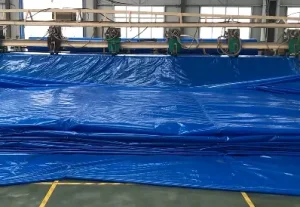
Equipped with state-of-the-art automatic high-output extrusion machinery and automated ultrasonic sealing systems, our factory delivers a rapid turn-around time of 15 to 25 days for standard 40ft high-cube container orders—enabling global distributors to maintain lean inventory models without risk of stockouts.
| Manufacturing Stage | Equipment / Technology | Quality Control Index (QA/QC) |
|---|---|---|
| 1. Polymer Extrusion | High-speed split-film extruders with computerized gauge control | Denier precision ± 2.5%, MFI monitoring (2.0 - 4.0 g/10min) |
| 2. Fabric Weaving | Sulzer flat looms & high-rpm circular shuttle looms | Mesh density verification (8x8 to 14x14 tapes/inch) |
| 3. Lamination & Coating | Dual-extrusion tandem coating lines (PE/PP melt layer) | Coating thickness uniform within ± 3 microns; 100% waterproof seal |
| 4. Converting & Finishing | Automatic hot-air welding, ultrasonic eyelet punching machines | Welding seam peel strength > 150 N/5cm; Grommet pull-out force > 500 N |
Engineered polyolefin formulations optimized for extreme environmental exposure, severe mechanical stress, and specialized industry requirements.
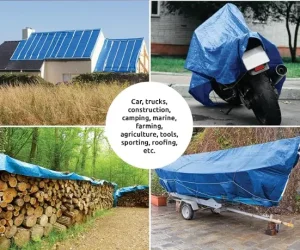
Scaffolding protection enclosures, sub-slab vapor barriers, temporary roof covers, and weatherproofing membranes. Formulated with flame-retardant (FR) additives meeting UL94 and DIN 4102 B1 standards to protect urban multi-story development sites.
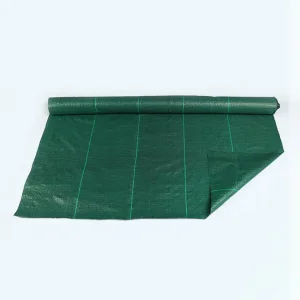
Hay stack covers, silage encapsulation sheets, grain drying tarps, and woven landscape weed control barrier fabrics. Impregnated with 3-5% Hindered Amine Light Stabilizers (HALS) to guarantee 3-year outdoor UV resistance under high irradiance (Middle East & Australia).
Flatbed truck cargo tarps, container inner liners, intermodal freight covers, and side-curtains. High-denier PP base fabric withstands continuous abrasion, road salt, highway wind buffeting, and repeated folding down to -40°C.
UNHCR / Red Cross emergency shelter sheets, fast-deployment disaster tarp modules. Standardized 4x5m and 4x6m formats pre-fitted with reinforced eyelets, cold-crack resistant coating, and high tensile corner patches for instant crisis mitigation.
Pond liners, agricultural water storage tank covers, and salt pan poly sheeting. Non-toxic, food-grade compliant PE/PP coatings prevent chemical leaching, safeguarding aquatic life and pristine water reserves.
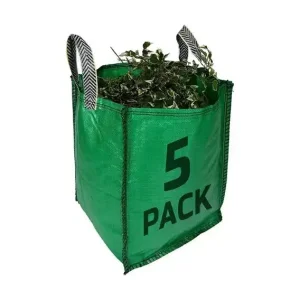
Master rolls shipped to secondary converters for fashioning into garden waste bags, PE layflat irrigation hoses, temporary containment baffles, and custom equipment covers.
Pioneering the next generation of eco-engineered polyolefin polymers and circular manufacturing systems.
The polyolefin industrial fabric sector is undergoing a massive transformation driven by carbon-neutral goals, plastic waste mitigation, and advanced material science. Modern polypropylene factories are shifting from linear consumption models toward circular polymer engineering.
Leading wholesale suppliers are integrating up to 30%-50% PCR polypropylene and polyethylene into core structural layers without sacrificing tensile elongation or tear strength. Advanced melt-filtration technology ensures virgin-like performance while reducing the carbon footprint per square meter by up to 38%.
Traditional UV additives degrade over time via micro-migration. Advanced nano-particle titanium dioxide and next-gen HALS additives lock directly into the polypropylene matrix during extrusion, eliminating micro-plastic shedding into agricultural soil and surrounding aquatic biomes.
Technical parameters and evaluation criteria for commercial procurement officers and bulk buyers.
• 60 - 90 GSM: Utility covers, lightweight DIY sheets, short-term promotional packaging.
• 100 - 160 GSM: Retail hardware standards, medium-duty construction tarps, lawn maintenance.
• 180 - 300 GSM: Heavy-duty industrial roofing, long-term outdoor hay covers, truck cargo curtains.
Denier indicates yarn weight per 9,000 meters. High-integrity tarpaulins use 800D to 1500D tapes woven at 10x10 to 14x14 strands per square inch, creating an explosion-resistant base substrate that halts puncture propagation.
Double-folded stitched or heat-sealed hems embedded with continuous PP rope prevent perimeter tearing under high winds. Reinforced plastic corner cleats and anti-rust aluminum or brass grommets placed every 50cm or 100cm ensure optimal tie-down torque.
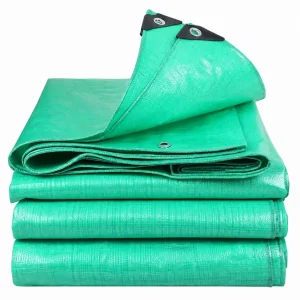
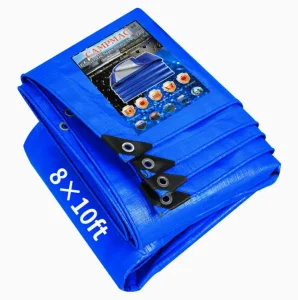
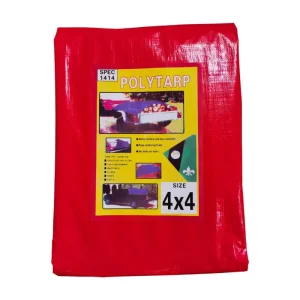
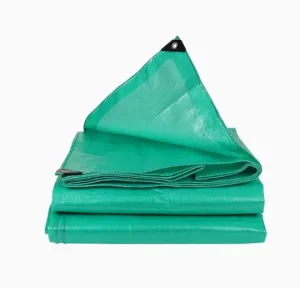
Explore our full line of direct-factory poly products available for OEM private labeling and worldwide shipping.
Expert technical answers regarding polypropylene polymers, factory capabilities, and global shipment logistics.
Connect directly with our polyolefin application engineers for fabric analysis, sample dispatch, and container pricing calculations.