
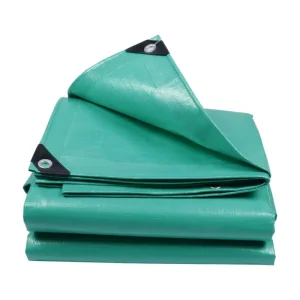
Direct factory supply of high-tensile polypropylene woven rolls, double-side laminated polyethylene tarpaulin sheets, and customized industrial covers tailored for global commercial buyers.
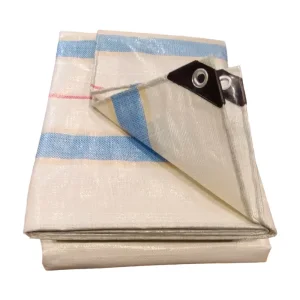
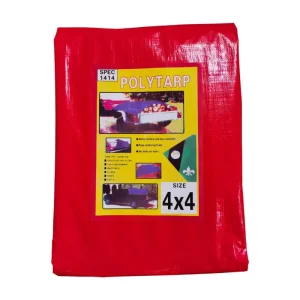
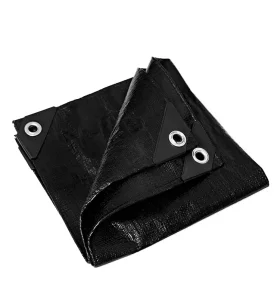
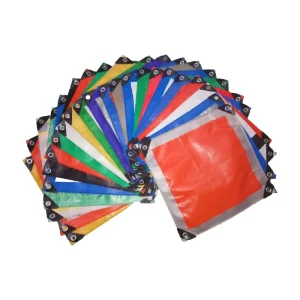
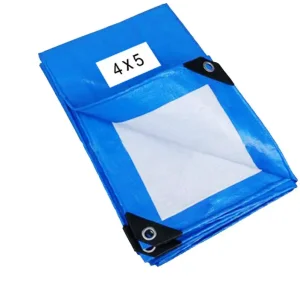
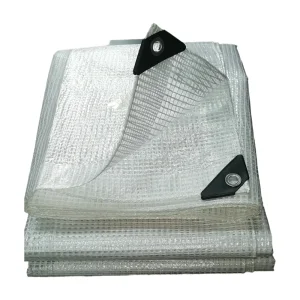
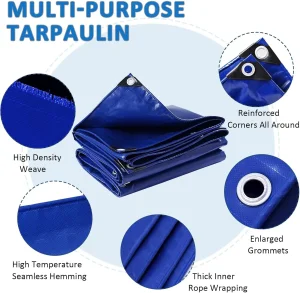
Polypropylene (PP) woven fabric represents the backbone of modern industrial containment, agricultural erosion control, flexible intermediate bulk containers (FIBC), logistics protection, and civil infrastructure geotextiles. As global supply chains demand higher tensile performance, extreme environmental resilience, and cost-effective bulk handling, sourcing directly from an established wholesale PP woven fabric manufacturer & factory has transitioned from a basic procurement choice to a strategic operational advantage.
Engineered via mono-axial orientation of high-melt-index polypropylene homopolymers, PP woven structures offer an unparalleled strength-to-weight ratio. With tensile yields exceeding standard unoriented plastic films by up to 400%, these fabrics provide high resistance to mechanical puncture, burst stress, and continuous dynamic tearing. In global markets spanning North America, the Middle East, Southeast Asia, and Sub-Saharan Africa, specialized woven polymers serve as critical protective barriers against UV radiation, moisture intrusion, and chemical degradation.
Information Gain Insight: The molecular integrity of PP woven textiles depends heavily on the draw ratio during extrusion (typically 1:4 to 1:6 orientation) and the precise inclusion of Hindered Amine Light Stabilizers (HALS). Without calibrated masterbatch dosing, standard polypropylene degrades under outdoor solar irradiation within 90 days. Professional manufacturing guarantees retention of over 80% tensile strength even after 3,000 hours of continuous QUV accelerated weathering test exposure.
At Linyi Xinshengyang Plastic Products Co., Ltd. (Star Tarpaulins), our 30,000 square meter integrated facility operates under a rigorous closed-loop quality assurance framework. From virgin resin intake to automated final roll winding, every manufacturing stage is monitored using digital sensors and inline denier tracking.
| Production Stage | Core Machinery & Parameters | Quality Control Metrics |
|---|---|---|
| 1. Polymer Extrusion & Slitting | High-output flat die film extruders with water-bath quench tanks and hot-plate orientation stretching units. | Denier uniform variance < ±2.5%; melt flow index (MFI) control (2.5 - 4.0 g/10min). |
| 2. Precision Weaving | High-speed circular looms (4-shuttle, 6-shuttle, 8-shuttle) and wide-width flat water-jet looms. | Warp/Weft density check (from 8×8 mesh to 14×14 mesh); zero dropped warp threads. |
| 3. Extrusion Coating / Lamination | Double-sided high-speed LDPE/PP extrusion coating lines with automatic thickness gauge feedback. | Coating weight adhesion (15 - 40 GSM per side); 100% pinhole-free hydrostatic barrier. |
| 4. Fabric Finishing & Conversion | Automated hot-air welding, ultrasonic slitters, eyelet punching lines, and rope-hemming machines. | Seam burst strength equal to base fabric; eyelet pull-out resistance > 800 N. |
The manufacturing process begins with virgin high-density Polypropylene (PP) homopolymer blended with linear low-density Polyethylene (LLDPE) modifiers to balance rigidity with flex-crack resistance. During tape extrusion, masterbatch additives including Carbon Black (for maximum thermal UV protection), titanium dioxide (for color vibrancy and opacity), and anti-static agents are homogeneously dispersed at 230°C to 260°C melt temperatures.
Our woven fabrics are manufactured to satisfy strict international standards across diverse heavy-industrial, civil engineering, and agricultural sectors:
Our specialized formulation solves traditional fabric failure modes such as delamination, UV embrittlement, seam separation, and moisture micro-seepage.
Engineered with 3%-5% Swiss UV stabilizer masterbatch, protecting against polymer chain degradation caused by aggressive outdoor solar radiation in desert and tropical climates.
Double-sided high-density polyethylene (LDPE/PP) molten coating seals all weave gaps, achieving hydrostatic pressure thresholds exceeding 100 kPa for total water impermeability.
High-denier oriented tapes (from 600D to 1500D) woven in high-density grid structures provide maximum pull-out force resistance along both warp and weft axes.
Optional compliance with international fire safety certifications (CPAI-84, NFPA 701, UL94 V-0), preventing self-sustained combustion in construction and temporary shelters.
Manufactured from 100% recyclable polyolefin polymers. Our zero-wastewater extrusion lines significantly reduce energy consumption per ton produced.
Custom fabric widths up to 6 meters, bespoke GSM options from 60 to 300+, custom color batch matching, surface logo printing, and corner patch reinforcements.
Polymer textiles must withstand vastly differing environmental stresses depending on their regional deployment zone.
Our research and development team customizes resin masterbatches to ensure optimum performance across harsh climatic extremes:
Our commitment to sustainability and next-generation polymer science:
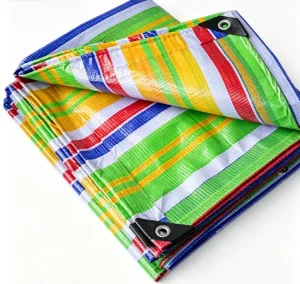
Explore our full line of Flame-Retardant tarpaulins, high-visibility striped sheeting, multi-purpose mesh grid materials, and reinforced cargo protection fabrics.
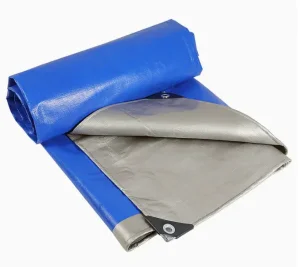
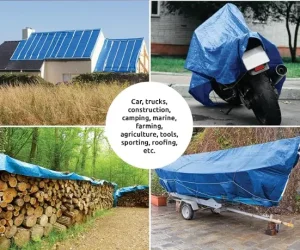
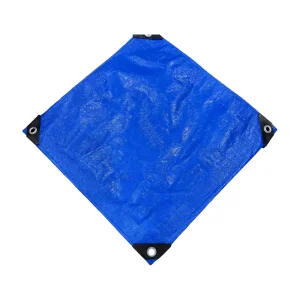
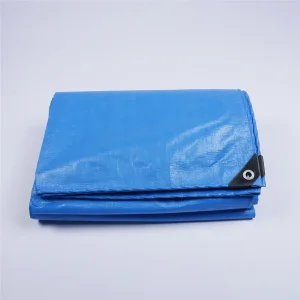
Clear technical guidance compiled by our senior polymer engineering team to streamline direct factory sourcing.
Polypropylene (PP) woven fabric offers superior tensile rigidity, higher melting temperature (160°C - 165°C), and greater burst resistance, making it ideal for structural geotextiles, FIBC bulk packaging, and high-load containment. Polyethylene (PE) tarpaulin utilizes a woven HDPE core laminated with LDPE film; it offers greater flex-crack fatigue resistance at sub-zero temperatures, lighter weight per GSM, and higher soft pliability. Our factory manufactures both material formats to meet specific application requirements.
GSM selection depends directly on exposure duration and mechanical stress:
UV degradation occurs when solar ultraviolet radiation breaks polymer covalent bonds. We combat this by dosing high-grade Hindered Amine Light Stabilizers (HALS) into the resin melt stream at 3% to 5% by weight. Each production run is validated via accelerated QUV laboratory testing according to ASTM G154 standards, ensuring over 80% tensile strength retention after 3,000 continuous hours of UV exposure.
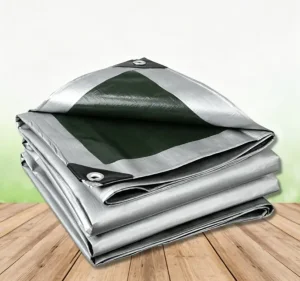
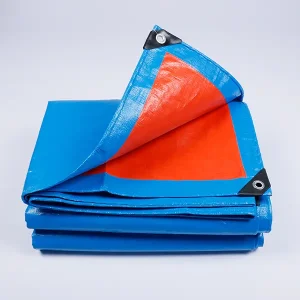
For standard stock roll widths and colors (e.g., Blue/Orange, Silver/Green, Black), our minimum order quantity starts at 3 metric tons, or a mixed 20ft container shipment. Custom color masterbatch matching, custom logo printing, and specialized FR/anti-static treatments require a 5-ton minimum. Standard lead times range from 15 to 25 calendar days post pre-production sample approval.
We provide full OEM fabrication including automated thermal seam welding, internal polypropylene/polyester hem rope reinforcement, triangular black plastic corner caps, anti-rust aluminum or solid brass grommet punching (spaced at 50cm, 100cm, or custom intervals), customized surface flexographic logo printing up to 4 colors, and retail barcoded packaging.
Absolutely. We regularly coordinate with independent inspection agencies including SGS, Bureau Veritas (BV), Intertek, and TUV. Our internal Quality Assurance team issues detailed factory batch test certificates covering GSM variance, hydrostatic head rating, warp/weft tensile strength, and eyelet pull-out resistance prior to shipment.
Get direct factory pricing, mill test certificates, and custom engineering samples delivered for your next procurement tender.