Explore our factory-direct poly woven and PVC coated micro tarps engineered for extreme weather protection and commercial applications.
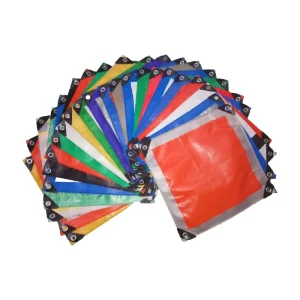
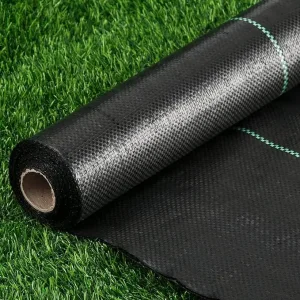
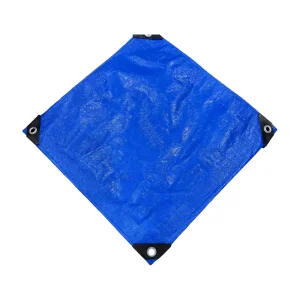
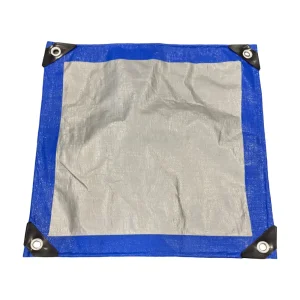
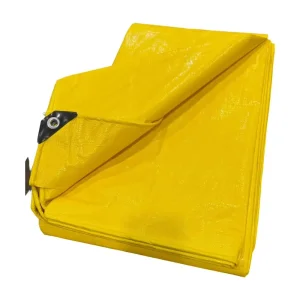
In the global industrial fabric and protective cover sector, the search query "Wholesale Small Waterproof Tarp Suppliers & Factories" represents a highly specialized market segment. Unlike large-scale agricultural stack covers or massive freight truck side curtains, small waterproof tarpaulins—typically ranging from 2m × 2m, 2m × 3m, up to 4m × 5m—demand a unique balance of dimensional precision, localized seam integrity, high tensile strength per square meter, and optimized packaging density for retail and industrial distribution.
Procurement directors, commercial buyers, and hardware brand managers face a complex set of engineering requirements when sourcing small format poly-tarps. While large tarps prioritize gross coverage area, small waterproof tarpaulins are subjected to localized mechanical stresses, frequent folding, sharp-edge abrasion, and rapid micro-climate fluctuations. Achieving true 100% impermeability requires robust raw material selection, precise lamination technology, and automated peripheral reinforcement.
Modern plastic tarpaulins utilize high-density polyethylene (HDPE) or polypropylene (PP) woven mesh inner scrims coated on both sides with low-density polyethylene (LDPE) lamination layers. Advanced industrial applications may also call for Polyvinyl Chloride (PVC) knife-coated formulations. The structural integrity of a small tarp relies heavily on its mesh count (threads per inch, e.g., 8×8, 10×10, 14×14) and yarn Denier rating (ranging from 600D to 1500D). Below is a comparative engineering breakdown of small tarp material compositions:
| Polymer Parameter | Light-Duty PE Tarp | Heavy-Duty PE/PP Tarp | Industrial Coated PVC Tarp |
|---|---|---|---|
| Weight Range (GSM) | 60 g/m² – 90 g/m² | 120 g/m² – 300 g/m² | 450 g/m² – 900 g/m² |
| Inner Scrim Structure | HDPE Woven Tape (600D-800D) | HDPE/PP High-Denier (900D-1200D) | High-Tenacity Polyester (1000D×1000D) |
| Weave Mesh Density | 8×8 to 10×10 mesh/sq.inch | 12×12 to 14×14 mesh/sq.inch | 18×18 to 23×23 mesh/sq.inch |
| Hydrostatic Pressure | > 5,000 mm H₂O | > 12,000 mm H₂O | > 25,000 mm H₂O |
| Tensile Strength (ASTM D751) | Warp: 450N / Weft: 400N | Warp: 1100N / Weft: 950N | Warp: 2500N / Weft: 2200N |
| UV Masterbatch Concentration | 1% – 2% HALS UV Stabilizer | 3% – 5% Tinuvin/Cyasorb UV | Integrated UV & Anti-Oxidant |
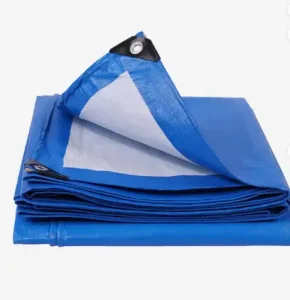
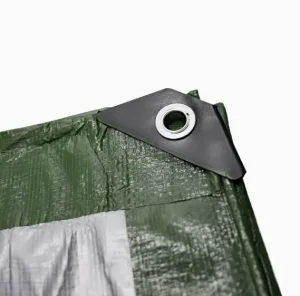
Because small waterproof tarps are tightly secured over localized objects (machinery, firewood, HVAC units, roof leak patches), tie-down ropes impart high concentrated point loads on corner eyelets and hemmed edges. Standard large tarps distribute wind stress over broad surface areas, but small tarps experience intense cyclical shearing forces. Consequently, top-tier China manufacturing plants incorporate double-folded PP rope-in-hem welding alongside sonic-welded poly-plastic triangular corner pads to prevent eyelet pull-out under stress.
Understanding how Shandong and Linyi plastic manufacturing hubs deliver unprecedented economies of scale, material purity, and automated assembly efficiency.
Direct proximity to major Asian polymer processing hubs allows our factories to source virgin HDPE pellets, LLDPE resins, and specialized UV color masterbatches with zero intermediary freight markups. This ensures chemical purity, consistent melt-flow index (MFI), and maximum tensile yarn yield.
Unlike secondary assembly workshops, lead-scale Chinese OEM tarpaulin factories maintain complete vertical control: high-speed tape drawing lines, water-jet weaving looms, dual-sided extrusion laminators, automatic punch grommeting, and heat-sealing machines operating seamlessly under one roof.
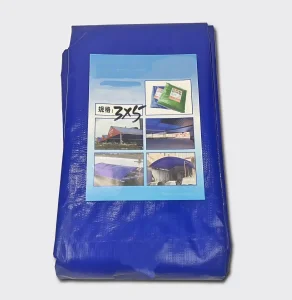
Small waterproof tarps are ideal for retail channels (hardware chains, outdoor sports stores, e-commerce stores). Factory automated slitting and folding lines wrap small tarps into ultra-compact polybags with custom insert cards, UPC barcodes, display boxes, and customized carton packing.
By streamlining raw material procurement directly through Sinopec or PetroChina polymer supplies, Linyi-based production hubs achieve high extrusion yield efficiency. Modern high-speed extrusion lines draw monofilament tapes with precise thickness control, preventing thin spots that cause premature wind tears or pinhole water leaks under heavy downpours.
Furthermore, dual-sided extrusion coating lines apply a uniform 25 to 45 micron LDPE film across both sides of the woven substrate. This double-layer encapsulation creates a hermetic seal over every weave intersection, guaranteeing resistance against rain, mildew, acid rain, and solar degradation.
How enterprise buyers configure custom small waterproof tarp orders to balance cost, brand differentiation, freight efficiency, and field durability.
International B2B sourcing of small waterproof tarpaulins requires strict engineering parameter configuration long before production contracts are signed. Professional procurement teams do not purchase tarps purely by weight; they mandate specific performance characteristics according to target distribution regions.
For buyers distributing in high-irradiance zones such as the Middle East, Australia, Latin America, or Southern United States, standard poly tarps quickly degrade due to photo-oxidation. Procurement contracts specify 3% to 5% Hindered Amine Light Stabilizers (HALS). This additive absorbs UV radiation, preventing polymer chain scission and extending tarp flex-life up to 36 months under constant sun exposure.
Indoor renovation drop-cloths, scaffolding tarps, and emergency relief shelters must comply with international fire safety codes. Factories supply small waterproof tarps formulated with antimony trioxide or hydrated alumina additives to pass NFPA 701, UL94 V-0, or DIN 4102 B1 flame propagation standards, self-extinguishing within seconds of ignition source removal.
Shipping small waterproof tarps across global ocean lanes requires maximum cube utilization. Modern factories utilize hydraulic multi-stage baling presses or heavy carton compression systems. By reducing air void ratios within individual polybags, buyers can increase container load density by 18% to 25%, significantly lowering shipping cost per unit.
Examining how specialized sectors utilize small format waterproof covers for micro-protection, quick deployment, and emergency repair.
Small waterproof tarpaulins (e.g., 2m × 3m, 3m × 3m) serve as essential micro-covers for localized crop beds, seedling nurseries, compost bins, and small grain stockpiles. Small sizes allow farm operators to quickly throw protective sheets over vulnerable high-value crops ahead of unexpected hailstorms or severe frost without deploying heavy machinery.
During interior commercial fit-outs and residential painting, contractors rely on small, non-slip PE or PVC drop tarps. These micro tarps protect hardwood floors, furniture, electrical installations, and delicate machinery from paint spills, drywall dust, water spray, and heavy tool impacts.
Outdoor enthusiasts and military personnel utilize ultralight high-density small tarps (often 1.5m × 2.2m) as tent footprints, hammock rainflies, or bushcraft shelters. Made from lightweight 80–110 GSM silver-coated PE or ripstop sil-nylon, these small tarps reflect radiant body heat while blocking ground moisture completely.
Global humanitarian organizations (UNHCR, Red Cross, USAID) include small waterproof tarps in emergency family shelter kits. Fast to deploy and easily tied to tree branches or wooden poles, small tarps provide instant waterproofing for roof breaches, temporary latrines, or windbreak partitions in crisis zones.
Freight logistics operators use small fitted tarps as top covers over outdoor palletized freight. If a large truck side curtain suffers a tear en route, emergency small tarps serve as quick repair patches to seal cargo against rainwater ingress until the vehicle reaches a repair depot.
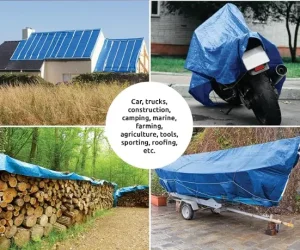
Homeowners and property management firms use custom small waterproof tarps fitted with elastic shock cords to cap outdoor air conditioning condensers, generator sets, patio furniture, and firewood stacks during winter months, stopping ice formation and moisture accumulation.
Ensuring your imported small waterproof tarpaulins meet stringent European Union, North American, and Asian environmental regulations.
Navigating international customs borders requires complete chemical compliance documentation. Leading Chinese tarp manufacturers maintain robust Quality Assurance (QA) labs that perform batch testing on every production run.
Small tarps imported into the European Union must strictly comply with REACH regulations concerning Substances of Very High Concern (SVHC). Products are certified free of harmful plasticizers, short-chain chlorinated paraffins (SCCPs), heavy metals (lead, cadmium), and polycyclic aromatic hydrocarbons (PAHs).
For North American retail markets, plastic covers must comply with California Proposition 65 phthalate limits (DEHP, DBP, BBP, DINP less than 1,000 ppm). Non-toxic, virgin polyolefin coatings ensure zero toxic off-gassing, making small tarps safe for home DIY use.
Our manufacturing facilities operate under ISO 9001:2015 Quality Management Systems and maintain active BSCI (Business Social Compliance Initiative) social compliance audits, guaranteeing ethical labor standards, structural factory safety, and traceably managed production processes.
How next-generation material science is revolutionizing small waterproof tarpaulin production for a circular economy.
Traditional tarps combining different polymer layers face recycling hurdles. Future innovations focus on 100% pure Polyethylene mono-material construction—where scrim, film lamination, eyelet grommets, and corner reinforcing patches are all made from identical PE resins. This enables zero-sorting, 100% circular closed-loop recycling after product retirement.
Incorporating super-hydrophobic nano-coatings creates a lotus-leaf effect on the tarp surface. Water droplets bead up at 150-degree contact angles, sliding off rapidly and washing away accumulated airborne grime, oil particles, and industrial dust automatically during rain showers.
Developing PLA (Polylactic Acid) and PBAT blended micro-tarpaulins tailored for temporary agricultural mulching and short-term construction shields. These sheets maintain 100% water barrier protection during their service life, then undergo accelerated breakdown under industrial composting conditions.
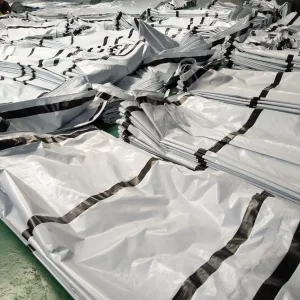
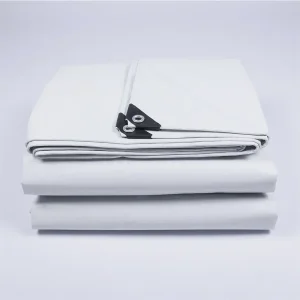
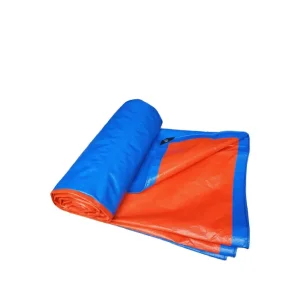
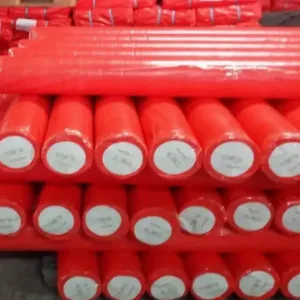
Review additional running specifications from our factory floor available for direct container export and custom OEM labeling.

In-depth answers from our polymer chemical engineers and international export trade managers.