Factory-direct ready-made tarpaulin sheets and master rolls manufactured under rigorous ISO 9001:2015 quality standards.
An authoritative technical breakdown of polymer extrusion, hot-melt lamination, and tensile physics engineered by Linyi Xinshengyang Plastic Products Co., Ltd. (Star Tarpaulins).
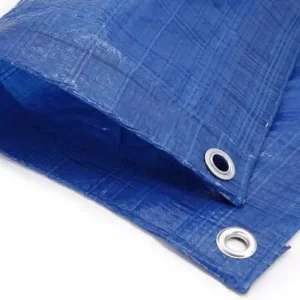
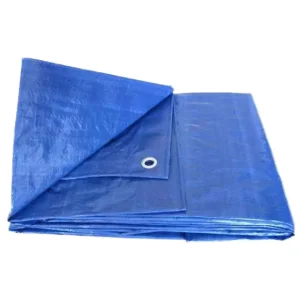
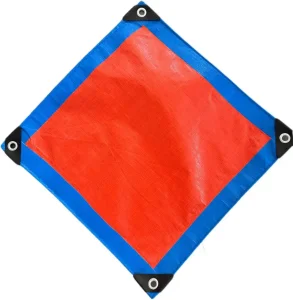
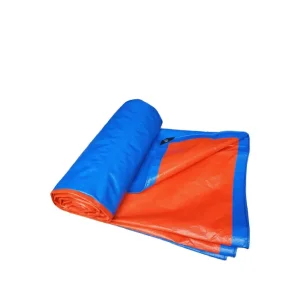
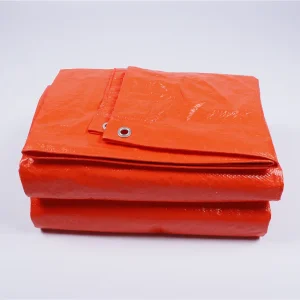
Selecting the appropriate polymer substrate is critical for procurement optimization. Polyethylene (PE) tarpaulins utilize high-density polyethylene (HDPE) woven ribbons laminated on both sides with low-density polyethylene (LDPE). This structural synergy offers lightweight flexibility, excellent tear resistance, and cost efficiency across temporary site containment.
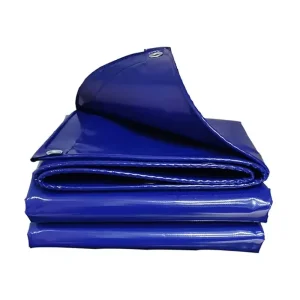
Conversely, Vinyl (PVC Coated) Tarpaulins utilize high-tenacity polyester woven scrims (e.g., 1000D×1000D, 18×18/inch) encapsulated in liquid PVC paste via knife-coating or hot lamination. This yields an impenetrable barrier capable of surviving hydrostatic pressure exceeding 10,000 mm H₂O, high mechanical abrasion, and prolonged outdoor exposure exceeding 5 to 10 years.
Unstabilized polyolefins degrade rapidly under solar ultraviolet (UV) radiation due to photo-oxidation of the polymer backbone. At Linyi Xinshengyang (Star Tarpaulins), our melt-extrusion process incorporates 3% to 5% Hindered Amine Light Stabilizers (HALS) alongside carbon black or specialized rutile titanium dioxide pigments.
This precise additive engineering prevents polymer embrittlement, stress cracking, and tensile loss even under extreme solar radiation in Middle Eastern, North African, and Australian climates, maintaining ductility from -40°C arctic freeze to +70°C ambient desert heat.
| Performance Standard / Specification | Lightweight Poly Tarp (PE) | Heavy-Duty Poly Tarp (PE/PP) | Industrial Vinyl Tarp (PVC Coated) |
|---|---|---|---|
| Fabric Mass Range (GSM) | 60 g/m² – 100 g/m² | 120 g/m² – 300 g/m² | 450 g/m² – 900 g/m² |
| Hydrostatic Head Resistance (DIN EN 20811) | > 1,500 mm H₂O | > 3,500 mm H₂O | > 10,000 mm H₂O (Impermeable) |
| Tensile Strength (ASTM D751 Warp/Weft) | 450 / 400 N / 5cm | 1,100 / 950 N / 5cm | 2,800 / 2,400 N / 5cm |
| Flame Retardancy Certification | Optional (CPAI-84) | Optional (CPAI-84 / NFPA 701) | Standard (DIN 4102 B1/B2, NFPA 701) |
| Service Life Expectancy (Outdoor UV) | 6 to 12 Months | 18 to 36 Months | 5 to 10+ Years |
How evolving international logistics standards, environmental mandates, and industrial automation are reshaping industrial protective textile procurement worldwide.
Logistics operators are replacing traditional manual tarpaulins with automated side-curtain systems and high-strength PVC sliding covers. The demand centers on low-mass, high-tensile 650 GSM to 900 GSM vinyl fabrics with low friction lacquering (acrylic/PVDF) that resist road salt, diesel exhaust, and mechanical abrasion.
Governments and Tier-1 construction firms require certified fire-retardant enclosures (DIN 4102 B1) and heavy concrete curing blankets. As extreme weather events intensify, procurement specifications mandate verifiable windshear resistance, eyelet pull-out forces exceeding 800 N, and reinforced corner patches.
Agricultural buyers are transitioning from single-use low-density films to multi-season woven geotextiles, grain-drying sheets, layflat hoses, and UV-stabilized weed control fabrics. The market demands 100% recyclable polyolefin alternatives alongside non-toxic REACH-compliant vinyl materials.
Tailored polymer configurations designed to meet specific physical stresses across commercial sectors.
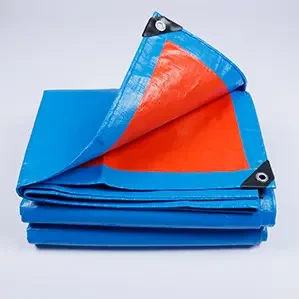
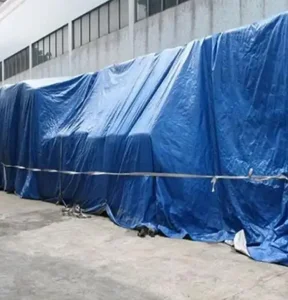
Freight protection requires tarpaulins that withstand high dynamic wind loads, continuous friction, and constant flexing. Our heavy-duty double-sided orange, blue, and green truck cargo tarpaulins incorporate high-tenacity yarn matrices hemmed with internal polypropylene ropes and reinforced triangle corners. Custom D-rings and anti-scratch surface coatings ensure load security under highway turbulence.
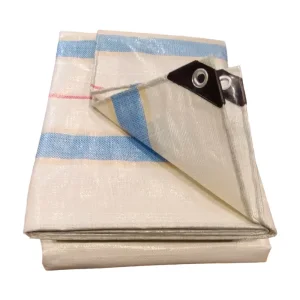
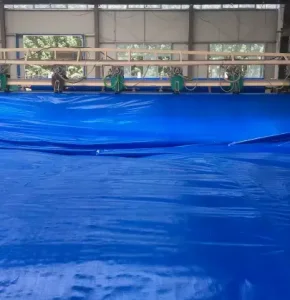
From high-rise scaffolding debris netting to concrete curing blankets, civil engineering sites demand structural integrity. Our 100% virgin PE poly concrete blankets provide critical thermal insulation and moisture retention during hydration, preventing structural cracking. Scaffolding sheets feature reinforced buttonholes and flame-retardant properties ensuring compliance with international safety codes.
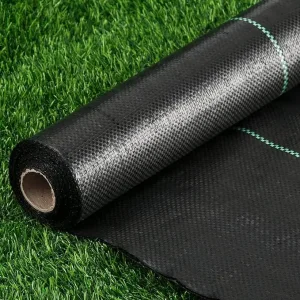
Post-harvest protection and farm irrigation require specialised chemical resistance. Our grain-drying tarpaulins feature food-grade surface non-toxicity and high solar absorption for rapid drying cycles. Combined with our woven geotextile weed barrier fabrics and high-burst-pressure PE layflat hoses, we offer comprehensive water conveyance and soil protection systems for modern agribusinesses.
Humanitarian agencies and disaster management authorities require rapidly deployable shelter materials. Our standard light-and-medium-duty PE tarpaulins (80–120 GSM) with heat-sealed seams and rust-proof aluminum eyelets at 1-meter intervals provide immediate waterproof emergency roofing, temporary humanitarian housing, and stockpiled aid protection under international procurement specs.
Rigorous quality control from raw resin pellet verification to full container loading inspections.
All raw materials used in our PE, PP, and PVC lines undergo strict chemical screening. Our vinyl formulations can be customized to comply with EU REACH SVHC (Substances of Very High Concern) guidelines, ensuring heavy metal-free, low-VOC, and non-phthalate (DOTP plasticizer) compliance for indoor curtains and tent structures.
Our on-site testing laboratory subjects batch samples to hydrostatic head pressure tests (ISO 811), strip tensile break strength tests (ASTM D751), and Elmendorf tear testing (ASTM D1424). Every production run receives a certificate of analysis (COA) detailing physical performance before dispatch.
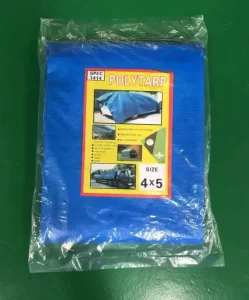
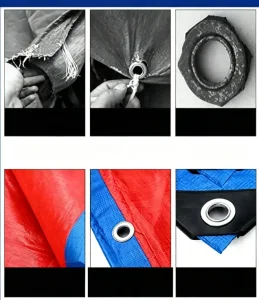
We provide complete OEM support including private-label retail insert sheets, barcode printing, custom grommet placement (brass, aluminum, stainless steel, or plastic), custom edge rope reinforcements, and specialized container stuffing optimization to minimize sea freight costs per unit.
Strategic polymer research and sustainability initiatives shaping our production capabilities for 2026 and beyond.
Linyi Xinshengyang is actively developing bio-based polyethylene compounds derived from renewable sugarcane ethanol feeds. Furthermore, our engineering team is advancing mono-material PE tarpaulins (where substrate, lamination layer, and hem ropes share identical polymer density), enabling 100% direct mechanical recycling without sorting or resin separation.
To address environmental dirt pickup on architectural tents and truck curtains, our next-generation PVC vinyl tarps utilize Polyvinylidene Fluoride (PVDF) top lacquering combined with photocatalytic TiO₂ nanoparticles. Sunlight breaks down organic grime, which is then effortlessly washed away by rainfall, maintaining pristine aesthetics and thermal reflectance over extended lifespans.
Detailed technical answers to common questions asked by global importers, wholesalers, and project engineers.
PE (Polyethylene) tarpaulins are lightweight, highly cost-effective, and ideal for short-to-medium-term applications (6 months to 2 years) such as construction site protection, grain drying, and temporary equipment covering. PVC Vinyl tarpaulins are heavy-duty engineering fabrics with superior tensile strength, chemical resistance, and hydrostatic waterproofness, designed for heavy transport (truck side curtains), structural tents, and long-term outdoor exposure (5 to 10+ years).
GSM (Grams per Square Meter) measures the weight density of the finished fabric. Higher GSM typically indicates a tighter weave mesh count (e.g., 14×14 inch vs 8×8 inch) and thicker coating films. A higher GSM directly correlates with greater resistance to physical punctures, hydrostatic pressure, and wind-shear tear propagation.
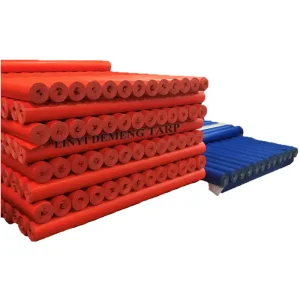
We provide full custom manufacturing including exact finished sheet dimensions, master roll widths (up to 6 meters wide without welding), custom color matching (RAL/Pantone), masterbatch UV dosage (1% to 5%), eyelet types (aluminum, brass, polycarbonate), corner reinforcements, customized surface printing, and custom retail packaging/carton labeling.
For standard stocked specifications or roll master stock, MOQ starts from one 20ft container mix. For custom-dyed colors, specific GSM, or printed OEM packaging, MOQ is typically 3 metric tons per specification. Standard production lead times range from 15 to 25 days following pre-production sample approval.
We integrate high-grade Hindered Amine Light Stabilizers (HALS) and premium weather-fast organic pigments directly during resin extrusion. Our formulations undergo accelerated weatherometer testing (QUV exposure) to guarantee that color shift (Delta E) and tensile retention remain within tight industrial tolerances after thousands of solar radiation hours.
Explore our complete catalog of specialty woven fabrics, shade nets, layflat hoses, and landscape ground covers.