Engineered for structural durability, moisture isolation, and rigorous Cal/OSHA compliance across Northern California’s commercial sectors.
Navigating Northern California's complex supply chains requires a technical understanding of San Francisco's distinct micro-climates, strict municipal waste regulations, and advanced industrial ecosystems.
South San Francisco, known as the birthplace of biotechnology, hosts hundreds of laboratories, cold-chain storage hubs, and cleanrooms. These facilities demand high-clarity, virgin Polyethylene (PE) cleanroom bags, anti-static liners, and moisture-barrier poly covers manufactured under ISO Class 7 cleanroom standards to prevent micro-particulate contamination during chemical and biological transportation.
As a key maritime gateway on the Pacific Rim, the San Francisco Bay Area maritime cluster processes millions of tons of containerized cargo annually. Ocean cargo faces salt fog, extreme relative humidity fluctuations, and condensation ("container rain"). Our industrial PE ocean freight liners, heavy-duty tarpaulins, and VCI (Vapor Corrosion Inhibitor) bags provide critical barrier insulation for trans-Pacific shipping routes.
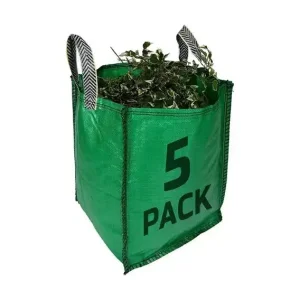
Silicon Valley and San Francisco tech headquarters operate massive corporate facilities committed to Zero Waste initiatives. Supply chain requirements call for high-strength, post-consumer recycled (PCR) PE waste collection bags, garden refuse heavy-duty containers, and flame-retardant building construction protective covers during continuous campus expansions.
From foggy coastal climate protection along the Pacific coastline to strict municipal solid waste compliance, explore how our tailored polyethylene products deliver measurable utility.
San Francisco's moisture-laden marine layer ("Karl the Fog") creates high ambient humidity (frequently above 85% RH) combined with atmospheric sea salt. Standard poly packaging breaks down under prolonged coastal moisture exposure.
Urban retrofitting across SF neighborhoods (such as SoMa, Mission District, and Financial District) requires high-tensile dust containment and weather-proofing sheets during earthquake safety retrofits.
We bridge raw polymer science with industrial execution. Our direct manufacturing facility employs multi-layer blown film co-extrusion and high-tenacity weaving to achieve exact gauge specifications.
| Polymer Grade / Type | Structural Composition | Technical Characteristics | Primary SF Industrial Application |
|---|---|---|---|
| LDPE (Low-Density Polyethylene) | Branched Polymer Network (0.910–0.940 g/cm³) | High clarity, exceptional flexibility, impact resistant | Biotech cleanroom secondary bags, protective garment covers |
| LLDPE (Linear Low-Density) | Linear Backbone with Short Branches | Superior tensile strength, puncture resistance, high elongation | Heavy-duty pallet stretch covers, liner bags for drums |
| HDPE (High-Density Polyethylene) | High Crystallinity Linear Network (>0.941 g/cm³) | Extreme stiffness, chemical resistance, low moisture absorption | Commercial yard waste bags, high-stress trash liners |
| mLLDPE (Metallocene PE) | Single-Site Catalyst Engineered Polymer | Ultra-thin gauge with 200% higher dart drop impact strength | High-speed automated logistics bag packaging in Bay Area hubs |
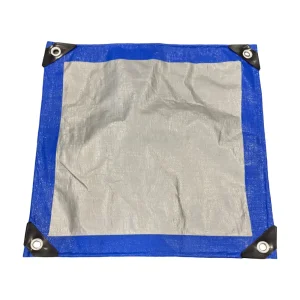
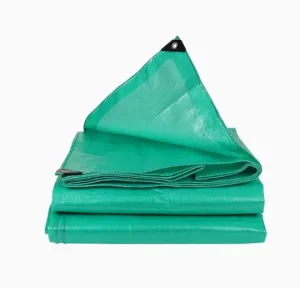
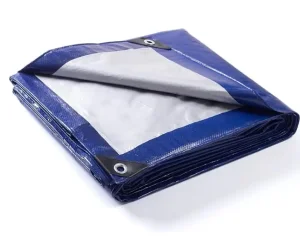
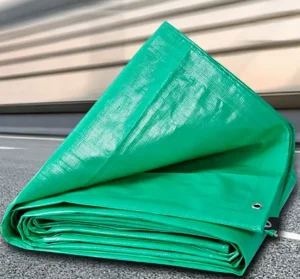
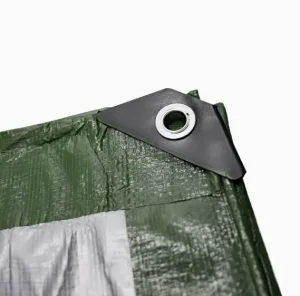
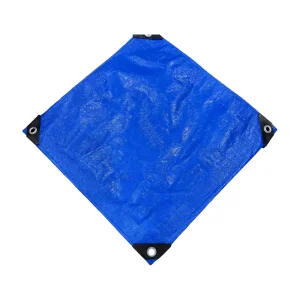
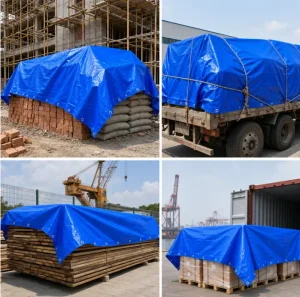
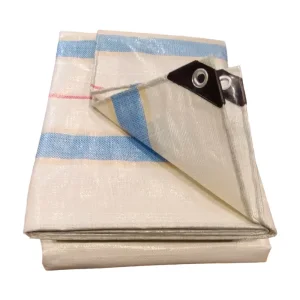
| Woven PE Laminated Sheet | HDPE Woven Mesh + LDPE Double Coating | 100% waterproof, structural anti-tear grid, rustproof grommets | Construction site tarps, ocean container liners, outdoor covers |
San Francisco experiences moderate UV radiation, but coastal exposure causes rapid polymer photo-oxidation. We blend 3%–5% Hindered Amine Light Stabilizers (HALS) into our outdoor PE formulations, preventing polymer chain scission for up to 36 months of continuous sunshine exposure.
Utilizing automated continuous thickness measurement equipment on our film extruders, we maintain a strict thickness tolerance of ±3% across film widths up to 6 meters. This eliminates thin spots that cause catastrophic seal failures under load.
For Bay Area semiconductor and electronics logistics, static discharge poses a constant threat. Our ESD bags utilize permanent non-sloughing anti-static additives yielding surface resistivity of 109 to 1011 ohms/sq (ASTM D257).
Why San Francisco procurement managers direct-source from our Shandong production base: vertical integration, uncompromised quality control, and rapid trans-Pacific marine distribution.
From virgin PE resin extrusion, tape drawing, high-speed loom weaving, and double-sided extrusion lamination to automated seal cutting and grommet insertion—we control 100% of the manufacturing process inside our 30,000 m² facility.
Every production batch undergoes hydrostatic head pressure testing, tensile strength pull tests, dart-drop impact analysis, and heat-seal integrity checks. Batch test certificates (COA) are issued with every export container.
Located near Qingdao and Lianyungang deep-water ports, we utilize direct ocean vessel lanes offering 12 to 14 days transit times to the Port of Oakland, enabling agile inventory replenishment for Bay Area buyers.
California enforces some of the world's most rigorous plastic packaging regulations. Our factory provides compliance-ready solutions aligned with California Senate Bill 54 (SB 54) and San Francisco Department of the Environment mandates.
To assist San Francisco companies in meeting California state recycled content mandates, we supply GRS (Global Recycled Standard) certified PE bags containing 30% to 70% high-purity PCR resin. Our multi-layer co-extrusion technology seals recycled polymers between inner and outer virgin poly layers, maintaining structural tensile integrity without compromising food-contact safety or cleanroom cleanliness.
In accordance with California regulations banning intentionally added PFAS (per- and polyfluoroalkyl substances) in packaging, our entire raw material supply chain is independently tested by SGS / TÜV Rheinland. We guarantee 100% heavy-metal-free, phthalate-free, and PFAS-free polyethylene film products.
Technical and logistical insights for procurement specialists, B2B distributors, and plant managers in the Bay Area.
Direct ocean vessels from Qingdao Port to the Port of Oakland typically take 12 to 14 days at sea. Including order booking, factory production (15-20 days), and US customs clearance, total door-to-door lead times range from 30 to 38 days. Accelerated air freight options are available for urgent sample or production runs.
Yes. We offer complete OEM customization. We can produce widths from 100mm up to 6000mm, thickness gauges from 0.015mm (15 microns) to 0.50mm (500 microns), and high-definition flexographic printing up to 8 colors for branding, barcodes, recycling symbols, and warning notices.
We work directly with California importers to engineer bags containing verified GRS-certified PCR content (30%+ recycled content). Additionally, all our formulations are certified PFAS-free and comply with Heavy Metals in Packaging laws (CONEG compliance).
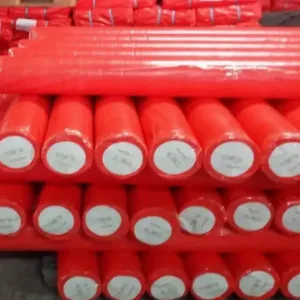
Our standard MOQ for custom PE bags or woven tarpaulins is 2 to 3 metric tons per specification. For full container loads (20ft or 40ft HQ), clients can mix multiple product specifications (e.g., custom PE bags + tarpaulin rolls + garden waste bags) to optimize ocean freight rates.
PE bags are blown seamless or side-sealed film containers ideal for individual unit packing, dust protection, and moisture barrier. PE woven tarpaulins utilize high-density woven HDPE ribbon fabric laminated on both sides with LDPE, offering extreme structural tensile strength for large equipment covers, scaffolding, and outdoor storm shields.
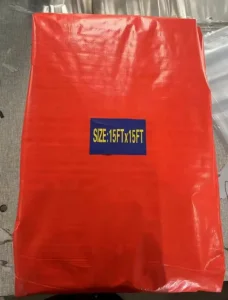
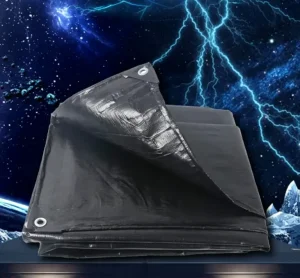
Select from our standard heavy-duty industrial lineup engineered for San Francisco commercial contractors, transport providers, and facility operators.
Contact our engineering sales department today for technical data sheets, GRS recycled content documentation, factory-direct pricing, and container delivery schedules to the Bay Area.