
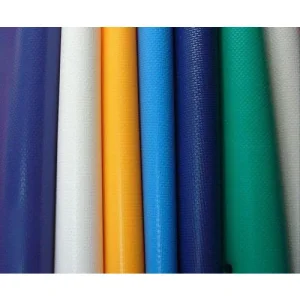
Direct factory-engineered heavy-duty protective covers designed to endure Indonesia's extreme tropical monsoon conditions, maritime salinity, and demanding highway transportation corridors.
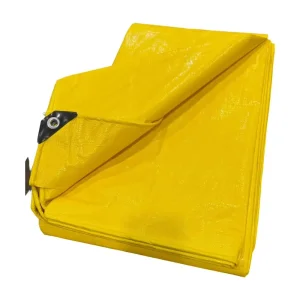
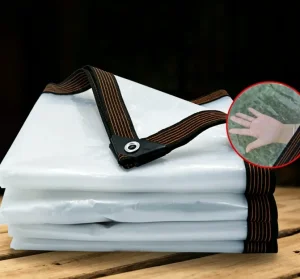
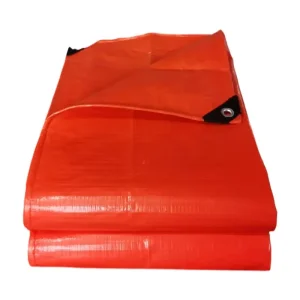
As the largest archipelagic state and the dominant economy in Southeast Asia, Indonesia presents an exceptionally rigorous environment for commercial freight protective gear. The rapid expansion of national infrastructure projects—highlighted by the completion of the Trans-Java Toll Road, the ongoing construction of the new capital city Nusantara (IKN) in East Kalimantan, and widespread nickel/bauxite mining developments in Sulawesi—has driven unprecedented demand for heavy-duty, high-durability truck tarpaulins.
Indonesian freight operators, logistics aggregators (Ekspedisi Cargo), plantation management groups, and mining hauling contractors face distinct climatic and mechanical challenges. Operating in a equatorial climate characterized by year-round high relative humidity (averaging 80%-90%), sudden torrential downpours during the wet monsoon season, and intensely high ultraviolet radiation index levels (UV Index 11+), low-grade tarpaulins quickly degrade, crack, lose tensile strength, and leak—resulting in millions of dollars in damaged cargo annually.
In Indonesia’s inter-modal supply chain—connecting sea freight ports like Tanjung Priok (Jakarta), Tanjung Perak (Surabaya), and Belawan (Medan) with inland arterial highways—trucks carry diverse commodities. These range from dry bulk agricultural produce (Crude Palm Oil derivatives, rubber sheets, coffee beans, fertilizer) to abrasive industrial materials (nickel ore, coal, cement, and construction steel). Standard commercial tarpaulins purchased off local retail shelves often fail within 3 to 6 months due to plasticizer migration, seam separation under wind shear, and fabric tearing from rough cargo edges.
Procurement directors and fleet operations managers across Indonesia are increasingly bypassing local trading intermediaries to partner directly with tier-1 OEM manufacturers in China. Direct factory collaboration allows customized formulation of UV masterbatch dosages, anti-fungal treatments, cold-crack resistance, and reinforced edge welding engineered precisely for the Indonesian micro-climate.
Selecting the optimal polymer base and coating formulation is the foundational decision in securing long-term freight protection. For procurement specialists evaluating suppliers for Indonesian logistics fleets, understanding the structural differences between High-Density Polyethylene (HDPE/LDPE) tarpaulins and Polyvinyl Chloride (PVC) knife-coated fabrics is essential.
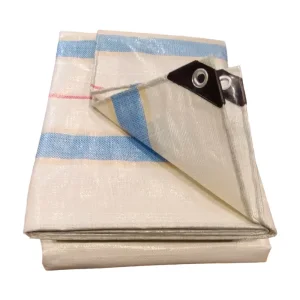
Constructed from woven HDPE scrim laminated on both sides with LDPE film. Ranging from 120 GSM to 300 GSM, PE tarpaulins offer an outstanding strength-to-weight ratio. They are highly economical, 100% recyclable, and ideal for medium-duty cargo transport, agricultural drying sheets, building scaffolding covers, and temporary storage caps.
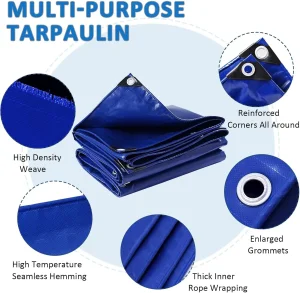
Engineered by coating high-tenacity polyester yarn (e.g., 1000D x 1000D, 20x20/inch) with fluid PVC resin compound mixed with plasticizers, flame retardants, and UV inhibitors. Weighing between 500 GSM and 900 GSM, PVC tarpaulins provide extreme puncture resistance, 100% hydrostatic water impermeability, seam weldability, and a service lifespan exceeding 3 to 5 years under harsh equatorial exposure.
The matrix below outlines key engineering performance indicators (KPIs) standard for professional truck fleets operating in Southeast Asia:
| Performance Indicator | Medium-Duty PE Tarp (200 GSM) | Heavy-Duty PE Tarp (280 GSM) | Industrial PVC Tarp (650 GSM) | Mining-Grade PVC Tarp (900 GSM) |
|---|---|---|---|---|
| Base Fabric Grid | 12 x 12 weave count | 14 x 14 weave count | 1000D x 1000D (18x18) | 1000D x 1000D (23x23) High Tenacity |
| Tensile Strength (Warp/Weft) | ~950 / 880 N/5cm | ~1400 / 1300 N/5cm | ~2600 / 2400 N/5cm | ~4000 / 3800 N/5cm |
| Tear Strength (Trapezoid) | ~130 / 110 N | ~210 / 190 N | ~450 / 400 N | ~600 / 550 N |
| Hydrostatic Head Resistance | > 45 kPa | > 70 kPa | > 100 kPa (Fully Impermeable) | > 120 kPa (Extreme Pressure) |
| Equatorial UV Stabilization | 3% UV Masterbatch (1-2 Yrs) | 5% UV Masterbatch (2-3 Yrs) | TiO2 + HALS Stabilized (3-5 Yrs) | Advanced PVDF Coating (5+ Yrs) |
| Temperature Tolerance | -20°C to +70°C | -30°C to +75°C | -30°C to +70°C | -30°C to +80°C (Flame Retardant B1) |
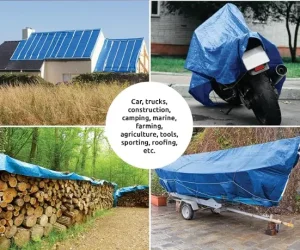
For long-haul inter-city trucking along Java’s coastal routes, 650 GSM to 750 GSM PVC tarpaulin rolls converted into customized side curtains or tied-down tarps are the industry standard. Conversely, for quick-turnaround distribution, agricultural shielding, and budget-conscious fleet operations, heavy-duty 220–280 GSM PE tarpaulin sheets equipped with reinforced triangular corners and aluminum eyelets offer optimal economic efficiency.
Indonesia's geographical fragmentation across 17,000+ islands creates specialized logistics niches. Professional tarpaulin manufacturers must design protective solutions that directly address the mechanical stresses unique to each region and sector:
High-speed arterial trucking between Merak, Jakarta, Semarang, and Surabaya subjects covers to sustained wind shear and high friction. Flame-retardant, high-tensile 650 GSM PVC side-curtain tarpaulins with thermal seam sealing eliminate moisture intrusion and prevent cargo flapping, reducing fuel drag while protecting electronics, textiles, and consumer goods.
Crude Palm Oil (CPO) derivative haulage and raw rubber transport demand chemical-resistant protective liners. Our specialized anti-fungal PE and PVC tarpaulins resist organic acid staining, prevent moisture entrapment that causes crop spoilage, and maintain flexibility even under prolonged tropical heat exposure.
Nickel ore, bauxite, and coal haulage in Morowali and Weda Bay involves harsh physical abrasion and heavy loads. Heavy-duty 850–900 GSM PVC scratch-resistant tarps feature reinforced webbings, double-folded hems, and high tear propagation resistance, preventing sharp mineral edges from puncturing the truck bed cover.
Inter-island shipping via ro-ro ferries and open-deck barges exposes cargo to salt spray and high humidity. Marine-grade PE and PVC tarpaulin rolls are deployed as cargo hold covers and port terminal stockpile tarps in major hub ports, guaranteeing zero salt-water penetration.
Linyi City in Shandong Province, China, is recognized globally as the premier industrial epicenter for plastic polymer weaving, extrusion, and coating technology. As an established direct manufacturer—operating under Linyi Xinshengyang Plastic Products Co., Ltd. (Star Tarpaulins)—our facility bridges technical innovation with scale economics to empower Indonesian importers, fleet managers, and distributors.
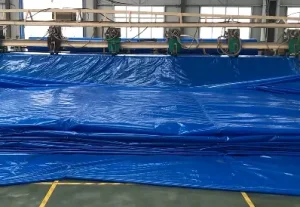
We control the complete value chain under one 30,000 m² plant: raw virgin HDPE/PVC resin compounding, high-speed flat and tape drawing extrusion, water-jet weaving looms, dual-sided coating lamination, high-frequency seam welding, and automated eyelet punching. This guarantees 100% batch-to-batch consistency with zero subcontracting margins.
Unlike generic domestic off-the-shelf products, our engineering team tailors the UV-stabilizer chemistry (utilizing premium Swiss-grade Hindered Amine Light Stabilizers) specifically for the equatorial solar radiation index (UV 11+) of Indonesia. This doubles the outdoor functional life of both PE rolls and finished PVC covers.
Located near major ocean shipping ports (Qingdao and Lianyungang), we offer fast container dispatch. Importers can combine PE ready-made sheets, PVC tarpaulin rolls, weed barrier fabrics, and layflat irrigation hoses in a single 20ft or 40ft High Cube container to optimize freight costs.
When purchasing truck tarpaulins for commercial operations in Indonesia, initial purchase price represents only a fraction of total life-cycle expense. Premature tarp degradation leads to cargo damage claims, road safety penalties by the Indonesian Ministry of Transportation (Kemenhub), vehicle downtime, and increased labor cost for frequent replacements.
A typical 10-wheel tronton truck traveling the Jakarta-Surabaya route requires a 6m x 9m protective cover. Comparing an unverified local retail tarp with a factory-customized 650 GSM PVC tarp yields clear economic insights:
| Evaluation Parameter | Local Retail Unbranded PE Tarp | Star Tarpaulins Factory Engineered PVC |
|---|---|---|
| Initial Unit Procurement Cost | Lower initial upfront investment | Moderate OEM Factory Direct Investment |
| Average Expected Life in Indonesia | 3 to 6 Months (Degrades quickly under UV) | 36 to 60 Months (UV & Mold Resistant) |
| Annual Replacement Frequency | 2 to 4 Times Per Year | Once every 3 to 5 Years |
| Risk of Cargo Water Damage | High (Seam leakage, fabric tearing) | Zero (100% Thermal Welded Seams) |
| 3-Year Total Financial Impact | 300% Higher Cumulative Cost | Optimal Overall ROI Savings |
Our production lines accommodate full OEM & ODM customization required by Indonesian B2B buyers:
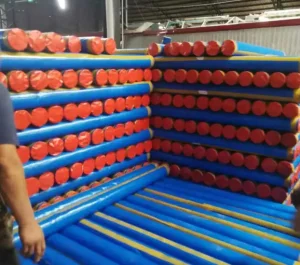
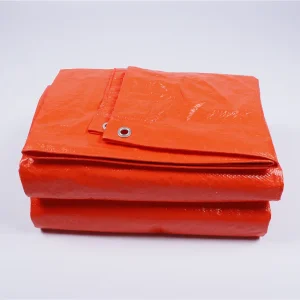
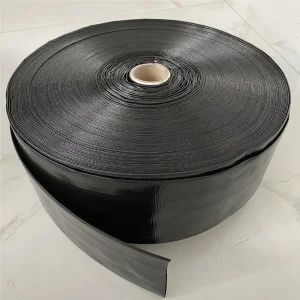
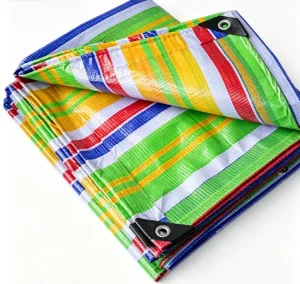
Browse our complete selection of polyethylene, polypropylene, and PVC coated materials ready for wholesale volume shipment to Indonesia.
Expert responses to critical engineering, logistics, and procurement questions from commercial buyers.
Contact our technical engineering and export team today for factory-direct price quotes, custom material sample kits, and container loading calculations tailored to your logistics requirements.
Send Inquiry Now