Navigating stringent EU environmental protocols, microplastic reduction mandates, and specialized soil microclimate demands in Benelux commercial agriculture.
Belgium occupies a uniquely intensive position within European horticulture, commercial floriculture, and civil engineering geotextiles. From the intensive glasshouse clusters in Flanders (around Ghent and Roeselare) to large-scale public infrastructure projects along the North Sea coast and the Port of Antwerp-Bruges logistics hubs, demand for high-durability, permeability-optimized weed barrier fabrics has reached unprecedented levels. Modern growers and civil engineering contractors require geotextile membranes that deliver absolute weed suppression without compromising hydrological equilibrium or introducing harmful synthetic degradation products into Flemish sandy-clay soils.
Under the European Union's Farm to Fork Strategy and the EU Green Deal, Belgian agricultural producers face severe legislative caps on chemical herbicide applications (such as glyphosate). Consequently, mechanical and physical weed management systems—primarily high-tensile, UV-stabilized polypropylene weed control fabrics—have shifted from optional landscape supplies to mission-critical infrastructure investments. As an original primary manufacturer operating extruded polyolefin weaving mills, we supply optimized geotextile solutions directly to Belgian distributors, agricultural co-operatives, commercial tree nurseries, and landscape engineering contractors.
Engineered ground covers and heavy-duty barrier fabrics deployed across Belgian tree nurseries, greenhouses, and logistics yards.
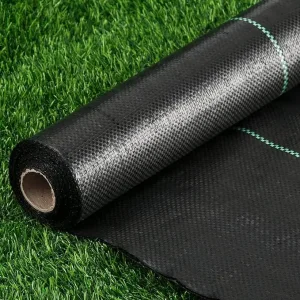
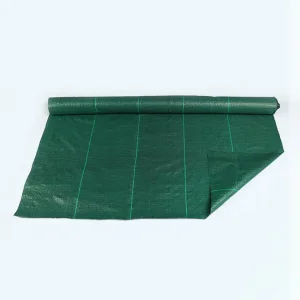
A comparative engineering evaluation of woven flat-ribbon tape geotextiles versus needle-punched non-woven membranes for Western European soils.
The performance of a weed barrier fabric in Belgium's maritime temperate climate (characterized by high annual rainfall, frequent freeze-thaw cycles, and moderate UV exposure) depends heavily on the polymer architecture and weaving geometry. Our manufacturing process utilizes 100% virgin high-tenacity Polypropylene (PP) resin compounded with specialized Hindered Amine Light Stabilizers (HALS) and optical carbon black masterbatches.
Belgian landscape applications frequently involve heavy aggregate layers (such as Belgian blue limestone gravel, volcanic lava stone, or decorative wood bark). Inferior non-woven fabrics or recycled PE sheets suffer rapid puncture and tearing under aggregate friction. Our heavy-duty woven PP weed barriers feature a tight warp/weft ribbon structure (density ranging from 10x10 to 14x14 tapes per inch), achieving Grab Tensile Strengths exceeding 1,100 N in accordance with ASTM D4632 standards. This ensures structural integrity under foot traffic, wheelbarrow loads, and commercial landscaping equipment.
A major failure mode in low-grade plastic weed sheets is water ponding, which creates localized anaerobic soil conditions, root rot in ornamental species, and severe surface runoff. Our engineered needle-punched woven composite geotextiles feature microscopic water-pass apertures. This structure provides a calibrated water flow rate of 12 to 18 L/m²/s under a 50mm head (ISO 11058), allowing rain and liquid fertilizers to penetrate evenly into the root zone while preventing upward weed seedling emergence.
Solar radiation in Benelux countries exhibits high seasonal variation with intense UV-A and UV-B components during spring and summer. Standard untreated polypropylene degrades rapidly within 90 days of open sun exposure. By integrating 3.5% weight-ratio Ciba-Geigy standard UV masterbatch into the molten polymer during strand extrusion, our fabrics guarantee a minimum service life of 5 to 8 years un-covered, and 20+ years when covered with organic or mineral mulch.
| Technical Parameter | Standard Landscape Grade | Commercial Agritech Grade | Heavy Engineering Geotextile | Test Standard |
|---|---|---|---|---|
| Nominal Mass (GSM) | 90 - 100 g/m² | 110 - 150 g/m² | 180 - 300 g/m² | ISO 9864 |
| Tensile Strength (Warp/Weft) | 7.5 / 6.0 kN/m | 12.5 / 10.5 kN/m | 22.0 / 18.5 kN/m | EN ISO 10319 |
| CBR Puncture Resistance | 1.2 kN | 2.1 kN | 3.8 kN | EN ISO 12236 |
| Water Permeability (VI50) | 20 L/m²/s | 15 L/m²/s | 10 L/m²/s | EN ISO 11058 |
| UV Weathering Resistance | 300 kLy (3 Yrs) | 450 kLy (5 Yrs) | 600+ kLy (8+ Yrs) | EN 12224 / ISO 4892-3 |
| Marker Line Grid | 15cm Green Lines | 15cm Green/Yellow Grid | Custom Color/Grid | Factory Standard |
Streamlined containerized logistics from our 30,000 m² manufacturing plant in Linyi to Antwerp, Zeebrugge, and inland Benelux distribution hubs.
Master rolls supplied from 0.5m to 6.0m widths, with lengths up to 1000m. Pre-cut retail rolls (1m x 10m, 2m x 25m) with custom barcode shrink-wrapping available for DIY retail chains across Europe.
Combine weed barrier fabric rolls, agricultural tarpaulins, PE layflat hoses, and PVC industrial covers within a single 20ft or 40ft HQ container to optimize freight costs and reduce inventory holding stress.
All production batches undergo stringent third-party testing (SGS/TÜV Rheinland). Materials strictly conform to EU REACH Regulation (EC No 1907/2006) for heavy metal and SVHC chemical safety.
Explore our full line of specialized polyolefin geotextiles, industrial covers, and agricultural tarpaulins engineered for European importers.
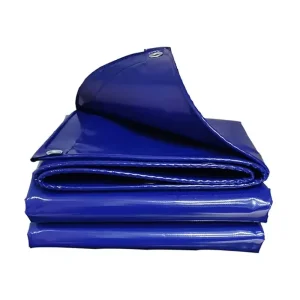
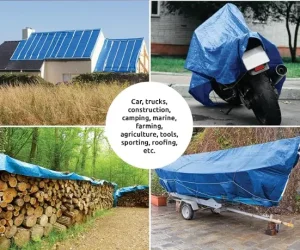
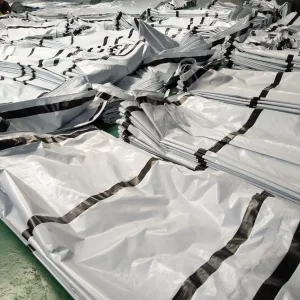
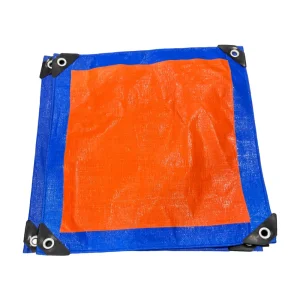
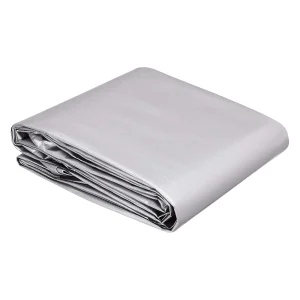
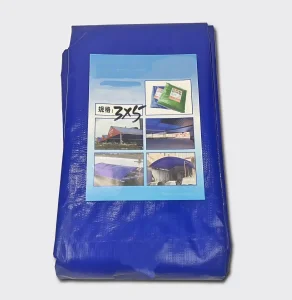
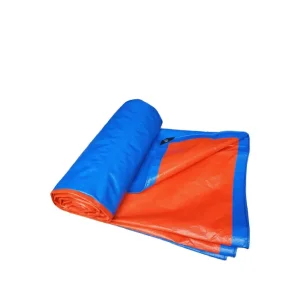
Meeting ISO 9001 quality controls, European CE geotextile marking, and ecological circular economy standards.
Traditional mechanical slitters leave loose fraying polypropylene yarns along roll edges. During installation in Belgian nursery beds or public green belts, these loose strands break down into soil microplastics. Our advanced production lines incorporate inline ultrasonic thermal edge-cutting units, melting individual filaments together into a smooth, monolithic selvedge. This process completely prevents edge-fraying and aligns with strict European soil protection guidelines.
Made from 100% single-polymer Polypropylene (PP), our weed barrier membranes are fully recyclable at the end of their operational lifecycle. Unlike multi-layer laminated composites containing incompatible plastics, clean recovered PP fabric can be re-granulated into industrial plastic pellets for non-structural plastic products, assisting Belgian commercial growers in achieving zero-waste agricultural accreditations.
Every roll leaving our factory is stamped with a unique batch tracking code. This code links directly to raw material lot certificates, extruder temperature logs, UV masterbatch dosing ratios, and laboratory tensile test reports. Belgian distributors receiving our containers can immediately verify material provenance and technical compliance for municipal tenders or major commercial contracting projects.
We provide comprehensive technical datasheets (TDS), Declaration of Performance (DoP) documents, and safety data sheets (SDS) formatted to European standards to streamline custom clearance and commercial project submittals.
Expert answers on specification selection, UV longevity, water flow dynamics, and containerized logistics.
For standard greenhouse floors, strawberry cultivation, and seasonal nursery beds in Flanders, a 90 to 110 GSM woven PP fabric provides an optimal balance of cost-effectiveness, high water permeability, and robust weed blocking. However, for heavy gravel driveways, pathways, or public infrastructure underlayment subjected to Belgian blue limestone or vehicle loads, we strongly recommend our 150 to 200 GSM heavy-duty geotextile grade. The higher mass increases CBR puncture resistance and prevents sharp aggregate from piercing the membrane.
Our fabrics feature engineered micro-porous aperture spaces between warp and weft ribbon tapes, supplemented by specialized hydrophilic surface treatments. This structure achieves a water flow rate of 12-18 L/m²/s (under ISO 11058 testing). Rainfall rapidly passes through the fabric into the subsoil, preventing surface puddles, algal growth, or anaerobic mud creation, while maintaining essential soil moisture levels underneath.
While Middle Eastern solar exposure requires 5% UV dosage, Belgian and Western European climates typically experience radiation levels between 80 to 120 kLy/year. We formulate our standard Benelux export grade with 3.0% to 3.5% Ciba-Geigy standard HALS UV stabilizer (300 to 450 kLy total UV rating). This guarantees a field life of 5+ years under continuous direct sunlight, or 20+ years when buried under wood mulch, gravel, or soil.
For custom specifications, custom width cuts, or private label retail packaging, our standard MOQ is 3 metric tons (or one mixed 20ft container). Production lead time is typically 15 to 20 days post-sample approval. Direct ocean transit from Qingdao/Lianyungang port to the Port of Antwerp or Zeebrugge takes approximately 30 to 35 days.
Yes. We operate fully automated automatic roll-rewinding, slitting, and heat-shrink packing lines. We supply small retail rolls (e.g., 1m x 10m, 1m x 25m, 2m x 25m) fitted with full-color process display inserts, EAN-13 barcodes, and private label logos ready for immediate shelf display in European hardware store networks.
Request direct factory quotations, engineering samples, container packing plans, and complete technical datasheets. Our export engineering team responds within 24 hours.