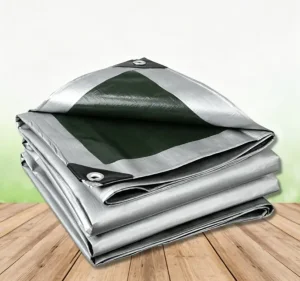
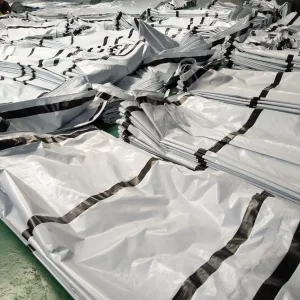
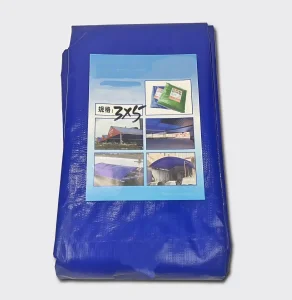
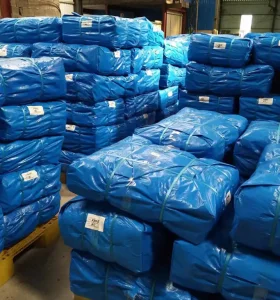
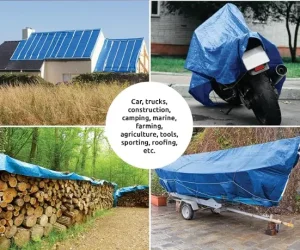
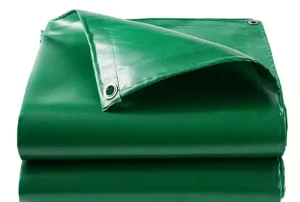
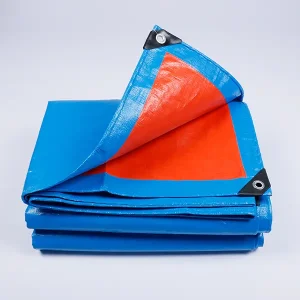
Selected high-durability woven geotextiles and heavy-duty poly sheets engineered specifically for the harsh climatic conditions and rigorous soil stabilization demands of Ontario infrastructure projects.
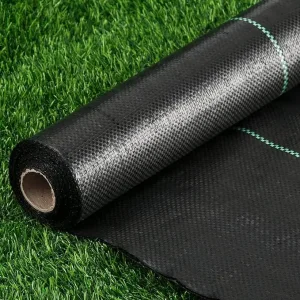
The Greater Toronto Area (GTA)—encompassing Toronto, Peel, York, Halton, and Durham regions—is undergoing an unprecedented expansion in urban infrastructure, high-density residential developments, and industrial logistics parks. With this surge, the demand for high-performance geotextile materials, specifically commercial-grade weed barrier landscape fabrics, has scaled exponentially. However, the unique environmental pressures of Southern Ontario present distinct engineering challenges that commodity-grade fabrics fail to address.
Commercial contractors, landscape architects, and civil engineering firms across Ontario require high-tensile, UV-stabilized virgin polypropylene (PP) and high-density polyethylene (HDPE) woven and non-woven needle-punched geotextiles. These specialized fabrics perform four critical structural functions:
The GTA market consumes tens of millions of square meters of landscape fabric annually across three distinct sectors:
Metrolinx light-rail expansion, highway median stabilization (401, 407, DVP), and public park revitalizations require heavy geotextiles meeting OPSS (Ontario Provincial Standard Specifications) 1860 criteria.
Industrial warehousing hubs in Mississauga, Brampton, and Vaughan require high-GSM underlayments beneath permeable paver parking lots and heavy-vehicle staging facilities.
The Niagara region and Holland Marsh commercial growers utilize heavy-duty ground cover mats for weed suppression, soil temperature regulation, and clean drainage pathways.
To achieve optimum performance in North American climates, procurement managers must evaluate weed barrier fabrics based on objective physical parameters tested under ASTM International standards rather than arbitrary nominal weights.
| Fabric Parameter | Standard Retail Grade | Commercial Woven PP | Woven + Non-Woven Composite | China 4.0 Factory Spec |
|---|---|---|---|---|
| Base Polymer | Recycled PE / Thin PP | 100% Virgin Polypropylene | Virgin PP Matrix + PET Needlepunch | 100% Virgin PP + Carbon Black Masterbatch |
| Fabric Weight (GSM) | 45 GSM - 75 GSM | 90 GSM - 150 GSM | 160 GSM - 250 GSM | Custom 60 GSM - 300 GSM Exact |
| UV Degradation Resistance | < 500 Hours (ASTM D4355) | 1,500 Hours (3% UV) | 2,500 Hours (4% UV) | 3,500+ Hours (5% HALS Dosage) |
| Water Flow Rate (Permeability) | Low (Ponding prone) | Medium (10-15 gpm/sq.ft) | High (20-30 gpm/sq.ft) | Engineered Flow (Controlled Porosity) |
| Puncture Resistance (CBR) | < 200 N | 450 N - 750 N | 1,100 N - 1,800 N | Up to 2,200 N (Heavy Duty Driveway) |
For Toronto distributors, landscape supply yards, and large-scale civil contractors, sourcing direct from established manufacturing facilities in China provides a decisive strategic advantage over local middleman wholesalers. Linyi Xinshengyang Plastic Products Co., Ltd. (Star Tarpaulins) exemplifies the modern Chinese high-efficiency manufacturing model, driving systemic value into the North American supply chain.
By controlling the entire production sequence—from raw resin granule compounding to flat-yarn extrusion, circular jet weaving, double-side ultrasonic lamination, and automated slitting—manufacturing tolerances remain precise within ±2% GSM variance.
Utilizing proprietary Hindered Amine Light Stabilizers (HALS) blended uniformly at the extrusion phase prevents photo-oxidation caused by intense high-latitude solar radiation during Ontario summer months.
Automated high-compression roll packing increases container loading volume by up to 35% per 40ft HQ container. Direct shipping lanes from Qingdao Port to Vancouver or Montreal with CN/CP intermodal rail transfer to Toronto depots optimize freight costs per square meter.
Local landscape distributors in Ontario typically apply a 40% to 70% markup on landscape fabrics to cover regional warehousing overhead. Direct factory engagement allows Toronto buyers to secure OEM packaging, customized roll widths (from 3ft up to 18ft master rolls), private labeling with printed plant alignment stripes, and container-mix flexibility—combining weed fabrics, heavy-duty tarps, and layflat irrigation hoses under a single Bill of Lading.
Engineering parameters must match specific field deployment conditions. Below is a detailed breakdown of localized application protocols utilized by Ontario civil engineers and commercial landscapers:
Recommended Spec: 120 GSM - 150 GSM High-Tensile Woven Polypropylene.
Placed directly over compacted clay subgrade before placing 3/4" clear stone aggregate. Prevents subgrade pump failure under vehicle loads while allowing rapid drainage during heavy spring rains in York Region.
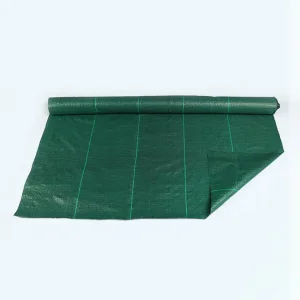
Recommended Spec: 100 GSM - 130 GSM Woven Ground Cover with Green Grid Lines.
Used extensively in Niagara-on-the-Lake and Leamington agricultural complexes. Green alignment markers (12-inch spacing) facilitate precise container placement, while high UV stabilization handles intense sunlight under glass or poly structures.
Recommended Spec: 200 GSM Needle-Punched Non-Woven / Woven Composite.
Deployed along Don Valley ravine slopes and coastal bluff retaining structures to stabilize soil banks, allow deep root establishment, and prevent silt transport into local waterways during heavy runoff events.
Expert guidance addressing import logistics, compliance testing, and technical specifications for North American landscape product buyers.
For standard residential garden beds, a 70 GSM to 90 GSM woven fabric is sufficient. However, for Toronto commercial applications, hardscape underlayments, and municipal installations, a minimum of 100 GSM to 150 GSM woven virgin polypropylene is required. Heavy-duty driveway foundations or aggregate separation projects demand 150 GSM to 250 GSM composite geotextiles to resist soil shear forces and heavy vehicular loads.
Sub-zero temperatures cause water trapped in low-quality fabrics to freeze and expand, tearing brittle recycled fibers. Our commercial fabrics utilize 100% virgin polypropylene resin with high molecular weight retention and elasticity, allowing the weave to accommodate frost heave without fiber rupture. Furthermore, hydraulic flow channels remain open during thaw cycles.
Yes. We provide comprehensive OEM/ODM services. Roll widths can be customized from 3 ft (0.91m) up to 16 ft (4.88m) seamless widths. We offer customized roll lengths (50ft, 100ft, 300ft, or master rolls), full-color display labels with English/French bilingual text for Canadian retail compliance, UPC barcodes, and protective UV-resistant outer shrink wrapping.
Manufacturing lead time is typically 15 to 20 days upon deposit approval. Sea freight from Qingdao Port to Vancouver or Montreal takes approximately 14 to 18 days, followed by 3 to 5 days via CN/CP rail to the Toronto Intermodal Terminal (Brampton or Vaughan). The end-to-end timeline from order placement to warehouse arrival is generally 35 to 45 days.
Our factory quality control testing laboratory performs rigorous batch testing verified by third-party agencies (SGS / Bureau Veritas). We evaluate Grab Tensile Strength (ASTM D4632), Trapezoid Tear Resistance (ASTM D4533), CBR Puncture Resistance (ASTM D6241), and Permittivity (ASTM D4491). Mill Test Certificates (MTC) are issued with every export shipment.
Explore our extended catalog of heavy-duty PE tarpaulins, UV-resistant ground covers, and custom protective sheets designed for industrial, transportation, and agricultural supply channels across North America.