Factory-direct supply of engineered polyethylene, polypropylene, and PVC coated industrial tarpaulins for severe global field environments.
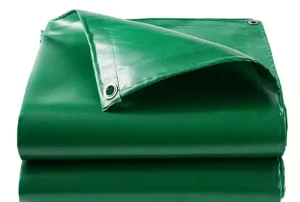
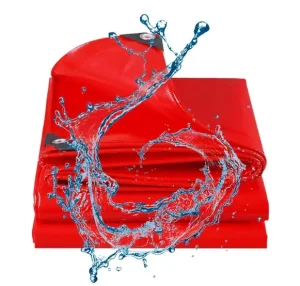
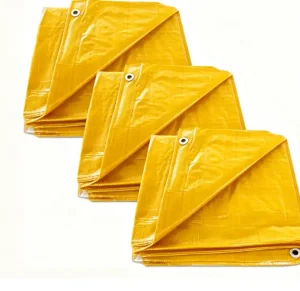
An authoritative analysis of technical specifications, material innovations, NIR stealth capabilities, and global procurement strategies for enterprise buyers.
In the global protective textile market, the demand for heavy duty camouflage tarpaulins has evolved far beyond basic waterproofing and physical concealment. Modern military logistics, disaster response authorities, forestry management entities, and industrial heavy-equipment operators require multi-spectral environmental protection. As the leading OEM/ODM manufacturing hub worldwide, China's industrial polymer ecosystem—centered in advanced manufacturing clusters such as Linyi, Shandong—delivers unprecedented structural engineering, cost efficiencies, and material longevity.
Global B2B buyers—ranging from defense procurement agencies to commercial hardware distributors across North America, the Middle East, Europe, and Africa—are shifting their evaluation metrics. Sourcing decisions are no longer driven strictly by price per square meter; procurement teams evaluate technical metrics including tensile stress (warp/weft N/5cm), hydrostatic head pressure resistance (mm H2O), cold-crack resistance thresholds (-40°C), and colorfastness ratings under continuous solar UV radiation (ISO 105-B02 standards).
How vertically integrated manufacturing chains ensure superior tear strength, seamless lamination, and global supply resilience.
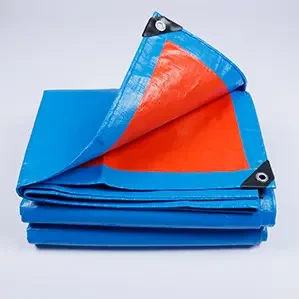
Unlike regional processing workshops that source woven scrims from third parties, top Chinese factories operate complete in-house extrusion, circular/flat weaving, double-sided film lamination, ultrasonic heat-welding, and automatic grommet installation lines. This guarantees exact GSM density and precise coating thickness throughout the batch.
By blending UV stabilizers (Hindered Amine Light Stabilizers - HALS) into virgin High-Density Polyethylene (HDPE) tapes prior to weaving, Chinese mills achieve enhanced resistance against photo-oxidation. Fabrics resist cracking, chalking, and tensile decay even under intense desert solar exposures (500+ KLY UV intensity).
Utilizing high-speed gravure and digital rotogravure printing presses, factories produce seamless woodland, desert operational, arctic winter, digital urban, and multi-terrain camouflage patterns with pin-point registration accuracy, preventing pattern bleeding and fading.
Selecting the optimal substrate base according to operational payload, exposure duration, and mechanical stress requirements.
| Performance Characteristic | PE Heavy Duty Camo (Polyethylene) | PP Reinforced Camo (Polypropylene) | PVC Knife-Coated Tactical (Polyvinyl Chloride) |
|---|---|---|---|
| Standard Weight Range (GSM) | 120 GSM – 300 GSM | 140 GSM – 350 GSM | 450 GSM – 900 GSM |
| Tensile Strength (Warp/Weft) | High (approx. 900N – 1400N / 5cm) | Very High (approx. 1200N – 1800N / 5cm) | Extreme (2200N – 3500N / 5cm) |
| Hydrostatic Pressure Rating | 1,500 mm – 3,000 mm H2O | 1,200 mm – 2,500 mm H2O | > 10,000 mm H2O (100% Waterproof) |
| Thermal Stability Range | -30°C to +70°C | -20°C to +80°C | -40°C to +85°C |
| NIR / Thermal Stealth Compatibility | Surface Pigment Coated | Laminated Layer Option | Full NIR Absorbing Compound Integration |
| Primary B2B Use Cases | Hardware retail, general cargo covers, farm protection, temporary tactical shelters | Heavy equipment packaging, mining ground covers, high-tensile scaffolding sheets | Long-term military tent structures, semi-trailer curtains, heavy duty defense logistics |
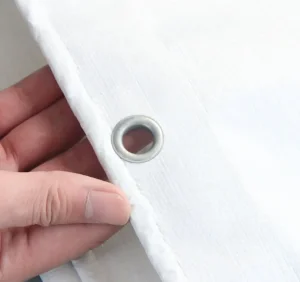
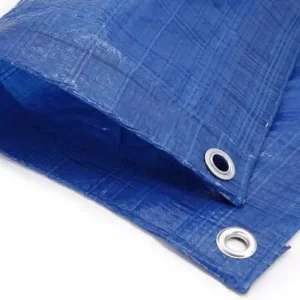
A heavy duty camouflage tarp is only as strong as its perimeter structural points. Leading Chinese manufacturers incorporate multi-tier edge sealing protocols:
Technical advancements driving the transition from legacy tarpaulins to smart multi-spectral protective barriers.
Modern thermal imaging and drone surveillance systems make conventional visual concealment insufficient. Advanced Chinese R&D centers incorporate spec-matched Near-Infrared pigments into topcoat layers, matching spectral reflectance curves (700nm–1200nm wavelengths) of forest, desert, or snow environments to evade sensor detection.
In response to global sustainability mandates (EU REACH, RoHS, and US EPA rules), factories are introducing Post-Consumer Recycled (PCR) polyolefin bases blended with virgin polymers. Hot-melt TPU and solvent-free extrusion coatings replace legacy plasticized compounds, eliminating VOC off-gassing while preserving cold-flexibility.
For humanitarian emergency relief stockpiles (UNHCR / Red Cross standards) and long-term storage in tropical areas, tarpaulins receive non-leaching antimicrobial additives (ASTM G21 compliant), preventing mold proliferation and material degradation during multi-year storage in humid environments.
How specialized heavy duty camo covers support tactical operations, commercial logistics, agriculture, and forestry management.
Used to conceal field command posts, supply dumps, mobile radar stations, and artillery units. Heavy duty camo tarps block moisture ingress, mitigate heat buildup, and provide visual masking against overhead drone surveillance.
Discreet protective coverings for field equipment, observation blinds, and timber stockpiles in dense forest reserves. Natural woodland print blends into foliage while heavy PE coatings stop sap, acid rain, and fungal damage.
Heavy duty PVC and high-density PE camo flatbed truck tarps safeguard dry goods, timber, machinery, and industrial equipment against road debris, highway wind shear, rainstorm saturation, and solar degradation.
Government agencies and international NGOs specify heavyweight tarpaulins for rapid-deployment emergency housing shelters, perimeter containment barriers, and emergency roof covers following severe weather events.
Ensuring zero-defect manufacturing through rigorous quality control procedures from raw polymer granules to final container loading.
For international buyers managing complex supply chains, partnering with a professional China factory requires strict adherence to quality verification standards. A robust Quality Management System (QMS) aligned with ISO 9001:2015 includes critical checkpoints:
Testing virgin PE/PVC resin batches for Melt Flow Index (MFI), moisture content, and chemical purity. Rejecting recycled off-grade polymers ensures high tensile yield strength and color consistency.
Laser gauge monitoring of coating thickness across the full web width. Ultrasonic flaw detectors scan for micro-pinholes in the laminate film to guarantee 100% waterproof ratings.
Batch sampling subjected to grab-tensile tests (ASTM D751), tongue-tear tests (ASTM D2261), hydrostatic head testing (AATCC 127), and QUV accelerated weathering chamber exposure.
Explore our full line of industrial tarpaulin rolls, finished customized sheets, and specialized agricultural fabrics direct from our factory lines.
Technical and commercial guidance provided by senior polymer engineers and global trade compliance experts.
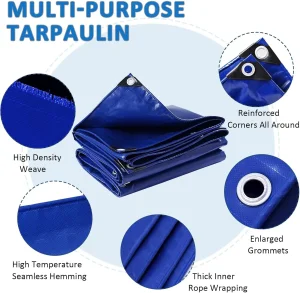
A true heavy-duty camouflage tarpaulin is distinguished by four core mechanical properties: 1) Fabric Weight & Scrim Count: Heavy-duty PE tarps feature weights from 180 GSM to 300+ GSM with a tight weave density of 12x12 or 14x14 per square inch (PVC variants range from 550 GSM to 900 GSM). 2) Lamination Layer Thickness: Dual-side virgin Polyethylene coating of at least 30–45 microns per side to eliminate pinhole water leakage. 3) UV Masterbatch Concentration: Inclusion of 3% to 5% HALS UV stabilizer to ensure 3-year to 5-year outdoor resistance under high KLY solar radiation. 4) Reinforcement Assembly: Ultrasonic heat-welded seams, continuous rope-in-hem, and reinforced polycarbonate corner patches with anti-corrosion grommets.
Yes. We provide complete OEM/ODM customization. We can replicate standard Woodland, Multi-Cam, Desert Digital, Universal Camo Pattern (UCP), and Flecktarn designs. Furthermore, our R&D laboratory can formulate Near-Infrared (NIR) reflective coatings that meet defense agency requirements, ensuring that reflectance values between 700nm and 1200nm blend seamlessly into natural terrain backgrounds under night-vision optic systems.
For standard stocked color specifications, MOQ starts at one 20ft container mix (approx. 10 to 11 metric tons). For custom camouflage printing, specific GSM formulations, or custom retail packaging, MOQ is typically 3 metric tons per specification. Standard production lead time is 15 to 25 calendar days post pre-production sample approval and deposit receipt.
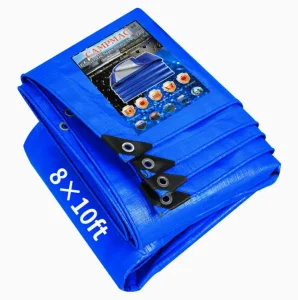
Ready-made tarpaulin sheets are individually folded and sealed inside transparent polybags featuring printed barcodes or retail inserts. These are packed into heavy-duty woven bale bags made of the same waterproof PE material or packed in corrugated double-wall export cartons. For roll goods, rolls are wrapped in protective PE film and capped with heavy plastic end-plugs, preventing core crushed edges during multi-modal ocean transit.
We provide comprehensive third-party test reports from recognized agencies such as SGS, TÜV Rheinland, and Intertek. Reports include Tensile and Tear Resistance (ASTM D751 / ISO 13934), Hydrostatic Head Pressure (AATCC 127), Flame Retardancy (DIN 4102 B1/B2, NFPA 701, CPAI-84), UV Aging Weathering (ISO 4892-2), and Chemical Compliance (EU REACH 235 SVHC screening and RoHS compliance).