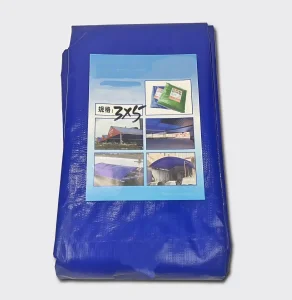
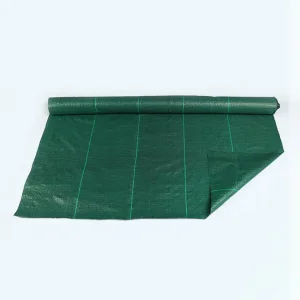
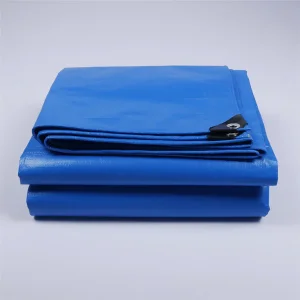
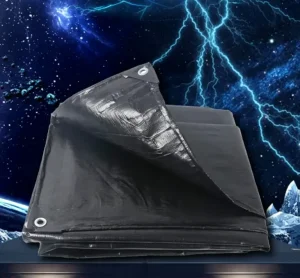
Engineered for immediate deployment across agricultural, construction, transport, and temporary structural applications.
Analysis of market adoption, material transition, and supply chain demands across global economic zones.
The global demand for high-performance polymer membrane materials—specifically lightweight, waterproof, and UV-stabilized Polyethylene (PE) tarpaulins—has witnessed a structural shift over the past decade. Driven by expanding infrastructure developments in emerging economies, modernizing agricultural operations, and rapid-response logistics requirements, PE tarpaulins have evolved from generic protective covers into precisely engineered architectural and industrial temporary barriers.
Leading Chinese original equipment manufacturers (OEMs) and original design manufacturers (ODMs), such as Linyi Xinshengyang Plastic Products Co., Ltd. (Star Tarpaulins) (operating a 30,000 m² modern manufacturing plant since 2006), stand at the core of this global ecosystem. By standardizing high-speed extrusion, high-density ribbon weaving, and precise double-sided low-density polyethylene (LDPE) coating processes, China has established an unassailable supply chain advantage, controlling over 70% of the worldwide poly-tarp market.
Technical Focus: High-Density Polyethylene (HDPE) provides the high tensile strength core fabric woven from slit tapes, while Low-Density Polyethylene (LDPE) provides a non-porous, waterproof matrix lamination on both sides. This dual-polymer architecture optimizes mass-to-strength ratio while ensuring absolute zero-permeability performance.
Commercial deployment trends across key regions highlight specific performance expectations:
Deconstructing the structural physics, chemical additives, and lamination mechanics behind heavy-duty poly tarps.
The core structural integrity originates from virgin HDPE resin extruded into flat tapes, oriented under high thermal stretch to maximize molecular chain alignment. Woven on circular looms at densities ranging from 8×8 to 14×14 threads per square inch, the fabric delivers tensile strength up to 1500 N / 5cm.
Using high-temperature slot-die extrusion, both surfaces are encapsulated with molten LDPE masterbatch containing pigments and water-repellent silane coupling agents. This forms an impermeable membrane capable of withstanding hydrostatic heads > 100 kPa (10,000 mm H2O).
To prevent photo-oxidative degradation caused by UV-A and UV-B spectrum radiation, Hindered Amine Light Stabilizers (HALS, such as Chimassorb 944 / Tinuvin 770) are blended into both core tapes and surface coatings, preventing polymer chain scission for up to 5 years of intense outdoor exposure.
Sourcing engineers must evaluate mechanical performance against cost constraints. Below is an engineering benchmark comparison compiled by factory testing labs:
Key technological advancements reshaping temporary shelter engineering and sunshade barrier manufacturing.
Unlike PVC covers which contain heavy plasticizers and mixed polymers difficult to separate, 100% Polyethylene tarpaulins (HDPE core + LDPE coating + PE hem ropes) are fully mono-material recyclable, supporting global ESG mandates and reduced carbon footprint initiatives.
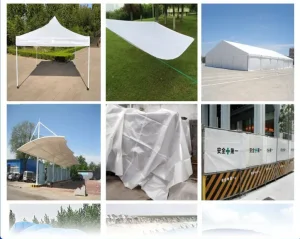
Innovations in silver, gold, and aluminum masterbatch lamination allow outer layers to reflect up to 85% of infrared radiation (IR). When used for outdoor tents, temporary sunshade barriers, or relief halls, internal ambient temperatures are reduced by 5°C to 10°C.
Modern tent construction relies on automated ultrasonic heat-sealing seams and reinforced welded patch corners with polycarbonate or heavy-duty brass grommets. This eliminates needle-hole leaks and distributes wind loads evenly up to Beaufort Scale 8.
Tailored fabric formulations for commercial, industrial, agricultural, and emergency infrastructure projects.
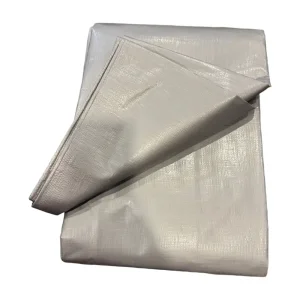
In high-volume agricultural logistics, temporary warehouse tents (Rubb Halls) constructed with 200 GSM to 300 GSM heavy-duty white or double-silver PE tarpaulin provide low-cost weather-proof storage. White outer coatings minimize internal heat buildup during harvest storage, preserving grain moisture content while preventing mildew and fungal growth.
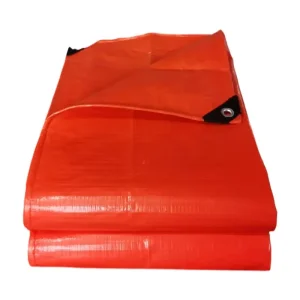
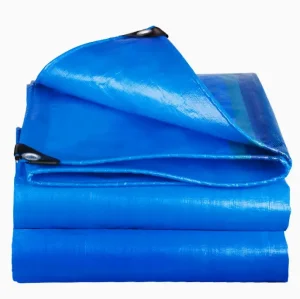
Urban construction sites require localized shade barriers, debris nets, and scaffolding tarps to comply with municipal safety rules and protect workers from sun heat stroke. Flame-retardant green, blue, or orange PE tarpaulins with fire-inhibitor masterbatches (compliant with EN 13501-1 Class B) ensure maximum site safety against welding sparks.
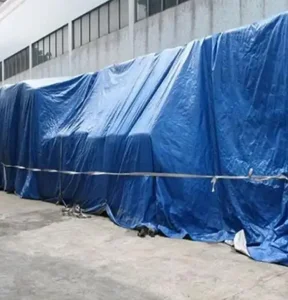
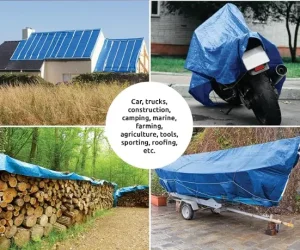
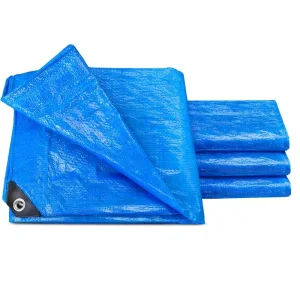
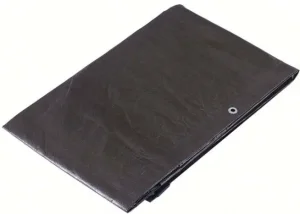
Heavy freight haulage demands tear-resistant, high-density blue or black poly covers featuring reinforced triangular plastic corners and perimeter synthetic ropes. These covers withstand continuous atmospheric friction, sub-zero highway crosswinds, and repeated mechanical tie-down stress without tearing around eyelet anchor points.
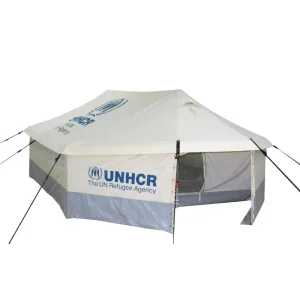
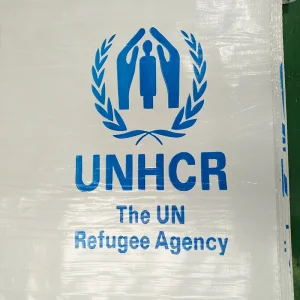
UNHCR and Red Cross compliant emergency shelter sheets (4m x 6m standardized PE sheets with reinforced bands) represent crucial life-saving infrastructure in disaster relief zones. Their light weight enables rapid airlift, while 100% waterproof heat-sealed hems guarantee immediate protection against monsoon conditions.
Rigorous manufacturing discipline verified by internal laboratory testing protocols at Star Tarpaulins.
Polyethylene resin granules are extruded at precise temperatures to achieve uniform ribbon thickness and denier strength. MFI (Melt Flow Index) testing guarantees batch consistency.
Modern circular looms turn flat yarn into tight woven mesh. Online optical sensors inspect warp and weft density in real-time, eliminating weave gaps or dropped threads.
Molten LDPE film is laminated on both sides under high nip-roll pressures, forming a monolithic bond with zero risk of delamination under prolonged sun exposure.
Computerized cutting tables trim sheets to exact buyer dimensions. Perimeter edges fold over poly rope reinforcement before high-frequency welding and grommet insertion.
Quality Assurance Benchmark: Every export shipment undergoes 5-point batch testing: Hydrostatic Pressure Test (ASTM D751), Tensile Strip Test (ASTM D5034), Trapezoidal Tear Test (ASTM D1117), Accelerated UV Weathering Chamber Test (ISO 4892-2), and Grommet Pull-Out Strength Test (> 500 N force).
Our technology trajectory for 2025–2035 in advanced polyolefin membranes and environmental sustainability.
Integration of sugarcane-derived bio-PE resins reducing fossil carbon reliance while retaining full tensile and lamination performance.
Development of elastomer-blended LDPE surface films capable of thermally resealing micro-punctures caused by installation stress.
Lamination of ultra-thin, flexible perovskite solar cell arrays directly onto outdoor tent tarps for off-grid power generation.
100% solar-powered extrusion facilities utilizing closed-loop industrial scrap recovery with zero post-industrial waste.
Explore engineered rolls, outdoor tent sheets, and custom-fabricated poly tarpaulin solutions.
Direct answers from our Senior Polymer Engineers and Global Sales Division.
GSM selection depends strictly on application life span and structural load:
UV degradation is prevented by dosing masterbatches with Hindered Amine Light Stabilizers (HALS) at a concentration of 1% to 5% by weight during HDPE ribbon extrusion and LDPE film lamination. For extreme solar exposure zones (e.g., Middle East, Australia), we conduct QUV accelerated weathering tests (ASTM G154) ensuring over 80% tensile strength retention after 2,000 hours of continuous UV-B radiation.
Standard stocked color combinations (e.g., Blue/Silver, Green/Silver, Double Black) start from one 20ft container mix (~10 metric tons). Custom color matching, special surface printing, or specific GSM specs require an MOQ of 3 metric tons per line item. Standard lead time is 15 to 25 calendar days post-sample approval and deposit receipt.
Yes. As a direct manufacturer operating full in-house cut-and-sew lines, we provide standard sheet sizes from 2x3m up to 20x30m (or custom roll widths from 2m to 6m). Grommet options include aluminum, brass, or heavy-duty molded plastic placed at 50cm, 100cm, or 3ft intervals. Packaging includes customized color inserts, printed barcodes, outer carton branding, or bale packing.
We supply complete export documentation sets including Commercial Invoice, Packing List, Clean On-Board Bill of Lading, Certificate of Origin (Form E, Form A, or RCEP CO), and SGS / BV / TÜV material test certificates for tensile, hydrostatic, and flame retardancy standards upon request.
Partner directly with Linyi Xinshengyang Plastic Products Co., Ltd. (Star Tarpaulins). Get engineered PE tarpaulin, tent fabric, and temporary barrier solutions tailored to your regional market requirements.