Direct factory supply of certified waterproof tarpaulin rolls, custom cut sheets, and high-tenacity covers for global commercial and industrial applications.
China dominates over 70% of the world’s synthetic polymer tarpaulin output. Understanding how industrial clusters, raw material integration, and high-efficiency extrusion technology yield unmatched market competitiveness is vital for global B2B procurement leaders.
Factories situated within key manufacturing clusters like Linyi, Shandong, leverage immediate access to primary virgin polymer resins (SINOPEC, PetroChina, Borealis, and Sabic virgin HDPE, LDPE, LLDPE, and PP). This proximity eliminates raw material transport delays and protects finished sheet costs from regional supply chain volatility.
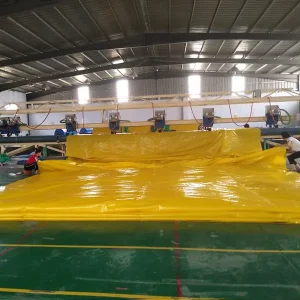
Leading Chinese factories operate complete end-to-end processing under one roof. By controlling raw polymer tape drawing, high-speed circular weaving, double-sided melt-extrusion coating, hot-air seam welding, and computerized eyelet riveting, producers eliminate mid-layer margins while standardizing quality controls across every batch.
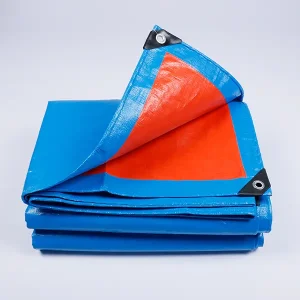
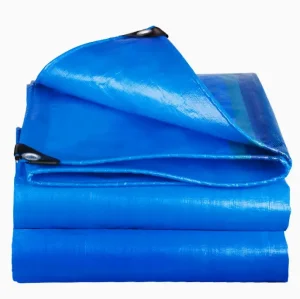
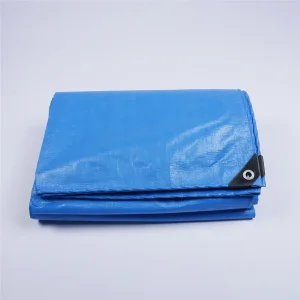
High-capacity machinery arrays (running 24/7 extrusion lines) allow factories to seamlessly pivot between standard stock items (such as blue/orange 90 GSM utility tarps) and highly customized specifications (e.g., 300 GSM double-silver UV-stabilized heavy-duty construction covers) with aggressive production lead times of 15–25 days.
Selecting the correct tarpaulin specification requires deep insight into polymer chemistry, fabric mesh construction, lamination thickness, and mechanical failure thresholds. Below is an engineering overview of structural tarpaulin classifications.
| Material Class | GSM Range (g/m²) | Weave Mesh Count | Tensile Strength (ISO 13934-1) | Hydrostatic Head (ISO 811) | Primary Industrial Applications |
|---|---|---|---|---|---|
| Economy PE Tarpaulin | 50 – 90 GSM | 8 x 8 to 10 x 10 denier | Warp: 450 N / Weft: 400 N | > 50 kPa (Waterproof) | Temporary equipment covers, light garden waste, promotional DIY tarp packs. |
| Commercial PE Tarpaulin | 100 – 160 GSM | 10 x 10 to 12 x 12 denier | Warp: 750 N / Weft: 700 N | > 80 kPa (Waterproof) | Hardware retail, cargo cover, agricultural shade fabric, camping ground sheets. |
| Heavy-Duty PE / PP Tarp | 180 – 300 GSM | 14 x 14 denier woven core | Warp: 1200 N / Weft: 1100 N | > 120 kPa (High Pressure) | Hay stack protection, scaffolding containment, long-term mining stockpile covers. |
| PVC Coated Polyester Tarp | 450 – 900 GSM | 1000D x 1000D high-tenacity | Warp: 2500 N / Weft: 2300 N | > 200 kPa (Extreme Pressure) | Truck side curtains, heavy trailer covers, architectural tension membrane tents. |
High-density polyethylene (HDPE) pellets are molten and extruded into fine flat yarns. These filaments are stretched under thermal tension to maximize molecular orientation, yielding tensile strengths up to 9.5 g/denier prior to circular weaving.
The woven HDPE mesh matrix passes through dual-head co-extrusion laminators. Low-density polyethylene (LDPE) mixed with color colorants, anti-oxidants, and UV inhibitors is melted at 260°C and fused onto both faces of the mesh, forming an impermeable, fluid-tight barrier.
Finished tarpaulin longevity depends on edge construction. Premium factory finishing involves folding the lamination edge around a continuous PP rope insert, ultra-sonic or hot-air seam sealing, and riveting heavy-duty aluminum or brass eyelets backed by molded polycarbonate corner patches.
International procurement managers, government agencies, and wholesale distributors require custom-engineered parameters matched precisely to downstream retail or industrial use. China factories support comprehensive OEM/ODM contracts.
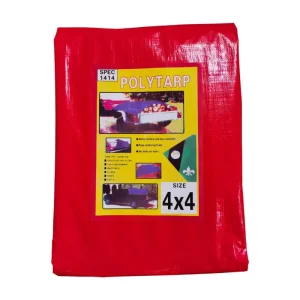
From pre-cut retail sizes (e.g., 2x3m, 4x6m, 10x12m) packaged in individualized polybags with color retail header cards, to industrial master rolls (width: 1.83m to 6m; length: 50m to 1000m) tailored for local converting workshops.
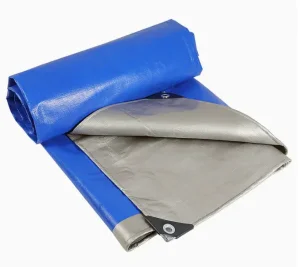
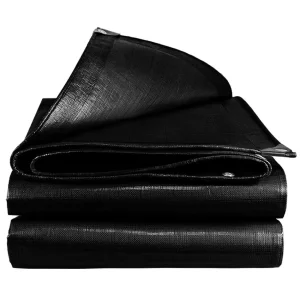
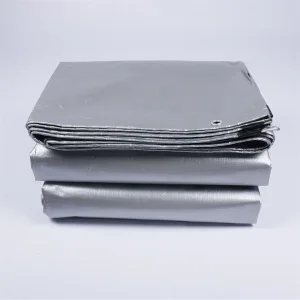
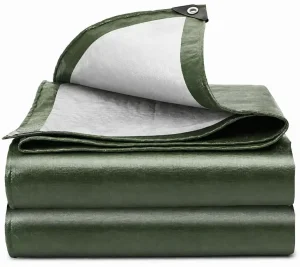
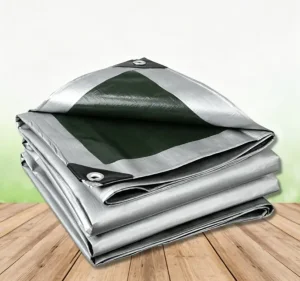
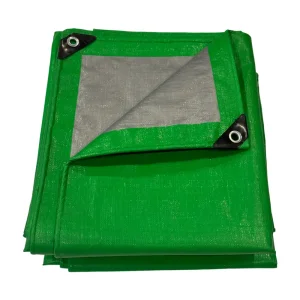
Co-extrusion lamination allows dual-tone aesthetics. Popular configurations include Silver/Green (heat reflective silver outer, subtle green inner), Blue/Orange (high visibility construction), and Black/Silver (100% light block-out for agricultural crop protection).
Factory chemistry labs mix specialized additives directly into the LDPE coating melt: 3–5% UV Masterbatch for tropical degradation protection, Flame Retardant masterbatch, Anti-Static agents for electronic cargo cover, and Anti-Mildew treatments for ocean container shipping.
Deploying polymer products across North America, Europe, Australia, and the Middle East requires strict adherence to environmental health, chemical hazard standards, and structural fire safety rules.
EU markets strictly prohibit hazardous plasticizers, heavy metals (lead, cadmium, mercury), and SVHCs (Substances of Very High Concern). Responsible Chinese factories utilize virgin polyolefins and non-phthalate plasticizers validated by SGS, Intertek, or TÜV Rheinland chemical screening.
For indoor scaffolding, public event shelters, and transport curtains, tarpaulins must resist ignition. Factory formulations comply with international flame retardant standards including DIN 4102 B1/B2, NFPA 701 (USA), and CPAI-84 requirements.
Ultraviolet (UV) radiation rapidly degrades non-stabilized polyethylene, causing brittleness and flaking. Standard factory quality control includes ASTM G154 accelerated QUV weathering tests, ensuring materials endure 3,000+ hours of continuous UV exposure (equivalent to 3–5 years of intense outdoor sunlight in the Middle East or Australia).
From harsh desert heat to sub-zero arctic logging logistics, waterproof plastic tarpaulins perform distinct protective functions across diverse field environments.
Heavy-duty PVC curtainsider fabrics (650–900 GSM) and reinforced PE truck covers protect goods against highway debris, torrential rains, and wind shear. Fitted with steel D-rings and rubber bungees, they allow fast loading while safeguarding high-value freight.
In farming hubs across Australia and North America, 16 mil heavy-duty yellow/black hay stack covers and silage tarps prevent moisture ingress, mold growth, and UV spoilage, saving millions of dollars in feed crop assets annually.
Flame-retardant scaffold enclosure sheets (120–200 GSM) enclose high-rise construction sites, containing dust, protecting workers from inclement weather, and facilitating temp-controlled concrete curing during winter build phases.
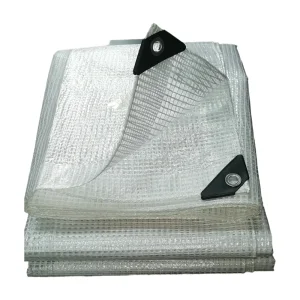
Standardized silver/white double-laminated PE shelter sheets form the backbone of humanitarian response efforts by agencies like UNHCR and Red Cross, providing fast, waterproof, and heat-reflective temporary roofing for displaced populations.
Driven by worldwide carbon reduction mandates and circular economy initiatives, China's tarpaulin manufacturing sector is undergoing rapid technological transformation.
Traditional PVC tarpaulins require complex, expensive recycling due to plasticizer separation issues. Modern development emphasizes 100% Polyethylene (PE) woven constructs (HDPE core + LDPE coating + PE hem cord + PE eyelets), enabling full single-stream mechanical recycling without material sorting.
Factories are integrating up to 30% Post-Consumer Recycled (PCR) resin into middle core weave layers without compromising tensile ratings, reducing environmental footprint while satisfying corporate ESG procurement directives in Europe and North America.
Emerging structural tarps feature nanotech ceramic heat-reflection coatings capable of reducing surface temperatures by up to 12°C in desert climates, along with persistent silver-ion anti-microbial treatments for long-term grain storage covers.
Detailed technical answers to common queries raised by procurement officers, importers, and structural engineers during factory audit and selection.
Explore our full line of factory-direct heavy-duty poly tarpaulin sheets, mesh fabrics, layflat hoses, and specialized covers ready for bulk export.