Directly manufactured in our vertically integrated Shandong facilities. Engineered for weatherproofing, heavy-duty logistics, and high tear-resistance.
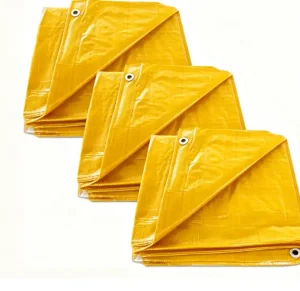
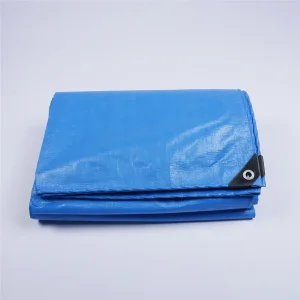
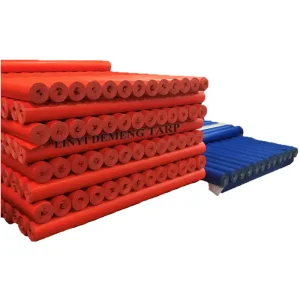
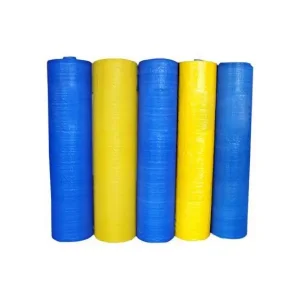
Understanding polymer formulations, plasticizer stability, and structural grid insertion in Chinese high-clarity protective enclosures.
The core clarity of transparent tarpaulins relies on high-purity Polyvinyl Chloride (PVC) or Polyethylene (PE) resins. By reducing micro-crystalline phase boundaries and controlling plasticizer migration through polymeric non-migratory plasticizers (such as DINP or DIDP alternatives), Chinese manufacturers achieve crystal-clear optical transmittances exceeding 92% with haze values under 1.5%.
To overcome the dimensional elasticity of plain clear films, high-strength polyester scrim (ranging from 300D to 1000D in 3x3 or 9x9 mesh density) is heat-laminated between two crystal-clear polymer layers. This composite structure retains maximum light transmission while boosting tensile break strength to over 1500 N/5cm.
Unprotected clear polymers rapidly degrade, yellow, and embrittle under solar ultraviolet radiation. Advanced Chinese manufacturing lines incorporate Hindered Amine Light Stabilizers (HALS) and UVA absorbers directly into the molten matrix, guaranteeing up to 5 years of continuous outdoor exposure without loss of tensile integrity or transparency.
Technical Insight: Transparent tarpaulin selection requires balancing optical clarity with structural tear strength. While unreinforced clear PVC provides complete visual transparency for architectural enclosures, grid-reinforced transparent PE/PVC tarpaulin provides superior resistance against storm winds and severe mechanical stress in commercial construction and agriculture.
Compare mechanical properties across clear PVC, clear PE mesh, and heavy-duty reinforced tarpaulin grades.
| Material Specification | Thickness / Mass | Tensile Strength (Warp/Weft) | Cold-Crack Resistance | Light Transmittance | Primary Industrial Use |
|---|---|---|---|---|---|
| Crystal Clear PVC Film | 0.30mm - 2.00mm (380-2400 GSM) | 220 N / 200 N per 5cm | -20°C to -30°C | 92% - 95% | Gazebo Side Curtains, Cleanroom Partitions |
| Clear PE Mesh Reinforced Tarp | 120 GSM - 250 GSM | 650 N / 580 N per 5cm | -40°C to -50°C | 75% - 85% | Winter Greenhouse, Scaffolding Enclosure |
| High-Tenacity PVC Grid Tarp | 400 GSM - 750 GSM (1000D Scrim) | 1800 N / 1600 N per 5cm | -35°C to -45°C | 70% - 80% | High-Wind Construction, Industrial Curtains |
| Flame-Retardant Clear PVC (NFPA 701) | 0.50mm - 1.00mm (650-1300 GSM) | 450 N / 400 N per 5cm | -15°C to -25°C | 88% - 92% | Mining Safety Enclosures, Welding Bay Screens |
Linyi, Shandong serves as the global epicenter for technical plastic extrusion, circular weaving, and high-frequency thermal welding technology.
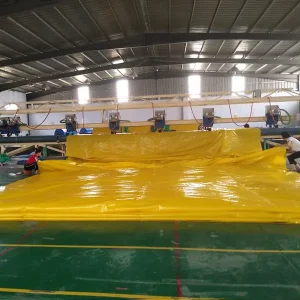
Our production facilities utilize modern 4-roll and 5-roll precision calendering trains. Electronic thickness control systems measure plastic film gage continuously every 10 milliseconds, maintaining thickness tolerances within ±0.01mm across a full 3.2-meter continuous width.
To produce extra-wide protective sheets without compromising waterproof integrity, heavy-duty transparent tarpaulins are fused using high-frequency electromagnetic welding. The process melts polymer molecular chains across the seam, yielding continuous waterproof bonds stronger than the base film itself.
By controlling resin blending, masterbatch formulation, thread extrusion, weaving, lamination, and corner eyelet punch assembly in a single industrial complex, unit production costs are minimized while maintaining total lot-to-lot traceability for international compliance.
Deploying high-clarity clear polymer covers across industrial, agricultural, and architectural sectors.
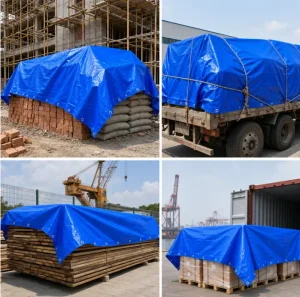
High-rise construction sites in cold climates rely on clear PE grid tarpaulins to seal open scaffolding bays. The clear matrix traps ambient thermal energy and heat from curing equipment while allowing natural sunlight to illuminate work areas, significantly cutting temporary site lighting power costs.
Anti-static transparent PVC sheets engineered with surface resistivity between 106 and 109 Ω/sq are extensively used in electronics assembly plants, pharmaceutical isolation bays, and auto-body paint booths to prevent dust accumulation and static discharge damage.
Anti-drip and anti-fog transparent tarpaulins incorporate hydrophilic surface additives that force condensation to form a thin, non-dropping water film. This increases total photosynthetically active radiation (PAR) reaching crops while reducing fungal disease vector risks.
Meeting international environmental mandates while pushing the boundaries of material science through 2030.
Our export-grade transparent polymer formulations are certified non-toxic and strictly comply with EU REACH SVHC regulations (phthalate-free formulations with <0.1% weight threshold), RoHS 2.0, and EN 71-3 safety standards. Flame retardant grades carry NFPA 701 Test Method 2 and DIN 4102 B1 fire ratings.
We support global distributors with customized master-carton packaging, barcode generation, private labeling, drop-ship container loading, and tailored grommet placements (aluminum, brass, or stainless steel spaced at 30cm, 50cm, or 100cm intervals with custom reinforced corner boots).
Next-generation transparent tarpaulin development centers on Bio-based TPU Alternatives to eliminate traditional plasticizer migration completely, Self-Healing Nanocoatings that seal hairline punctures under sunlight, and Monomaterial PE Transparent Assemblies designed for 100% circular recycling.
Direct technical answers from our senior chemical engineers and factory sales directors.
Clear PVC tarpaulin offers solid, window-like optical transparency (up to 95%) without any internal mesh lines, making it ideal for patio enclosures and retail soft walls. Clear PE Grid tarpaulin incorporates a poly mesh scrim inside translucent polyethylene; while it diffuses direct vision slightly, it provides significantly higher tear strength per unit weight and performs superiorly in freezing temperatures (-40°C).
Yellowing is caused by UV oxidation breaking down polymer chains. We integrate 3% to 5% high-grade Hindered Amine Light Stabilizers (HALS) and organic UV absorbers into the virgin PVC compound. Fogging or haze is mitigated by using low-volatility, non-migratory plasticizers that prevent surface exudation in hot weather.
For standard light-duty covers, 0.15mm to 0.30mm (approx 6 to 12 mil) is sufficient. Heavy-duty winter construction enclosures require 0.50mm (20 mil) clear PVC or 180+ GSM reinforced PE. Extreme industrial curtains, truck side windows, and architectural gazebos specify 0.80mm to 1.50mm (30 to 60 mil) engineered PVC film.
For standard stocked master rolls, the minimum order quantity starts at 1 container mix or 3 MT per custom specification. Standard manufacturing production cycle is 15 to 25 calendar days following pre-production sample approval and receipt of deposit.
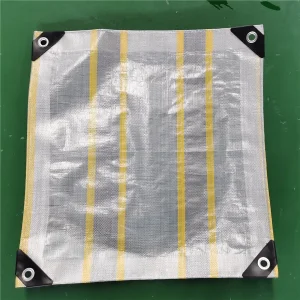
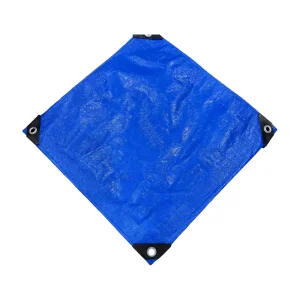
Yes. Finished sheets are cut to exact size, hemmed with internal polypropylene reinforcement cords, high-frequency fused at the perimeter, and fitted with heavy-duty aluminum, nickel-plated brass, or stainless steel eyelets. Triangular plastic corner caps are routinely added to distribute wind tension.
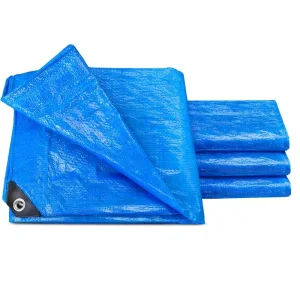
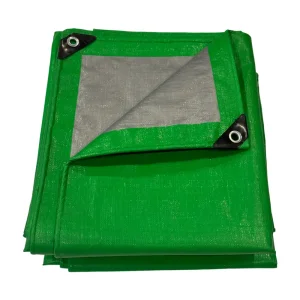
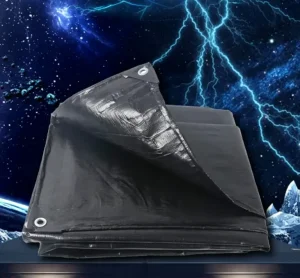
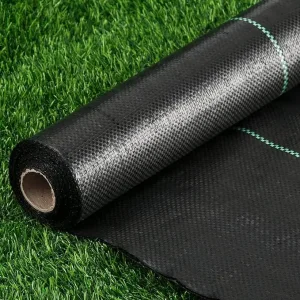
High-tensile, waterproof, anti-UV, and multi-purpose polymer sheeting options for global distribution.

Request engineering datasheets, factory-direct wholesale pricing schedules, and physical sample swatches directly from our Shandong engineering hub.
Submit Technical Tender / Inquiry