
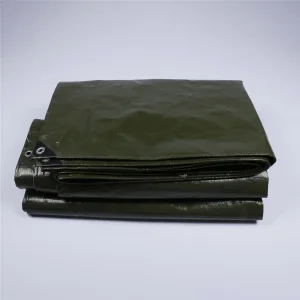
Direct from China's premier synthetic fabric extruder: Heavy-duty PE, PP, and PVC tarpaulin sheets engineered with high tensile strength, 100% hydrostatic water resistance, and multi-season UV stabilization.
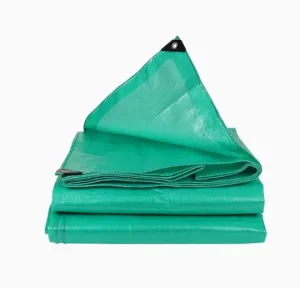
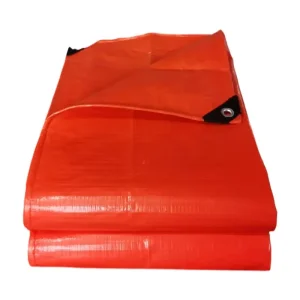
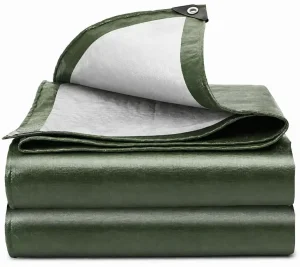
An executive analysis on how Chinese manufacturing clusters are driving polymer innovations, cost efficiencies, and structural durability standards in the global waterproofing market.
In the contemporary industrial ecosystem, the demand for high-performance waterproof fabric covers, poly tarpaulins, and synthetic membrane systems has expanded beyond basic weather protection into critical infrastructure support, agricultural yield preservation, intermodal logistics, and emergency shelter operations. As the world’s primary industrial manufacturing hub, China produces over 65% of the global woven polyolefin fabric and PVC-laminated technical textiles. As a recognized premier China waterproof supplier & manufacturers hub, advanced facilities in Shandong Province (specifically the Linyi polymer cluster) have pioneered key advancements in extrusion line automation, high-density polyethylene (HDPE) tape drawing, dual-sided low-density polyethylene (LDPE) lamination, and specialized additives engineering.
Modern commercial applications demand tarpaulin solutions that exhibit exceptional physical metrics: hydrostatic pressure resistance exceeding 50,000 Pa, tear strength surpassing 250 N, and multi-year resistance against solar photo-oxidation (UV weathering). The transformation from basic 60 GSM promotional poly tarps to heavy-duty 300+ GSM structural PE covers and 900 GSM knife-coated PVC architectural membranes highlights the rapid technological evolution of the industry.
By integrating Hindered Amine Light Stabilizers (HALS) and nano-scale titanium dioxide (TiO2) masterbatches during the high-speed tape drawing process, modern PE tarpaulins resist UV degradation even in severe equatorial solar conditions (e.g., Middle East and Sub-Saharan deployment).
Eliminating stitch punctures entirely, modern automated heat-sealing lines weld fabric panels together using 450°C hot-air jets. Combined with internal PP rope-reinforced hems, structural tearing along stress seams is virtually eliminated.
Transitioning from plasticized PVC to 100% recyclable mono-material Polyethylene (HDPE inner weave + LDPE double coating) allows total industrial recyclability without toxic dioxin emissions during end-of-life thermolysis.
Understanding the chemical composition, tensile mechanics, and environmental adaptability of different synthetic waterproofing substrates to select the optimal material specification.
| Performance Metric | PE Tarpaulin (Polyethylene) | PP Tarpaulin (Polypropylene) | PVC Coated Tarpaulin (Polyvinyl Chloride) |
|---|---|---|---|
| Base Polymer Composition | HDPE Woven Scrim + LDPE Lamination | High-Stiffness PP Woven Base + PP Film | High-Tenacity Polyester (PES) Scrim + PVC Coating |
| Typical Weight Range (GSM) | 60 g/m² – 300 g/m² | 80 g/m² – 280 g/m² | 450 g/m² – 900 g/m² |
| Hydrostatic Pressure Rating | 20,000 to 40,000 mm H₂O | 15,000 to 30,000 mm H₂O | > 80,000 mm H₂O (100% Impermeable) |
| Tensile Strength (Warp / Weft) | 800 N / 700 N per 5cm (180 GSM) | 1100 N / 950 N per 5cm (180 GSM) | 2500 N / 2200 N per 5cm (650 GSM) |
| Flexibility at Low Temperature | Excellent (-40°C to +70°C) | Moderate (-10°C to +80°C) | Good (-30°C to +70°C with cold-flex plasticizers) |
| UV Life Expectancy (Unstabilized vs Stabilized) | 3 Months vs 3–5 Years (3–5% HALS) | 2 Months vs 2–3 Years | 5 to 10+ Years (Inherent UV Matrix) |
| Recyclability & Eco Profile | 100% Recyclable (Monomaterial Polyolefin) | 100% Recyclable | Requires Specialized PVC Scrap Reclamation |
| Best Suited Commercial Use | General Covers, Cargo Tarp, Scaffolding, Grain Drying | High-Stiffness Covers, Weed Barrier, Packaging | Heavy Truck Side Curtains, Membrane Structures, Tents |
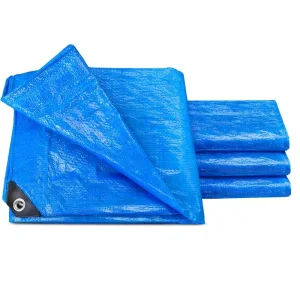
A multi-layered polyethylene tarpaulin is engineered via a three-tier co-extrusion and weaving methodology. The innermost core consists of High-Density Polyethylene (HDPE) slit tapes, woven on circular looms into a tear-resistant mesh matrix (ranging from 8x8 mesh per square inch for light utility tarps, up to 14x14 mesh for heavy-duty construction covers). Both top and bottom surfaces are subsequently sealed via high-temperature extrusion coating with Low-Density Polyethylene (LDPE) containing color pigments, carbon black, and UV stabilizers.
Custom engineering blueprints developed for commercial procurement teams, disaster relief agencies, logistics fleets, and agricultural enterprises.
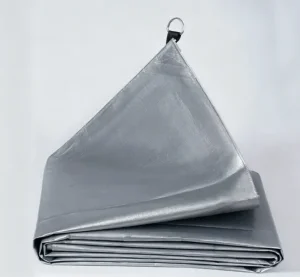
High-speed highway transit subjects cargo covers to extreme aerodynamic drag, flapping stresses, and dynamic water penetration. Our heavy-duty double-green and silver-black truck tarpaulins feature reinforced brass grommets every 50cm, welded webbing around perimeter hems, and anti-abrasion top coatings. They guarantee zero water ingress during long-haul freight transit across varied climatic zones.
Post-harvest crop loss due to moisture infestation is a major global economic challenge. Specialized agricultural tarpaulins engineered by leading China suppliers offer high solar reflection (silver upper layer) to reduce internal heat buildup under grain stockpiles, combined with food-grade virgin PE raw materials to ensure non-toxic food contact during drying processes.
Urban construction sites require debris containment, worker weather protection, and concrete curing insulation. Flame-retardant PE tarpaulins complying with EN 13501-1 Class B-s1,d0 and NFPA 701 standards provide fire-safe scaffolding enclosures that resist wind-loading while preventing water leakage onto lower floor concrete pours.
From polymer pellet inspection to automated container loading—how raw material consistency translates to field performance.
100% virgin HDPE granules are melted and extruded into high-tenacity flat yarn tapes with precise denier control.
Circular and water-jet looms weave tapes into uniform high-density fabric matrices ranging from 8x8 to 14x14 mesh.
Simultaneous double-sided melt lamination applies smooth, pinhole-free LDPE waterproof films over the woven core.
Automated slitting units trim master rolls into exact customer widths from 2 meters up to 6 meters continuous width.
Wide panels are hot-air welded together at 450°C, producing 100% waterproof bonded seams with zero thread holes.
Heavy-duty polypropylene ropes are encapsulated inside double-folded folded borders for maximum edge tear resistance.
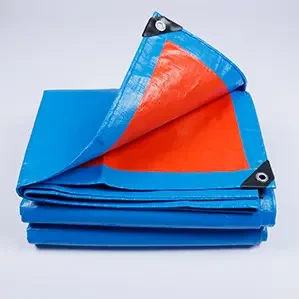
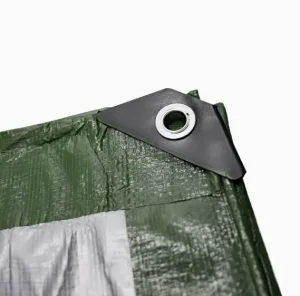
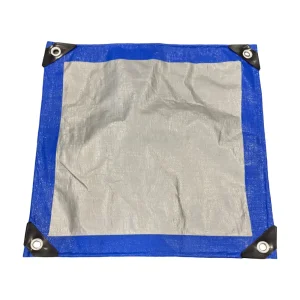
Aluminum, brass, or molded plastic eyelets are punched along borders alongside reinforced black corner triangles.
Every batch undergoes hydrostatic head pressure testing, tensile pull trials, and barcode retail packaging inspection.
Emerging material innovations transforming static tarpaulin covers into intelligent, climate-adaptive protection systems.
Integration of graphene oxide flakes into LDPE lamination resins creates tortuous pathways for gas and water vapor molecules. This delivers ultra-low moisture vapor transmission rates (MVTR < 0.1 g/m²/24h), crucial for sensitive military electronics and moisture-vulnerable grain reserves.
Advanced passive daylight radiative cooling (PDRC) coatings reflect up to 95% of incoming solar infrared radiation while emitting mid-infrared heat back into space, lowering temperatures under covered cargo enclosures by up to 12°C in desert environments without external power.
Replacing fossil-based ethylene with sugarcane-derived bio-PE polymer bases maintains identical tensile and hydrostatic performance while reducing the net product cradle-to-gate carbon footprint by over 68% for environmental tender compliance.
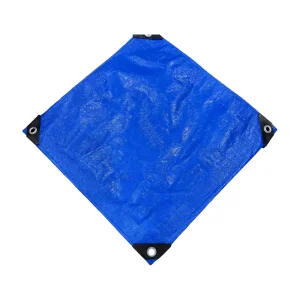
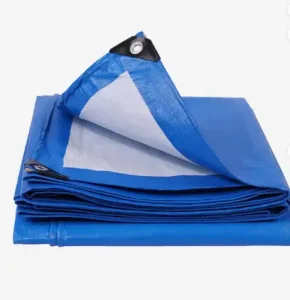
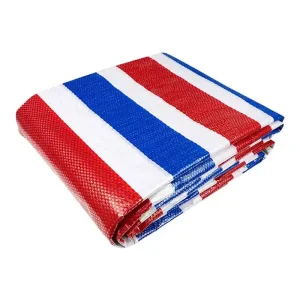
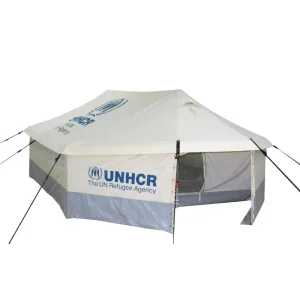
Explore specialized agricultural grain tarps, striped poly sheeting, warehouse hall fabrics, and custom-printed branded covers engineered for high-volume commercial buyers.
Technical answers compiled by Senior Materials Engineers to streamline global procurement decisions.
Sourcing directly from a China waterproof supplier provides access to vertically integrated manufacturing—from polymer granule synthesis and tape extrusion to high-speed circular weaving and automated hot-air lamination. This eliminates middleman markups, allows complete customization of weight (GSM), mesh density, colors, and UV masterbatch additives, and reduces bulk unit costs by up to 35-50% while guaranteeing strict batch-to-batch chemical consistency.
PE (Polyethylene) Tarpaulins utilize woven HDPE strips laminated on both sides with LDPE film. They are lightweight, highly flexible in freezing sub-zero temperatures (-40°C), 100% recyclable, and cost-effective for medium-to-heavy utility covers. PP (Polypropylene) Tarpaulins feature higher mechanical tensile stiffness but lower flex life under severe UV. PVC Coated Tarpaulins utilize liquid PVC knife-coating over high-tenacity polyester scrim, producing extremely heavy-duty, 100% impermeable, flame-retardant membranes rated for 5 to 10+ years of continuous outdoor exposure on truck side curtains and architectural structures.
UV longevity is controlled by adding 3% to 5% high-grade Hindered Amine Light Stabilizers (HALS) and optical brighteners into the outer LDPE molten film during extrusion. For regions with high solar radiation (such as Australia, the Middle East, or Arizona), accelerated weathering testing according to ISO 4892-3 / ASTM G154 standards verifies that the fabric retains over 80% of its initial tensile strength after 2,000 to 5,000 continuous hours of intense UV exposure.
Weight selection depends directly on the mechanical load and target application environment:
Yes. Full OEM/ODM capabilities include surface gravure printing up to 4 colors, customized sheet sizing from small 2x3 meter retail packs to massive 20x30 meter agricultural sheets, continuous roll stock (2m to 6m width x 100m length), custom grommet spacing (50cm, 100cm, or customized pitch), aluminum/brass/plastic grommet material choices, and corner plastic reinforcement triangles.
Our manufacturing lines produce fabrics compliant with international fire safety standards, including EN 13501-1 (Class B-s1,d0), DIN 4102 B1, and NFPA 701. Environmental compliance reports under EU REACH regulation, RoHS directives, and ISO 14001 Environmental Management certification are available upon contract execution.
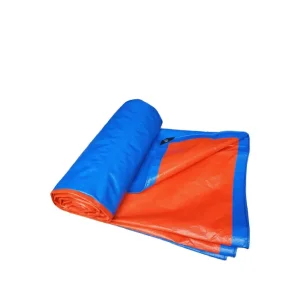
For standard stocked color specifications (e.g., Green/Silver, Blue/Orange, Double Silver), container-mix orders start from one 20ft container (approx. 10 to 12 metric tons). Custom color matching, special GSMs, or branded retail packaging require an MOQ of 3 to 5 tons per specification. Standard production turnaround is 15 to 25 calendar days post sample approval.
Traditional sewn seams introduce thousands of needle punctures along the fabric joint, requiring secondary spray seam tapes that degrade over time. Automated hot-air thermal welding melts the LDPE coatings together under pressure at 450°C, forming a molecular bond that is 100% waterproof and exhibits higher shear strength than the parent fabric itself.