Explore our factory-direct surplus tarpaulins, multi-purpose poly covers, and high-density woven fabrics. Every specification is engineered for maximal rip-stop strength, UV endurance, and complete fluid impermeability.
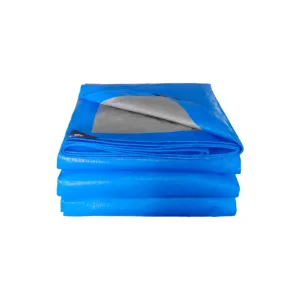
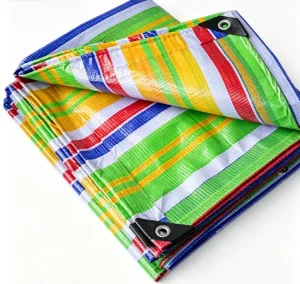
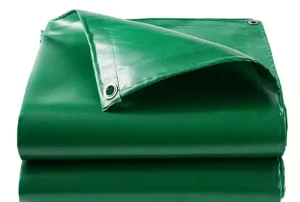
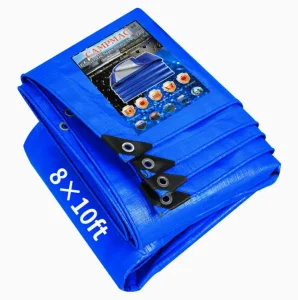
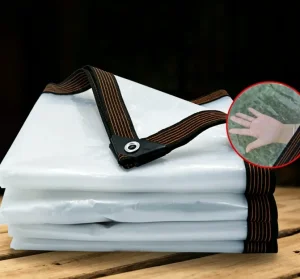
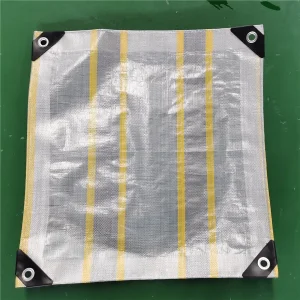
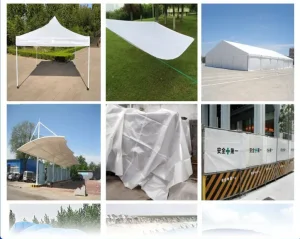
From military defense staging areas to massive commercial intermodal logistics networks, army surplus tarps represent the pinnacle of cost-effective, high-tensile protective barrier technology.
In the contemporary global trade landscape, procurement managers and government supply officers no longer view army surplus tarps merely as second-hand military excess. Instead, the term "Army Surplus Tarp" has evolved within commercial and defense manufacturing into a benchmark standard representing heavy-gauge construction, olive-drab/camo color fastness, extreme tear resistance, and military-specification (MIL-SPEC) structural integrity.
Modern wholesale military surplus tarps factories utilize high-density polyethylene (HDPE) inner scrim woven at extreme grid densities (ranging from 10×10 to 14×14 threads per inch) combined with low-density polyethylene (LDPE) dual-sided lamination. This multi-layered architecture renders traditional heavy canvas obsolete by providing superior hydrostatic head resistance (up to 10,000 mm H2O) at a fraction of the weight, completely eliminating moisture absorption, rot, and mildew breakdown.
Key Strategic Insight: Sourcing direct from primary manufacturing facilities eliminates 35% to 50% in distributor markups while allowing precise specification customization—such as Near-Infrared (NIR) camouflage reflection, customized flame retardancy standards (CPAI-84 / NFPA 701), and climate-specific UV masterbatch stabilization.
Detailed comparative evaluation of Polyethylene (PE), Polypropylene (PP), and Polyvinyl Chloride (PVC) formulations for heavy-duty military surplus and industrial applications.
| Material / Spec Metric | Standard Commercial Tarp | Heavy-Duty Army Surplus Poly (PE) | Tactical Military PVC Knife-Coated |
|---|---|---|---|
| Base Fabric Grid | 8×8 scrim (60-90 GSM) | 12×12 to 14×14 High-Density Weave (160-300 GSM) | 1000D × 1000D High Tenacity Polyester (450-900 GSM) |
| Tensile Strength (ASTM D751) | Warp: 450 N / Weft: 400 N | Warp: 1450 N / Weft: 1380 N | Warp: 3200 N / Weft: 2800 N |
| Tear Resistance (Trapezoid) | 60 N | 220 N (Rip-Stop Reinforced) | 450 N (Ultra-Tough Commercial) |
| Hydrostatic Head Pressure | 1,500 mm H2O | > 8,000 mm H2O (Zero Seepage) | > 15,000 mm H2O (Submersible Grade) |
| UV Stabilization Dosage | 1% Masterbatch (< 6 mos life) | 3% - 5% HALS Dosage (2 - 5 Years Outdoor Life) | Integrated Anti-UV & Anti-Mildew Coatings |
| Thermal Sealing Method | Cold Glue / Basic Stitching | Continuous Thermal Hot-Air Fusion + Rope Hem | High-Frequency Ultrasonic Dielectric Welding |
Utilizing 100% virgin HDPE resin pellets for drawing high-denier flat tapes. Dual-sided LDPE lamination creates a impermeable seal preventing chemical, oil, and water intrusion.
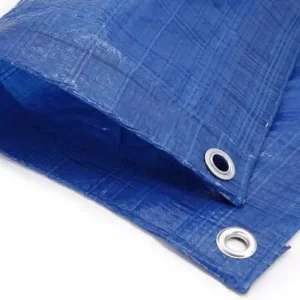
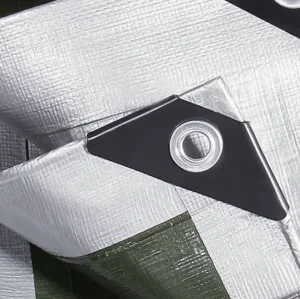
Stressed points incorporate molded triangular plastic corners backed by double-folded webbing and heavy-gauge solid brass or anti-rust aluminum grommets spaced every 50 cm.
Optional additive packages complying with FAR 25.853 and NFPA 701 self-extinguishing flame specifications for military command tents and field munitions storage.
How military-grade tarps are reshaping global supply chains, disaster relief logistics, and heavy-equipment protection infrastructure.
Over the past decade, global demand for military-style surplus tarps has surged beyond defense sectors into massive civil applications. Municipalities, humanitarian aid organizations (UNHCR, Red Cross), agricultural mega-corporations, and intermodal freight conglomerates rely on heavy-duty army surplus poly tarps for extreme-weather resilience.
Traditional cotton duck canvas tarps suffer from heavy water gain (increasing freight weight by up to 40% when wet), mold vulnerability, and high manufacturing costs. Modern PE and PVC surplus tarps manufactured in automated Chinese facilities deliver superior performance at 1/4th the total operational cost.
Direct integration with factory production lines allows international importers to specify custom roll lengths, masterbatch color matching (Olive Drab 34094, Coyote Brown, Desert Tan, Camouflage), and private labeling.
By establishing container-load factory programs, wholesale buyers secure consistent GSM tolerance (± 3%), guaranteed heat-seal seam strength, and scheduled shipping timelines directly to regional distribution centers.
Navigating international regulatory frameworks, climate-specific engineering, and local field applications.
Fully compliant with REACH, RoHS, California Proposition 65, and CPSIA requirements. Free from prohibited phthalates, heavy metal pigments, and ozone-depleting substances.
Engineered with 5% HALS UV stabilizers specifically formulation-tested to withstand high-radiation solar indices (>200 kLy/year) across Saudi Arabia, UAE, and North Africa.
Formulated with plasticizer additives guaranteeing structural flexibility and zero cracking under severe sub-zero conditions down to -40°C (-40°F).
Impregnated with bio-inhibitors preventing fungal hyphae growth and biological degradation in hot, high-humidity equatorial zones.
The next decade of tarpaulin manufacturing integrates automated quality assurance, advanced polymer circularity, and functional camouflage technologies.
In-line high-resolution optical scanners monitor weaving tension, tape width uniformness, and coating continuity in real-time, instantly flagging micro-pinholes.
Advanced masterbatch additives that mimic natural spectral reflection curves, preventing detection by modern night-vision and thermal reconnaissance equipment.
Mono-material PE structures (where scrim, coating, and hem cord consist of pure polyolefin) enabling 100% direct mechanical recycling without manual component separation.
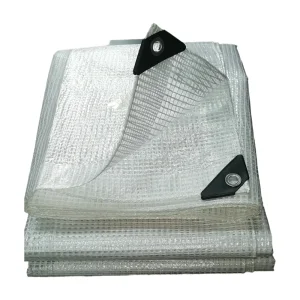
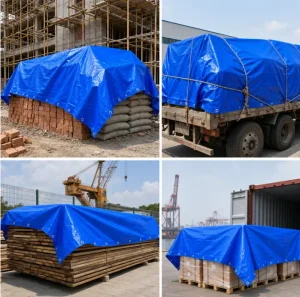
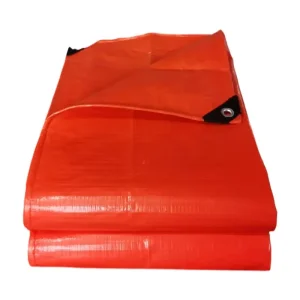
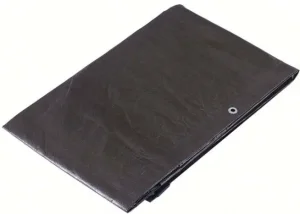
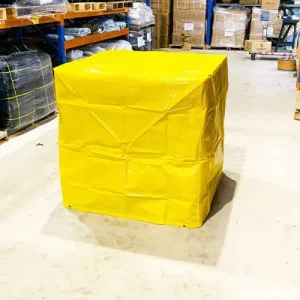
Browse our extended product portfolio engineered for agricultural, industrial warehouse, and specialized weatherproofing demands.
Clear, engineering-level answers to common procurement questions from global buyers and distributors.