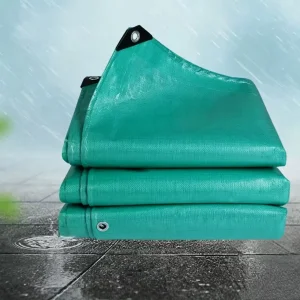
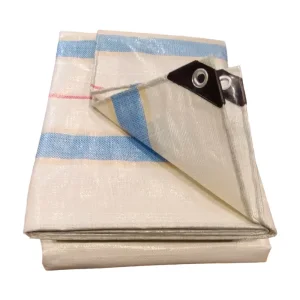
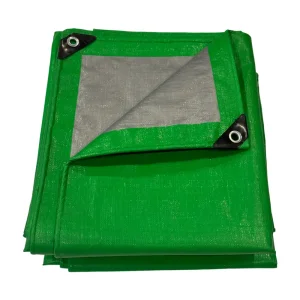
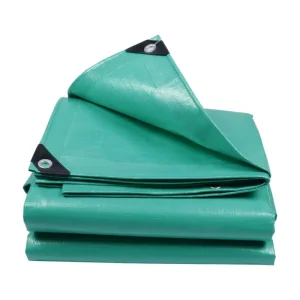
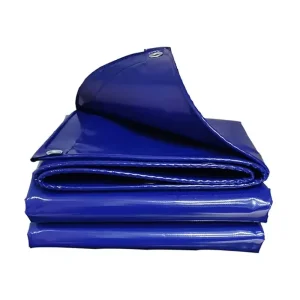
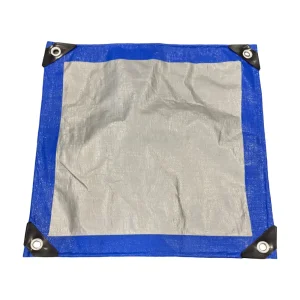
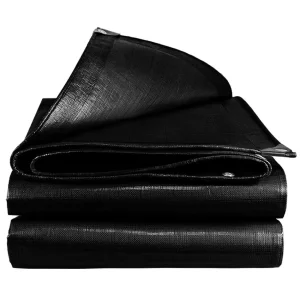
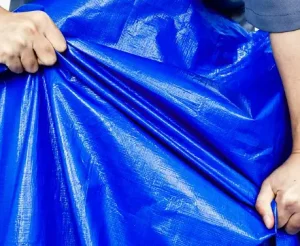
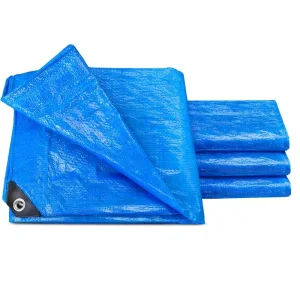
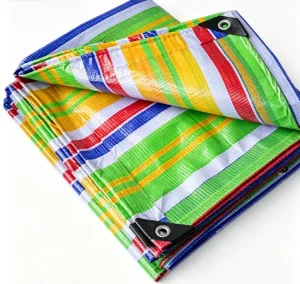
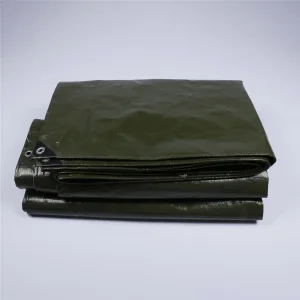
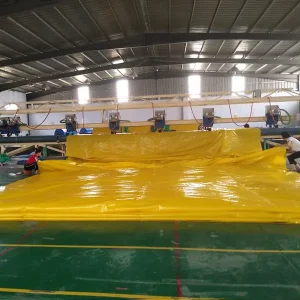
Engineering heavy-duty polyolefin and PVC protective membranes for global construction, logistics, and industrial applications. Direct factory scalability with complete compliance assurance.
Explore our flagship heavy-duty protective sheets, UV-treated covers, and industrial-grade woven tarpaulins manufactured direct from our production facility.
A comprehensive analysis of polymer chemistry, tensile physics, and surface coatings designed for extreme environmental durability on modern job sites.
Our heavy-duty building covers utilize High-Density Polyethylene (HDPE) as the internal woven core, engineered with targeted melt flow indices (MFI) to optimize tensile resistance. By orienting polymer chains during yarn drawing, we achieve superior tear thresholds against sharp structural steel and raw masonry edges.
Both sides of the woven substrate are laminated with Low-Density Polyethylene (LDPE) blended with linear low-density polyethylene (LLDPE). This dual-layer encapsulation yields 100% moisture impermeability, preventing water ingress under hydrostatic pressure ratings exceeding 100 kPa.
Solar radiation breaks polymer bonds via photo-oxidation. We formulate our coatings with 3% to 5% Hindered Amine Light Stabilizers (HALS) and micro-fine Carbon Black or Titanium Dioxide pigments, guaranteeing upwards of 36 months of active outdoor service life in high-UV global zones.
Technical Information Gain: Standard tarp covers suffer rapid delamination when exposed to site chemicals and moisture. Our heat-sealing process uses continuous hot-air welding at controlled temperatures (400°C–450°C), creating molecularly fused seams that match 95%+ of the virgin base fabric strength.
Leveraging scale, raw material proximity, and end-to-end processing automation to deliver unmatched cost efficiency and supply security to international enterprise clients.
Situated in Shandong’s premier plastic processing hub, we procure virgin resin directly from Sinopec and PetroChina. In-house masterbatch formulation ensures pristine color uniformity and exact polymer purity without secondary filler degradation.
Our facility operates over 200 high-speed circular looms and flat weaving machinery. We maintain strict control over warp and weft density (ranging from 8×8 to 14×14 threads per inch), eliminating weave defects and ensuring uniform tensile performance across every roll.
From automated cutting tables to automatic aluminum and brass eyelet punching lines, our finished sheet assembly line converts raw poly rolls into ready-to-use building material covers at a rate of 65 tons per day, drastically shortening export lead times.
B2B procurement teams require guaranteed specifications, transparent quality control, and robust compliance to protect site assets and total cost of ownership (TCO).
We guarantee a weight tolerance within ±3% of specified GSM. Enterprise buyers avoid the common market pitfall of receiving undersized or lightened tarps that tear under wind loads.
Finished tarpaulins are compressed into high-density bales or stacked on ISPM-15 heat-treated wood pallets, maximizing container cube utilization and reducing landed freight costs by up to 18%.
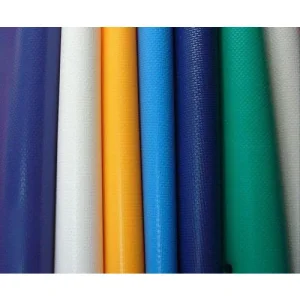
Full support for client artwork, custom color masterbatch, branded edge reinforcement tape, outer carton barcoding, and multilingual installation instruction inserts.
Every shipment is backed by internal laboratory testing logs covering grab tensile strength (ASTM D5034), trapezoid tear strength (ASTM D5587), and hydrostatic head (AATCC 127).
Ensuring your building covers conform strictly to regional construction regulations, environmental directives, and fire safety mandates.
For high-rise scaffolding enclosures and commercial construction zones, flame-retardant additives are blended directly into the PE/PVC matrix. Certified to pass NFPA 701 (Large Scale), DIN 4102 B1/B2, and EN 13501-1 Class B-s1,d0 self-extinguishing protocols.
Exported materials strictly comply with European Chemicals Agency (ECHA) regulations. Our membranes are free from restricted heavy metals (lead, cadmium, hexavalent chromium), phthalate plasticizers (DEHP, DBP, BBP), and SVHC hazardous substances.
Custom chemical formulations adapted to specific geographical challenges: anti-cold crack additives down to -40°C for Nordic/Canadian winters, or high-dosage HALS UV masterbatches designed for Saudi Arabia, Australia, and Arizona solar exposure levels.
The protective containment sector is evolving rapidly toward eco-efficiency, advanced composite durability, and circular plastic lifecycles.
Global ESG mandates are driving a shift away from mixed-material tarps toward mono-material Polyethylene (PE) solutions. By using PE eyelets, PE rope hems, and PE coatings, the entire cover can be directly shredded and recycled into post-consumer resin without costly manual sorting.
Next-generation covers leverage micro-denier, high-tenacity yarns that reduce total product weight by 20% while maintaining equivalent tensile strength. This reduces transportation emissions and allows faster site installation with fewer workers.
Future industrial tarpaulins are beginning to incorporate printed moisture-indicator strips and embedded wireless IoT sensors. Contractors can monitor internal humidity, concrete curing thermal levels, and seal integrity remotely on critical infrastructure builds.
Proven field effectiveness across major civil engineering, building construction, transportation, and agricultural sector protection jobs.
Shielding active construction sites from severe weather while protecting urban pedestrian areas from falling debris and overspray. Ideal for winter enclosure heated pours.
Immediate weather-tight protection for damaged commercial buildings following hurricane or storm events. High tear-resistance prevents tearing over exposed rafters.
Protecting multi-million dollar industrial equipment, structural beams, and raw lumber from salt spray, road grime, and moisture ingress during flatbed ocean or highway transport.
Securing harvested crops, forage bales, and bulk fertilizers against rain mold and solar spoilage, preserving essential crop nutrient value in outdoor field storage.
Compare performance metrics across our main industrial cover product categories to select the right specification for your project environment.
| Material Classification | GSM Range | Tensile Strength (Warp/Weft) | Tear Resistance | Hydrostatic Head | UV Service Life | Flame Rating |
|---|---|---|---|---|---|---|
| Lightweight Utility PE | 60 - 100 GSM | 450 / 400 N/5cm | 45 / 40 N | > 50 kPa | 6 - 12 Months | Optional HB |
| Standard Construction PE | 120 - 180 GSM | 750 / 700 N/5cm | 85 / 80 N | > 80 kPa | 18 - 24 Months | CPAI-84 / DIN 4102 B2 |
| Heavy-Duty Industrial PE | 200 - 300 GSM | 1200 / 1100 N/5cm | 140 / 130 N | > 100 kPa | 24 - 36+ Months | NFPA 701 / DIN 4102 B1 |
| Ultra-Heavy Coated PVC | 450 - 900 GSM | 2500 / 2300 N/5cm | 300 / 280 N | > 150 kPa | 48 - 60+ Months | EN 13501-1 B-s1,d0 |
Explore our complete commercial roll stock, reinforced tarpaulin covers, and specialized agricultural membranes ready for immediate export shipping.
Expert insights covering raw material selection, custom fabrication, export documentation, and lead-time logistics for commercial bulk purchases.
For standard scaffolding and debris protection, we recommend 130 GSM to 160 GSM PE fabric woven at a 10×10 mesh density. For winter construction enclosures in freezing or high-wind environments, a 180 GSM to 240 GSM PE sheet with reinforced webbing hems or flame-retardant scaffolding sheeting (DIN 4102 B1 certified) is advised to prevent tear-outs under elevated wind stress.
Our baseline MOQ for custom-manufactured tarpaulin sheets (specified GSM, color, eyelet spacing, and branded packaging) is 3 metric tons per specification, or one mixed 20-foot container across standard stock items. Production lead times typically range from 15 to 25 calendar days following artwork confirmation and deposit clearance.
UV masterbatch dosage is precisely metered during the primary extrusion stage using gravimetric dosing systems. We incorporate high-performance HALS additives at a 3% to 5% concentration, tested under accelerated weathering standards (ASTM G154). Test reports showing retained tensile strength after 1,500 hours of continuous UV exposure are available upon request.
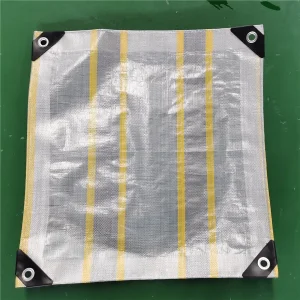
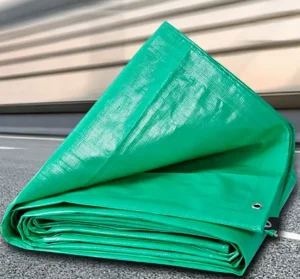
Yes. All finished building material covers are cut to exact size tolerances, perimeter rope-hemmed inside heat-sealed edges, and fitted with heavy-duty aluminum, brass, or molded plastic grommets at intervals of 50cm, 100cm, or client-specified spacing. We also apply triangular plastic corner patches to absorb tension forces.
We routinely facilitate third-party pre-shipment inspections conducted by SGS, Bureau Veritas (BV), or Intertek. Products are fully compliant with REACH (SVHC), RoHS, CE, and fire standards (NFPA 701, DIN 4102 B1). Complete certificates of analysis (CoA) and mill test certs are supplied with every export shipment.
Individually cut sheets are folded and packed into clear Polybags featuring custom color inserts, barcodes, and hang holes. Bulk shipments are wrapped in heavy poly outer covers or packed into double-wall corrugated shipping cartons, palletized with stretch film wrapping for seamless forklift handling.
Partner directly with a leading Chinese building material cover manufacturer. Send us your required GSM, target dimensions, color requirements, and volume—our technical engineering team will deliver a comprehensive quote within 12 hours.