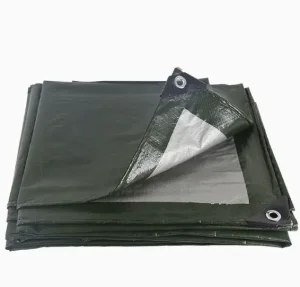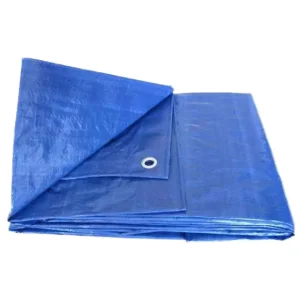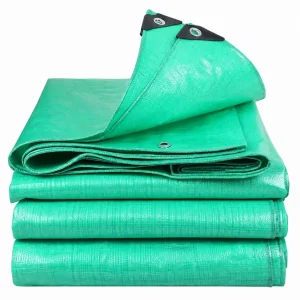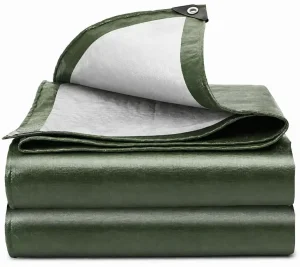
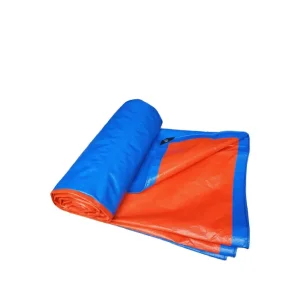
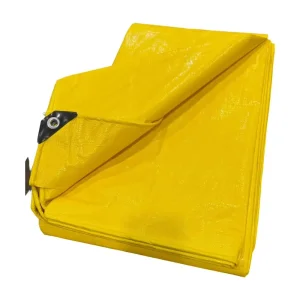
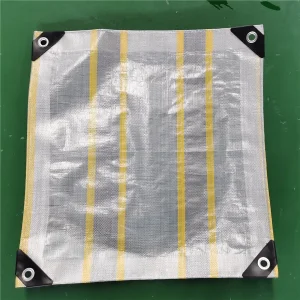
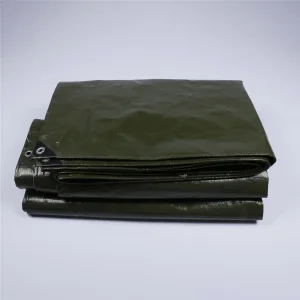
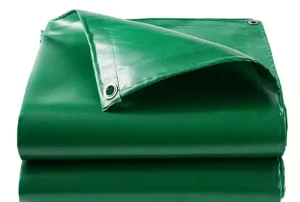
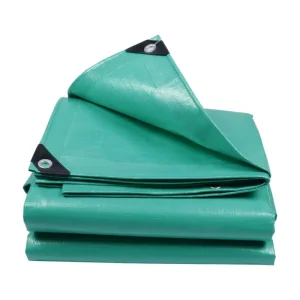
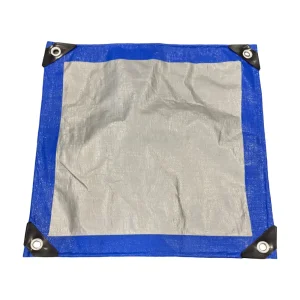
Coated Polyethylene (PE) tarpaulin rolls represent the gold standard in modern polymer-based containment and environmental protection. Unlike traditional canvas, rubberized fabrics, or single-layer unlaminated plastics, coated PE tarpaulin utilizes a multi-layered composite matrix. At its structural core lies a woven scrim crafted from high-density polyethylene (HDPE) tape yarn, extruded through precision slit-film lines to achieve exceptional tensile strength along both the warp and weft directions.
To achieve 100% water impermeability, air sealing, and environmental defense, this interior HDPE fabric undergoes a continuous thermal extrusion lamination process on both sides using low-density polyethylene (LDPE) or linear low-density polyethylene (LLDPE) film coatings. This dual-sided lamination encapsulates the structural weave, preventing fiber slippage, moisture ingress, and atmospheric degradation.
Monofilament and flat tape extrusion yields tensile resistance exceeding 1200 N / 5cm. Resists longitudinal tearing under sustained wind shear.
Hot-melt extrusion coating seals microscopic weave interstices. Creates an impervious barrier against hydrostatic pressure up to 15,000 mm H2O.
Compounded with Hindered Amine Light Stabilizers (HALS) and Carbon Black masterbatches to prevent photo-oxidative degradation in tropical solar environments.
Global procurement directors face continuous challenges involving virgin polymer price fluctuations, maritime logistics delays, and rigorous quality consistency. China’s tarpaulin industrial clusters—specifically located in Shandong province (Linyi)—offer a complete, vertically integrated supply ecosystem that eliminates middle-man margins and optimizes production velocity.
From petrochemical polymer virgin resin compounding, high-speed tape drawing lines, and water-jet weaving looms, to dual-side tandem extrusion laminators and automated rolling—every phase occurs within a single industrial campus.
Direct supply contracts with Sinopec and PetroChina guarantee steady resin supply and protect global wholesale buyers from extreme market price volatility during international bulk contracts.
Strategic proximity to Qingdao Port enables rapid FCL container staging, streamlined ocean freight documentation, and optimized roll packing configurations (naked roll wrapping or heavy-duty carton tubes).
| Specification Parameter | Standard Duty Range | Heavy Duty Range | Ultra Heavy Industrial | Test Standard Method |
|---|---|---|---|---|
| Fabric Weight (GSM) | 50 g/m² – 90 g/m² | 100 g/m² – 180 g/m² | 200 g/m² – 320 g/m² | ISO 3801 / ASTM D3776 |
| Weave Mesh Density | 8 x 8 / sq.inch | 10 x 10 to 12 x 12 | 14 x 14 / sq.inch | ASTM D3775 |
| Tensile Strength (Warp/Weft) | 450 / 400 N/5cm | 850 / 750 N/5cm | > 1350 / 1200 N/5cm | ISO 13934-1 |
| Tear Strength (Trapezoidal) | 60 / 55 N | 120 / 110 N | > 210 / 195 N | ASTM D751 / DIN 53363 |
| Hydrostatic Water Head | > 7,000 mm H2O | > 12,000 mm H2O | > 20,000 mm H2O | AATCC 127 / ISO 811 |
| UV Weathering Resistance | 300 Hours QUV | 1,000 Hours QUV | > 3,000 Hours QUV | ASTM G154 / ISO 4892-3 |
| Thermal Stability Range | -20°C to +70°C | -30°C to +80°C | -40°C to +85°C | EN 1876-1 |
| Standard Roll Widths | 1.8m – 2.0m | 2.0m – 4.0m | Seamless up to 6.0m | Factory Roll Slitting |
Exporting coated polyethylene tarpaulin rolls requires strict compliance with international chemical safety and fire prevention directives. A standard tarpaulin formulation suitable for mild European climates will quickly degrade under the intense radiation of the Middle East or fail environmental audits in North America if restricted phthalates or heavy metals are present.
Formulated without SVHC (Substances of Very High Concern), nonylphenol ethoxylates, lead, or cadmium. Fully compliant with EU Regulation (EC) No 1907/2006 for safe indoor and consumer contact.
Compounded with non-halogenated antimony trioxide additives to satisfy NFPA 701 (USA), CPAI-84, DIN 4102-1 B1 (Germany), and BS 7837 standards for commercial scaffolding enclosures and public event shelters.
For GCC Middle East buyers (Saudi Arabia, UAE, Qatar), UV masterbatch loading is increased to 4.5%–5.0% using dual HALS (770/944) stabilizers to withstand solar irradiancy above 200 kLy/year.
Procuring raw PE tarpaulin rolls versus prefabricated custom-sized sheets requires distinct logistical planning. Tarpaulin rolls serve local converters, sign-makers, and specialized fabrication plants, whereas prefabricated sheets target hardware retail chains (DIY stores), agricultural distributors, and emergency relief organizations.
Fully customized options including surface flexographic logo printing (up to 4 colors), continuous edge reinforcement bands, customized barcode labeling, and retail polybag insertion.
Every batch batch is subjected to tensile testing, hydrostatic head rupture checks, edge heat-seal peel analysis, and electronic GSM balance verification prior to container sealing.
Expert tariff classification under HS 3926.90 (Articles of plastics) or HS 6306.12 (Tarpaulins of synthetic fibers) ensures smooth customs clearance across North American and European ports.
Used extensively in North America and Australia for grain bunker covers, hay bale wraps, and silage trench sealing. White/black dual-tone tarpaulins reflect thermal solar heat while blocking internal light transmission to preserve feed quality.
Essential across European urban job sites. Flame-retardant mesh and translucent PE tarpaulin sheets protect workers from wind driven rain while maintaining natural daylight permeability inside temporary building enclosures.
Heavyweight 200–300 GSM PE coated rolls converted into custom-fit flatbed truck tarps, trailer side curtains, and intermodal shipping container rain covers that survive high-speed highway wind friction.
Standardized 4m x 6m and roll-form humanitarian tarpaulins supplied directly to global relief agencies (UNHCR, Red Cross) for rapid deployment emergency tents and disaster recovery shelters.
As international environmental regulations tighten and corporate ESG mandates expand, the coated PE tarpaulin industry is undergoing a major technological transformation. Key innovations focus on eliminating non-recyclable composite wastes and reducing reliance on virgin fossil fuels.
Unlike PVC-coated fabrics which contain complex plasticizers and cannot be easily recycled, PE tarpaulins feature a 100% olefin matrix (HDPE core + LDPE film). Used tarpaulins can be directly re-pelletized into low-grade industrial plastic products without chemical separation.
Advanced extrusion lines now accommodate up to 30%–50% certified Post-Consumer Recycled (PCR) PE in the interior woven core while preserving structural tensile strength, lowering total carbon footprint by up to 38%.
Infusing non-toxic nano-zinc oxide and infrared-reflective ceramic pigments into the outer LDPE coating layer to inhibit mold formation in high-humidity tropical storage while drastically reducing surface temperature under direct sunlight.
Coated PE tarpaulin uses an HDPE woven core laminated with LDPE film, rendering it lightweight (typically 50–300 GSM), 100% recyclable, highly cost-effective, and exceptionally flexible in extreme cold (-40°C). PVC tarpaulin utilizes a polyester scrim liquid-coated with polyvinyl chloride, resulting in a much heavier material (450–900 GSM) designed for 5 to 10-year permanent structural installations, though at significantly higher material cost and container shipping weight.
While higher GSM (e.g., 200+ GSM vs 70 GSM) provides greater physical abrasion resistance and tensile thickness, outdoor service life against sun rot is primarily controlled by the chemical UV stabilizer percentage (HALS masterbatch) in the LDPE coating layer. A 100 GSM tarp with 4% UV stabilization will outlast a 200 GSM tarp with zero UV additives when exposed to sunlight.
Standard master roll widths are 1.83m (6ft), 2.0m, 3.81m (12.5ft), 4.0m, and seamless 6.0m. Standard roll lengths are 50 meters, 100 meters, 100 yards, or 200 yards. Custom slit widths down to 0.5m or jumbo rolls up to 1,000 meters can be ordered for automated processing plants.
For standard running stock colors (Blue/Silver, Green/Silver, Dark Blue, White, Black), MOQ starts at 3 metric tons per specification. For specialized OEM custom pantone colors, flame retardant grades, or non-standard mesh counts, the minimum extrusion run is typically 5 to 10 metric tons (approx. one 20ft full container load).
Yes. Because the outer lamination layer consists of pure low-density polyethylene (LDPE), rolls can be effortlessly joined using continuous hot-air welding equipment, hot-wedge seamers, or ultrasonic sealing machines at temperatures between 260°C and 320°C, producing 100% waterproof continuous sheets of infinite width.
Finished sheets undergo double-folded hem heat-sealing reinforced with an internal PP rope (3mm–5mm diameter) along the entire perimeter. Eyelet stress locations are further reinforced with molded polycarbonate or heavy-duty plastic triangular corner patches prior to riveting aluminum or brass eyelets.
Standard export document packages include the Commercial Invoice, Packing List, Clean On-Board Bill of Lading, Certificate of Origin (Form E for ASEAN, Form A, or RCEP Preferential Certificates), SGS/Intertek Factory Test Reports, and REACH/RoHS Chemical Compliance Certificates.
Coated PE tarpaulin master rolls packed with protective inner paperboard and outer woven sleeves generally achieve a payload of 24–26 MT per 40HC container. Prefabricated folded sheets packed in high-density bales (pressed via hydraulic balers) can reach maximum payload limits of 27–28 MT per 40HC container.