Browse our primary selection of heavy-duty polyethylene, canvas-grade woven fabrics, and industrial covers direct from OEM production lines.
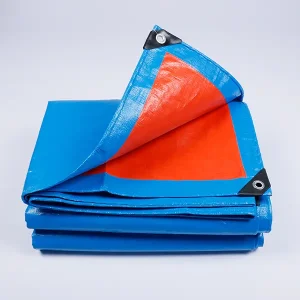
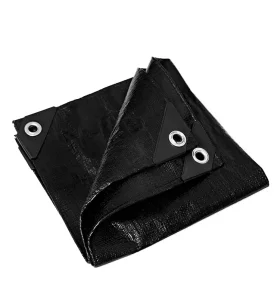
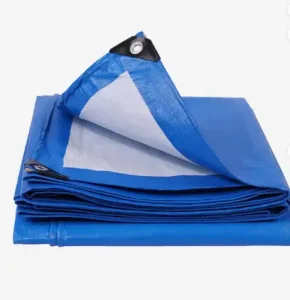
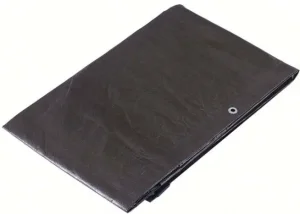
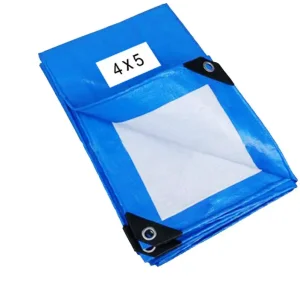
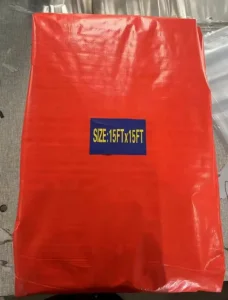
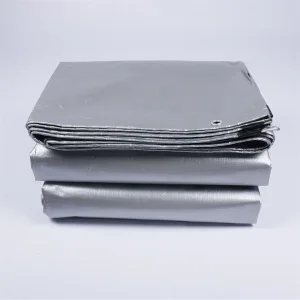
In modern industrial sourcing, specifying protective coverings requires a precise balance between vapor permeability (breathability), tensile durability, and weather resistance. While synthetic polyethylene (PE) and polyvinyl chloride (PVC) sheets dominate short-term and fully impermeable membrane markets, Cotton Canvas Tarpaulins remain the indispensable benchmark for heavy-duty commercial freight, historic preservation, defense equipment protection, and agricultural machinery covering.
Cotton canvas tarpaulin manufacturing relies on tightly spun, long-staple natural cotton yarns woven into heavy-duty Duck Canvas structures. Unlike synthetic poly tarps that lock in moisture and create micro-climates conducive to rust and mold, cotton duck canvas allows interior vapor pressure to equalize while repelling external wind-driven rain.
The structural integrity of a cotton canvas tarp is defined by its ounce per square yard rating (oz/sq.yd) prior to chemical proofing treatment, as well as its duck number according to international textile standards:
Lightweight industrial canvas engineered for equipment drop cloths, light agricultural covers, and internal warehouse partitioning. Offers high flexibility and easy manual handling.
The standard workhorse grade for general flatbed trucking, grain pile protection, and outdoor construction staging. Features plied warp and weft yarns for enhanced tear strength.
Severe-duty military, mining, and maritime covers. Extremely dense weave combined with heavy wax or silicone impregnation capable of resisting high mechanical stress and abrasive contact.
When commercial procurement managers evaluate factory quotes for enterprise supply contracts, choosing between Paraffin Wax Canvas, Silicone Coated Canvas, PVC Coated Fabrics, and PE Poly Tarpaulins requires evaluating lifecycle costs, breathability requirements, and environmental compliance.
| Performance Specification | Wax-Treated Cotton Canvas | Silicone-Coated Cotton Canvas | PVC Coated Polyester | Heavy-Duty PE Tarpaulin |
|---|---|---|---|---|
| Breathability (Vapor Permeability) | High (Vapor Permeable) | Very High (Breathable Matrix) | Zero (Fully Impermeable) | Zero (Fully Impermeable) |
| Hydrostatic Water Resistance | Moderate (Rain Repellent) | High (>800 mm H2O) | Extreme (>3000 mm H2O) | High (>1500 mm H2O) |
| Weight Range (GSM) | 350 - 750 gsm | 320 - 650 gsm | 450 - 900 gsm | 80 - 300 gsm |
| Oil / Wax Bleed Risk | Minor initial bleed potential | Zero Bleed (Dry Finish) | None | None |
| Flame Retardancy Certification | CPAI-84 / NFPA 701 Option | CPAI-84 Option | DIN 4102 B1 / NFPA 701 | CPAI-84 Option |
| Typical Lifespan (Outdoor Exposure) | 3 - 5 Years | 5 - 8 Years | 5 - 10 Years | 1 - 3 Years |
Historically, cotton canvas tarpaulins were rendered water-repellent using paraffin wax and oil emulsions. While cost-effective, wax-treated canvas can feel oily to the touch, possess a distinct paraffin odor, and lose flexibility in freezing arctic temperatures. Modern high-tier Chinese OEM factories now offer advanced Silicone Elastomer Impregnation. Silicone-treated canvas provides a dry-finish touch, zero odor, superior UV resistance, and twice the hydrostatic head rating of traditional wax without compromising natural fabric breathability.
Sourcing wholesale cotton canvas and heavy-duty poly tarpaulins from premier Chinese manufacturing clusters in Shandong, Jiangsu, and Zhejiang provides international buyers with unparalleled cost efficiency, high-volume capacity, and rigorous quality assurance.
Equipped with 3.6m to 6.0m ultra-wide rapier looms and air-jet weaving machines, Chinese factories produce seamless, heavy-weight canvas fabrics that eliminate continuous central seams—the primary failure point in large industrial covers.
Submersion dipping, double-sided roller wax application, and high-temperature curing ovens ensure complete core fiber saturation. Every yard of canvas undergoes uniform waterproofing without patchy spots or variable density.
Factory finishing incorporates double-folded hem lines reinforced with heavy polypropylene webbing, double lock-stitched rot-proof polyester threads, and heavy-duty solid brass or stainless steel grommets pitched every 18 to 36 inches.
Different geographic regions and industrial sectors mandate specialized chemical treatments and physical properties. Understanding localized user intent enables global importers to stock optimal canvas configurations.
When transporting precision CNC machinery, raw steel coils, or kiln-dried timber across climate zones, plastic tarps trap rising engine heat and ambient humidity, causing heavy sweating and severe surface corrosion. Commercial trucking fleets utilize 16 oz breathable silicone canvas truck tarps to vent humidity while shielding cargo from highway rain and road debris.
In North America, Australia, and Western Europe, farmers require breathable crop protection sheets. Covering freshly harvested hay bales with impermeable PE film causes thermal condensation, leading to mold spoilage and internal heat combustion. Heavy cotton duck canvas allows internal heat escaping while shedding seasonal rainfall.
Shipyards, oil refineries, and structural steel erection sites enforce strict OSHA and ISO safety standards. Treated canvas tarpaulins compliant with NFPA 701 and CPAI-84 serve as spark-containment curtains, welding blankets, and heavy equipment shields capable of resisting hot metal slag without melting or catching fire.
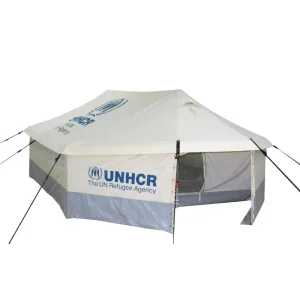
Government procurement agencies specify olive drab and desert tan heavy duck canvas for field tents and tactical equipment covers. Natural cotton canvas offers natural acoustic dampening, superior thermal insulation over vinyl, and long-term durability in extreme desert environments.
To satisfy customs inspections and enterprise supplier compliance mandates in Europe, North America, and Australia, professional Chinese canvas tarpaulin manufacturers subject finished batches to rigorous third-party physical and chemical testing.
Chemical water-proofing formulations are certified free from restricted SVHCs (Substances of Very High Concern), heavy metals, AZO dyes, and banned phthalate plasticizers to ensure eco-friendly handling and clearance across European ports.
Batch samples are tested in accordance with ASTM D5034 (Grab Test) and ASTM D1424 (Elmendorf Tear Strength) to verify warp/weft breaking force under simulated high-wind stress scenarios.
Treated canvas fabrics undergo Xenon Arc accelerated weathering tests (AATCC 16 / ISO 105-B02) ensuring chemical proofing compounds resist color fading, fabric embrittlement, and rot over multi-year exposure.
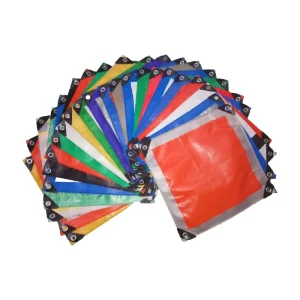
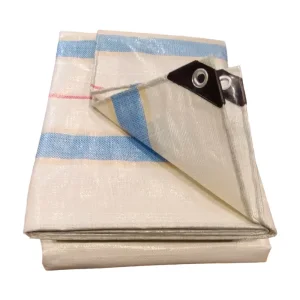
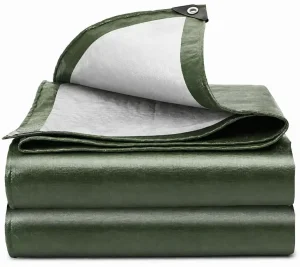
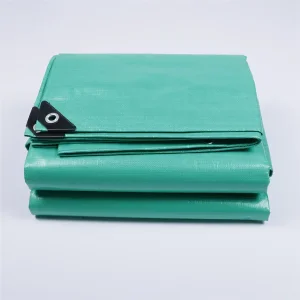
Explore our full line of specialized poly woven tarps, heavy-duty truck covers, UV-stabilized rolls, and agricultural ground sheets available for wholesale contract ordering.
Direct answers compiled by our senior textile engineers to assist procurement teams in specifying and ordering custom wholesale tarpaulins.
Paraffin wax treatment saturates the cotton fibers with oil/wax emulsions. It is cost-effective and highly traditional, but can feel slightly oily, emit a mild petroleum scent, and stiffen in sub-zero climates. Silicone-coated canvas utilizes a dry synthetic silicone treatment. It is completely odorless, non-staining, flexible in extreme cold, twice as water-resistant, and maintains natural breathability without oil transfer onto covered cargo.
Cotton canvas tarpaulins are classified as water-repellent rather than 100% impermeable plastic barriers. When exposed to rainfall, the natural cotton fibers swell, locking the tight weave matrix while the chemical wax/silicone coating sheds water. This structure allows air and water vapor to pass through from the inside, preventing condensation damage. However, if standing water puddles on flat canvas over extended periods, moisture seepage will eventually occur. For standing water containment, heavy-duty PVC or PE tarpaulins should be specified.
For standard running canvas weight specifications (10 oz, 12 oz, 16 oz in Olive Drab, Tan, or Navy Blue), our standard factory MOQ starts at 1,000 square meters or one mixed 20ft FCL container. Custom dye matching (Pantone TPX), custom grommet spacing, or specialized flame-retardant chemical treatments require a minimum order of 3,000 square meters per spec. Standard manufacturing lead time is 20 to 30 days post sample approval.
Grommet integrity is maintained through structural reinforcement. Our factory double-folds all outer hems over heavy polypropylene or canvas webbing reinforcement strips before lock-stitching with high-tenacity UV-stabilized polyester thread. Heavy-duty solid brass or stainless steel spur tooth grommets are hydraulic-riveted through all four layers of material, providing over 800 N of pull-out force per eyelet.
Yes. We supply specialized flame-retardant duck canvas treated with durable organophosphorus or inorganic chemical flame retardants. Our FR canvas products meet international fire safety standards including CPAI-84 Section 6, NFPA 701, and BS 7837, making them suitable for oil & gas refinery maintenance, foundry spark protection, and indoor public event shelters.
Every export order is accompanied by a full shipping document packet: Commercial Invoice, Packing List, Clean On-Board Bill of Lading, Certificate of Origin (Form E for ASEAN, Form A, or RCEP Preferential COO), Factory Batch Quality Inspection Report (COA), and third-party laboratory test certificates (SGS/TUV) upon request.