Featured Industrial-Grade PE & PVC Coated Specifications Engineered for Heavy Construction, Agricultural Protection, and Logistics Cargo Covers.
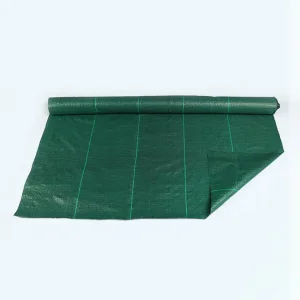
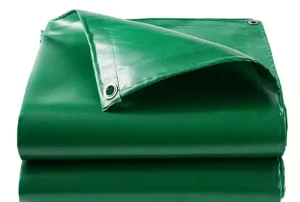
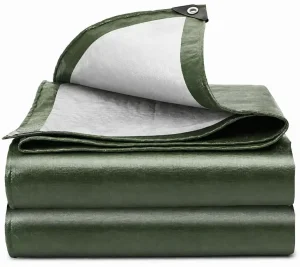
An Industry Whitepaper on Navigating Polyolefin Polymer Dynamics, Custom Manufacturing Scalability, and Global Sourcing Economics.
In the contemporary B2B procurement environment, global enterprise buyers are rapidly pivoting away from third-party intermediaries and regional aggregators in favor of direct engagement with original wholesale custom manufacturers. The rationale is rooted in total cost of ownership (TCO) optimization, structural batch-to-batch consistency, and direct control over chemical formulation. When sourcing heavy-duty polyethylene (PE), polypropylene (PP), and polyvinyl chloride (PVC) tarpaulins, direct factory integration ensures exact compliance with ISO, ASTM, and DIN technical standards, bypassing margin stacking and communication latency.
Understanding the molecular properties of polyolefins is critical for strategic sourcing managers. HDPE woven core fabrics laminated with LDPE offer exceptional hydrostatic performance combined with lightweight flexibility, ideal for agricultural covers and site scaffolding. PP tarpaulins deliver superior tensile stiffness and puncture resistance at equal fabric weights. Meanwhile, PVC knife-coated technical textiles provide unparalleled tear strength, fire retardancy (B1/M2), and operational longevity exceeding 5 to 10 years in harsh outdoor climates.
Technical Insight: Sourcing low-cost tarpaulins without verified UV stabilizer ratios (such as Hindered Amine Light Stabilizers - HALS) leads to rapid photo-oxidation under solar radiation, degrading tensile strength by up to 60% within 180 days of field deployment. Custom manufacturing allows precise masterbatch formulation tailored to the UV index of the destination market.
How Linyi, Shandong Has Become the World’s Leading Hub for Technical Polyolefin Extrusion, High-Speed Weaving, and Coated Fabric Innovation.
The industrial ecosystem in Linyi, Shandong, encapsulates the complete production cycle within a 30-kilometer radius—ranging from virgin petrochemical resin suppliers (Sinopec, PetroChina) to specialized extrusion machinery manufacturers, high-speed circular looms, double-side lamination units, heat-sealing automation, and eyelet punch tooling shops. This extreme vertical density reduces raw material logistics latency to near-zero and drastically lowers production overhead.
Modern Chinese custom factories utilize automated high-output tape extrusion drawing lines, multi-shuttle water-jet and circular weaving looms, and continuous thermal lamination lines capable of running 24/7. Operating 30,000+ square meter manufacturing facilities allows for massive raw material purchasing leverage, yielding unmatched unit economics that are passed directly to international volume buyers.
Customization in Chinese manufacturing goes far beyond simply choosing a color. Facilities offer end-to-end bespoke tailoring: custom denier ratios (e.g., 500D to 1500D), specific warp/weft mesh densities (from 6x6 up to 14x14 per inch), customized roll widths up to 6 meters without seams, anti-fungal additives, specialized flame retardants, and multi-color surface printing—all supported by rapid physical sample turnaround times within 3 to 5 business days.
| Material Parameter | Standard Commodity Grade | China Custom Factory Engineered Grade | Commercial Procurement Benefit |
|---|---|---|---|
| Resin Base | Recycled / Mixed Grade Polymers | 100% Virgin HDPE Core + Prime LDPE Lamination | Higher tensile strength, zero chemical odor, consistent thickness. |
| UV Protection | 0.5% - 1% Basic Carbon Black | 3% - 5% Premium HALS Masterbatch Additive | 3x - 5x outdoor lifespan under extreme solar radiation. |
| Seam Technology | Stitched / Glue Bonded | High-Frequency Thermal Hot-Air Welding | 100% leak-proof seam integrity under extreme hydrostatic pressure. |
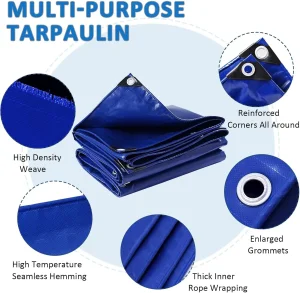
| Corner & Hem | Simple Folded Edge | PP Rope Reinforced Hem + Molded Plastic Triangle Corners | Eliminates grommet pull-out under heavy wind loads and high tension. |
Key Innovations Redefining Specifications, Environmental Compliance, and Functional Performance in Wholesale Manufacturing.
Global regulatory frameworks (such as the EU Green Deal and ESG mandates) are driving a rapid transition toward single-polymer construction. Traditional multi-layer materials combining disparate plastics pose recycling bottlenecks. Modern custom manufacturing leads the charge with 100% polypropylene or 100% polyethylene mono-material tarpaulins—where the base fabric, coating layer, edging rope, and corner reinforcements are produced from the exact same polymer family, enabling seamless end-of-life closed-loop recycling without material separation.
Addressing historical concerns regarding phthalate plasticizer migration in standard PVC coated fabrics, next-generation manufacturers are integrating bio-based, plant-derived plasticizers and non-phthalate stabilizers (DOTP/DINCH). Furthermore, solvent-free hot-melt extrusion coating technologies are replacing traditional liquid dip coatings, eliminating volatile organic compound (VOC) emissions during manufacturing while maintaining superior flex-crack resistance in sub-zero working conditions.
With global temperature extremes escalating, protective covers are transitioning from passive shade cloths to active thermal barriers. Advanced custom manufacturers incorporate multi-layer titanium dioxide (TiO2) and aluminum-powder vacuum lamination. These specialized coatings reflect up to 90% of solar radiation across the near-infrared spectrum, achieving internal micro-climate temperature reductions of 10°C to 15°C—a critical requirement for cold-chain agricultural storage, livestock shelters, and temporary disaster shelter structures.
Precision fabrication is evolving from manual craftsmanship to CNC-driven automated hot-air and high-frequency RF welding cells. Smart sensor arrays monitor temperature, pressure, and seam speed in real time, guaranteeing absolute weld homogeneity. This eliminates structural micro-voids, ensuring that heavy-duty truck side curtains, containment liners, and architectural membrane structures withstand severe dynamic shear forces during long-haul transport.
Engineered Protective Cover Fabrics Applied Across Diverse Commercial, Industrial, and Environmental Domains.
Long-haul freight fleets require cargo covers that endure highway speeds, severe wind turbulence, abrasion from structural steel cargo, and continuous road salt exposure. Custom manufacturers engineer 600-900 GSM PVC coated curtains and 200-280 GSM PE truck covers equipped with reinforced webbing, stainless steel D-rings, and custom perimeter elastic cords designed to secure cargo across cross-border freight routes.
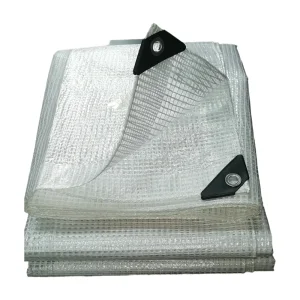
Modern urban infrastructure development demands high-visibility flame-retardant site enclosure sheeting, temporary roof repair tarps, and specialized concrete curing blankets. Custom PE grid tarpaulins provide translucent daylight transmission while retaining thermal heat during cold-weather concrete hydration cycles, protecting site workers and structural work from windstorms.
Agricultural operations rely on technical fabrics for multi-season hay stack protection, silage pit covers, grain bunker tarps, woven landscape weed barriers, and high-burst-pressure PE layflat irrigation hoses. Controlled UV stabilization guarantees structural fabric resistance against organic fertilizers, pesticide breakdown, and extreme solar exposure across arid agricultural zones.
Heavy mining stockpiles, mineral ore transport, and open-air industrial machinery demand heavy scratch-resistant, chemical-proof PVC and PE covers. Flame-retardant and anti-static additives ensure safety in volatile industrial environments, protecting high-value equipment assets from moisture ingress, dust contamination, and corrosion.
Marine environments impose harsh conditions, including high salinity, continuous wave spray, intense ultraviolet degradation, and severe physical abrasion. Specialized double-coated silver/black PE sheets and marine-grade PVC tarpaulins prevent saltwater seepage, keeping hatch covers, shipping containers, and deck-mounted cargo completely dry.
Global humanitarian agencies (UNHCR, Red Cross, NGO relief operations) require immediate deployment of standardized family shelter tarpaulins, waterproof ground sheets, and disaster recovery covers. Custom manufacturers maintain rapid-response production capacity, supplying lightweight, high-tear-strength tarpaulins compliant with international emergency relief specifications.
A Rigorous Testing Protocol Ensuring Zero Structural Defect Rates for High-Volume OEM Procurement Managers.
Quality assurance begins before extrusion. Raw virgin HDPE, PP, and PVC resin pellets undergo Melt Flow Index (MFI) testing, moisture content analysis, and density verification. Precise compounding ensures that color pigments and UV masterbatches are evenly dispersed during extrusion, preventing weak points in individual yarn tapes.
Fabric samples are taken from every production run to test warp and weft tensile strength, trapezoidal tear resistance, and elongation percentage. Using calibrated electronic tensile testing machines, custom factories verify that finished fabrics withstand design-level wind loads and mechanical stresses without structural rupture.
100% waterproof protection is validated through hydrostatic pressure testing. Coated fabric panels and thermal-welded seams are subjected to continuous water pressure columns (exceeding 10,000mm H2O for standard PE and 30,000mm H2O for heavy PVC). Zero water penetration or seam weeping must occur during test duration.
To guarantee multi-year outdoor durability, fabric samples undergo accelerated ultraviolet weathering tests combined with extreme temperature cycling (-40°C freeze testing to +80°C hot air exposure). Tensile retention curves must remain within acceptable ISO limits prior to mass production release.
Expert Answers to Critical Procurement, Specification Engineering, and Custom Manufacturing Questions.
Standard commodity tarpaulins are designed for short-term retail consumer use, typically using low-density woven fabrics (6x6 or 8x8 mesh count per inch), lower weight (60 to 90 GSM), minimal UV stabilization (<1%), and recycled polymer content. They rely on simple folded stitched hems with light aluminum eyelets.
In contrast, engineered industrial custom specifications utilize virgin polymer resins (100% HDPE core with high-density LDPE coating), precise weave densities (10x10 to 14x14 mesh), higher fabric weights (120 to 300+ GSM for PE, 450 to 900 GSM for PVC), precise chemical masterbatches (3-5% HALS UV protection, flame retardants, anti-mildew additives), thermal hot-air welded seams, rope-reinforced perimeter hems, and heavy-duty brass or stainless steel eyelets seated in molded plastic reinforced corners.
Material selection depends directly on exposure duration, mechanical wind loading, and local climate parameters:
1. Arid / High Solar UV Regions (Middle East, Australia, North Africa): Prioritize 3-5% UV masterbatch formulation. Select 140-200 GSM PE tarpaulins with silver/black heat-reflective lamination, or 600+ GSM PVC for permanent installations.
2. High Humidity / Tropical Monsoon Regions (Southeast Asia, West Africa): Select fabrics treated with anti-fungal and anti-mildew agents. Thermal hot-air welded seams are essential to prevent moisture migration through stitch lines.
3. Sub-Zero / Cold Climates (Nordic Europe, Canada, Northern USA): Choose flexible polyolefin formulations with cold-crack resistance engineered down to -40°C. Standard PVC stiffens in severe cold; plasticizer-modified PVC or flexible PE tarpaulins ensure year-round workability.
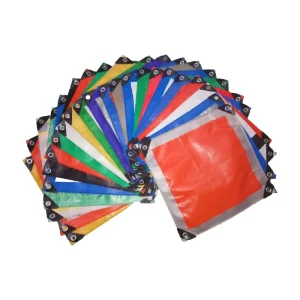
For standard stocked specifications and standard color combinations (such as Blue/Orange, Green/Silver, or Heavy-Duty Blue), minimum order quantities start from a mixed 20ft container (approx. 10 to 12 metric tons across multiple sheet sizes).
For custom bespoke specifications—including non-standard colors, specific corporate logo surface printing, unique GSM weights, specialized anti-fire treatments, or custom retail label packaging—the MOQ is typically 3 to 5 metric tons per individual fabric specification. Standard initial mass production lead times range between 15 and 25 calendar days following pre-production sample approval and artwork sign-off. Repeat orders for existing tooling specifications can be expedited in 10 to 15 days.
Yes. Custom factories utilize precise gravure and flexographic surface printing equipment capable of applying up to 4-color high-definition logos, safety compliance markings, barcode panels, and branded corporate graphics. Color matching is executed using standard Pantone spot colors or customer-supplied physical color swatches. Color consistency is verified under calibrated Light Booths (D65 daylight illumination) to guarantee batch-to-batch visual accuracy.
Fixing hardware and edge detailing can be fully customized based on mechanical loading requirements:
1. Eyelet Types: Heavy-duty aluminum eyelets, anti-corrosive solid brass grommets, or non-metallic polycarbonate plastic eyelets for 100% recyclable mono-material tarpaulins.
2. Eyelet Pitch: Standard spacing is 100cm (approx. 3 feet) along perimeter hems. Custom configurations offer 50cm, 30cm, or custom intervals to withstand high dynamic wind stress.
3. Reinforcement Options: All edges feature internal PP reinforcement ropes. Corners can be upgraded with heavy-duty molded polypropylene triangular corner patches, double-layer fabric patches, or heavy webbing bar-tack stitching to prevent eyelet pull-out under heavy tensioning.
A common issue in commodity plastic trading is "weight cutting," where suppliers supply tarpaulins below ordered GSM weights or calculate weight including thick edge ropes. Direct tier-1 manufacturers operate under strict ISO quality systems. Net fabric weight is verified during double-sided coating using continuous laser thickness gauges.
Quality certificates provide separate figures for: Core Woven Fabric GSM + Top LDPE Layer GSM + Bottom LDPE Layer GSM, guaranteeing an overall finished GSM tolerance within ±3%. Pre-shipment inspection reports include scale mass measurements of cut fabric samples before hem folding, ensuring complete transparency for commercial procurement teams.
Custom manufacturing facilities regularly undergo independent audits by accredited third-party inspection agencies (SGS, Bureau Veritas, TÜV Rheinland, Intertek). Document sets available for export orders include: ISO 9001 (Quality Management), ISO 14001 (Environmental Management), REACH / RoHS chemical compliance certificates, Flame Retardant test reports (DIN 4102 B1, NFPA 701, CPAI-84), Tensile & Hydrostatic test data (ASTM D751 / ISO 1421), and Certificates of Origin (Form A, Form E, Form F, RCEP) for duty preference optimization.
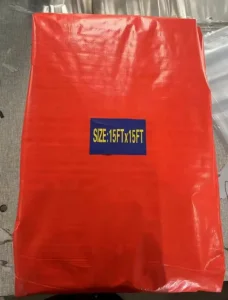
Maximizing container cubic capacity while preventing carton damage during transit is vital for overseas shipping. Finished tarpaulins are folded and individually packed into heavy-duty polybags with printed artwork labels. For bulk commercial shipping, individual polybags are packed into export-grade corrugated shipping cartons or compressed into heavy-duty bale packs bound with nylon strapping.
Bale packing increases container payload weight by up to 20-30% compared to carton packaging, significantly reducing freight cost per unit. Fumigated wooden or plastic pallets with stretch-wrap perimeter protection are also provided for automated warehouse forklift handling.
Explore Full Factory Product Range Available for Custom Wholesale Orders, Containerized Shipping, and Private Label OEM Supply.
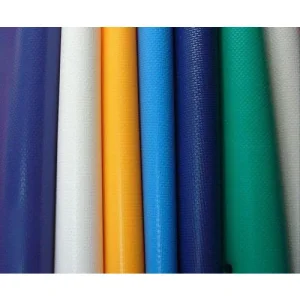
Partner directly with a leading Chinese wholesale manufacturer. Contact our technical sales engineering team for tailored material consultations, factory-direct wholesale pricing schedules, and physical sample kit dispatches within 48 hours.