Direct factory supply of precision-laminated tarpaulins engineered for extreme weather resistance, structural logistics, and heavy industrial protection.
Analyzing global supply chain trends, polymer consumption vectors, and operational benchmarks across modern manufacturing hubs.
The global market for industrial protective coverings is experiencing a structural migration toward heavy-duty, engineered synthetic fabrics. Driven by expanding cross-border intermodal freight networks, severe climate volatility, and strict civil engineering regulatory frameworks, enterprise buyers are replacing traditional low-density canvas with high-performance Polyvinyl Chloride (PVC) coated fabrics and high-density polyolefin membranes (PE/PP).
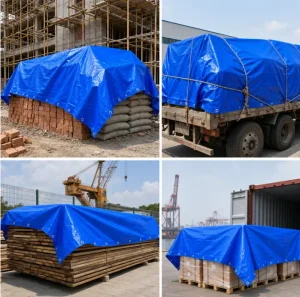
Modern industrial tarpaulins are no longer regarded as disposable utility covers; they function as primary structural containment barriers. Within global logistics, the adoption of TIR-compliant side curtains and heavy-duty flatbed tarps has reduced freight water-damage claims by over 74% across North American and European transport corridors. Simultaneously, the rapid rise of modular construction across APAC and the Middle East has accelerated regional demand for flame-retardant (DIN 4102 B1 certified) scaffolding enclosure sheets and foundation geomembranes.
Selecting optimal polymer formulations requires rigorous structural analysis of tensile load, puncture dynamics, UV degradation rates, and chemical resistance.
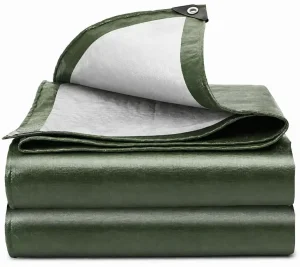
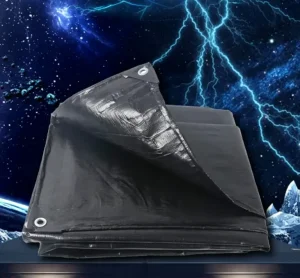
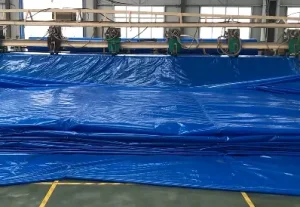
Engineered via continuous knife-coating or hot-melt lamination over 1000D/1300D polyester scrims. Delivers exceptional tensile strength (>3000 N/5cm), dynamic weld seam stability, and high chemical resistance against oils, acids, and industrial solvents. Typical weight spectrum: 450 GSM to 900+ GSM.
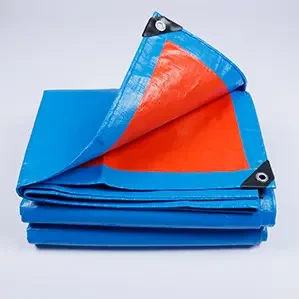
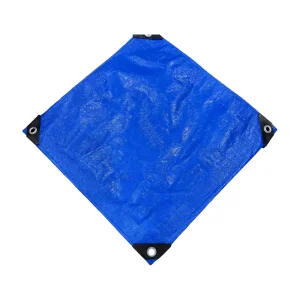
Utilizes high-density woven ribbon cores double-sidedly encapsulated by low-density polyethylene films. Standardized for high strength-to-weight ratios (60 GSM to 300 GSM). Highly flexible in sub-zero climates (-30°C) with low initial capital investment for large-acreage temporary coverage.
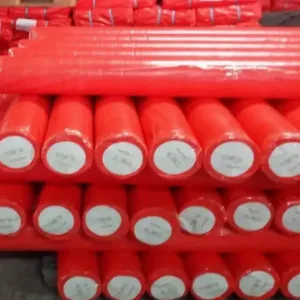
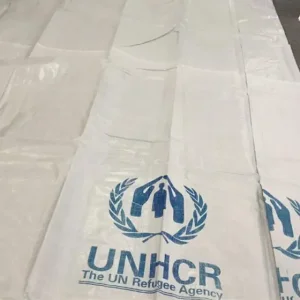
Offers superior dimensional stiffness and surface hardness compared to standard PE tarps. Ideal for heavy agricultural grain stockpiles, geotextile weed barriers, and high-abrasion outdoor installations. Can be formulated with anti-slip micro-texturing.
| Performance Standard / Metric | Heavy-Duty PVC Knife Coated | High-Grade PE Laminated | Heavy PP Woven Roll |
|---|---|---|---|
| Fabric Base Scrim | 1000D × 1000D High-Tenacity Polyester | 14×14 Mesh HDPE Filament | 12×12 Ribbed PP Filament |
| Tensile Strength (Warp / Weft) | 3500 N/5cm / 3000 N/5cm (ISO 1421) | 1250 N/5cm / 1100 N/5cm | 1600 N/5cm / 1450 N/5cm |
| Tear Resistance (Trapezoid) | 450 N / 400 N (DIN 53363) | 180 N / 150 N | 220 N / 200 N |
| Hydrostatic Head Rating | > 100,000 mm H₂O (100% Impermeable) | > 25,000 mm H₂O | > 30,000 mm H₂O |
| Operating Temperature Range | -40°C to +70°C | -30°C to +60°C | -20°C to +80°C |
| Expected Outdoor Service Life | 5 to 10+ Years (Climate dependent) | 1 to 3 Years (UV Grade dependent) | 2 to 4 Years |
Custom engineering patterns tailored to specific environmental stresses, structural loads, and regional regulatory mandates.
Custom 650–900 GSM PVC tarps configured for roll-up side curtains, lumber tarps with double-drop drop flaps, and container liners. Seams are high-frequency hot-air welded to withstand dynamic wind shear forces at 120 km/h on highway transit runs.
Heavy duty flame-retardant enclosures providing windbreak, dust containment, and worker protection. Reinforced with peripheral rope hems and heavy brass grommets spaced every 50cm to resist localized storm gusts on high-rise building projects.
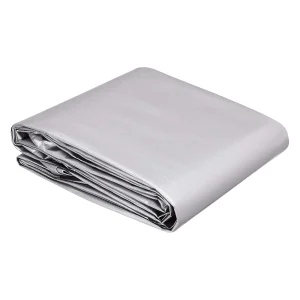
Multi-layered UV-stabilized (up to 5% HALS dosage) covers designed for grain protection, hay stack preservation, and pond liners. Reflective silver/black formulations minimize thermal accumulation under direct desert exposure, preventing moisture decay.
How industrial tarp factories are evolving through next-generation polymer chemistry, smart sensing, and circular manufacturing models.
Transitioning from traditional DOP/DINP plasticizers to vegetable-oil-derived bio-plasticizers. This innovation reduces toxic VOC off-gassing, complies with strict EU REACH standards, and maintains sub-zero film flexibility without brittleness degradation.
Integrating micro-printed conductive threads directly into the base scrim. Smart tarpaulins monitor stress points, moisture ingress, and structural tears in real-time, transmitting diagnostic data directly to logistics managers via IoT gateways.
Pioneering 100% Polyolefin monomaterial tarps where the base fabric, coating film, and hem rope are manufactured from the same polymer family. This enables direct post-industrial mechanical recycling without costly thermal separation procedures.
A standardized quality verification framework for global procurement officers, B2B importers, and industrial distributors.
When sourcing heavy-duty tarpaulins in containerload quantities, verifying raw material integrity and inline manufacturing standards is critical to avoid batch degradation. A rigorous audit protocol covers four distinct verification checkpoints:
Direct inspection of virgin polymer pellet purity, UV master-batch loading percentages (typically 3–5%), and tape drawing denier consistency. Strict tolerance limits (+/- 3%) ensure tensile strength uniformity across the full roll width.
Continuous ultrasonic gauge checking during knife-coating or double-sided PE film extrusion. Peeling adhesion strength is verified according to ISO 2411 standards to prevent micro-delamination under severe thermal stress.
Hot-air and high-frequency welded seams undergo continuous hydrostatic head testing. Corner patches are reinforced with triangular rubber pads and tested for eyelet pull-out forces surpassing 1,500 N per anchor point.
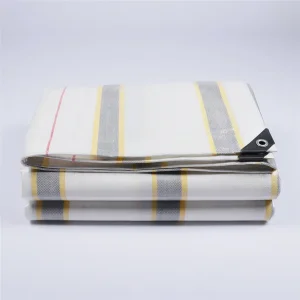
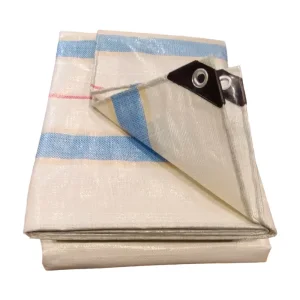
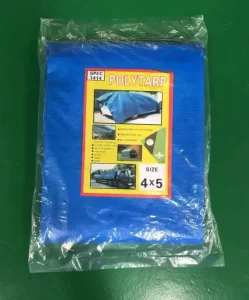
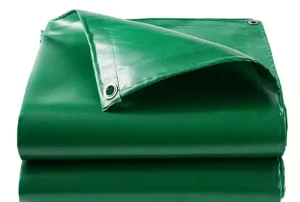
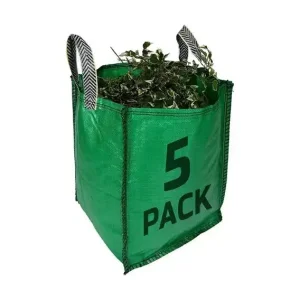
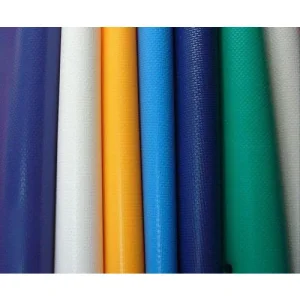
Explore our full OEM catalogue including agricultural weed barriers, striped high-visibility fabrics, multi-purpose poly tarps, and specialized layflat hoses.
Expert answers to critical procurement, chemical formulation, and custom manufacturing inquiries.
PVC knife-coated tarpaulins utilize high-tenacity woven polyester scrims (e.g., 1000D×1000D) thoroughly impregnated with liquid vinyl compound. This creates a monolithic, heavy-duty membrane (450–900+ GSM) with exceptional tensile strength, weld seam integrity, and multi-year outdoor durability. Polyethylene (PE) tarps consist of high-density polyethylene woven ribbons laminated on both sides with low-density PE films (60–300 GSM), offering a lightweight, cost-effective, and fully waterproof solution for temporary coverings and agricultural use.
UV protection is engineered at the primary polymer extrusion stage by incorporating Hindered Amine Light Stabilizers (HALS) and optical absorbers (e.g., Titanium Dioxide or Carbon Black). For high-radiation zones, a master-batch loading of 3% to 5% active UV stabilizer is added, guaranteeing retention of >80% tensile strength after 3,000 hours of accelerated Xenon-arc weatherometer exposure (ISO 4892-2).
Flame-retardant industrial tarpaulins are formulated with antimony trioxide and chlorinated paraffin additives within the coating matrix. Products are tested and certified to international flammability standards, including German DIN 4102 B1, French NF P 92-503 M2, and American NFPA 701, ensuring self-extinguishing behavior upon removal of an active flame source.
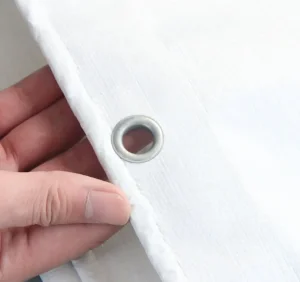
Factory direct OEM production includes: heat-sealed reinforced hems with polypropylene rope inserts, heavy-duty aluminum or solid brass grommets (spaced from 30cm to 100cm pitch), 3-layer triangular corner reinforcement patches, custom screen or rotogravure surface logo printing up to 4 colors, custom roll widths up to 6 meters, and retail-ready barcode packaging.
Standard stock specification roll orders feature an MOQ of one 20ft container mix (~11–13 metric tons). Custom color, weight (GSM), and brand-printed sheet orders require a minimum run of 3 metric tons per specification. Regular mass production lead times range between 15 and 25 days following pre-production artwork and lab dip approval.